
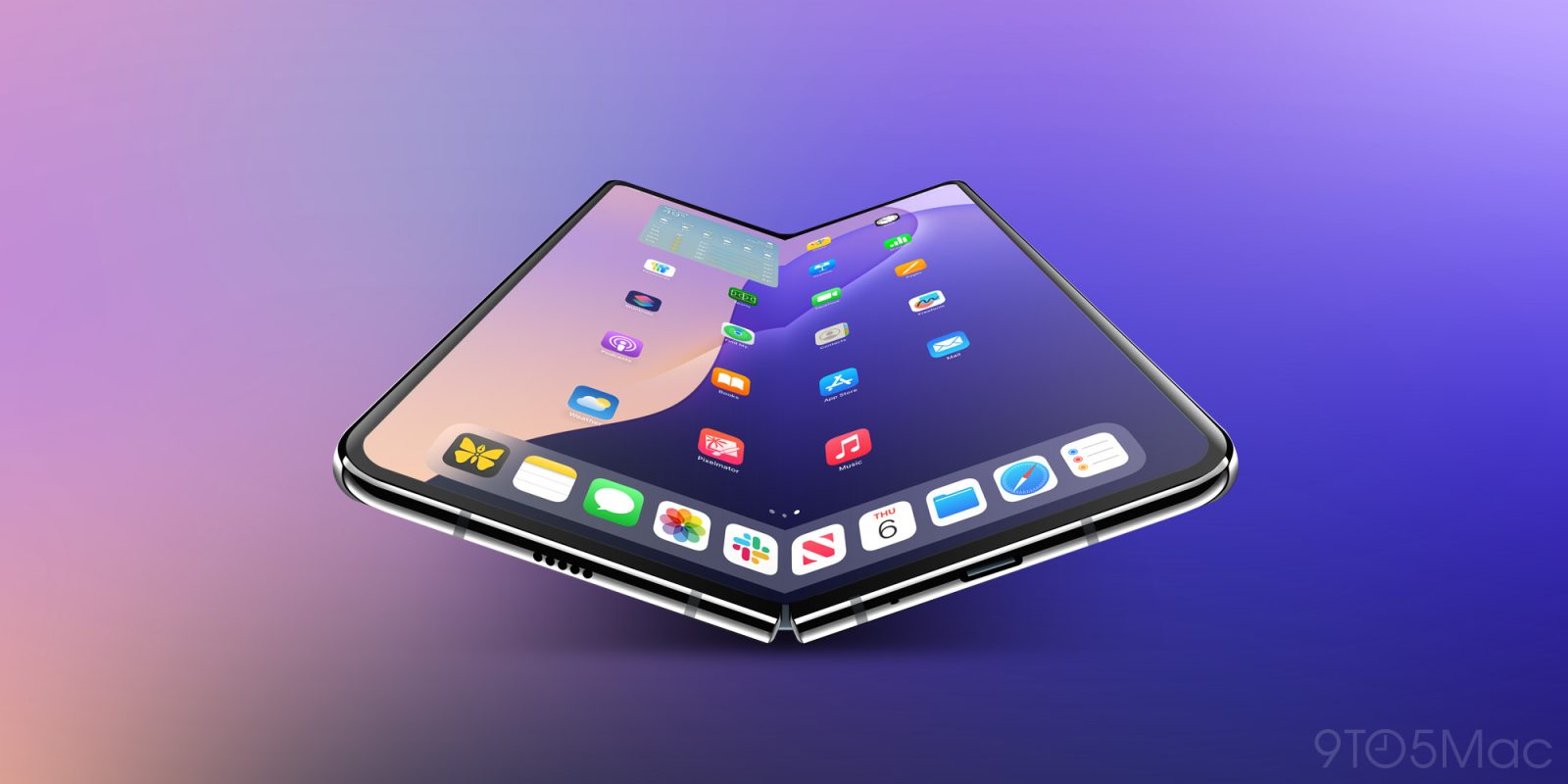
The iPhone Air was arguably the biggest innovation in iPhone design since the iPhone X. The iPhone Fold we’re expecting to see launch next year will be an even bigger shift.
All the signs point to the iPhone Fold being the best foldable smartphone launched to date, but there is one big problem with it – and it’s almost the obvious one …
Apple is waiting eight years, but that’s fine
Apple famously doesn’t aim to be first to market with a new technology, but rather to be the best. The company watches and waits as other companies launch their products, learns from their mistakes, and then tries to launch the best possible implementation of the technology.
Even so, it has watched and waited for an extraordinarily long time when it comes to foldable smartphones. Samsung launched its first folding phone seven years ago, so Apple will be coming to the party some eight years later.
The wisdom of waiting very quickly became apparent when the launch of the first Galaxy Fold was an unmitigated disaster. The company started by shipping out review models, with tech writers finding major problems with it almost immediately. Samsung responded by delaying the launch and taking back review units. It subsequently cancelled customer orders for the device and refunded their money.
There were two issues with the design which persisted several generations later. First, a very visible and ugly crease in the center of the unfolded screen. Second, the display was very vulnerable to damage caused by dust and dirt being trapped during the fold.
It’s only this year that Apple was said to be satisfied with the display quality of iPhone fold prototypes after the company tasked its own engineers with eliminating the crease.
The price is the obvious problem
The most obvious problem with the iPhone fold is the likely price. It looks set to be around twice the price of an iPhone Pro model, with estimates of anything up to $2,500. The most recent of these is well toward the upper end of the range.
That’s expensive even by the standards of Android folding phones, which are themselves fairly eye-wateringly priced. Given that buyers seemed reluctant to pay a premium for the sleek design of the iPhone Air, that raises obvious questions about how many would be willing to fork out well over $2,000 to buy the iPhone Fold.
Indeed, this would seem to put it into Vision Pro territory; that is, likely to sell only to the most enthusiastic of early adopters. But that is not in itself what I see as the biggest problem here.
The bigger issue
Price alone is the obvious problem, but the company does have a generally good track record at separating well-heeled customers from their cash. For me, the biggest issue here is the combination of price and longevity.
I’ll pay a lot for a well-specced MacBook Pro because I expect to keep it five years or so. (There was a period when I didn’t, but Apple has since solved this by allowing AppleCare policies to be renewed indefinitely. Additionally, the launch of the first Apple Silicon model was, of course, irresistible – but I’m now back on track to get at least five years out of my current model.)
But while there are some who keep their iPhones for five years or more, that’s relatively unusual. Certainly among 9to5Mac readers, it’s more common to replace our iPhone every one to two years.
Top comment by Kris
"But while there are some who keep their iPhones for five years or more, that’s relatively unusual. Certainly among 9to5Mac readers, it’s more common to replace our iPhone every one to two years."
Regular reader, 13 mini here, I'll keep using this until it no longer supports the latest iOS version. Unless Apple releases the next mini first (which is unlikely).
That in itself isn’t necessarily a deal breaker. Premium Apple products do hold their value well, so if you were to upgrade a MacBook two years later, the resale price would pay for a decent chunk of a new purchase. However, I very much doubt that will be the case for the iPhone Fold.
If anything, the manufacturing cost of folding phones will fall very rapidly over the next few years, with purchase price likewise falling, and the resale value of a 2026 model will quickly fall to a fraction of the purchase price. Anyone buying a first-gen one is going to be faced with the choice of holding on to it for quite a few years in order to get their money’s worth, or taking a very hefty financial hit in order to upgrade to a new model a couple of years later.
It’s this equation which I think poses the biggest challenge when it comes to persuading people to buy the first-gen iPhone Fold.
This is one of two (or more) reasons I expect my wallet to remain safe next year – how about yours? Please share your thoughts in the comments.
Highlighted accessories
- Official Apple Store on Amazon
- Apple 40W Dynamic Power Adapter for iPhone 17
- Official Apple iPhone Air cases and bumpers
- iPhone Air MagSafe Battery
- Official iPhone Air case
- Official iPhone 17 cases
- Official iPhone 17 Pro cases and Pro Max cases


FTC: We use income earning auto affiliate links. More.





Comments