
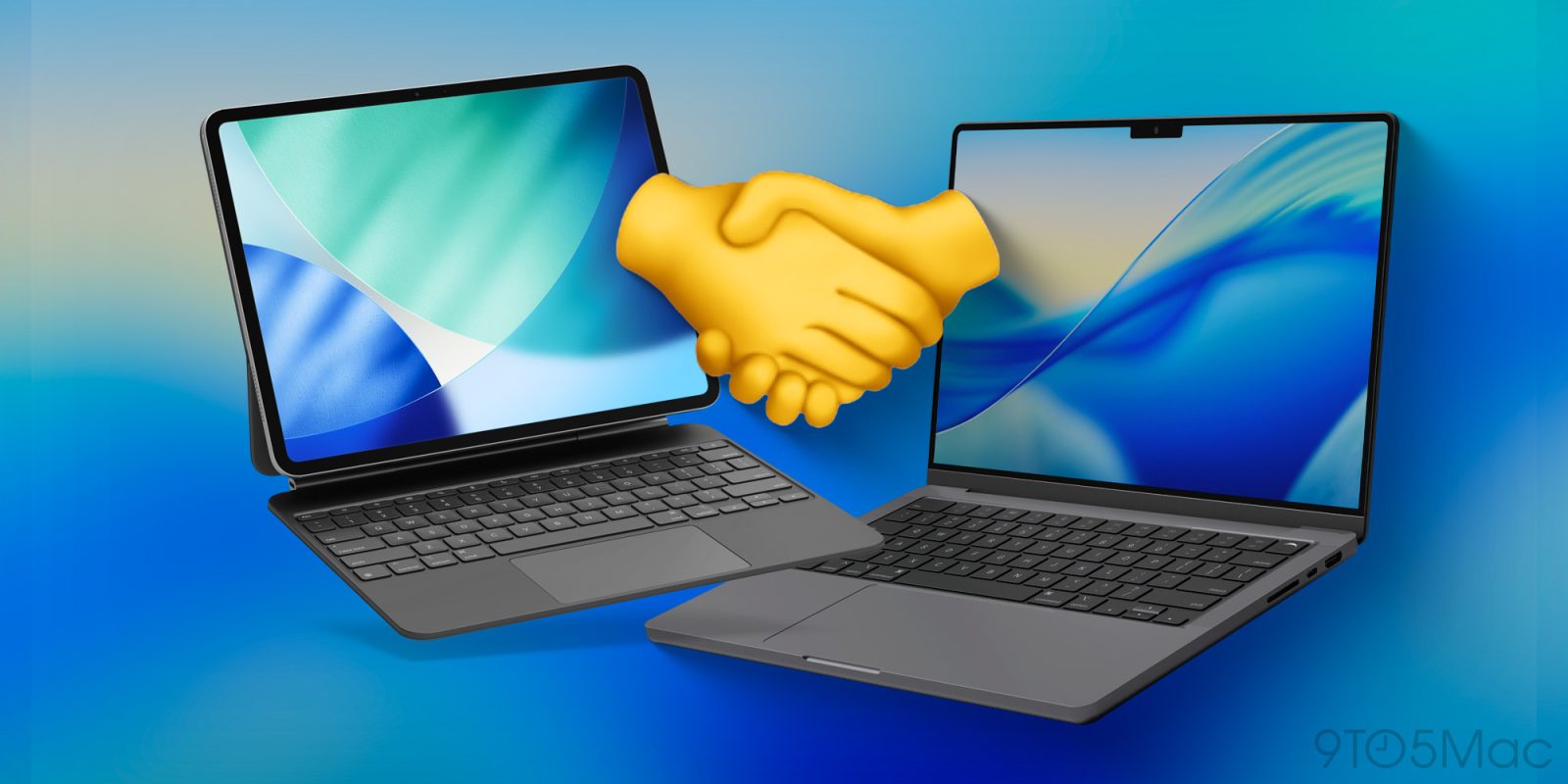
I have been a hardcore iPad user for almost a decade now. I have used it as my main computer and dealt with all the ups and downs. But one of the biggest misconceptions about the iPad is that it is trying to compete with the MacBook when, in reality, they were built to work in tandem. It is not until you have them side by side that you start to see the magic and power that is the Apple walled garden. Features like Universal Control, Sidecar, Handoff, and continuity tools create “aha” moments that genuinely change how you work. So I wanted to put a list together of some of those amazing magic ecosystem moments that iPadOS and MacOS give you together.
Be sure to check out our most recent video, which gives you a first-hand look at some of the best ecosystem moments out there today.
Thanks to Paperlike for supporting 9to5Mac on YouTube, check them out today.
Sidecar
Sidecar is one of the more popular features that you get when you combine an iPad and a MacBook. This feature turns your iPad into a portable external display for your Mac. You are able to treat your iPad as an extended display or mirror the current display on your Mac. It even enables you to use the Apple Pencil in a macOS environment for certain situations, which is awesome. Here is how to turn it on:
- Make sure both devices are on the same Apple ID, wifi, have Bluetooth on, and Handoff enabled
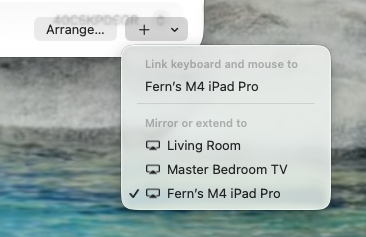
- On the Mac, go to System Settings > Displays > Add Display > Mirror or Extend to iPad
- To adjust the iPad display position, tap on the Arrange button and set it where you want it
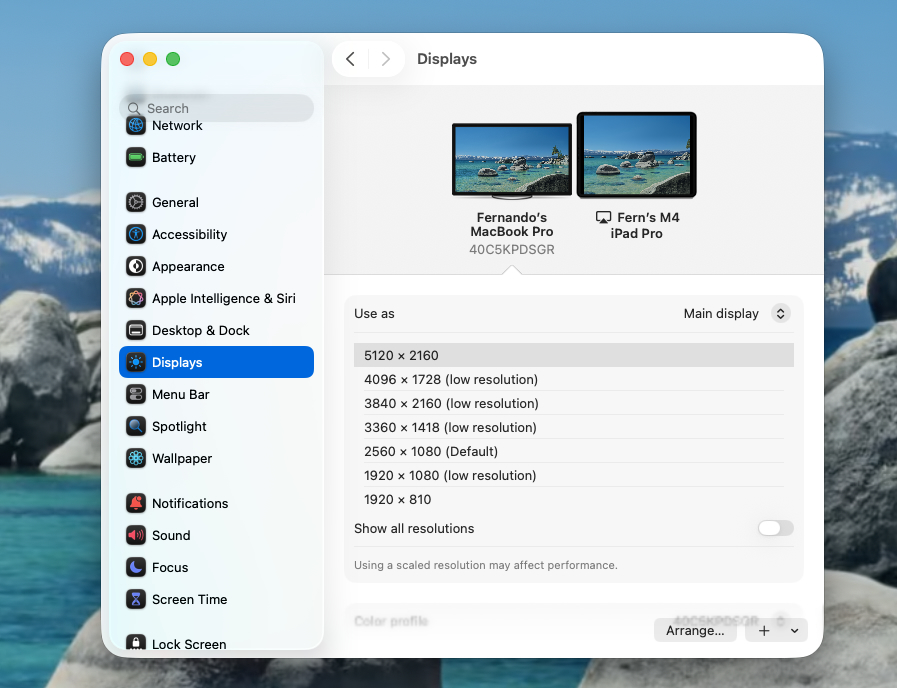
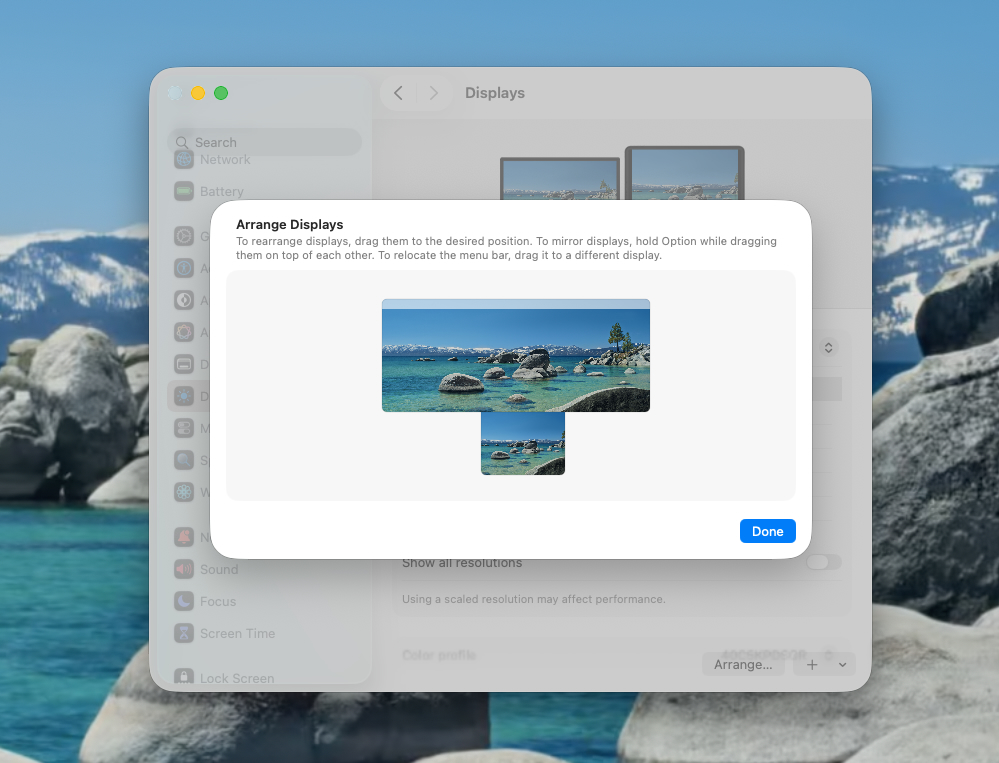
This is one of the easiest and most justifiable ways to use your iPad in tandem with your MacBook. People spend $250 to even $1000 just for an external portable display, so I would argue you should just buy an iPad Air for $499 and use that as a portable display that also happens to be an iPad! I have been using my iPad Pro as a reference display in Final Cut Pro, and it’s been working masterfully.
Universal Control
Using your iPad as an external display makes sense, but what if you wanted to use your iPad as an iPad but use the same keyboard and mouse between your iPad and Mac without needing to continuously change Bluetooth connections? That is exactly what universal control is. Universal Control allows you to use a single keyboard and mouse or trackpad to control both your Mac and your iPad seamlessly. It genuinely feels like you’re moving between two screens on the same computer, even though they’re separate devices. You can even drag and drop files directly between them. The process to enable it is nearly identical to Sidecar with one difference:
- Make sure both devices are on the same Apple ID, wifi, have Bluetooth on, and Handoff enabled
- On the Mac, go to System Settings > Displays > Add Display > Link keyboard and mouse to iPad
- To adjust the iPad display position, tap on the Arrange button and set it where you want it
I also use this alongside my Mac when I am editing images in Affinity Photo on the iPad. I will create my image, then drag it from my iPad to my Mac and use it as I need to use it. No need to transfer the file over, no Airdrop, no storage gymnastics. Just drag it from your iPad to your Mac and vice versa!
Screenshot edits
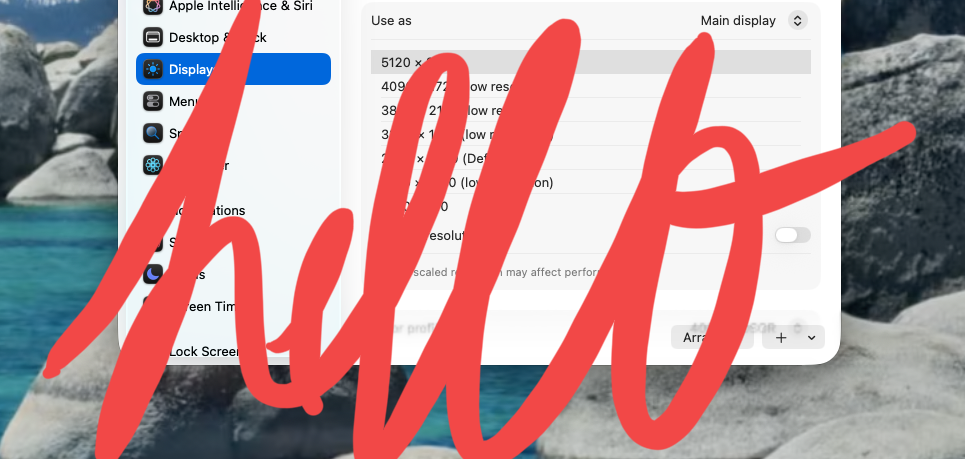
This is one of my most used and slept on features. When you take a screenshot on your Mac you are able to annotate it directly on the Mac. You can even “handwrite” on it using your trackpad or mouse but it is never that accurate. It would be much easier if you could just use your Apple Pencil to annotate the Mac screenshot, right? That is where continuity comes into play.
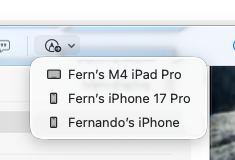
If you have your iPad around your Mac, you can actually use your iPad and Apple Pencil to make any edits to the screenshot. The screenshot will appear on your iPad, you make your edits, tap done and then the new edited screenshot appears as a file on your Mac desktop. It never actually sits on your iPad. Its magical. All you have to do is:
- Take a screenshot on your Mac
- Tap the pencil icon on the screenshot app
- Tap on the down arrow and select your iPad
- Make edits on iPad
- Tap done on iPad
- The edited image shows up on the Mac
Pure magic!

Univeral clipboard
Universal Clipboard allows you to copy text, images, or files on one Apple device and paste them onto another almost instantly. Once you get used to this, it becomes one of those features you can’t imagine living without. Here is how to use it:
- Same Apple ID on both devices
- Wi-Fi, Bluetooth, and Handoff enabled
- Copy content on one device
- Paste on the other device within a few seconds
This is great for copying links, text, notes, small images, and even video if you need to. This will also work with your iPhone, of course, but it works so well between your Mac and your iPad. Just copy one of them and paste it onto the other.
Handoff
Handoff allows you to start working in an app on one device and continue exactly where you left off on another. Safari, Notes, Mail, and many Apple apps support this, and it helps your workflow feel continuous rather than segmented across devices. Here is how it works:
- Enable Handoff on both devices
- Open a supported app on one device
- Look for the app icon in the Dock or app switcher on the other device
- Tap to continue where you left off
For example, if you are using the Notes app on your Mac and have your iPad nearby, you will see the Notes app icon appear in your iPad’s dock with a little computer badge. If you tap on that Notes App icon, it will bring you to the exact note and position you were in on your Mac. This helps reduce the friction and time it takes to find the note you had started on your Mac. This is an extremely useful feature.
Final thoughts
There are still plenty of other ecosystem moments that I mention in our video that are worth checking out. The combination of Mac and iPad is something that no other company has. Once you start using tools like Universal Control, Sidecar, and Handoff regularly, the devices stop feeling separate and start feeling like one system that adapts to whatever you’re trying to accomplish.
The best part is that you don’t need the best iPad Pro or MacBook Pro to experience this ecosystem advantage. Even entry-level models unlock most of the same functionality. You could get a Mac mini or MacBook Air and pair that with an entry-level iPad and still get all the same functions I mentioned above.
What do you think? What are some of your favorite Apple ecosystem moments? Do you use any of the features I mentioned above?
Best Apple deals
- Best iPad screen protector
- iPad Air only $489 (Normally $599)
- iPad only $329 (Normally $349)
- MacBook Air only $899 (Normally $999)
- Mac mini only $569 (Normally $599)
- MacBook Pro Only $1449 (Normally $1599)


FTC: We use income earning auto affiliate links. More.


Comments