
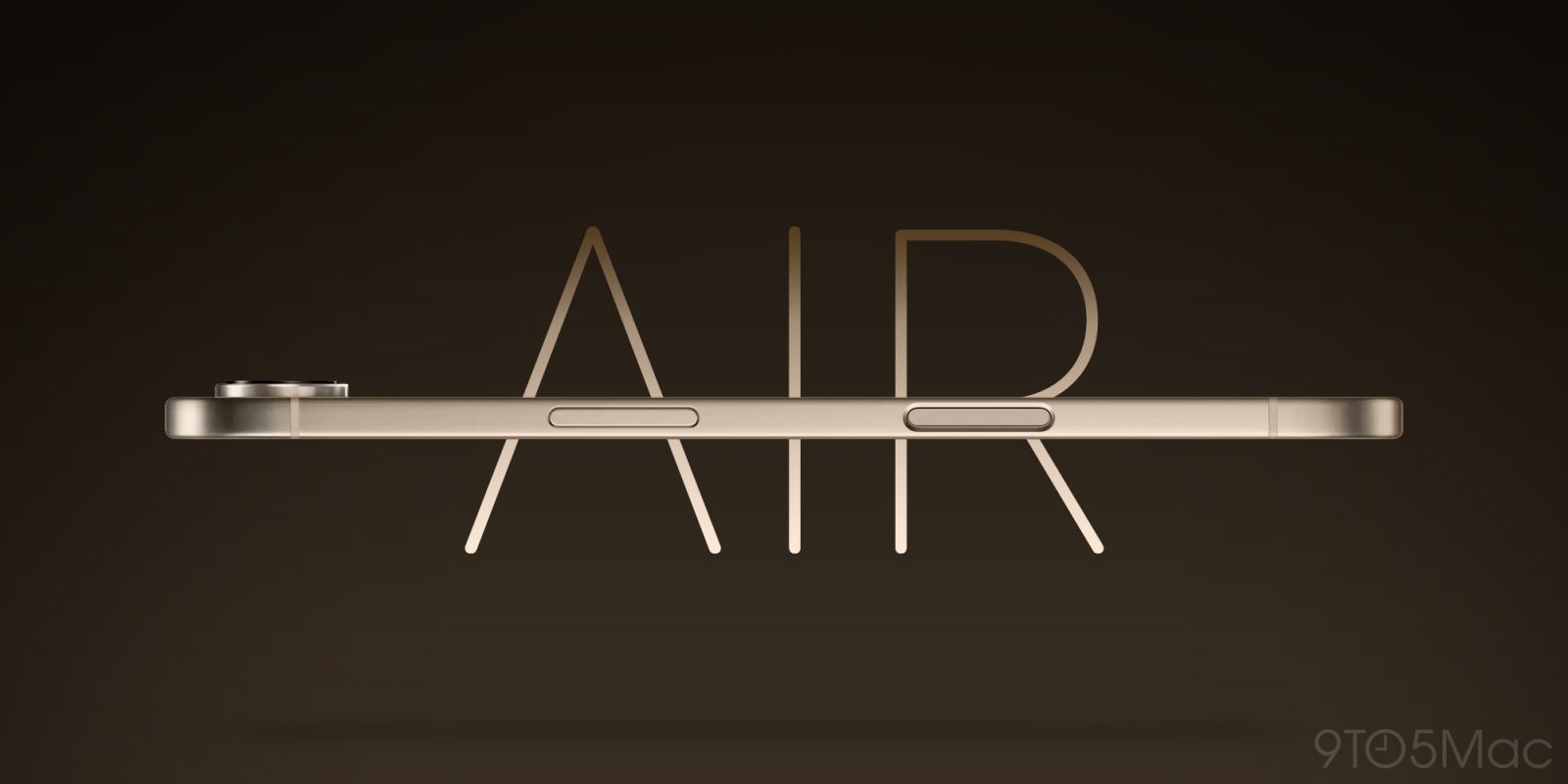
At next week’s ‘Awe Dropping’ Apple Event, Apple will release the iPhone 17 lineup. One of the most noteworthy models this year will be an entirely new one: the iPhone 17 Air. It’s going to be an ultra-thin iPhone, and it’s set to replace the iPhone 16 Plus entirely. That being said, will this third attempt at making a fourth iPhone model actually pan out this time?
A continually growing iPhone lineup
Apple has slowly been growing the size of its iPhone lineup. It started off with one a year, then became two a year in 2014 with the introduction of the iPhone 6 Plus. You could even technically say they started doing two iPhones in 2013 with the iPhone 5c, though that’s up for debate since the model didn’t stick.
Things kicked up another notch in 2017 with the announcement of the iPhone X, since that introduced two new things: a third annual iPhone launch, as well as true premium and non-premium segmentation. We now had the standard iPhone 8 and 8 Plus, and then the premium iPhone X.
It pivoted slightly in 2018 with the iPhone XS, XS Max, and XR – since it then became two premium iPhones and one non-premium iPhone. In 2019, Apple introduced the ‘Pro’ iPhone branding, but the semantics stayed the same.
In 2020, things changed – with the introduction of the iPhone 12 mini. This marked the beginning of Apple trying to invent a fourth mainstream iPhone.
Apple’s attempts to create a fourth flagship iPhone
I’ve done a bit of a history lesson thus far, so I’ll keep this section brief. Apple introduced the iPhone 12 mini in 2020, killed the mini off two years later due to apparently having poor sales, then introduced the iPhone 14 Plus. The ‘Plus’ iPhone lasted three years, so a bit longer than the mini, but it’s still set to be replaced.
Now, iPhone 17 Air does feel a lot more primed for success than the iPhone mini and iPhone Plus. It’s a remarkably different phone, and maybe that’ll attract more consumers. Apple’s suppliers don’t have high hopes for the iPhone Air, though. Currently, roughly 10% of manufacturing volume is going towards the new ultra-thin model.
For reference, iPhone mini and iPhone Plus both made up roughly 10% of iPhone sales volume, so it doesn’t sound like suppliers anticipate iPhone Air to do much better than prior.
I could understand why Apple’s suppliers are pessimistic on the new iPhone Air. It’s likely to have weak battery life and come in at around $900. With the battery life compromise, the cool factor of having an ultra-thin phone might not win consumers over – especially when they could pay $100 less for a standard iPhone 17 or $100-200 more for an iPhone 17 Pro.
Ultimately, people seem to really like the standard phone and the two pros.
Wrap up
We’ll have to see how things pan out – but it certainly feels like the four flagship iPhone strategy isn’t working out for Apple. At least, if their suppliers sales estimates are to be believed.
In the past, I’ve floated the idea of the iPhone mini returning as part of the ‘e’ iPhone lineup. I think positioning it right below the iPhone 16e, for $499, would sell quite favorably. That isn’t necessarily related to the four flagship iPhone story, though. I just think it’d be a nice way of honoring the small phone market.
Top comment by Blurft
We’ll have to see how things pan out – but it certainly feels like the four flagship iPhone strategy isn’t working out for Apple.
That's not what "flagship" means.
Aside from the obvious naval definition, a flagship is "the best or most important thing owned or produced by a particular organization." In Apple's case that is the iPhone Pro line - and we can consider the Pro and Pro Max to be the same "thing" because they are functionally identical, just different sizes.
What this author seems to mean is "four iPhone models."
I also question the assertion that it "isn't working out for Apple," because Apple's sales seem to be doing pretty well under the current product offerings. Consumers have the option of a budget phone, a midrange phone in small or large, and a premium phone in small or large. The only thing I would change is to make a large budget phone - an iPhone 16e Plus - for consistency (and for older adults who want bare-bones and big-font).
Apple is replacing the Plus with the Air not because the Plus is poorly received or the current strategy is bad, but because they see an opportunity to offer less product - less battery, less camera - while spinning it as "more advanced" because it's thin. It's just shrinkflation. Simple as that.
Hopefully the iPhone 17 Air turns things arounds, and Apple can finally have a solid fourth flagship iPhone in the lineup. If it doesn’t work out, I sort of feel like we won’t see another swing from Apple, at least in terms of a standard glass sandwich phone. A foldable iPhone may prove to be a success.
What do you think about the iPhone 17 Air? Will it be Apple’s next big hit or yet another insignificant seller? Let us know your thoughts in the comments.
Get into the world of audiobooks with Audible’s vast catalog, even if you’ve already subscribed in the past. It’s just $0.99/month for your first 3 months – for a limited time.
Follow Michael: X/Twitter, Bluesky, Instagram


FTC: We use income earning auto affiliate links. More.



Comments