
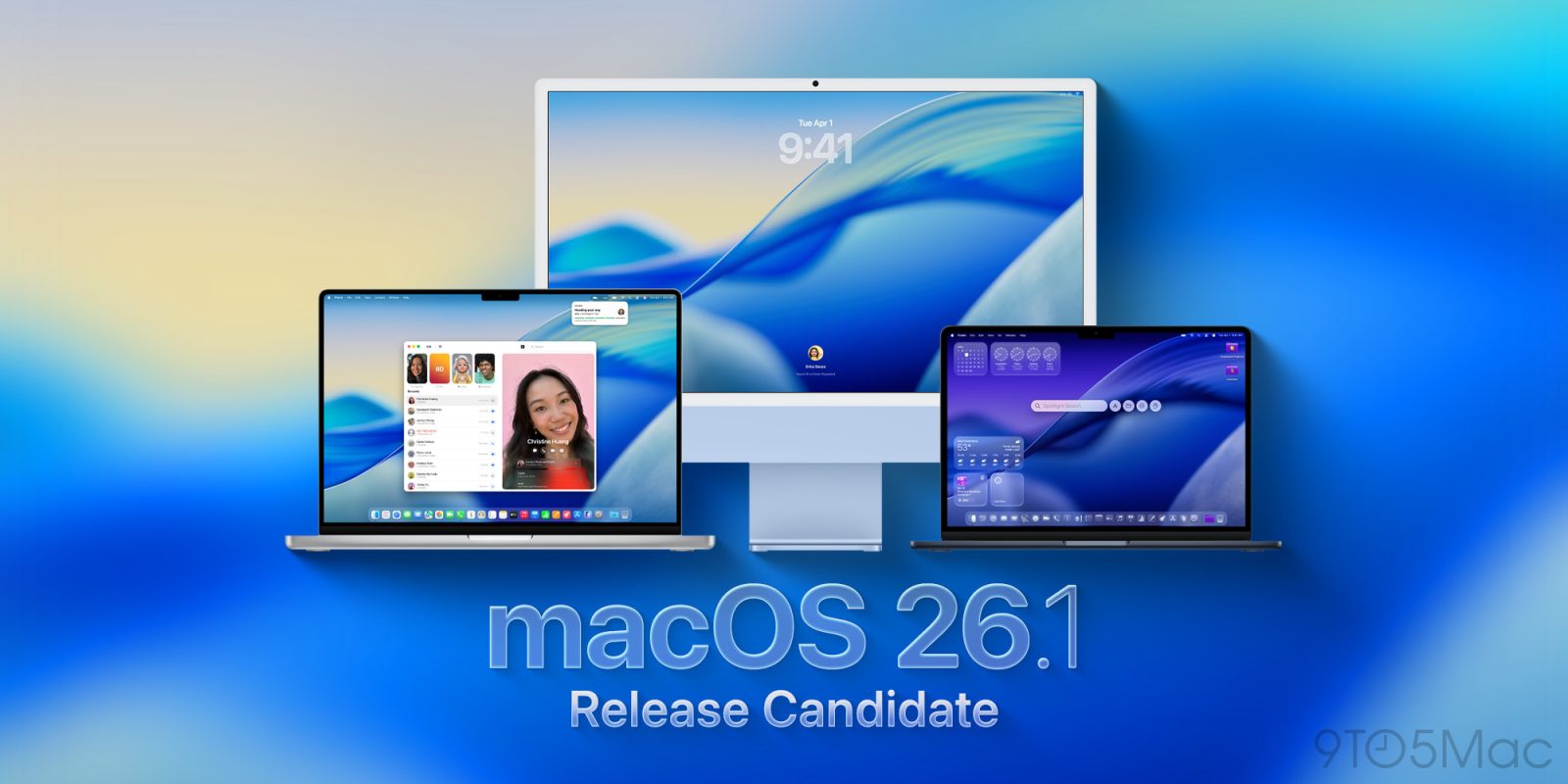
Apple is rolling out the release candidate version of macOS 26.1 for developers, as well as the public beta, ahead of the upcoming public launch. Here’s what to expect.
AI groundwork, new icons, and Tinted Liquid Glass
Since the first beta, Apple included a few changes under the hood to get the system ready for MCP support, as well as to add more third-party AI services than ChatGPT on Image Playground. These features have not yet been announced officially.
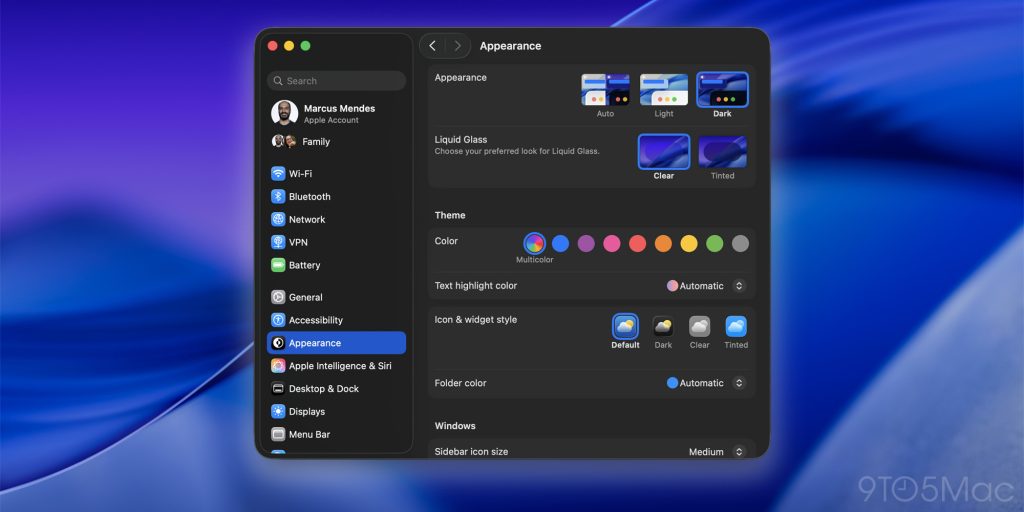
Apple also added a toggle that lets users choose to keep the current Liquid Glass design, or to have a muted version, called Tinted, which increases contrast.
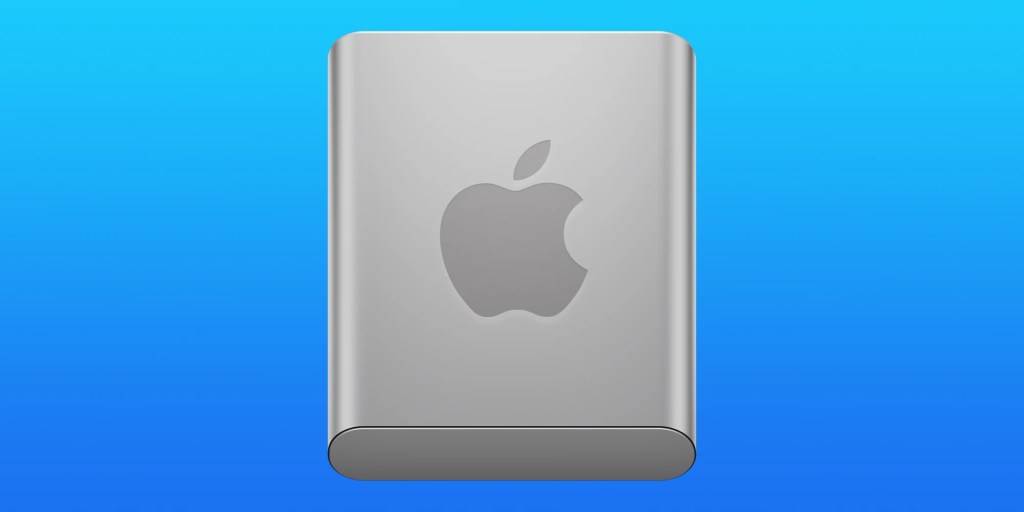
Apple also changed once again the Macintosh HD icon, following criticism of the overhauled version introduced on macOS 26.
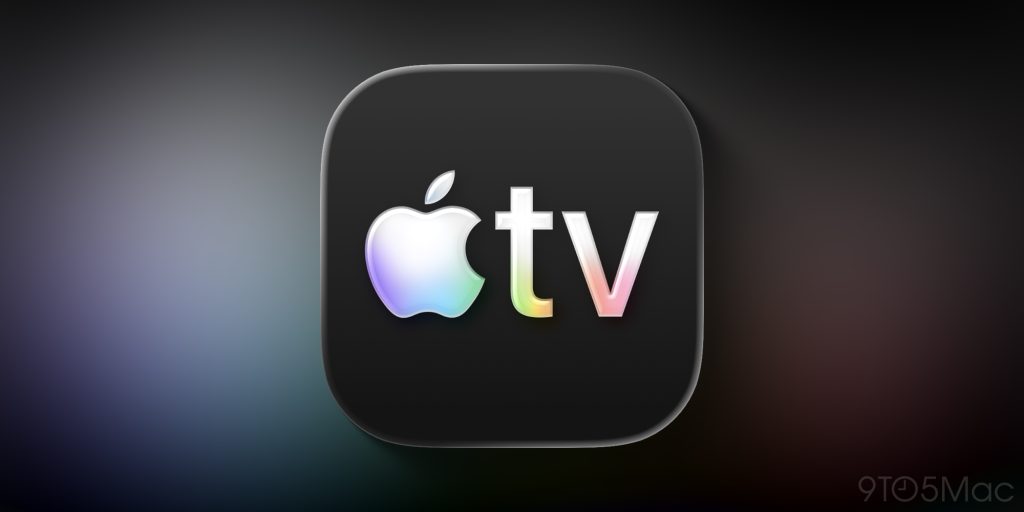
macOS 26.1 also introduces the new Apple TV icon, and includes references to a second-generation Apple Pro Display XDR.
We’re digging through the new release and will report back if we find anything noteworthy.
How to install the new beta
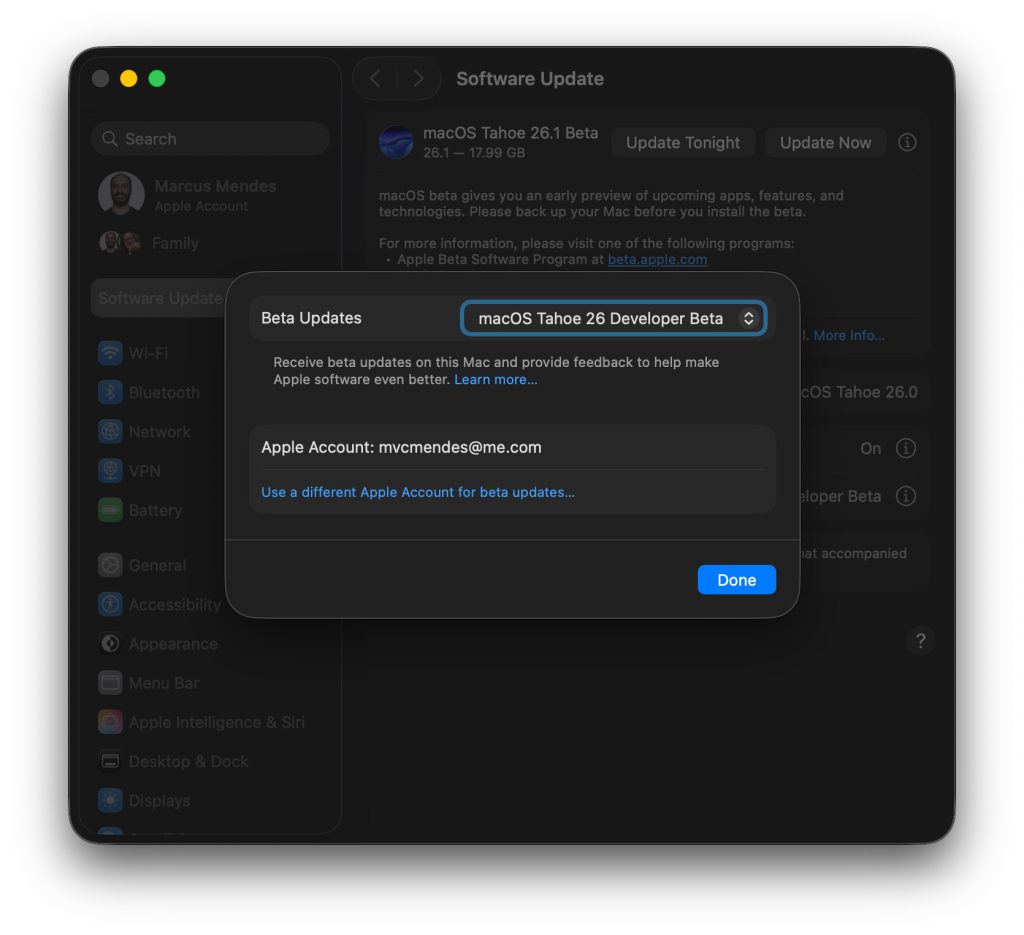
Here’s how to install the macOS Tahoe 26.1 RC:
- Backup your Mac
- Open System Settings
- Go to General ⇾ Software Update
- Click the ‘i’ icon next to Beta Updates
- From the dropdown menu in the top-right, select the macOS Developer Tahoe Beta
- Hit ‘Done’
Did you spot any changes in today’s beta? Let us know in the comments.
Accessory deals on Amazon
- Apple AirTag 4 Pack
- Beats USB-C to USB-C Woven Short Cable
- Logitech MX Master 4
- AirPods Pro 3
- Wireless CarPlay adapter
- iPhone Air Ultraslim Magsafe Power Bank


FTC: We use income earning auto affiliate links. More.



Comments