It turns out that his hobby 9to5Mac blog was always his favorite and in 2011 he went full time adding his Fortune Google followers to 9to5Google and adding the style and commerce component 9to5Toys gear and deals site. In 2013, Weintraub bought one of the Tesla’s first Model S EVs off the assembly line and so began his love affair with the Electric Vehicle and green energy which in 2014 turned into electrek.
In 2018, DroneDJ was born to cover the burgeoning world of drones and UAV’s led by China’s DJI.
From 1997-2007, Weintraub was a Global IT director and Web Developer for a number of companies with stints at multimedia and branding agencies in Paris, Los Angeles, New York, Sydney, Hong Kong, Madrid and London before becoming a publisher/blogger.
Seth received a bachelors degree in Industrial and Systems Engineering from the University of Southern California with a minor in Multimedia and Creative Technology in 1997. In 2004, he received a Masters from NYU’s Tisch School of the Art’s ITP program.
Hobbies: Weintraub is a licensed single engine private pilot, certified open water scuba diver and spent over a year traveling to 60 cities in 23 countries. Whatever free time exists is now guaranteed to his lovely wife and two amazing sons.
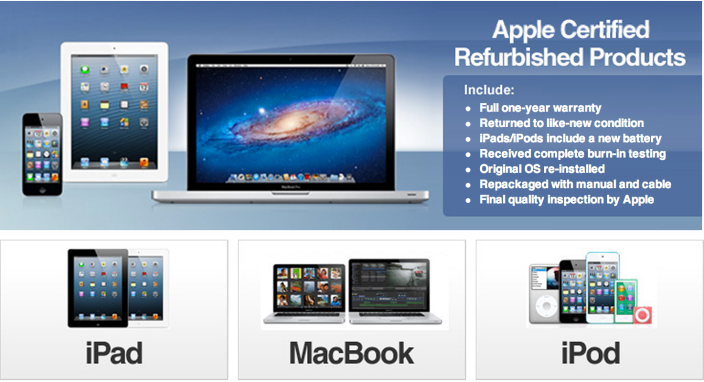
We reported in November that a representative of eBay told us Apple was running the store, possibly through intermediaries. An eBay spokesperson declined to refute the information at the time. An Apple spokesperson also declined to comment.
As part of a wide-ranging music industry story by Greg Sandoval at The Verge, details on Apple’s upcoming streaming radio project seem to be clearing up.
Much has been written about Apple’s plan to launch a Pandora-esque service this year. Now multiple music industry insiders have told The Verge that significant progress has been made in the talks with two of the top labels: Universal and Warner. One of the sources said “iRadio is coming. There’s no doubt about it anymore.” Apple is pushing hard for a summertime launch.
Next came keyboard attachments – two of my favorites are from Logitech and Zagg – but they don’t offer much protection if you drop your iPad (in fact you may notice a slight crack at the top right of my screen there *ahem).
I had a chance to put the two up against each other to find out which was the best and found out that it just isn’t that simple… Expand Expanding Close
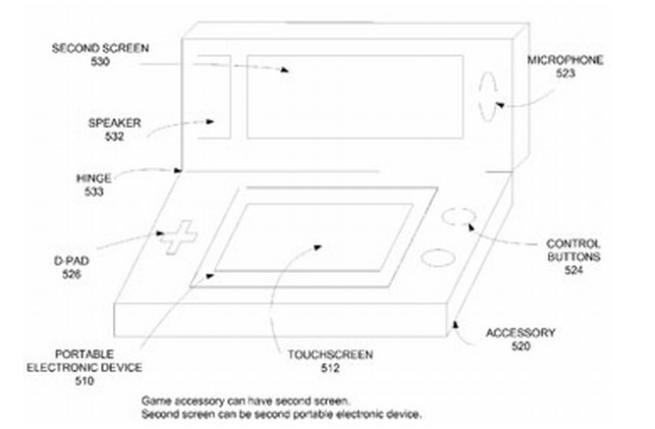
Apple’s Nintendo-DS like remote concept from 2010 patent
Pocketgamertoday says it has heard word from mobile game developers that Apple has operated secret meetings at GDC and discussing a game controller.
Long rumoured – and hoped for – GDC 2013 has finally provided confirmation that Apple will release its own dedicated game controller. Of course, there’s no official word yet, but Apple has been active during the conference talking to developers about its plans and ensuring plenty of games will support the joypad at launch.It’s been operating a meeting room at the show, albeit booked under a pseudonym company name to avoid media attention.However, speaking anonymously, multiple developer sources have confirmed the news to PocketGamer.biz
While this report sounds a bit sketchy with details, it would be interesting to see what Apple could bring to the table in the gaming space. Pocketgamer previously reported that Apple would announce a $19.99 store for premium games that never panned out.
I know of an internal Apple project to bring a physical controller to market, but whether or not it will ever see the light of day remains to be seen. As smartphones and tablets come close to equalling the performance of current game consoles, I feel like the controller problem must be addressed.
April is almost here and that means Opening Day is almost upon us. Getting its affairs in order, MLB issued two updates today. MLB.com At Bat 6.1.0 was released with the following updates
• Multi-platform live audio access for At Bat 13 subscribers (portable to Mac/PC with a valid MLB.com account)
• Universal support for At Bat 13 subscribers, accessible on iPhone, iPad and other supported smartphones and tablets
• New video section featuring more highlights and search (iPad)
• Sortable batting, pitching and fielding statistics (iPad)
• Re-designed individual team pages (iPhone)
• Updated news section interface (iPhone)
• Classic games library featuring more than 60 historic games dating back to 1952 (iPhone and iPad)
• Re-architected navigations (iPhone and iPad)
• Additional push notification options (iPhone & iPad)
• Closed captioning availability for live video (iPhone and iPad)
Meanwhile MLB.com At The Park gets Passbook integration for digital ticket delivery and storage for select clubs as well as other updates:
• Re-architected My Journal section
• Manually enter all of your ballpark visits dating back to 2005
• Upload and share personal photos from your ballpark visits, dating back to 2005
• View team statistics and watch video highlights from games attended
• Ballpark and player entrance music
• Social media clubhouse, including social rewards for select clubs
• Updated tickets section, featuring special offers by club
• Seat and experience upgrade functionality at select ballparks*
• Passbook integration for digital ticket delivery and storage (select clubs only)
• Re-designed user interface
T-Mobile tipped us to its grand plan to become the ‘Uncarrier’ at CES in January 2013. The idea is to radically simplify the phone plan purchasing experience by cutting away most complexities of the carrier agreements. The effort was very forward thinking and Apple-like in that sense, and the results are certainly a big change for the industry.
http://www.youtube.com/watch?v=7Zv5wdX1zp0
You basically start with a $50 a month unlimited data plan and go from there. T-Mobile will throttle you after 500MB, unless you give them $10 or $20 more a month, which gives you 2GB or unlimited before un-throttling. Family plans are $30 for the first extra device and $10 for each one thereafter. I imagine most normals will pay $50 a month. That’s a lot less than the typical iPhone user pays.
.
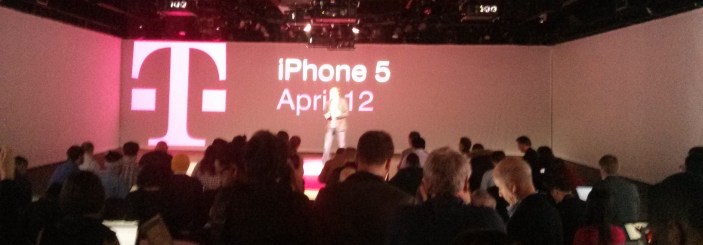
But, let’s not kid ourselves on what’s motivating T-Mobile here. It has been losing customers like crazy and that’s largely due to its failure to carry the iPhone. The iPhone represents well over half of all smartphones on every other big U.S. carrier, and it will likely dominate T-Mobile over the next few years. T-Mobile said that even though it won’t officially support the iPhone until April 12, it currently has over 2.1 million iPhones on the network. That’s about to skyrocket…
CEO John Legere comes from over a decade at Global Crossing, an IP Data backbone firm, so cutting through all the B.S. and delivering fat delicious packets of data is his specialty.
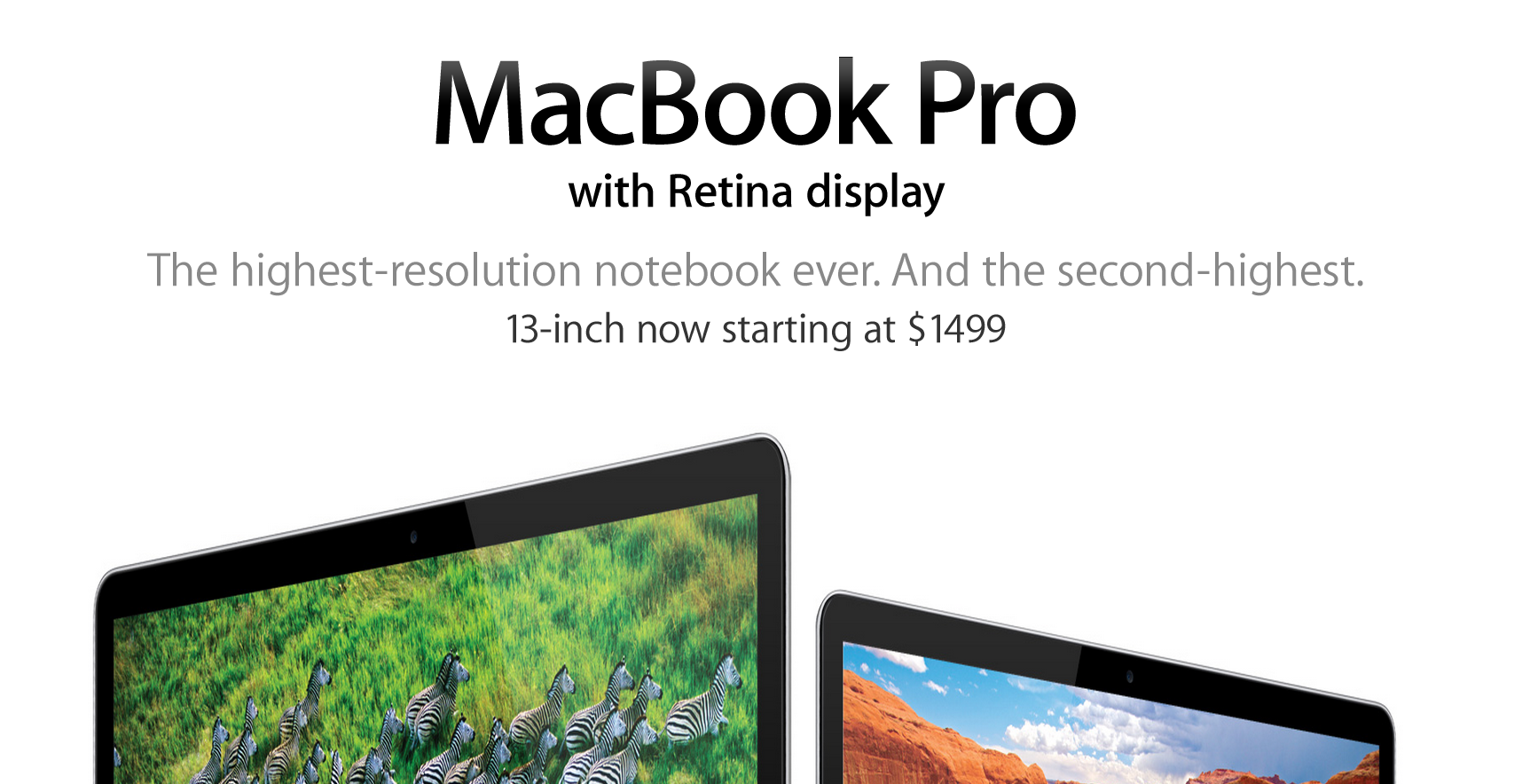
When the 13-inch Retina MacBook Pro arrived, it was the second-highest resolution notebook ‘ever’ even though its 2,560-by-1,600 screen was a relatively diminutive 13.3 inches diagonally. The highest resolution laptop was of course on its big brother, the 15-inch Retina MacBook Pro. Apple made note of it with the tagline on its website: “The highest-resolution notebook ever. And the second highest.”
Unfortunately for the speeds and feeds crowd, Google came along last month and introduced the 12.75-inch screen Chromebook Pixel (review) with a 2,560-by-1,700 display. Say what you will about having a high-end notebook that is exclusively a browser, Google made a higher resolution display than Apple’s 13-incher… and added touch to it.
As of this week, Apple now has a new tagline on its MacBook Pro page that states, “High performance has never been so well defined”(image below). This change reflects the outdated nature of the previous tagline. There is also another copy change below because of the Pixel.
Chief Executive Tim Cook’s third big hire after the short-lived Mark Papermaster (during Steve Jobs’ second leave) and unpopular John Browett is former Adobe CTO and Flash advocate Kevin Lynch, who will report to the SVP of Technologies Bob Mansfield. It would seem Lynch is pretty set up because Mansfield is set to retire next year and Lynch carries the same VP of Technologies title.
The hire seems to be a very interesting choice, however.
Lynch is a long-time Adobe veteran who came over when the company purchased Macromedia in 2005, largely for its Flash technology. Interestingly, Apple SVP Phil Schiller was the Vice President of Product Marketing at Macromedia, Inc. from December 1995 to March 1997. Lynch served as President of Macromedia Products and then as General Manager of Web Publishing from February 1996 to June 2000. The two likely spent some time together, although it was admittedly a decade and a half ago. Still, the relationship seems to be cordial.
Excellent #WWDC today — including collaboration by Adobe and Apple on Photoshop for Retina. Thanks for the nice call out @pschiller
Andrew ‘weev’ Auernheimer was sentenced today for his role in the 2010 ‘hack’ of AT&T’s iPad database in which he and an accomplice brute forced a weakness in AT&T’s network to gain access to the names and other details of iPad owners on AT&T’s network. His security group, ‘Goatse’ (don’t Google it), then showed the information to Gawker. It published some of the more famous names in the records including entertainment stars, active duty Congressmen, and high-ranking military figures.
Although he seems to be a particularly unsavory character, his case has drawn a lot of attention because of the contention “that he did not illegally access a private server and he wasn’t able to gain a list of user passwords — which was confirmed during testimony.”
Designers typically present and visualize their ideas by photographing and Photoshopping or by printing and constructing mock-ups using paper and glue. Both of these are often time-consuming and take designers away from their main focus—designing. LiveSurface is a unique new image library of more than 350 specially constructed image templates that contain 3D surfaces. The pre-built images dramatically shorten the time it takes to create realistic representations of a design idea.
Design can be a tough sell to clients who often don’t know what they want until they see it, and designers often work in the void of the Illustrator Artboard and wait to test their designs on real-world surfaces and materials until later in the design process.
Joshua Distler, Apple alum and creator of LiveSurface, gave us a demo of Context, LiveSurface’s next-generation design tool. Context, now in beta, is a Mac desktop application that integrates with Adobe Illustrator via a plug-in. The application works with Illustrator to allow designers to visualize and present their ideas with just a few clicks… Expand Expanding Close
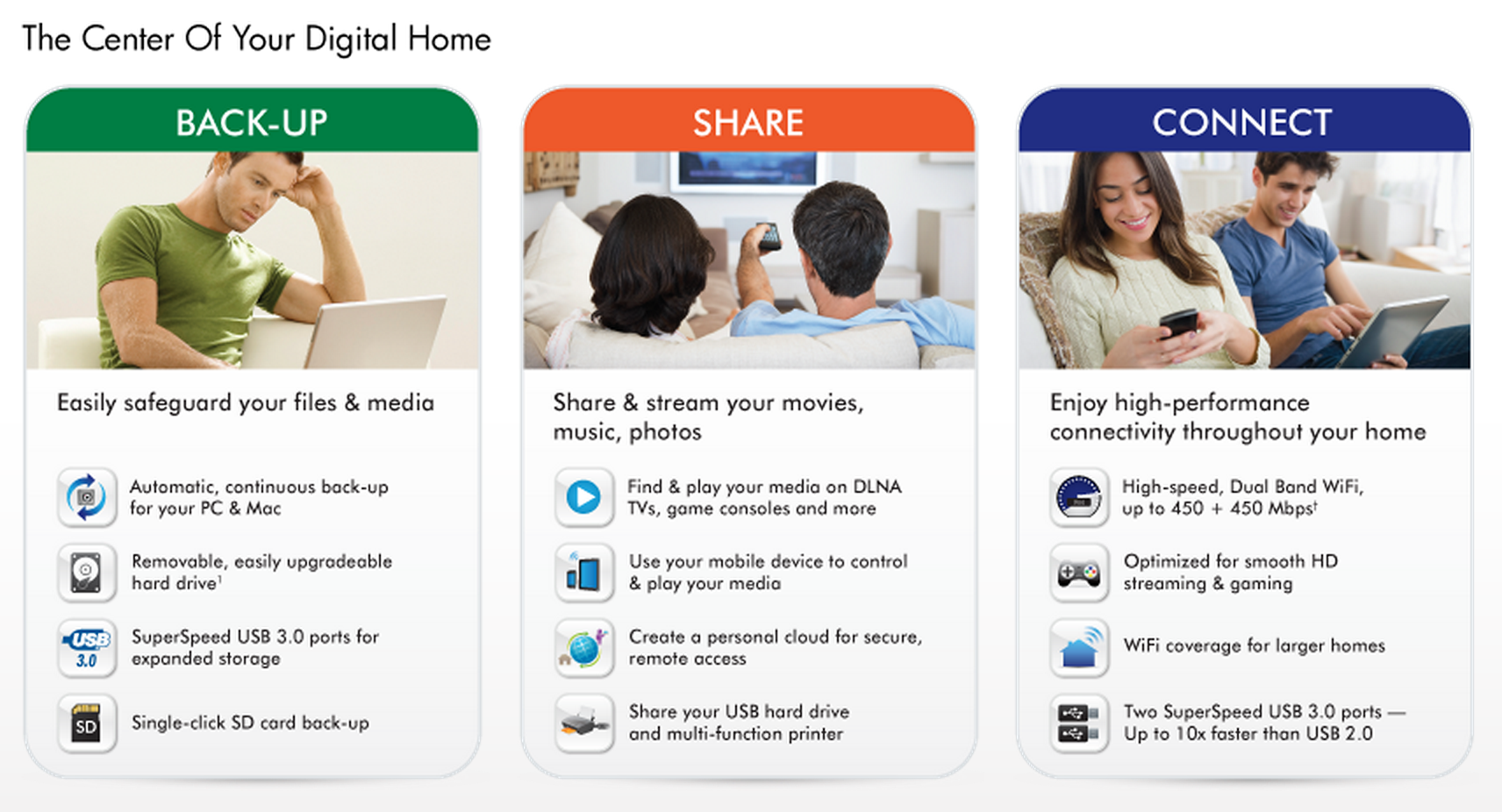
Apple’s Time Capsule network storage/wireless router is a fine device, but it often doesn’t offer all the flexibility people desire. For instance, my in-laws were after some of the functionality of a Time Capsule (back-up, fast wireless), but they also have a PC (along with a few Macs) and wanted DLNA storage for their Roku video player and some Cloud access to their files from both computers and iOS devices.
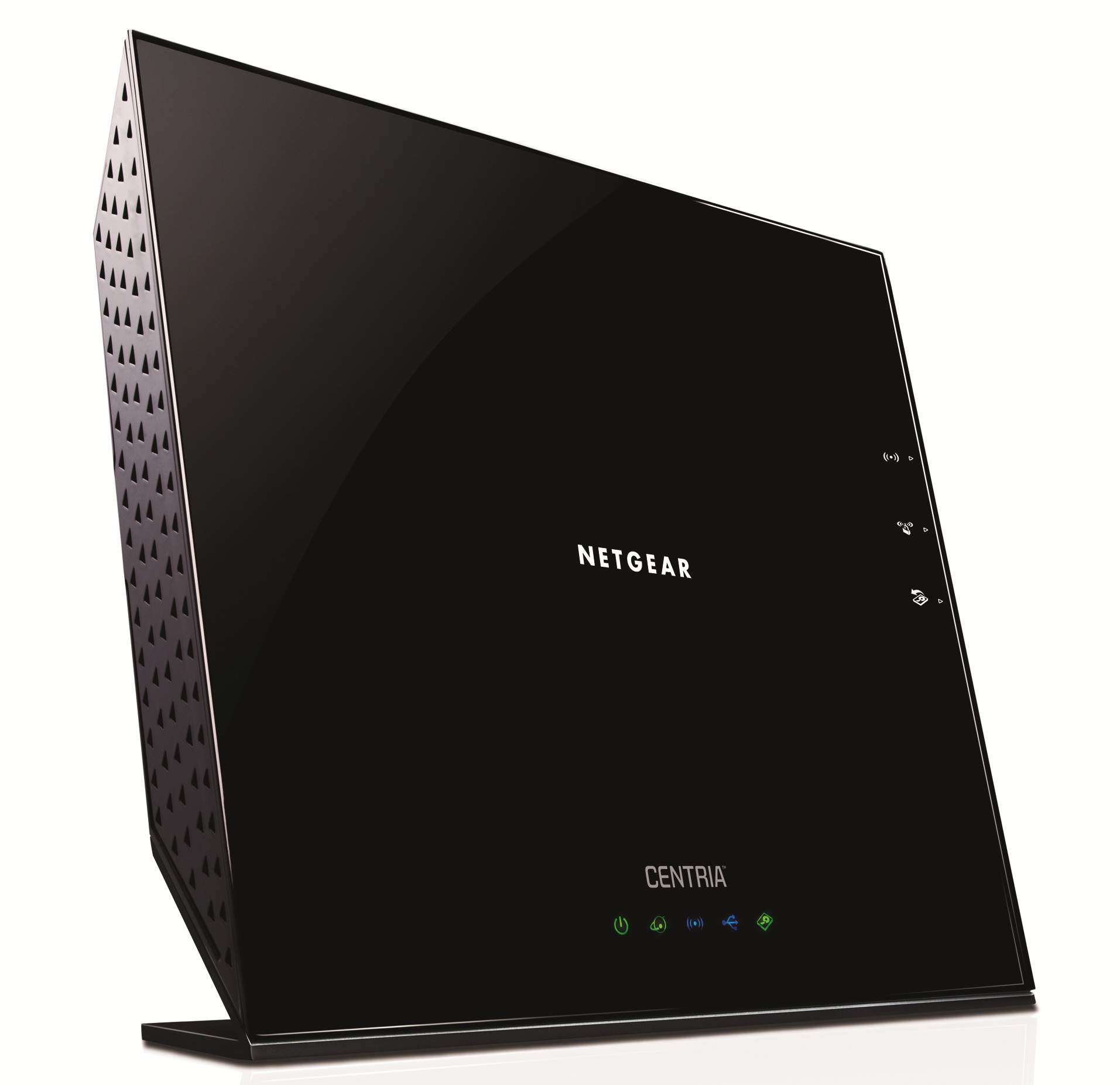
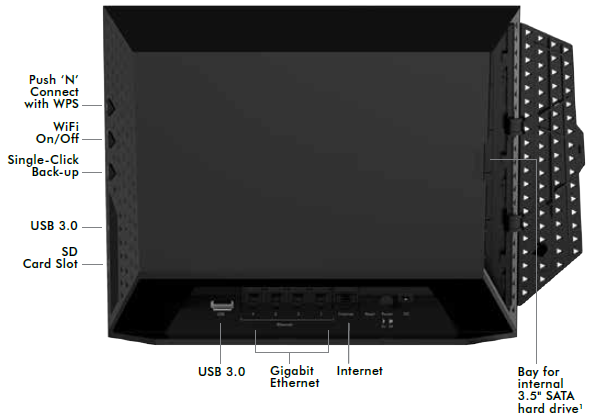
That’s where Netgear’s new Centria WNDR4700 comes in. Released last month and available in 2TB and $188 empty configurations, the Netgear Centria is a very nice looking Time Capsule replacement that can save a few bucks and add some missing capabilities. It comes with the same dual 802.11N radios and 4-port Gigabit Ethernet switch, but it adds two USB 3 ports compared to the Time Capsule’s single USB 2.0 port…
Setup isn’t Apple-easy, but it also isn’t hard. The hard drive comes formatted (if you get one without—formatting takes awhile and only goes up to 2TB internally at the moment). There is a setup ‘Genie’ that takes you through most of your wireless settings, including changing the passwords and setting up a Cloud account.
backside
Network Printing is one area where the Time Capsule handily beats the Centria. Netgear requires that you put a small utility on your PC/Mac client machines that must be active when you want to print, rather than printing to a typical print server-type configuration. The upside is that it makes printers AirPrint compatible.
Network speed is as good—if not better— than a recently tested Time Capsule, and I got a much better range unscientifically (out to the street in suburbia). Netgear also allows you to create separate networks for 5GHz and 2.4GHz and open and close guest networks at the same time.
A bonus feature is the easy SDCard backup. Inserting an SD card and pushing a button starts an automatic backup of the SD. Nice-to-have.
Time Machine updates over wireless and wired and both worked fine over about a week of testing. I haven’t had good luck with Time Machine backups in general, so I like to do manual backups every month or so.
The pitch
A small quibble: The fan/hard drive is significantly noisier than a Time Capsule—which is almost silent. Keep that in mind if this thing isn’t going to be living in a closet.
One area where the Centria beats Time Capsule is adding an external USB drive. The 10x USB 3 definitely shows up here and almost matches the internal drive when it comes to backup speed.
The Apps for both iOS and Android are rudimentary. You can download and play videos/pictures/audio from any Internet connection, but it isn’t nearly as robust as Synology’s DiskStation apps for instance. Here’s an iPad screenshot:
If you have PCs that you want to back up and share data, the Centria is definitely a bonus. It has automatic backups for PC users and better Windows-sharing options.
From a networking perspective, you have a lot more granular access to port forwarding and QoS than you have on a Time Capsule. Most people won’t find that important.
Wrap-up:
The Netgear Centria is a nice midrange wireless router/network attached-server option for Mac users and people in a mixed Mac/PC environment. The printing and setup complexity is easily outweighed by its much broader feature set. Things like faster USB 3 connections, SD Card access, easy hard drive upgrades, iOS app/printing, DLNA and Windows compatibility push it over the Time Capsule.
Today, the WSJ reports that Schiller has more tough words for the Android platform (which today saw a change in leadership). Beyond the 4X switching rate to iPhone vs to Android, he also said that Android users are often running old operating systems and that the fragmentation in the Android world was “plain and simple.”
He added that “Android is often given a free replacement for a feature phone and the experience isn’t as good as an iPhone.”
Mr. Schiller said the Android service suffers in part because different elements come from multiple companies, where Apple is responsible for all its mobile hardware and as well as its iOS operating system.
“When you take an Android device out of the box, you have to sign up to nine accounts with different vendors to get the experience iOS comes with,” he said. “They don’t work seamlessly together.”
Interesting words from Schiller ahead of the Galaxy S4 launch. On one hand the timing makes Apple seem defensive as the WSJ notes. On the other, most of these stats, while widely known for the most part, are indicative of Apple success.
Slickwraps sent us some of their awesome MacBook Pro covers (starting at $20) this month to give a test drive on our Retina MacBook Pro. These are basically hi-tech ‘stickers’ that you apply to your Apple device. Application is easy and bubbles and warps are easy to smooth out. What you see above is the result of about one minute of application of the ‘carbon fiber skin’. If I had spent a little more time, I probably could have aligned things exactly. These things are made to exactly fit Apple’s devices. Note that the stickers don’t cover up any of Apple’s mics, speakers, I/O ports or even the fans on the underside, yet give the MacBook Pro an entirely new, distinctive look.
These covers keep dust and scratches from the Aluminum and glass. The ones you see above have been affixed without issue for over a week. If nothing else the material makes a great palm rest as well.
We also tried out the iPhone wraps (this one is Mahogany). Same story. Very easy to install. Looks great. Taking it off left no residue and it blocks scratches scuffs and dirt. You can even apply many more times because the panels retain their stickiness.
It’s an interesting evening for Maps on iOS. First up, Google released a rudimentary iOS Google Maps video that feels circa 2007 and includes all the gestures that made Steve Jobs go thermonuclear on Android. We’re not sure who the intended audience is, but this was just released. Maybe it is for the people who’ve never used a smartphone before?
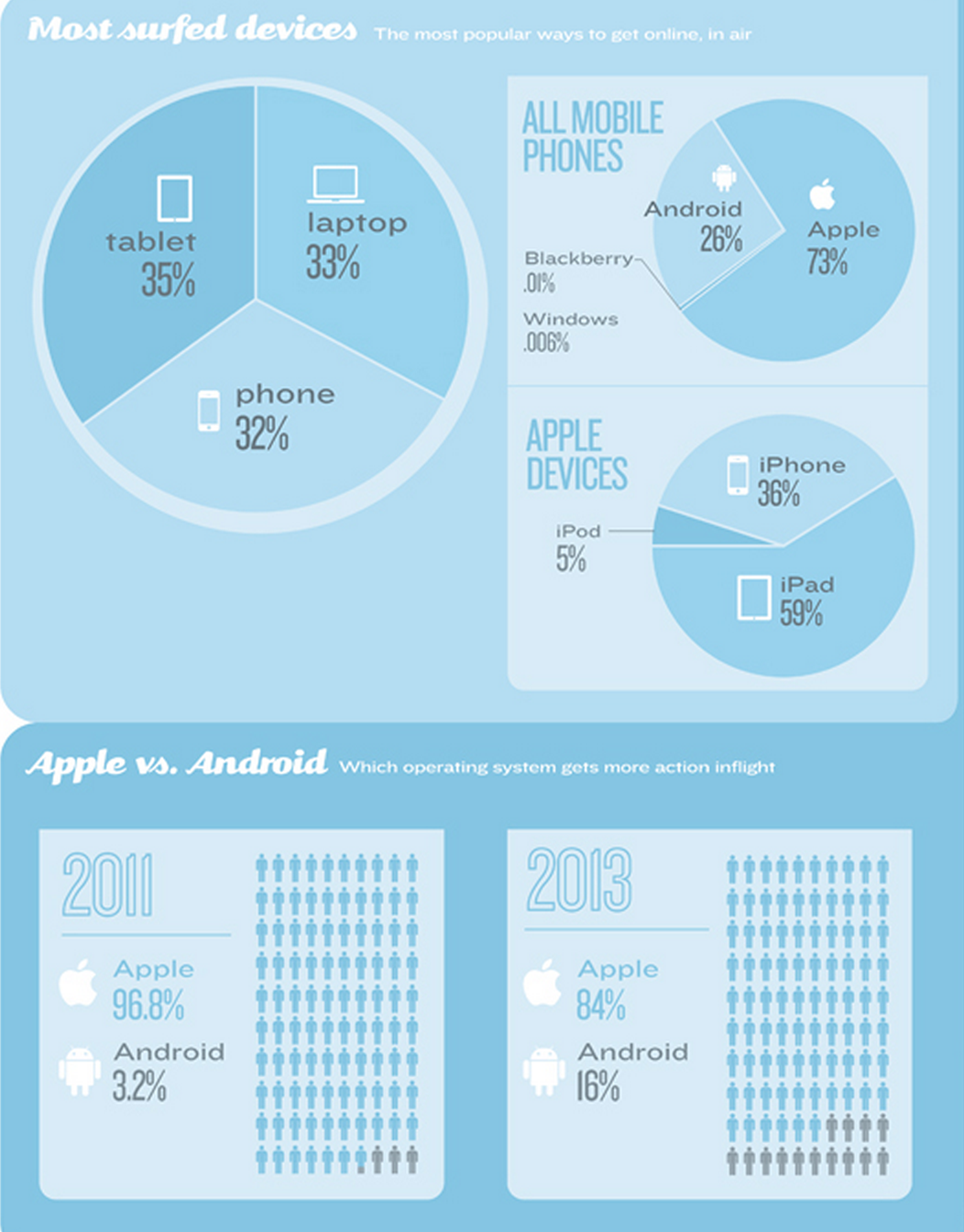
Gogo published the above infographic yesterday on the state of devices using its in-flight network that covers the air over much of North America.
Interestingly, Google’s Chromebooks currently offer free usage of Gogo’s in-flight wireless service yet tablets out number laptops (and by tablets we’re talking iPads). While Apple still owns 84 percent of the device market, Android is gaining some ground after climbing from a 3.2-percent low in 2011 to a 16-percent share in 2013.
Blackberry and Windows Phone? Combined, they don’t make up .02-percent of the share.
In January, anonymous U.S. analysts at Detwiler Fenton postulated that Apple could save a few bucks on a low-cost iPhone by using a Qualcomm Snapdragon integrated processors that place the CPU and wireless processors on the same die.
“It is likely that the work with QCOM is being driven by AAPL’s concern regarding maintaining gross margins as well as the need to differentiate the product by performance,” the research firm (which shuns putting the spotlight on particular analysts) said in a research note. “AAPL would not want a value priced iPhone to offer the same kind of graphics and video support, processing power etc. that its premium priced device would, therefore a less powerful lower-end Snapdragon integrated solution would help segment the product.”
At the time, the idea of Apple using Qualcomm processors and not its own perhaps older-model processors seemed preposterous. Sure, Apple uses Qualcomm 4G radio chips extensively, but its own processors now power the ‘free with a plan iPhone 4’ and the prospect of reworking the OS to work with a new off-the-shelf Qualcomm processor instead of in-house solutions still seems extremely unlikely.
In fact, the original analysts —with the statement “AAPL would not want a value priced iPhone to offer the same kind of graphics and video support, processing power etc. that its premium priced device would, therefore a less powerful lower-end Snapdragon integrated solution would help segment the product”— seemed to have no knowledge of Apple’s wide range of A4, A5, and A6 processors or wide range of iPhones in which those processors currently reside.
Digitimes is out today with a report that states Apple and Samsung are set to introduce wireless charging flagship phones this year. At least with Apple, this is unlikely.
Following the steps of Nokia, LG Electronics and HTC, Samsung Electronics and Apple are expected to add wireless charging capability to their flagship models in 2013, according to industry sources […] Apple is likely to adopt the wireless charging technology developed internally, but it remains unknown if the next-generation iPhone will come with built-in wireless charging capability or with other attached accessories, said the sources.
While Apple has of course patented just about everything under the sun, including wireless magnetic inductive charging, Apple Senior Vice President Phil Schiller downplayed the idea of wireless charging after the release of the iPhone 5 just 5 short months ago…
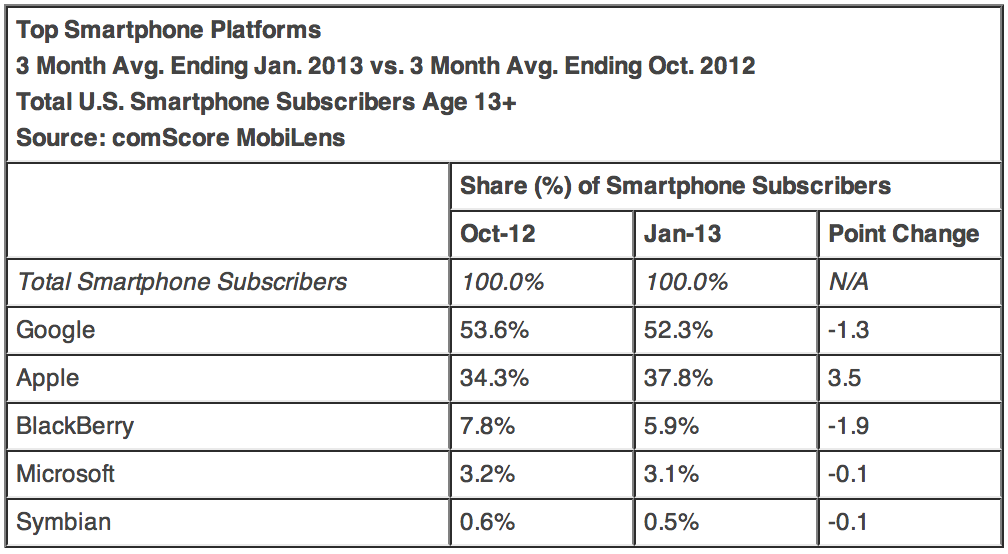
ComScore’s January 2013 numbers are out today, and it has Google (and everyone else) losing ground to Apple. Android dropped for the first time to 52.3-percent from 53.6-percent of U.S. smartphone subscribers, while Apple climbed 3.5 points to 37.8-percent. Both OS’s make up over 90 percent of the base.
What’s strange is that the three big U.S. carriers report that iPhone makes up anywhere from 66 percent to 85 percent (Verizon, Sprint, and AT&T) of activations, so it would seem that Apple’s market share should be much higher.
Meanwhile, Apple out-gained everyone including Samsung on the manufacturers’ distribution:
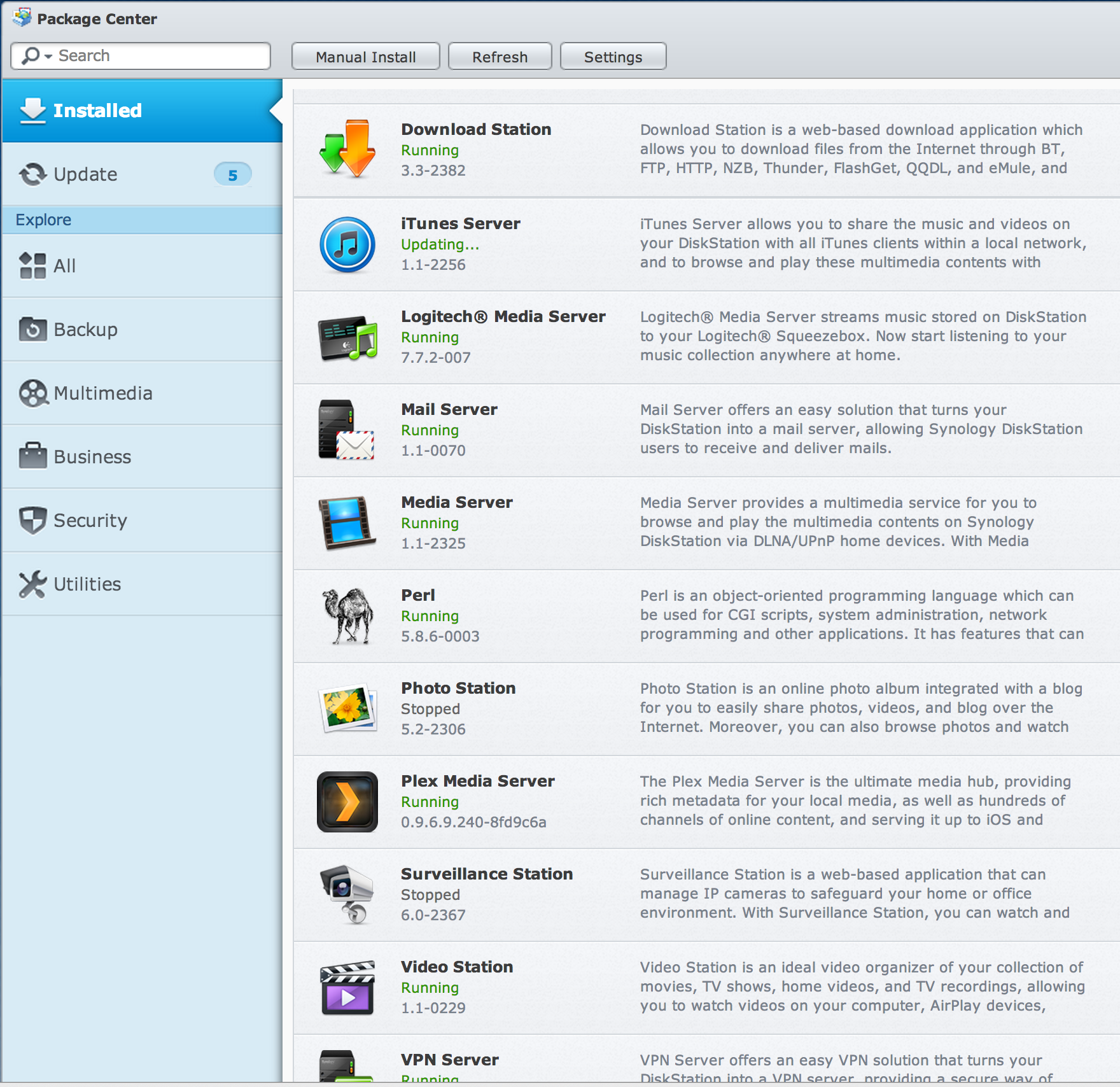
I never thought I’d ever become a Network Attached Storage evangelist, but it’s all I can do to keep from recommending it to everyone I know since I got my Synology DiskStation last year. DiskStations not only act as a reliable and speedy home file/backup server, but they also provide a wealth of other features and apps for iOS and Android. On the server side, you can install just about any service you’d put on a Linux box (iTunes Music Server, WordPress, etc. The list is seriously impressive)—but in an easy, reliable, speedy GUI.
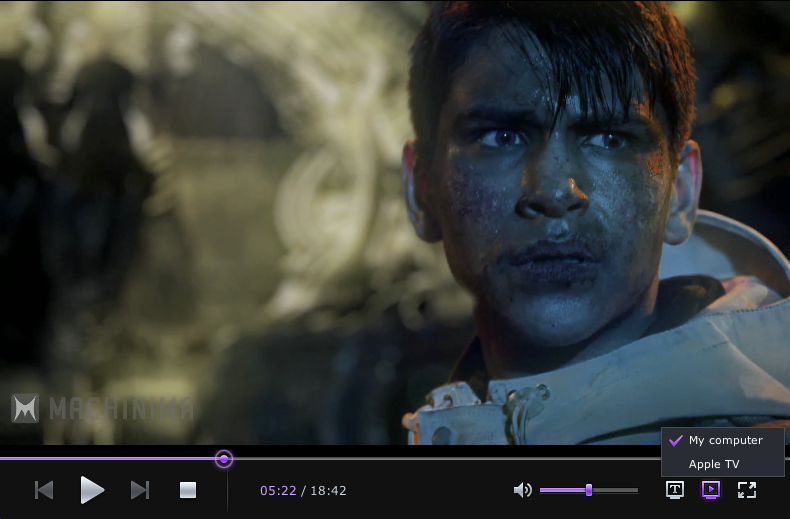
Synology updated its DiskStation firmware to 4.2 today (the Beta was released at CES), and, while its servers are still being slammed, you can automatically update your DiskStation. The big update here for Apple users is the ability to play videos from your DiskStation directly to Apple TV over AirPlay. If you’ve ripped a boatload of DVDs and Blu-rays like me and want to play them on your Apple TV, this is now the easiest way to do so.
Other highlights of DiskStation Manager 4.2 for iOS and Mac users:
Adobe unleashed its flagship photo-editing product today for iPhone and Android. Called “Adobe Photoshop Touch” for phone [iTunes-$4.99], the app brings many of the features of the tablet version to the small screen.
Much like the tablet version, Photoshop Touch on the phone has core Photoshop features like layers, advanced selections tools, adjustments and filters. We also packed in features exclusive to Photoshop Touch, like Scribble Selection for high-precision selections using only your finger, and Camera Fill for real-time creative blending of your camera feed with layers. This app features the same creative filters as the tablet version, like Color Drops and Acrylic Paint, and also a new Ripple filter.
The bad news is that it isn’t a universal app—meaning, if you purchased it already for iPad, you’ll have to purchase it again for iPhone.
A small Cambridge, Mass., team of teachers and developers, Power2Teach, came up with this novel little app called “Quick Key”. It makes multiple-choice grading and tallying far more efficient, allowing teachers more time to mark written work, prepare material for class, and support their students.
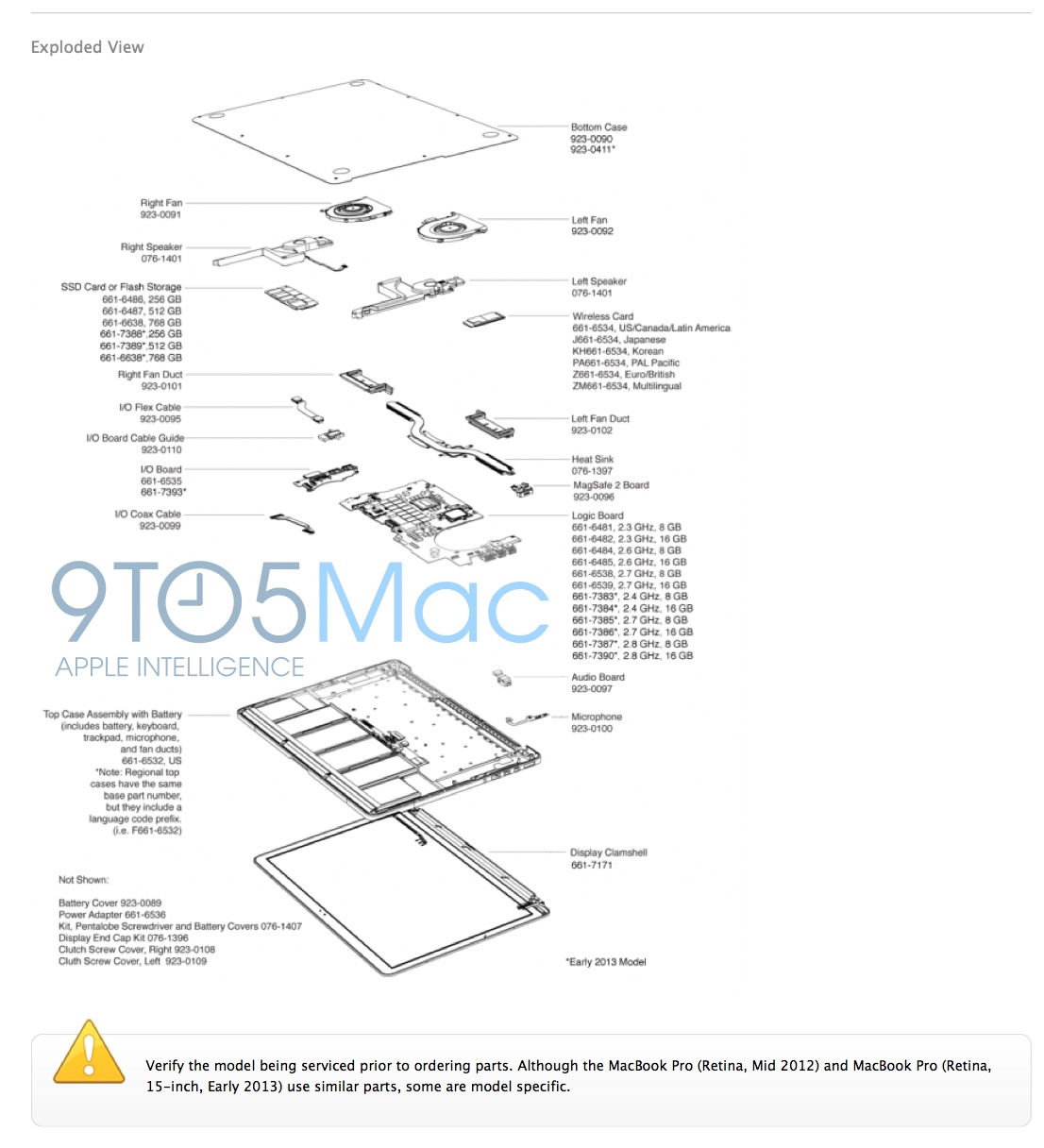
It appears the recent spec update to the MacBook Pros wasn’t as minor as we had originally thought. According to a leaked Apple repair guide for the 15-inch Retina MacBook Pro, many internals including the SSD, I/O Board, Logic Board and even the bottom case have been updated to new parts. While it isn’t clear yet how the updated parts were changed (besides the obvious CPU speed), it reminded us of a Foxconn leak we got in October 2012:
1. The rmbp in production line D2 is identified as defected products as in terms of thermal heating and screen ghosting. P/S: Apple is not going to re-launch the 15” rmbp. Just that Apple will improve on the production technique in D2 line. Apple will launch the 13” rmbp. Ghosting and thermal issues will be fixed but internals and design will be similar to 15” rmbp.
Interestingly, the report also said that Retina MacBook Pro production would move, at least partially, to Mexico.
We also have the 2013 repair manual for the 13-inch MacBook Pro below that only shows 2013 updates to logic board (likely just for CPU updates) and how to tell which model of Retina MacBook Pro you have for both 13- and 15-inch varieties. Expand Expanding Close




 .
.