Author

Avatar for Seth Weintraub

Seth Weintraub

Founder, Publisher and Editorial Director of the 9to5/Electrek/DroneDJ sites.

Seth Weintraub is an award-winning journalist and blogger who won back to back Neal Awards during his three plus years  covering Apple and Google at IDG’s Computerworld from 20072010.  Weintraub next covered all things Google for Fortune Magazine from 2010-2011 amassing a thick rolodex of Google contacts and love for Silicon Valley tech culture.

It turns out that his hobby 9to5Mac blog was always his favorite and in 2011 he went full time adding his Fortune Google followers to 9to5Google and adding the style and commerce component 9to5Toys gear and deals site. In 2013, Weintraub bought one of the Tesla’s first Model S EVs off the assembly line and so began his love affair with the Electric Vehicle and green energy which in 2014 turned into electrek.

In 2018, DroneDJ was born to cover the burgeoning world of drones and UAV’s led by China’s DJI.

From 1997-2007, Weintraub was a Global IT director and Web Developer for a number of companies with stints at multimedia and branding agencies in Paris, Los Angeles, New York, Sydney, Hong Kong, Madrid and London before becoming a publisher/blogger.

Seth received a bachelors degree in Industrial and Systems Engineering from the University of Southern California with a minor in Multimedia and Creative Technology in 1997. In 2004, he received a Masters from NYU’s Tisch School of the Art’s ITP program.

Hobbies: Weintraub is a licensed single engine private pilot, certified open water scuba diver and spent over a year traveling to 60 cities in 23 countries. Whatever free time exists is now guaranteed to his lovely wife and two amazing sons.

More at About.me. BI 2014 profile.

Tips: seth@9to5mac.com, or llsethj on Wickr/Skype or link at top of page.

Site default logo image

Collapsing Nokia may have had Apple-like hardware in development in the 90s

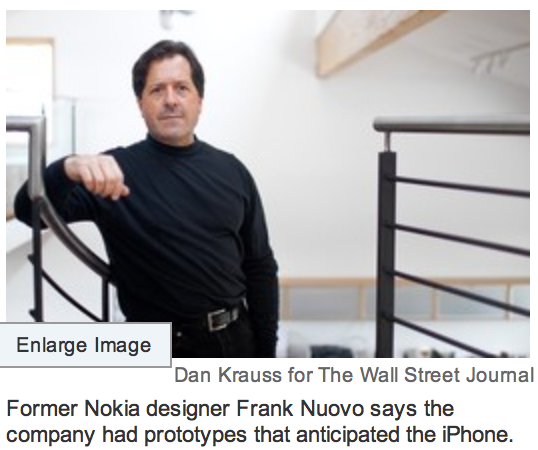
…but horrific corporate management has it in a place where it may be forced into a patent firesale.

Interesting article on Nokia in the Wall Street Journal last night. It starts with:

More than seven years before Apple Inc. rolled out the iPhone, the Nokia team showed a phone with a color touch screen set above a single button. The device was shown locating a restaurant, playing a racing game and ordering lipstick. In the late 1990s, Nokia secretly developed another alluring product: a tablet computer with a wireless connection and touch screen—all features today of the hot-selling Apple iPad.

“Oh my God,” Mr. Nuovo says as he clicks through his old slides. “We had it completely nailed.”

Hardware is a key element, but, as we saw with Apple’s 2002 iPad, software, marketing, ecosystem and maybe most of all timing also play important roles when determining the success of a product line. When the time was right and the opportunities presented themselves, however, Nokia failed to execute.

“What struck me when we started working with Nokia back in 2008 was how Nokia spent much more time than other device makers just strategizing,” Qualcomm Chief Executive Paul Jacobs said. “We would present Nokia with a new technology that to us would seem as a big opportunity. Instead of just diving into this opportunity, Nokia would spend a long time, maybe six to nine months, just assessing the opportunity. And by that time the opportunity often just went away.”

Anecdotally, I have a friend who worked with Nokia in advertising. He would say the same thing: The company was gridlocked by politics and poor leadership. Different product groups treated different parts of the company as competitors and not compatriots.

And, five years after the iPhone unveiled, Nokia is in a tail spin. This is causing a cash crunch so huge that it will likely be forced to sell off a lot of those early patents that are valued around $6 billion—which is just slightly under Nokia’s current $6.5 billion market cap. That means investors have very little confidence in the firms ability to succeed. In fact, had Google waited, Nokia might have been a better patent purchase target than Motorola.
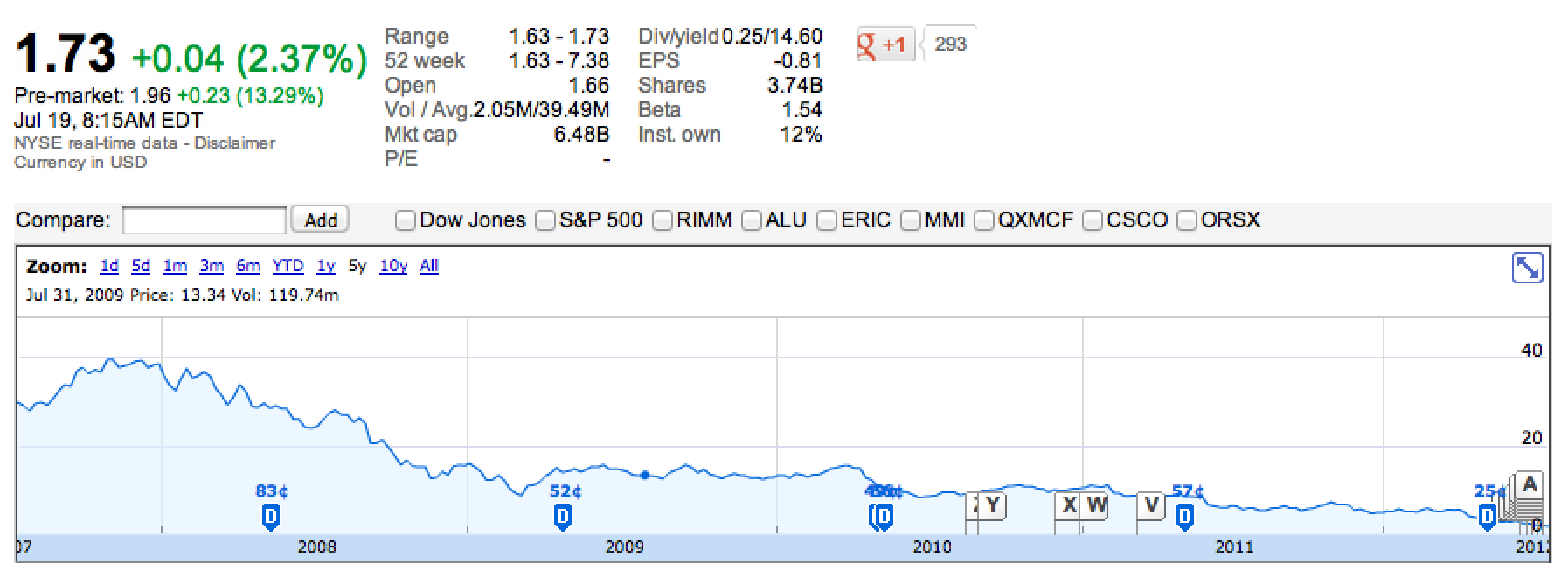
Nokia still is struggling to turn its good ideas into products. The first half of the year saw Nokia book more patents than in any six-month period since 2007, Mr. Elop said, leaving Nokia with more than 30,000 in all. Some might be sold to raise cash, he said.

“We may decide there could be elements of it that could be sold off, turned into more immediate cash for us—which is something that is important when you’re going through a turnaround,” Mr. Elop said.


It is pretty sad that a company like Nokia is not worth more than the patents it holds.

Original iPad prototype screen was around 13 inches diagonally, the body was almost an inch thick [Gallery]

Site default logo image

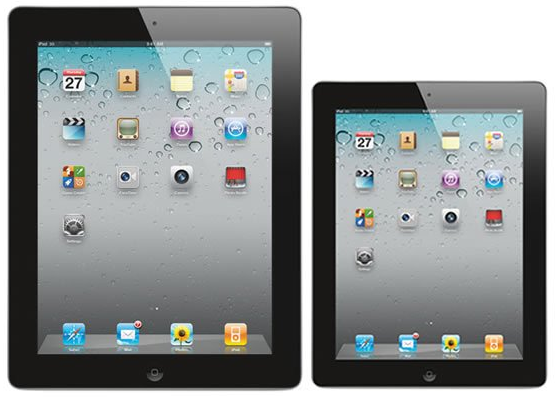
Buzzfeed got its mitts (don’t ask, just look) on more of those “original iPad” pictures discovered today. These are actually compared to a modern day iPad in size. And, oh my— the original prototype iPads are big. They look equivalent to a 13-inch MacBook display or thereabouts. Moreover, they look almost an inch thick.

Is it just me…or does the idea of a (albeit thinner) 13-inch iPad suddenly sound tantalizing?


Expand
Expanding
Close

Apple’s plastic, thicker, buttonless iPad prototypes circa 2002-4 from Jony Ive deposition [Gallery]

Site default logo image

.

NetworkWorld has a great pull of a Jony Ive deposition which references looks at early iPad prototypes which were much thicker, made of plastic and buttonless on the face:

During the course of the deposition, Ive at one point is shown photos of a three dimensional mockup of a tablet that Apple produced as part of the discovery process. It’s referred to as the 035 mockup or prototype.

Ive is then asked if he’d seen the mockup before, and if so, when.

He responds that he has seen the 035 mockup before and adds:

My recollection of first seeing it is very hazy, but it was, I’m guessing, sometime between 2002 and 2004, some but it was I remember seeing this and perhaps models similar to this when we were first exploring tablet designs that ultimately became the iPad.

So the takeaway is that Apple was tinkering with tablet prototypes as early as 2002.

Network World was then able to find the actual pictures Ive was referring to in unsealed court documents (above).

Reuters has profiled the court’s decision to reject Apple and Google’s secrecy requests.

You’ll recall that Steve Jobs actually said that Apple worked on the tablet long before moving to the iPhone (which appears to be from 2002 on  — right after the release of the iPod).  However, Apple stopped working on the iPad to focus on the iPhone which was, at the time, more important.  Eventually, “when Apple got its wind back in its sails”, Apple “took the iPad off the shelf and used what they’d learned in making the iPhone to make the iPad.”

[youtube=http://www.youtube.com/watch?v=pW7dBJmWo1k]


Expand
Expanding
Close

Report reiterates next iPhone specs (NFC,1GB RAM, LTE), says only in earlier stages of production

Site default logo image

.

report from BGR today contradicts an earlier report that stated the next-gen iPhone is already in production. We did not cover the report initially due to the many suspect claims. The BGR report claims that early EVT/DVT prototypes of the new iPhone are in production, but full, final runs are still relatively far off. The development stages of the iPhone were also dicussed by developer @chronic yesterday:

[tweet http://twitter.com/chronic/status/225019682174939136]

[tweet http://twitter.com/chronic/status/225019957375795201]

Additionally, BGR runs down some next-gen iPhone specs, which we were first to reveal, including: NFC1GB of RAMLTE, and an early fall release window.

Additionally, we have confirmation that the units Apple is currently testing have 1GB of RAM, doubled from the iPhone 4S’s 512MB, and integrated 4G LTE radios. We can also confirm that NFC hardware is present in the phones as well. We’re expecting Apple’s new iPhone to be released at the end of September or early October.

For more next-gen iPhone specs, check out our previous stories (here and here).


Expand
Expanding
Close

AT&T announces simplified shared bucket data plans for late August

Site default logo image

AT&T today announced its shared data plans for smartphone, tablet (phablet?), and Mac/PC users. Current and new customers will be able to choose plans for all of their devices with one with a fairly simple matrix. Current customers will not be forced into these plans (ahem Verizon!), but many with multiple devices/family members might jump at the opportunity.

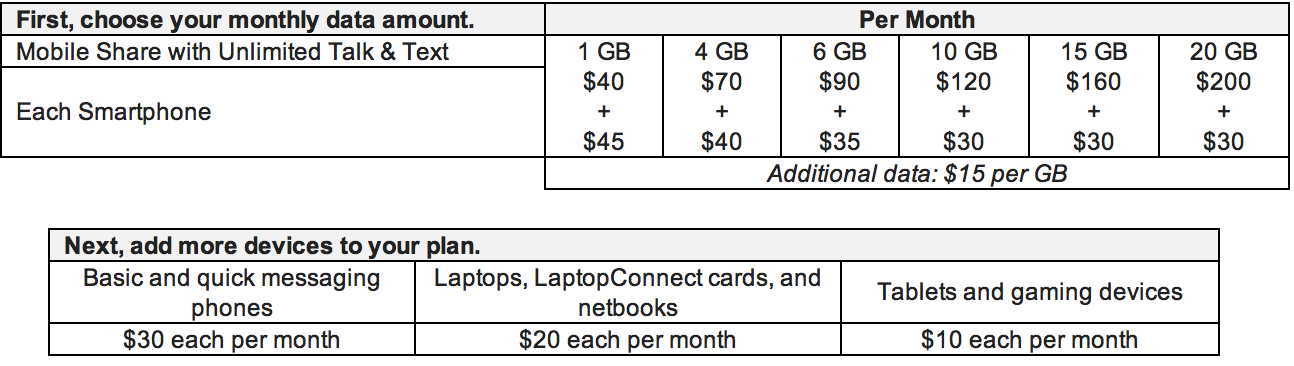
Bucket plans start at $45 a month (but drop to $30 a month at higher data tiers) + $40 for 1GB of data. Tablets like the iPad will cost $10 a month to add to a smartphone plan. PCs and Macs will be an additional $20 each via LaptopConnect cards, MiFi, or built-in modems. Adding an extra smartphone with unlimited talk and text will be $30 a month.

Interestingly, MiFis are grouped with PCs, so that might be better than getting a separate tablet and PC charge, but it also is another device to carry/charge. Moreover, the extra hop often slows down the speed of the network.

Below is the cost matrix:

Let’s say you have an iPhone and an iPad that you want to put on AT&T’s network with 10GB of data per month. It would be $120+$30 for the iPhone and an additional $10/month for the iPad. That is $160 a month. Adding a Mac data card would bring the total to $180 a month.

This shared bucket plan will particularly appeal to folks with lots of devices/family members and probably most of all businesses that want simplified billing and bucket data. Whether customers use the bucket for a bunch of co-workers or one businessperson with like three biz devices, billing will be simplified for IT.

“We offer customers a broad choice and the best lineup of plans, now enhanced by Mobile Share,” said AT&T Chief Marketing Officer David Christopher. “With these new plans, the more you share, the more you save. They will be a good fit for a variety of new and existing customers. However, if customers want to stay on their current plan or choose from our existing plans, they can do that, too. It is their choice.

“Today we think of people’s smartphones and tablets sharing a bucket of data. But in the future we’ll see health care monitors, connected cars, security systems and other devices in the home all connected to the mobile Internet,” said Christopher. “Our Mobile Share plans are simple, easy and a great value for individuals or families with multiple mobile Internet devices.”

You need to activate a smartphone with these plans. You cannot go data only. I would have liked a data-only share plan where I could just buy data for a few iPads and Macs to share.

The full release follows:


Expand
Expanding
Close

Site default logo image

Former Apple Executive in charge of OSX Bertrand Serlet joins Parallels Board of Directors

[youtube=http://www.youtube.com/watch?v=N-2C2gb6ws8]

So much for the early retirement… Former head of Mac OSX Bertrand Serlet is not only working on cloud startup Upthere, but we were told today that he is joining the board of Parallels, the popular virtualization software for Mac.

It is impossible to overstate Serlet’s importance to the creation of OSX. He was at NeXT when they were first building OSX. He left just last year as Steve Jobs was relinquishing his role at the company.

  • Serlet worked at Apple for 14 years, where he led the development and creation of OS X and was frequently a key speaker at Apple industry events. Serlet previously spent eight years with NeXT contributing to NeXTSTEP, OpenStep and WebObjects, and four years as researcher at Xerox PARC. Serlet holds a doctorate in computer science from the University of Orsay, France.
  • “With Parallels Desktop, Parallels became a critical developer for the Mac platform, and I got to know and appreciate the Parallels leadership team. I also discovered Parallels deep involvement with the cloud, represented by its rich portfolio of products. I look forward to drawing on my career at Apple to help guide Parallels as it continues on its impressive growth trajectory,” said Serlet.

We are wishing the best for Dr. Serlet in his new role at Parallels.

The full release follows…
Expand
Expanding
Close

Apple Store overnights happening July 24. Mountain Lion launch the next day?

Site default logo image

We’ve heard a few whispers (3 and counting) that Apple Stores both in the United States and overseas have planned overnights for Tuesday, July 24th. With OS X Mountain Lion launching “in July”, according to Apple, we believe that it is sensible to speculate that this overnight may point to a public launch the following day.

This purported launch would be July 25th, a date that we speculated when Apple announced that its Q3 2012 earnings would be announced on the 24th. For OS X Lion’s launch last year, Apple announced the July 20th release at its July 19th Q3 2011 earnings announcement. It appears that Apple may follow that same pattern this year.

This year, Mountain Lion isn’t being launched alongside hardware (last year new Minis and Airs launched with Lion) so there is less setup required and accordingly, we’re hearing that the overnights will be smaller.  One employee tells us that it is basically just a few guys running around with the master image installing it on every Mac.  Notably, some stores we’ve spoken to haven’t heard of any overnight…yet.

On the other hand, Apple often holds Tuesday overnights, so this July 24th overnight may simply be a coincidence, and Apple may not launch OS X Mountain Lion on the 25th. But, there is already under two weeks left in July, and with last year’s launch pattern prime for repetition (launch announcement during the upcoming earnings call), we’d say a July 25th launch is increasingly likely.

OS X 10.8 Mountain Lion will be a $19.99 upgrade which will hit the Mac App Store on launch day.  Developers already have what is likely the Golden Master – build number is 12A269, a 4.34 GB Mac App Store download.


Expand
Expanding
Close

Apple finally leaks 7.85-inch iPad rumor to New York Times on eve of Nexus 7 launch

Site default logo image

You have to feel for The New York Times. I mean, Apple leaked the 7-inch iPad information to The Wall Street Journal and Bloomberg over a week ago as orders for Google’s 7-inch tablet were opening up. Perhaps Apple was not pleased with the iEconomy series that The New York Times insisted on running.

Nevertheless, Apple’s PR machine has a message to get out (even turncoats MG Siegler and Walt Mossberg love the Nexus 7!), and, as Google’s Nexus 7 finally ship this week, it is The New York Times’ chance to “shine.”

[tweet https://twitter.com/stevekovach/statuses/224662980065886210]

Sadly, that is all the The New York Times got. Except it is saying…wait for it…

The company is developing a new tablet with a 7.85-inch screen that is likely to sell for significantly less than the latest $499 iPad, with its 9.7-inch display, according to several people with knowledge of the project who declined to be named discussing confidential plans. The product is expected to be announced this year.

Recap: The new smaller iPad will cost less than the $499 iPad third generation. The New York Times would not even go out on a limb and say it would cost less than the $399 iPad 2?

[Slow clap]
Expand
Expanding
Close

Nielsen: Android and iOS are over 90 percent of US smartphone market, and growing

Site default logo image

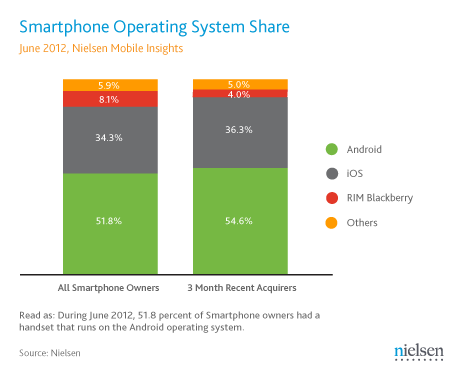
…For the first time ever, two-thirds of new phone acquirers are buying smartphones.

Smartphone use is exploding in the United States, while PC sales are dropping. If 66 percent of mobile phone buyers purchase smartphones, and 36.3-percent of them get the iPhone, then that means almost a quarter of all phones bought in the U.S. are iPhones. That also means 36 percent of the purchased phones run Android OS.

More from Nielsen, including the incredibly skewed graphic, is below—which gives Symbian, Palm and Windows 7 devices almost the same amount of “fill” at 2.8-percent as Apple’s 34 percent.


Expand
Expanding
Close

‘iPhone 5’ is already for sale in China

Site default logo image

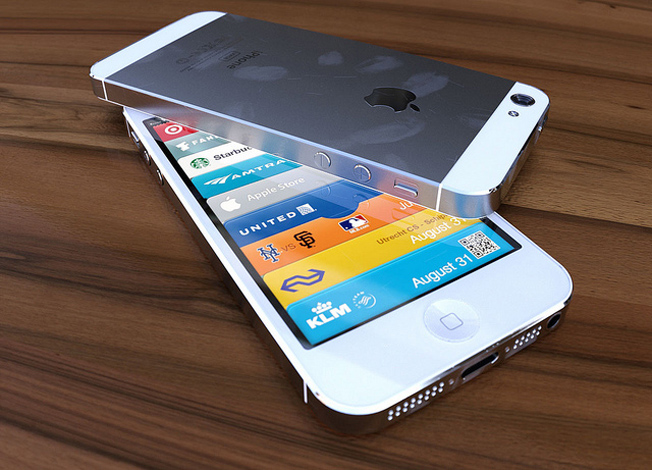
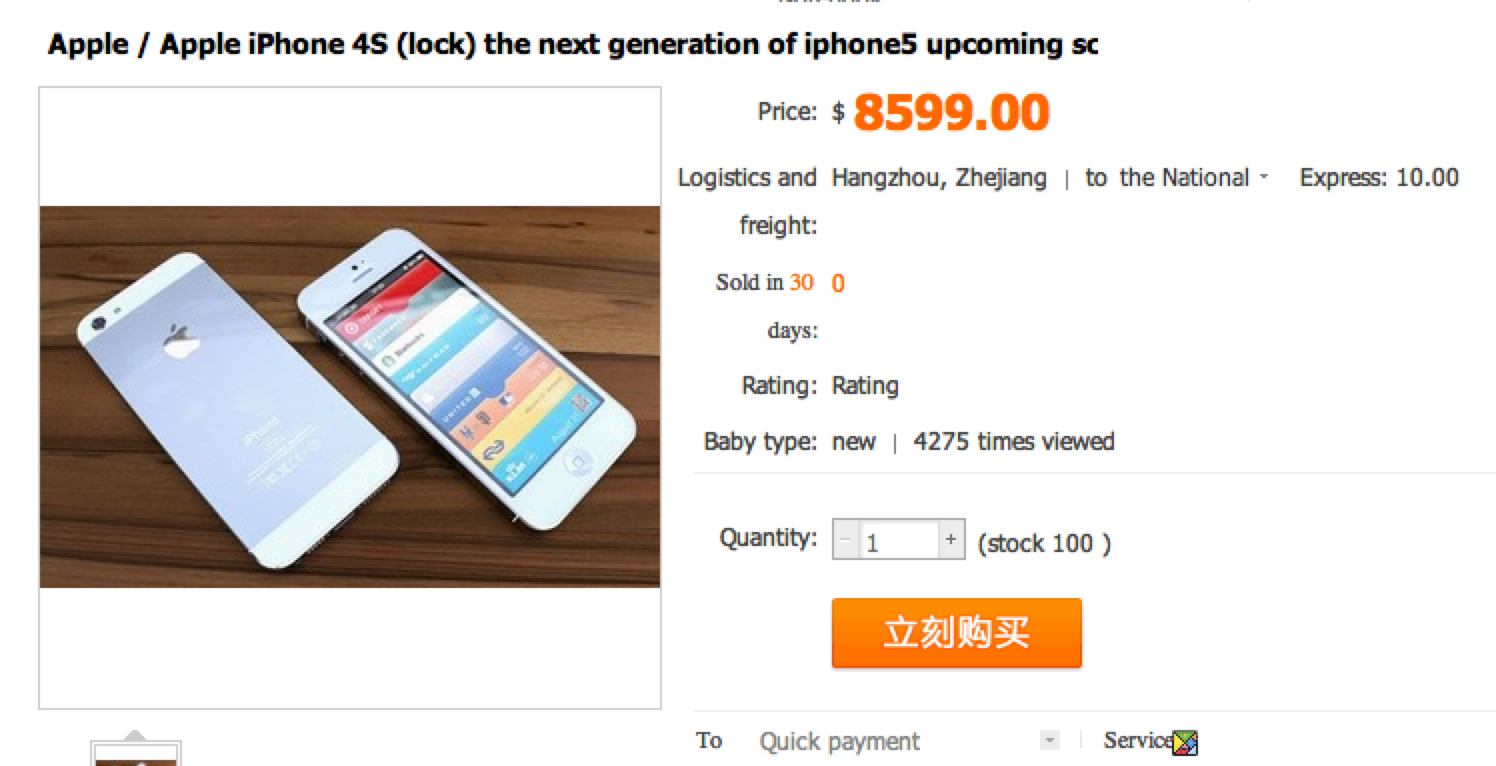
Those in China looking to get a head start on their Fall iPhone shopping are given the opportunity by sites like TaoBao, which, according to Reuters, (and the link we dug up) are already for sale.

Apple Inc’s next-generation iPhone has not even been released yet, but opportunistic sellers on China’s largest e-commerce platform, Taobao, are already accepting pre-orders, complete with mock-up pictures and purported technical specifications.

The hotly anticipated iPhone 5 is widely expected to be released sometime between August and October this year, although Apple itself has been tight-lipped about it. Sources have said the iPhone 5 would have a bigger screen than previous models, while Taiwanese media reported the phone’s voice recognition software, Siri, would have more powerful functions.

Buying Apple devices unseen shows what kind of confidence consumers have in the products that Apple makes. Would you put money down on Apple’s next iPhone without knowing anything about it?
Expand
Expanding
Close

Site default logo image

Tiny Wings 2/HD is rolling out to stores internationally

[youtube=http://www.youtube.com/watch?v=AXUiyK1olZ8&feature=plcp]

As we reported earlier this week, Tiny Wings 2.0, which is a free update of the original, is now hitting App Stores around the world.

Additionally, the HD version is now available for iPad. It is also eyeing an ongoing global rollout.

Developer Andreas Illiger had some lovely words for his fans…

Hi Tiny Wings fans! The long-awaited Tiny Wings 2 is finally done! I’ve put a lot of love into creating this major update, and I hope you’ll enjoy it. You’ll be getting a completely new game mode with 15 hand-designed levels, a whole flock of baby birds, fish, and other surprises! And here’s the best part: Tiny Wings 2 is a free update, as a thank-you to my loyal fans (and because I don’t particularly like in-app purchases). :)
Thanks, and have fun!

What’s New in Version 2.0

• A new game mode: “Flight School”
• 15 hand-crafted levels that really “flow”
• A few new additions to the bird family
• Hello shiny Retina Display! Tiny Wings is now as lovely as you are.
• Night flights
• iCloud support (even syncs your game between the iPhone & iPad versions)
• Revised menu
• New languages: German, French, Spanish, Italian, Dutch

iPad Description:

You have always dreamed of flying – but your wings are tiny. Luckily the world is full of beautiful hills. Use the hills as jumps – slide down, flap your wings and fly! At least for a moment – until this annoying gravity brings you back down to earth. But the next hill is waiting for you already. Watch out for the night and fly as fast as you can. Otherwise flying will only be a dream once again.

Tiny Wings was chosen as the iPhone Game of the Year in App Store Rewind 2011 in Europe and many other countries.
Thank you Apple and a big thank you to all Tiny Wings fans!

Highlights:
• Multiplayer: Play against your friends on a single iPad!
• simple but skillfull “one button” (ok… maybe “one tap”) arcade game about the dream of flying
• the world is changing every day – so it does in this game! Procedural generated graphics will make “tiny wings” look different every day you play
• upgrade your nest by fulfilling tasks
• Three game modes: “Day Trip,” “Flight School,” and “Hill Party”
• Play as the mama bird or one of her four children
• 15 hand-designed levels in the new “Flight School” mode
• iCloud support (even syncs your game between the iPhone & iPad versions)

Apple responds to EPEAT delisting, touts Energy Star

Site default logo image

.

There is some backlash over Apple’s recent move to delist its products from the U.S. EPEAT Government standard for Green computers.

Today, it was reported that San Francisco was no longer able to buy Apple computers because of the delisting, and many other education, government and other big business entities could theoretically follow suit.

Apple released the following statement to the Loop this evening to clear up the situation somewhat:

“Apple takes a comprehensive approach to measuring our environmental impact and all of our products meet the strictest energy efficiency standards backed by the US government, Energy Star 5.2. We also lead the industry by reporting each product’s greenhouse gas emissions on our website, and Apple products are superior in other important environmental areas not measured by EPEAT, such as removal of toxic materials.”

While these are all very important environmental attributes, the lack of repairability and ability to take apart these new machines does have a negative affect on consumers and the environment—which is a still a downside/tradeoff for new Retina MacBook Pro designs. Will these moves affect your buying decision?


Expand
Expanding
Close

Apple’s new designs force it to abandon EPEAT Green standard, potentially cutting off big customers

Site default logo image

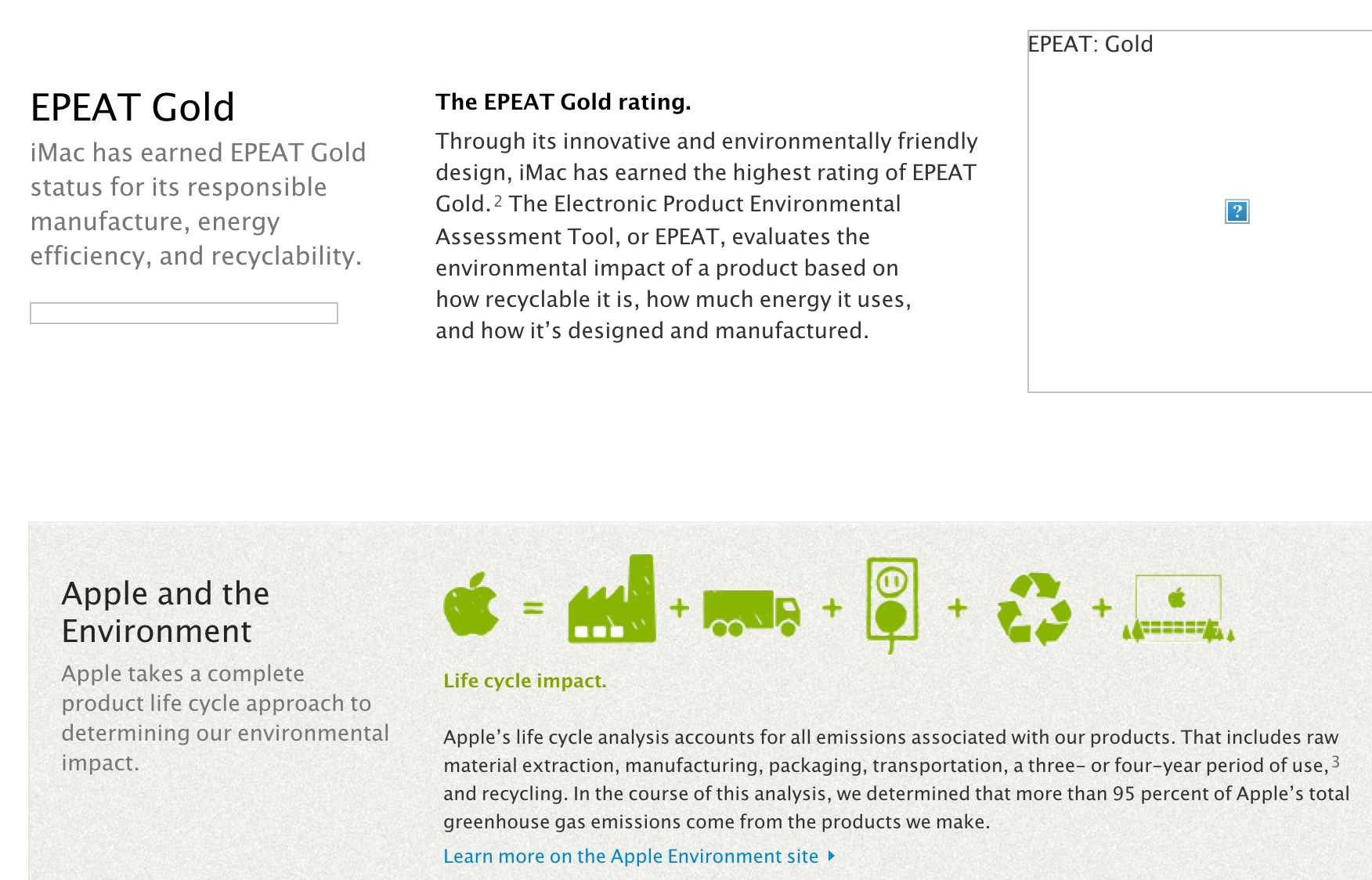
The Electronic Product Environmental Assessment Tool (EPEAT) is a program that ranks computers and displays based on environmental attributes in accordance with IEEE 1680.1-2009.

A clear and consistent set of environmental performance criteria for the design of personal computer products including notebook computers, desktop computers, and computer displays is provided, thereby providing an opportunity to secure market recognition for efforts to reduce the environmental impact of electronic products. This standard is intended to provide a tool for government, institutional, and corporate purchasers. Product manufacturers may also use this tool to earn recognition in the consumer market, recognizing that certain criteria may not be applicable to all types of purchasers.

According to Robert Frisbee, CEO of EPEAT, Apple asked the organization last month to pull its 39 certified desktop computers, monitors and laptops, which included past versions of the MacBook Pro and MacBook Air. The likely reason is the new Retina MacBook Pro. Its glass display is fused with the top of the case, while the batteries are glued to the bottom, making it extremely difficult to repair or recycle.

According to iFixit’s EPEAT contacts:

Apple’s mobile design direction is in conflict with the intended direction of the standard. Specifically, the standard lays out particular requirements for product “disassemble-ability,” a very important consideration for recycling: “External enclosures, chassis, and electronic subassemblies shall be removable with commonly available tools or by hand.” Electronics recyclers need to take out hazardous components such as batteries before sending computers through their shredders, because batteries can catch fire when punctured.

Beyond its environmental impact and its inability to be repaired, the decision to pull out EPEAT may have some economic ramifications as well…
Expand
Expanding
Close

Apple is taking it slow on mobile payments but carriers are likely the biggest roadblock

Site default logo image

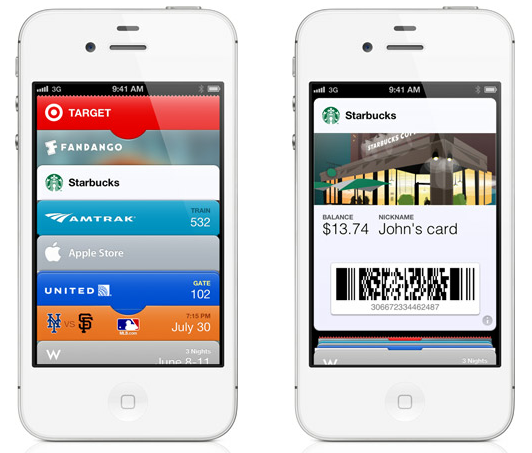
We recently reported that upcoming iPhone prototypes were found to contain code for Near Field Communication. However, that does not mean Apple mobile wallet – or Passbook – will let you make purchases right out of the gate. In fact, according to a Wall Street Journal report published late last night, Apple is taking a slow-go approach to mobile payments.

  • Apple’s head of iPhone software, Scott Forstall, was interested in the idea, say people familiar with the matter, and engineers on his team began to brainstorm a comprehensive “wallet app.”
  • They discussed whether Apple should facilitate payments to merchants directly, one of these people said. The idea didn’t go very far, on account of the complexity, including the possibility that the company would need to become a bank.
  • The Apple team investigated ways to make money from various ideas, such as teaming up with an existing payment middleman and taking a small cut of many transactions rather than layering on an additional fee. Some who worked on the project referred to the idea as “the Superman III” play, in honor of the movie’s greedy tech-savvy villain, this person said.

If you want to know the real roadblock, look at Google to see how its Wallet plan is going. Verizon, AT&T and T-Mobile are part of a separate, competing wallet system called “Isis” that has yet to get off the ground. However, that has not stopped the three Telcos from colluding to stop competition.

Even though Google Wallet is over a year old, it has yet to get on any of these three carriers’ devices. In fact, to get it on AT&T and T-Mobile, Google has to sell the Galaxy Nexus unsubsidized without any T-Mobile or AT&T branding. T-Mobile and AT&T refuse to subsidize the Galaxy Nexus so long that it has Google Wallet (they do subsidize the Nexus S without Wallet added). On the Verizon version of the Galaxy Nexus, the Google Wallet app is blocked. Sprint is the only carrier that allows Google Wallet; however, as a partner with Google, it would be just as unlikely to allow an Apple mobile wallet as ‘Team Isis” above.

The reality is that an Apple Wallet may not be able to get off the ground in its current form, because the carriers would block it. Although Apple is a power player and would be the best hope of breaking up the Isis Cartel, it would likely create enemies of its very influential carrier partners.


Expand
Expanding
Close

Apple has fixed the corrupted DRM App issue according to a statement

Site default logo image

Apple just released the following statement on the App corruption issue we reported earlier today:

“We had a temporary issue that began yesterday with a server that generated DRM code for some apps being downloaded. It affected only a small number of users.

“The issue has been rectified and we don’t expect it to occur again,” Apple said. Those who have an affected app can re-download it from the App Store.

The “small number of users” seems to run counter to what Instapaper developer Marco Arment found as he publicized his issues with Apple (along with Good Reader) today.

Apple: This is a serious problem. It’s not isolated. Please fix this.

Sources told Macworld that Apple will be removing one-star app reviews developers earned unfairly because of the company’s server issue.

Site default logo image

Finnish 90-day old iPhone combusts into smoke cloud on CCTV

According to a report this evening from Finnish pub SK24, a 17-year-old Finn named Henri Helminen was carrying his iPhone in his back pocket (stick with us here) when it spontaneously started smoking in a big way. We all know Lithium batteries can— if something is wrong— explode or behave like in the video. But, usually there has to be some major malfunction. An Australian man’s iPhone blew up recently, but it was traced to a poorly done third-party repair.

This is a little too close to Nokia’s headquarters for us to believe off the bat. We will continue to follow the story to see what has happened.

Video of the exploding iPhone below:


Expand
Expanding
Close

Review: Logitech Ultrathin iPad Keyboard Cover will kickstart your transition from consumption to creation

The one standout feature of the Microsoft Surface Tablet in our eyes was the keyboard cover. But is it that great? No one outside Redmond knows because Microsoft did not let anyone touch it at the press event.

But, if you can handle a paltry extra 4mm of thickness with the addition of real keys, an iPad aluminum-matched protective cover, and a built in stand, Logitech already has Microsoft beat in my eyes.

Enter the $99 Logitech Ultrathin iPad Keyboard Cover for iPad 2 and the new iPad. It uses the same magnets as Apple’s “smart” accessories to clip on and activate the iPad, but it is a rigid enclosure that matches the back of the iPad and turns it into the proverbial Apple netbook. It offers screen protection, but the back and sides are not protected.› So, you will not want to drop test this setup.

[youtube=http://www.youtube.com/watch?v=zsIJUiTlrGI]

This is not just a repurposed PC/Mac keyboard either. It has dedicated iPad keys across the top including the very useful home button, volume keys, editing keys, and play/pause.

I have been using it since it unveiled two months ago. Here is my take:


Expand
Expanding
Close

New iPhone prototypes have NFC chips and antenna

Site default logo image

We have previously been able to pull data from PreEVT iPhone 5,1 and iPhone 5,2 prototypes codenamed “N41AP (5,1)” and “N42AP (5,2)”, which lead us to believe that the new iPhone will have a bigger 1,136-by-640 display. We also detailed a lot of the hardware (here), but we forgot one very important bit of information. Further investigation into this hardware code dump leads us to believe that these iPhones also have Near Field Communication controllers directly connected to the Power Management Unit.

The implications are obviously monstrous. With the recently announced PassBook application (which we detailed prior to its announcement while speculating about an NFC tie-in), Apple will be set to compete with Google Wallet and Microsoft’s similar service that unveiled last week. Apple could tie in with a payment processor like Citibank’s PayPass system for credit card transactions—or it could become a payment processor of sorts with its hundreds of millions of credit cards already on file at iTunes.

NFC would also allow iPhone users a quick and easy way to share files from one iOS device to another.

Jim Peters, CTO of SITA, agrees that NFC is coming to iPhone and retailers should prepare…


Expand
Expanding
Close

Site default logo image

RIM to be split into handset and services, sold off piecemeal?

TheVerge reads behind the Sunday Times’ firewall:

The Sunday Times reports today that RIM is considering a plan to split its handset division and messaging network into two separate companies, and will sell off the struggling BlackBerry hardware business. The British paper doesn’t cite any sources in the report, but it says that Facebook and Amazon are both “potential buyers.” As part of this plan, RIM could keep its enterprise-friendly messaging and data network (including BBM and BIS) in-house and license them out.

BBM and BES only run on Blackberry now, and that platform will have a market share heading toward zero by the time RIM gets all of this organizational structure sorted. So keeping that a separate business makes little sense.

The other option is selling out piecemeal to Microsoft for parts and people. I imagine that by then, the price of RIM will get so low, even Apple and Google would be interested in picking up the parts (patents, people, and tech). Microsoft is probably already lining up some cash to buy the remnants of Nokia as well, so it is less likely to pick up RIM (although it made several attempts to pick up RIM in the past).

Moreover, RIM’s QNX/Blackberry 10 might have some value for companies like Dell, HP (which recently fumbled WebOS), Lenovo, Toshiba, Acer, or ASUS due to Microsoft now building its own tablets and scaring OEMs.

That split could also see Cisco or Oracle taking the backend stuff.

Any way you look at it, on the fifth anniversary of iPhone, Blackberry —as we knew it— is almost over.