Antitrust

See All Stories

There are growing concerns that Apple could be facing an anti-trust investigation by the US Department of Justice.

Apple faces antitrust worries

What does antitrust mean?

In most jurisdictions around the world, it is illegal for large companies to band together to form agreements or “trusts” to behave in a particular way – for example, to all sell their products for the same high price. Laws designed to outlaw this type of behavior are called antitrust legislation.

However, the term is used more generally to refer to laws designed to prevent companies from engaging in any kind of anti-competitive action – that is, do anything that would tend to artificially distort competition within a market.

One common myth is that antitrust laws only apply to monopolies. This is very much not the case: They apply to any company large enough to have a dominant position in any market. As we shall see below, the definition of the word “market” can be crucial to deciding whether antitrust concerns arise.

Why is Apple facing antitrust investigations?

First, Apple is a very large company, and it would be very easy for a company of that size to commit antitrust violations, so it is to be expected that any massive corporation would be put under the antitrust microscope.

But in Apple’s case, there are some more specific concerns based on the company”s market dominance in particular areas. These are addressed below.

What are the antitrust concerns with Apple?

There are a number of different ones, in areas as diverse as ad tracking and Sign In With Apple, but here are three of the main ones.

The App Store

The biggest antitrust concern is the App Store.

Apple argues that it does not have a dominant position in this market, as it considers the relevant market to be either “smartphones” or “apps.” Since the company holds a minority share of the smartphone market in most of the countries in which it operates, it believes it cannot be considered to have a dominant position.

Competition regulators tend to take the view that the relevant market is “iOS apps,” and here Apple has a 100% monopoly on their sale and distribution. Edge cases aside, there is no way for a developer to bring an iOS app to market without selling it through the App Store.

Companies like Epic Games argue that they should be allowed to sell in-app purchases without Apple taking a cut of their revenue. The argument here is that Apple harms developers by taking part of their income, and consumers by forcing developers to charge more to make up for Apple’s cut. Apple, in response, says that it is perfectly normal for a company to take a cut of the sales it facilitates.

Default apps

Additionally, some companies accuse Apple of anti-competitive behavior by giving its own apps advantages over third-party ones.

One way that Apple does this, they say, is by pre-installing its own apps. For example, when the Apple Weather app is already installed on an iPhone when you buy it, then Apple’s own app has an obvious advantage over a competing app.

There is overlap here with the App Store concerns. For example, Apple Music and Spotify are competitors, but not only is Apple Music preinstalled, you can subscribe from within the app. If Spotify offered this same ability, it would have to pay Apple a 30% cut. Spotify can’t afford this, so users are forced to take a more long-winded route to subscription, which gives Apple Music an additional competitive advantage.

Relationships with carriers and retailers

Apple has also been found guilty in more than one country of exploiting a dominant position within the smartphone market to place undue demands on carriers and retailers.

Because the popularity of iPhones meant carriers had to sell them, Apple was able to dictate terms. In South Korea, for example, it was accused of imposing three onerous conditions on local carriers:

  • Carriers had to buy minimum quantities of each model, dictated by Apple
  • Carriers had to share the cost of warranty repairs or replacements
  • Carriers had to pay to run Apple’s own TV ads for the iPhone

Budget-focused carriers might, for example, want to buy only older and cheaper models, as that’s what their customers want, but Apple would force them to buy flagship models, too. And if a phone proved faulty, Apple wouldn’t just replace it, but would oblige carriers to meet some of the costs. Finally, although carriers had to pay the full cost of running iPhone ads on TV, they were only allowed to use Apple’s own ads, and the only thing they were permitted to change was adding their own logo to the final frame.

Additional areas of concern range from Apple Pay to a 4K video codec alliance!

What could happen to Apple as a result?

Antitrust outcomes will usually happen on a country-by-country basis, though there are exceptions. In Europe, for example, it is likely that the European Union will act as a bloc, and that any legislation applying to Apple will apply across all 27 member countries.

The worst-case scenario for Apple is for the US government to call for the breakup of the company. For example, it might be ruled that Apple Inc cannot run an App Store while also selling the iPhones on which those apps run. This is not a likely outcome, however.

A more likely scenario is a series of smaller changes. For example, Apple might be required to appoint an independent oversight board to carry out app reviews, or that it must allow Spotify to offer in-app subscriptions without taking a cut.

How is Apple responding?

In public, Apple’s stance is an outraged one, arguing that it does not have a dominant position and is doing nothing wrong. Behind closed doors, the company is aware that it either has to change some of its practices, or be forced to do so by law.

For example, while publicly declaring that a 30% commission on apps was industry standard, Apple made a massive U-turn by introducing the Small Business Program, with a 15% commission instead. Although touted as applying to the smallest developers, it in fact applies to 98% of them. It would be more accurate to say that the App Store now has a standard commission rate of 15%, with a higher 30% rate applying only to a tiny minority of companies.

The company has also quietly made a number of other changes in direct response to antitrust concerns, for example, opening up the Find My app to third-party accessories, and allowing people to change their default email app and web browser.

However, Apple is still sticking its head in the sand and hoping the issue will go away – when it absolutely won’t.

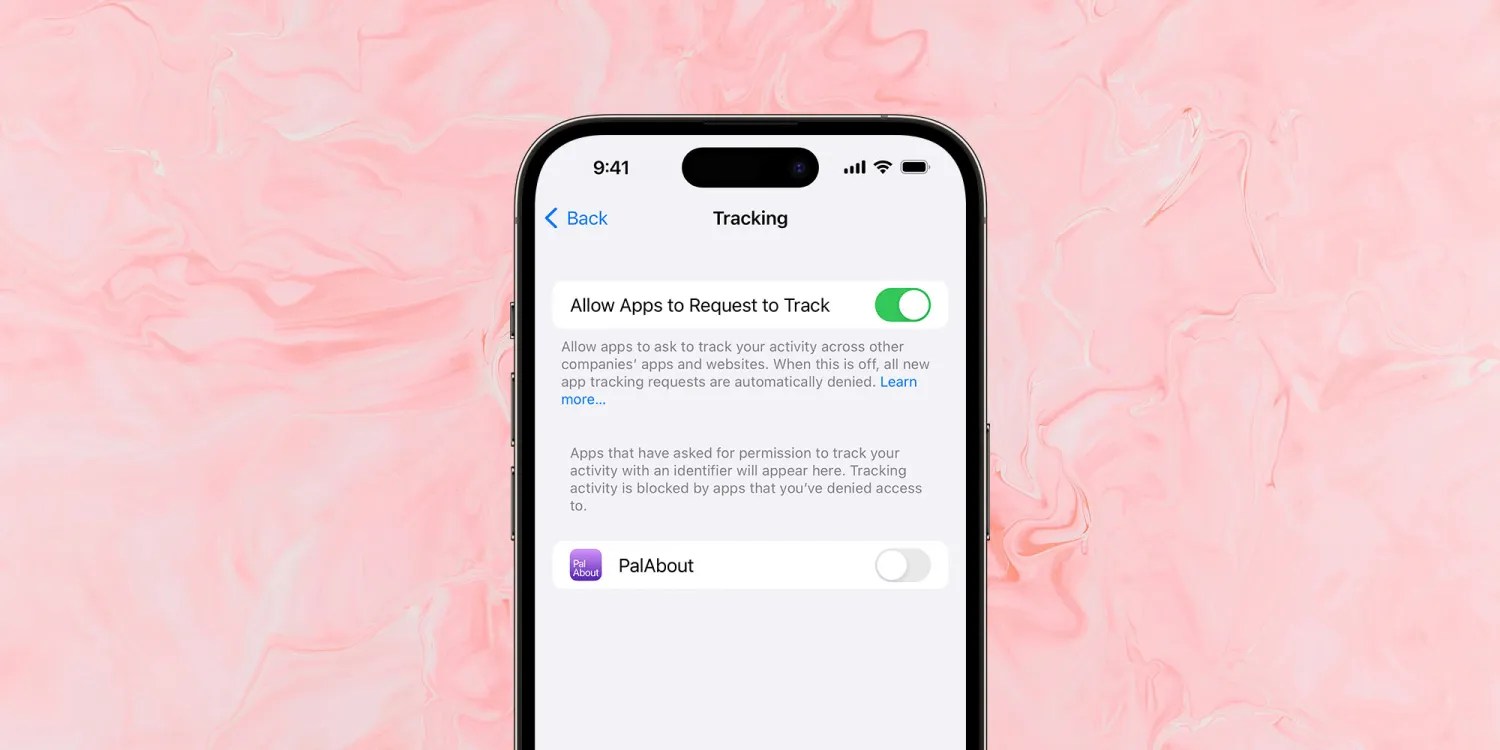
Apple falsely accused of misleading users about App Tracking Transparency privacy

Apple falsely accused of misleading users about App Tracking Transparency privacy (permission dialog shown)

A competition regulator has accused Apple of misleading users about the level of privacy offered by the App Tracking Transparency feature. That accusation, while made in good faith, is based on a misunderstanding.

The iPhone maker has responded by saying that it may be forced to withdraw the privacy protection from EU users …

Expand Expanding Close

Apple denied permission to appeal loss in $1B+ developer lawsuit [U]

Apple seeking permission to appeal loss in $1B+ developer lawsuit | Photo shows court gavel and book on top of a pile of $100 bills

Apple was today denied permission to appeal the result of a billion-dollar lawsuit filed by UK app developers accusing the company of abusive commission levels.

The company last month lost the case and a hearing today is deciding how the damages are calculated. If the ruling stands, it is expected to end up costing Apple anywhere between £1B and £2B ($1.3B to $2.6B) – but Apple is expected to counter this with four arguments …

Expand Expanding Close

Apple says study proves the EU is wrong about lowering app prices

Apple says study proves the EU is wrong about lowering app prices | Apple comic-style graphic showing people using iDevices

Apple’s opposition to the EU’s Digital Markets Act (DMA) antitrust legislation took a turn back in September when the company started arguing that the law should be repealed. It also suggested that more new features would be delayed for EU customers, and perhaps even new hardware.

The company is now claiming a new study proves that the DMA fails to live up to one of its core promises: reducing app prices …

Expand Expanding Close

EU accuses Apple of putting users at risk; Apple accuses EU of hypocrisy

EU accuses Apple of putting users at risk –Apple accuses EU of hypocrisy | Boxers train for fight

As part of an investigation into whether Apple complies with the Digital Services Act (DSA), the EU has said that it suspects the company of failing to protect its customers from scams. The Cupertino company is also accused of not providing enough safety measures for children who use its devices.

The iPhone maker has responded with an exceptionally strongly-worded letter, accusing the EU of hypocrisy and cynically attempting to distract attention from the failings of its own laws …

Expand Expanding Close

Japan to become 29th country to get third-party iPhone app stores

Japan to become 29th country to get third-party iPhone app stores | Photo shows spectacular tree blossoms at night on the Meguro River, Matsuno, Japan

Apple’s monopoly on the sale of iPhone apps is set to be further eroded according to a new tweet showing third-party app stores in the iOS 26.2 beta in Japan. This follows a ruling by Japan’s Fair Trade Commission in August that both Apple and Google must allow alternative app stores.

This will make Japan the 29th country to get third-party app stores for the iPhone, with others set to follow as courts and antitrust regulators continue to issue rulings …

Expand Expanding Close

Apple spent $8M lobbying the EU last year and had 76 meetings

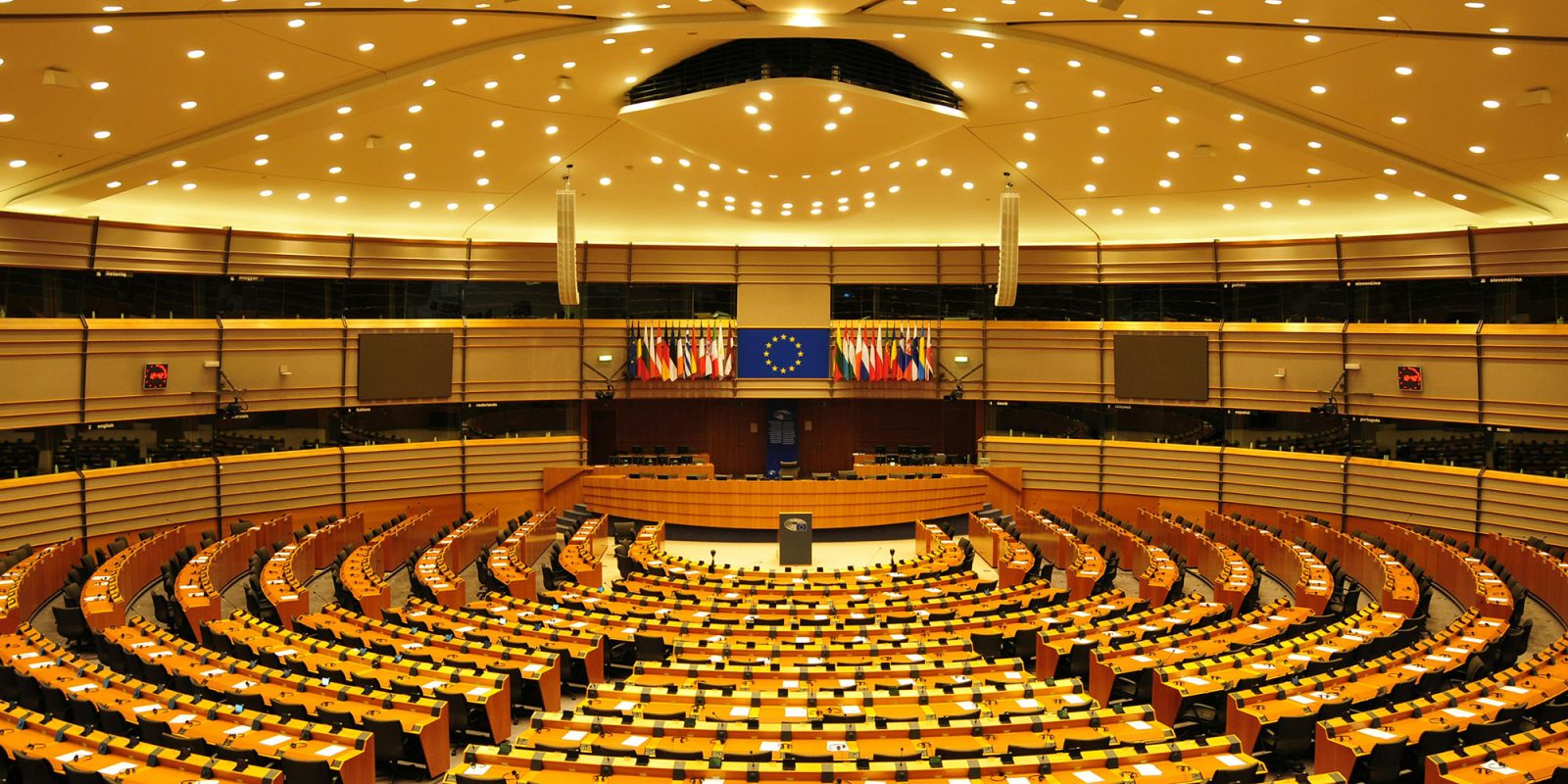
Apple spent $8M lobbying the EU last year and had 76 meetings | Photo shows the interior of the European Parliament in Brussels

A new report by a corporate watchdog says that Apple spent €7M ($8.1M) lobbying the EU in the past year, making it the joint second-largest spender in the tech sector. It says tech giants now spend more on EU lobbying than Big Pharma and the automotive industries combined.

It also reveals that Apple held a total of 76 meetings with Members of the European Parliament and high-level European Commission staff …

Expand Expanding Close

Apple vs EU war of words continues – ‘intrusive burdens’ v ‘locked-in users’

Apple vs EU war of words continues – 'intrusive burdens' v 'locked-in users' | High-key image of white pillars

Just days after Apple accused Epic Games of seeking a free ride in one antitrust case, the company is continuing to engage in a war of words with the EU over another.

In a court hearing on the legality of the Digital Markets Act, Apple’s lawyer said that it “imposes hugely onerous and intrusive burdens” on the company, while the EU says the iPhone maker wants “absolute control” in order to lock-in users to achieve “supernormal profits” …

Expand Expanding Close

Apple says Epic Games is seeking a free ride, as we await latest court ruling

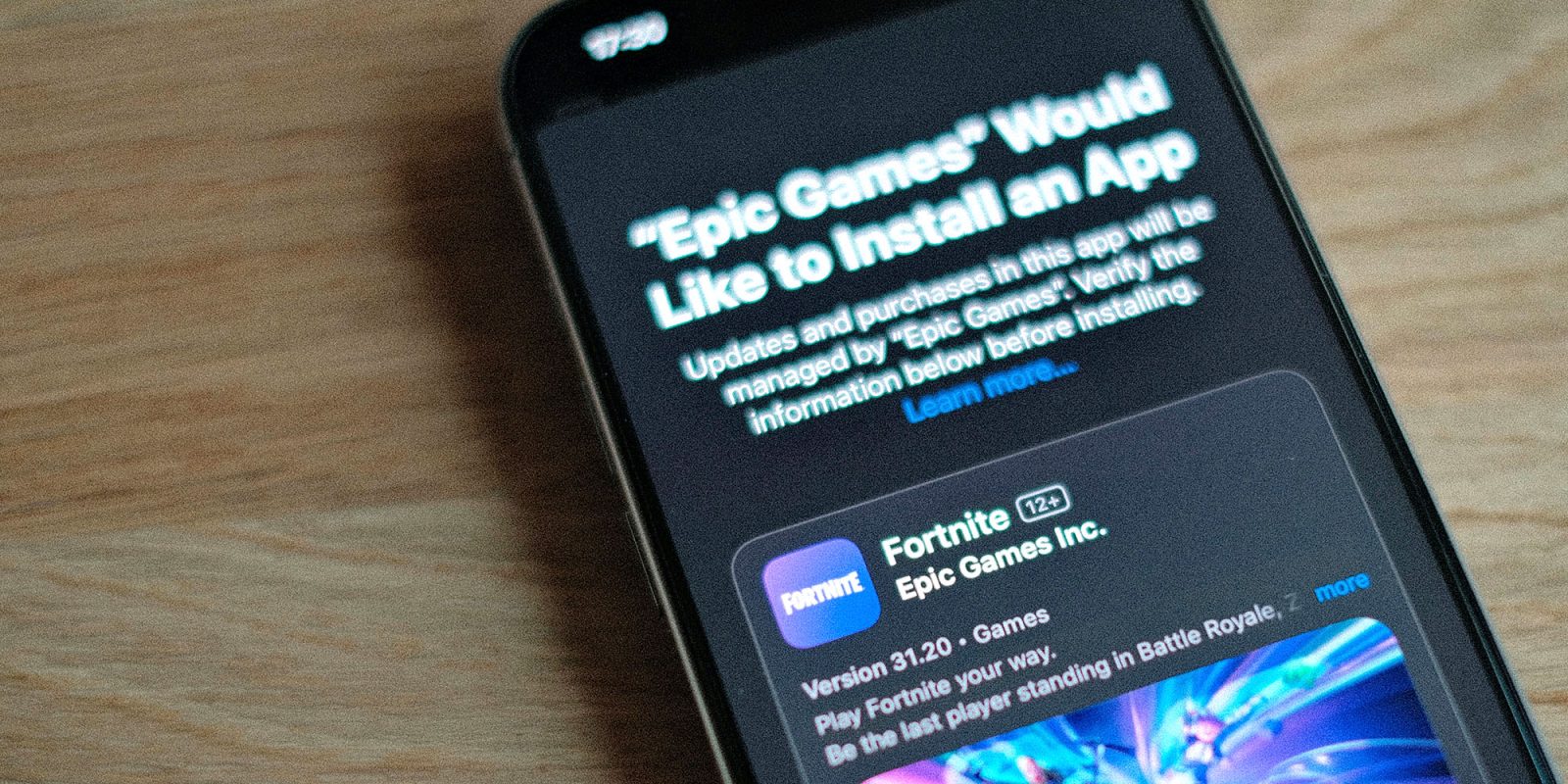
Apple says Epic Games is seeking a free ride, as we await latest court ruling | Permission screen on third-party app install

Apple has accused Epic Games of seeking a free ride as the games company asks a court to permit its apps to be sideloaded onto iPhones with no commission to the Cupertino company.

The accusation was made after an Australian court indicated it was likely to rule that Apple must permit sideloading – but with details yet to be decided …

Expand Expanding Close

Apple reportedly close to settling with the EU over Digital Markets Act violations

Apple reportedly close to settling with the EU over Digital Markets Act violations | Photo shows a couple holding hands

Although Apple is on record as saying that it wants to see the EU’s Digital Markets Act either repealed or substantially revised, it is reportedly close to reaching a settlement with the antitrust regulator.

In public, the two have engaged in a pretty fierce war of words, but a new report claims that they are close to reaching a behind-the-scenes agreement …

Expand Expanding Close

Epic Games gives backhanded compliment to Apple over removal of scare screens

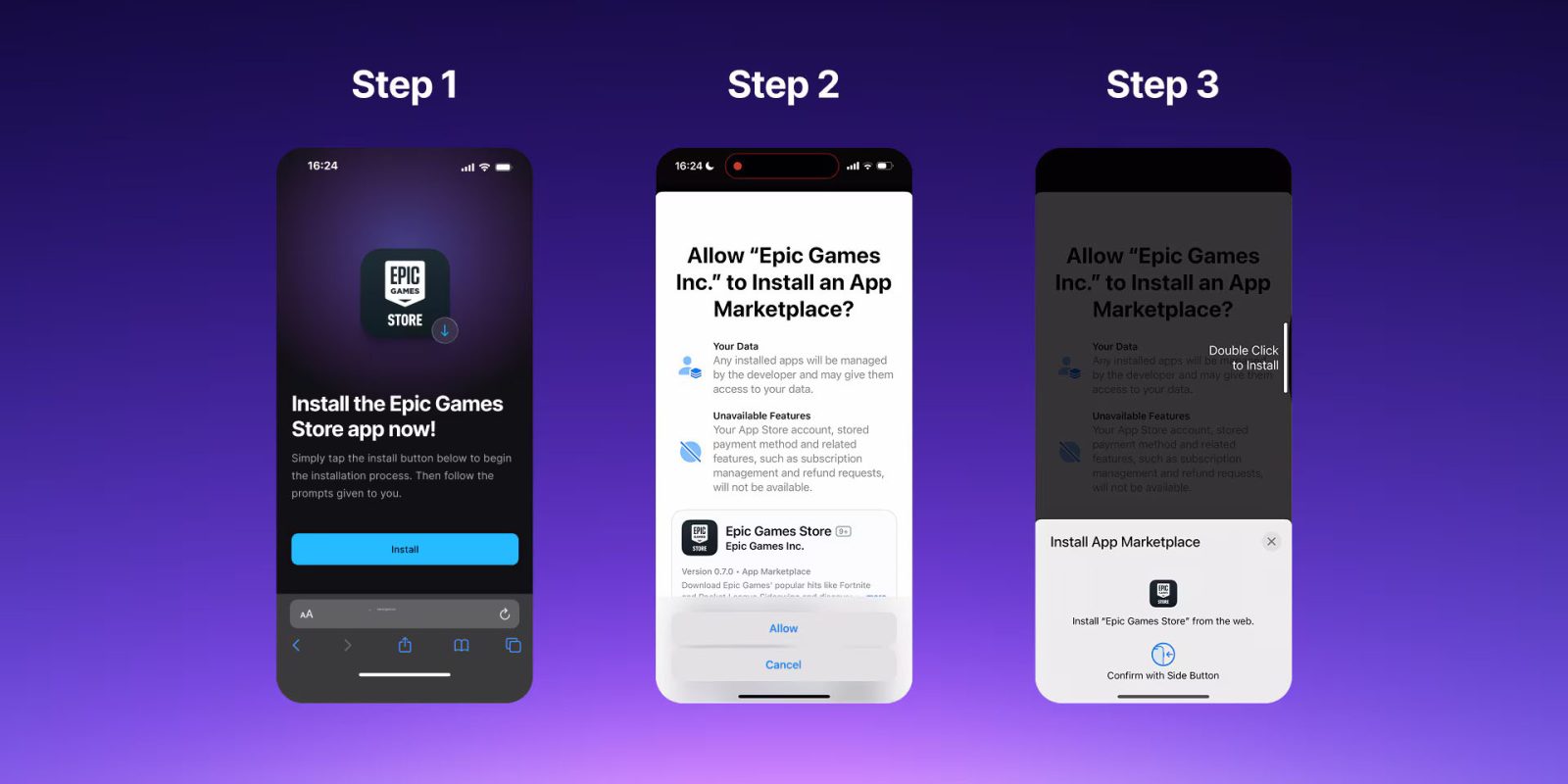
Epic Games gives backhanded compliment to Apple over removal of scare screens | Screenshots of the new flow

Epic Games has given Apple a backhanded compliment over the changes it made to reduce the barriers to installing the company’s games store on iPhones.

Apple had long come under antitrust fire for forcing users to take 15 separate steps to install a third-party app store. The company has now reduced that to six steps and eliminated what has been described as a “scare screen with a misleading message” …

Expand Expanding Close

Apple says EU law will mean more features are delayed, maybe even new hardware

Apple says EU law will mean more features are delayed, maybe even new hardware | Close-up photo of hourglass with blue sand

The European Union is currently carrying out a consultation process into the impact of its Digital Markets Act (DMA). This is the antitrust legislation which required Apple to permit third-party app stores and which the company says has made it impossible to release some software features to EU users.

In its response, Apple says it has not yet released either iPhone Mirroring or AirPods Live Translation within EU countries over privacy concerns, and it expects more features to be delayed in Europe. The company in its submission to regulators said there was a possibility some hardware launches might be affected …

Expand Expanding Close

Epic Games versus Apple Australia ruling published – Apple calls it harmful

Epic Games versus Apple Australia ruling published – Apple calls it harmful | Gavel coming down on MacBook keyboard

We last month learned that Epic Games had won its antitrust case against Apple in Australia, with the court ruling that the iPhone maker must permit side-loading and third-party payments.

The full reasoning for that decision has now been published – all 900 pages of it – and Apple has accused the judge of underestimating the privacy and security risks to users …

Expand Expanding Close

Just one word in the Google antitrust ruling was worth $20B a year to Apple

Just one word in the Google antitrust ruling was worth $20B a year to Apple | Close-up photo of a man amending a contract

For more than a year now, there have been debates about whether Google’s payment to Apple to be the default search engine in Safari would be outlawed.

While it had seemed likely this would be the case, what we got was a compromise ruling. It turned out that the difference between Apple earning $20 billion a year and $0 hinged on a single word …

Expand Expanding Close

Fortnite returns to the App Store in another country after court ruling

Fortnite returns to the App Store in another country after court ruling | Promo image for the game

Fortnite returned to the App Store in the US back in May after a federal court ruling, and is now set to return to iOS in Australia through the Epic Games store after a similar judgment there.

While Epic Games celebrated the ruling, the fate of the app in other countries still remains far from certain – and its availability in the US may be temporary …

Expand Expanding Close

Apple slams DOJ lawsuit: ’threatens the very principles that set iPhone apart’

Apple Park | AAPL (9to5Mac image)

The US Department of Justice formally sued Apple in March 2024, accusing the company of having a “smartphone monopoly.”

Apple has voiced its opposition to the case many times over the last year. Now, it has officially filed its answer to the DOJ’s antitrust complaint, pushing back forcefully against the allegations.

Expand Expanding Close

Apple profits means iPhone users still get no real browser choice, says group

Apple profits means iPhone users still get no real browser choice, says group | Calculator app with graphs on paper and Mac displays

A web advocacy group says that iPhone users still get no real web browser choice more than a year after this was supposed to happen under antitrust legislation.

The non-profit Open Web Advocacy (OWA) claims Apple deliberately places obstacles in the path of developers, and that’s because doing so protects a large slice of its profits …

Expand Expanding Close

Apple’s insanely complex App Store terms could point to 20% commission globally

Apple's insanely complex App Store terms could point to company reducing its commission to 20pc | Complex equations in a book

Apple last week announced an insanely complex set of changes to its App Store terms in the EU, and hidden in the small–print is one sign that the company might be reducing its standard commission from 30% to 20%, and that it may make this change globally.

If so, it would be the first time the company has ever reduced its 30% cut for all developers, and might go a long way to tackling its legal battles with antitrust regulators around the world …

Expand Expanding Close

Apple could remove AirDrop from EU iPhones as legal battle heats up

Apple could remove AirDrop from EU iPhones as legal battle heats up | AirDrop contacts exchange shown

The legal battle between Apple and the European Union is showing no signs of easing up. A possible consequence of the latest round is that Apple could end up removing AirDrop functionality from iPhones sold in the EU.

Apple has appealed a key part of the Digital Markets Act that would require it to make certain features available to third-party companies, and given its hardline attitude so far, there could be significant consequences if it loses the case …

Expand Expanding Close

Whatever side you favor in Apple’s court battles, can we all agree on this one thing?

Apple to finally let iPhone apps and games offer promo codes for in-app purchases

Apple has for years been fighting antitrust battles all around the world, most of them concerning the App Store, and most of them coming down to a single issue: having monopoly control over the sale of iPhone apps.

Opinions on both sides of the debate are strongly held, and there’s little sign of that changing anytime soon – but it seems to me that there is one thing we could perhaps all agree on …

Expand Expanding Close

Big tech lawyers for Apple and others ‘actively encouraging lawlessness’

Big tech lawyers for Apple and others 'actively encouraging lawlessness' – WSJ | Photo of judge's gavel on keyboard

A WSJ piece today suggests that big tech lawyers for Apple, Amazon, Google and other industry giants are not only failing to properly advise their clients, but are “actively encouraging” them to break the law.

The piece suggests that one reason Apple was rebuked by the judge in the Epic Games lawsuit was that its lawyers encouraged the company to abuse legal privilege …

Expand Expanding Close

Apple using sketchy warning for apps bought using third-party payment systems [Updated]

Apple using sketchy warning for apps bought using third-party payment systems | Screengrab against dramatic red background

Update:

This message has been live in the App Store since the beginning of Apple’s DMA compliance efforts in March 2024.

In August 2024, Apple announced multiple changes to its compliance plan – including a change to the disclosure message that appears in the App Store for apps that do not use Apple’s In-App Purchase system. Apple proposed updating the disclosure to read:

Transactions in this app are supported by the developer and not Apple.

Learn more

The proposal also changed the design of the disclosure message, replacing the bright red “!” icon with a less aggressive gray “i” icon, as you can see below.

Apple tells 9to5Mac it was ready to implement the changes and that the EU took no issue with the updated disclosure sheet. According to Apple, however, the EU requested the company not implement the changes at that time and never followed up with further guidance. It then fined Apple $500 million for noncompliance last month.

Apple’s comments today align with a report from Politico last week, which said Apple tried addressing the EU’s concerns last summer but was stonewalled.

Here’s the updated disclosure sheet proposed by Apple:

Original story below.

Expand Expanding Close

Brazilian antitrust regulator upholds order against Apple over App Store restrictions

Apple Brazil App Store

Today, Brazilian antitrust regulator CADE voted unanimously to maintain a provisional measure issued last week requiring Apple to loosen restrictions on how iOS developers offer services and handle payments in their apps.

The measure stems from an investigation launched in 2022 following a complaint by Latin American e-commerce giant Mercado Libre.

Expand Expanding Close

Fighting Apple cost Epic Games more than $1B; CEO says it was worth it

Fighting Apple cost Epic Games more than $1B | Several Amex cards pictured

Epic Games‘ five year legal battle against Apple has cost the developer well over $100M in legal fees alone, and CEO Tim Sweeney says that the total cost has been north of a billion dollars.

While Sweeney thinks it was worth it, one high-profile Apple commenter has his doubts – suggesting the legal victory doesn’t necessarily mean Fortnite will be allowed back into the App Store

Expand Expanding Close