Three U.S. Senators have asked Apple CEO Tim Cook to temporarily remove X and Grok from the App Store due to “sickening content generation” in recent days.
Roblox, one of the most popular kids’ apps in the world, is now requiring children as young as nine years old to submit a video selfie for age verification. Update: Following a partial launch in December of last year, the requirement is now being rolled out globally. The company says you will see the update within the next week.
While the developer is doing this for good reasons, it adds further weight to the argument that Apple and Google, rather than individual app developers, should be responsible for age verification …
9to5Mac Security Bite is exclusively brought to you by Mosyle, the only Apple Unified Platform.Making Apple devices work-ready and enterprise-safe is all we do. Our unique integrated approach to management and security combines state-of-the-art Apple-specific security solutions for fully automated Hardening & Compliance, Next Generation EDR, AI-powered Zero Trust, and exclusive Privilege Management with the most powerful and modern Apple MDM on the market. The result is a totally automated Apple Unified Platform currently trusted by over 45,000 organizations to make millions of Apple devices work-ready with no effort and at an affordable cost. Request your EXTENDED TRIAL today and understand why Mosyle is everything you need to work with Apple.
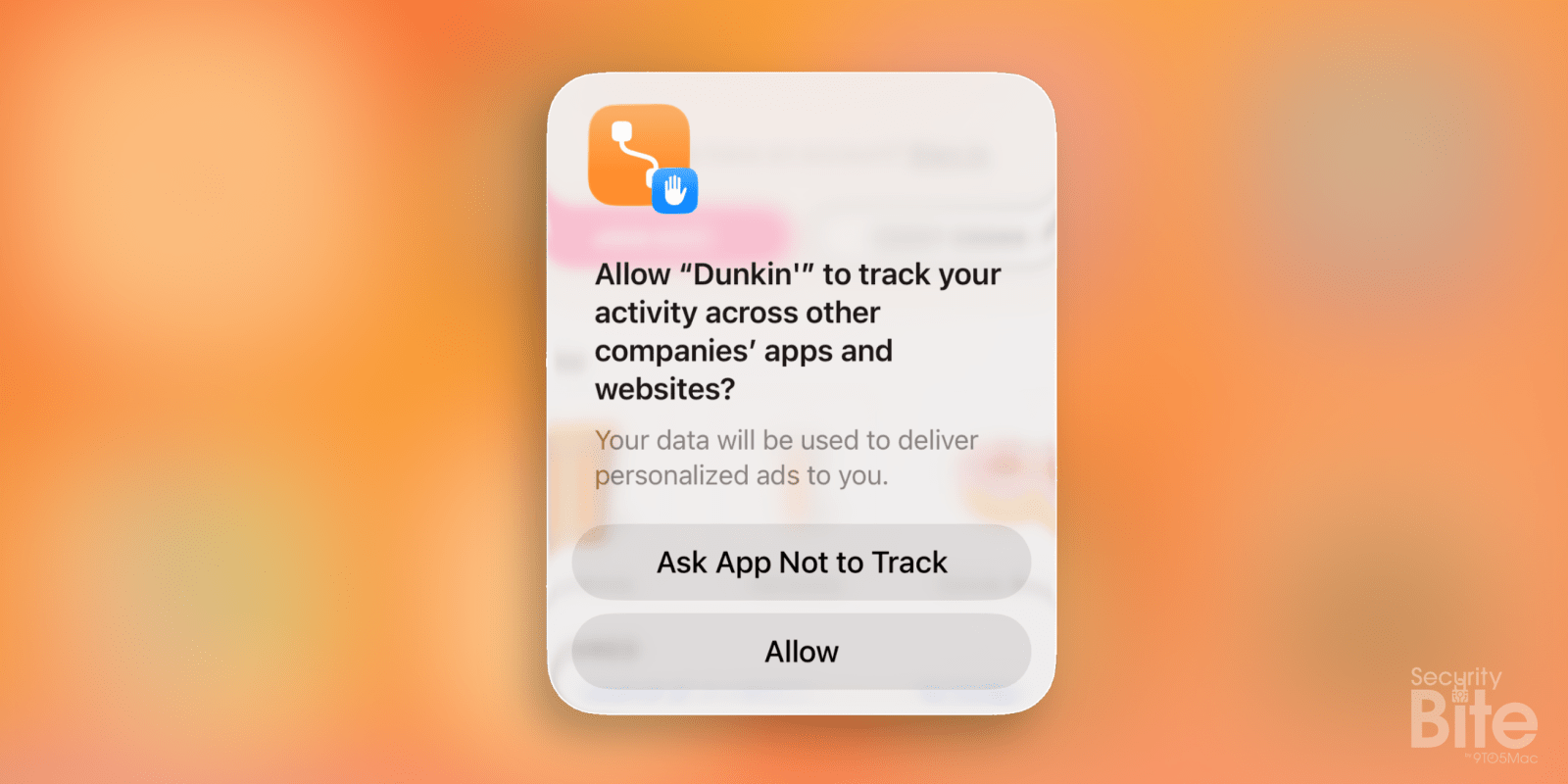
When Apple dropped App Tracking Transparency (ATT) prompts in iOS 14.5 back in 2021, it was a watershed moment for user privacy within third-party applications. Nothing like it had existed prior. The initiative gave iPhone users control over whether their in-app data could be aggregated and shared with third parties for advertising or other purposes.
Still, today, I often find comments online from people who don’t really know what it does and find the wording very taboo. Like, why “Ask” the app? And is it still effective? Let’s briefly look at App Tracking Transparency in 2025…
Apple is expanding the number of ads that appear in App Store search results. In an update on its Apple Ads website today, the company detailed that it will introduce more ads “to increase opportunity in search results” starting next year.
To comply with the Mobile Software Competition Act (MSCA), Apple has announced a set of major changes to the App Store and iPhone in Japan. The changes include new app distribution options for developers and new alternative payment rules for the App Store.
On the heels of unveiling the App Store Awards winners last week, Apple today unveiled the most downloaded apps and games of the year in the United States. This year, the most downloaded free iPhone app was ChatGPT, while the top paid iPhone app was HotSchedules.
Meanwhile, the top free iPhone game was Block Blast!, while the top paid iPhone game was Minecraft: Dream it, Build it.
Head below for the full list of the top iPhone and iPad apps and games of 2025.
Apple has been accused of breaking the law by failing to comply with US sanctions after the App Store was found to have contain dozens of apps from sanctioned companies. The same was true of Google, though at a smaller scale.
The banned apps were identified by the Tech Transparency Project, which says it demonstrates that Apple failed to live up to its promises that the App Store represents a safe and trusted source …
In preparation for a law that will prohibit Australians under 16 from having social media accounts, Apple is highlighting the App Store tools that developers can use to ensure their apps comply. Here are the details.
After announcing the finalists last month, Apple today officially announced the winners of the 2025 App Store Awards. This year, the App Store Awards recognize 17 apps and games for their “technical ingenuity and lasting cultural impact.”
The winners were selected by App Store Editors for “demonstrating exceptional innovation, user experience, and design.”
As it’s tradition, many indie (and major) app developers take Black Friday and Cyber Monday to offer steep and rare discounts for their apps. Here’s a list of great deals you should check out.
There’s been growing pressure to protect children from age-inappropriate content in both apps and websites at both state and federal levels.
Moves to shift the responsibility from individual developers to app stores is gaining momentum, and that’s reflected in a new proposed law: the App Store Accountability Act …
As we approach the end of 2025, Apple is gearing up to unveil the winners of the 2025 App Store Awards.
As part of that process, Apple today announced the 45 finalists for the App Store Awards. The nominations span a wide range of categories. Head below for the full list.
Apple has updated its App Review Guidelines with multiple new rules, including one targeting the misleading use of other developers’ branding. Here are the details.
Earlier today, reporting emerged of Apple and WeChat owner Tencent coming to an agreement that will earn Apple a 15% commission on revenue from mini apps.
Now, it seems that this is actually tied to a newly announced Mini Apps Partner Program wherein Apple offers that reduced 15% commission to all developers.
Tencent, like all developers, will first need to apply to take part in the program.
Apple was today denied permission to appeal the result of a billion-dollar lawsuit filed by UK app developers accusing the company of abusive commission levels.
The company last month lost the case and a hearing today is deciding how the damages are calculated. If the ruling stands, it is expected to end up costing Apple anywhere between £1B and £2B ($1.3B to $2.6B) – but Apple is expected to counter this with four arguments …
Apple’s opposition to the EU’s Digital Markets Act (DMA) antitrust legislation took a turn back in September when the company started arguing that the law should be repealed. It also suggested that more new features would be delayed for EU customers, and perhaps even new hardware.
The company is now claiming a new study proves that the DMA fails to live up to one of its core promises: reducing app prices …
Apple’s monopoly on the sale of iPhone apps is set to be further eroded according to a new tweet showing third-party app stores in the iOS 26.2 beta in Japan. This follows a ruling by Japan’s Fair Trade Commission in August that both Apple and Google must allow alternative app stores.
This will make Japan the 29th country to get third-party app stores for the iPhone, with others set to follow as courts and antitrust regulators continue to issue rulings …
Update, November 8, 9:46 a.m. ET: The GitHub repository and its forks have been taken down. The original story follows below.
Just hours after Apple launched a revamped web interface for the App Store, a GitHub project was released with the site’s entire front-end source code. Here’s how that happened.
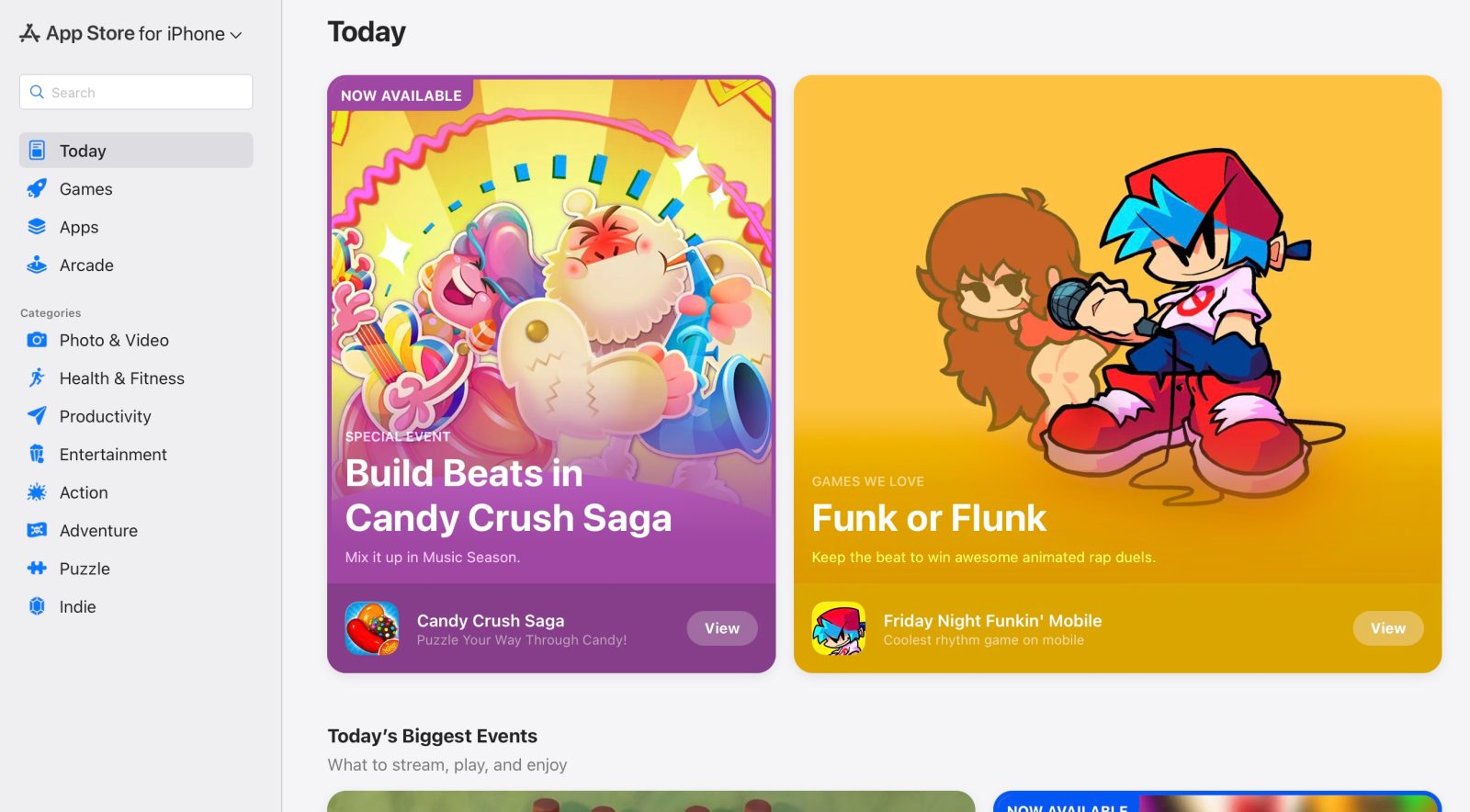
Apple has launched a dramatic new web interface for the App Store. You can now get the full App Store experience right in your browser, with dedicated pages for the iPhone, iPad, Mac, Vision, Watch, and TV app libraries.