Asus

See All Stories
Site default logo image

RIM to be split into handset and services, sold off piecemeal?

TheVerge reads behind the Sunday Times’ firewall:

The Sunday Times reports today that RIM is considering a plan to split its handset division and messaging network into two separate companies, and will sell off the struggling BlackBerry hardware business. The British paper doesn’t cite any sources in the report, but it says that Facebook and Amazon are both “potential buyers.” As part of this plan, RIM could keep its enterprise-friendly messaging and data network (including BBM and BIS) in-house and license them out.

BBM and BES only run on Blackberry now, and that platform will have a market share heading toward zero by the time RIM gets all of this organizational structure sorted. So keeping that a separate business makes little sense.

The other option is selling out piecemeal to Microsoft for parts and people. I imagine that by then, the price of RIM will get so low, even Apple and Google would be interested in picking up the parts (patents, people, and tech). Microsoft is probably already lining up some cash to buy the remnants of Nokia as well, so it is less likely to pick up RIM (although it made several attempts to pick up RIM in the past).

Moreover, RIM’s QNX/Blackberry 10 might have some value for companies like Dell, HP (which recently fumbled WebOS), Lenovo, Toshiba, Acer, or ASUS due to Microsoft now building its own tablets and scaring OEMs.

That split could also see Cisco or Oracle taking the backend stuff.

Any way you look at it, on the fifth anniversary of iPhone, Blackberry —as we knew it— is almost over.

New iPad as 25+ hour LTE hotspot, runs cooler than some Android tablets

Site default logo image

There are two interesting pieces of information this morning on the new iPad.

If used solely as an LTE MiFi, AnandTech got a mind-numbing 25.3 hours of Verizon LTE hotspotting out of the new iPad. That is equal to about five to seven MiFis.

Now for the killer. If you have an iPad on Verizon’s LTE network and use it as a personal hotspot (not currently possible on the AT&T version), it will last you roughly 25.3 hours on a single charge. Obviously that’s with the display turned off, but with a 42.5Wh battery driving Qualcomm’s MDM9600 you get tons of life out of the new iPad as a personal hotspot.

By my calculations, that means you could download 182GB of data at 2MB/sec on LTE through a single charge or over 18 times Verizon’s highest data plan in a single day.

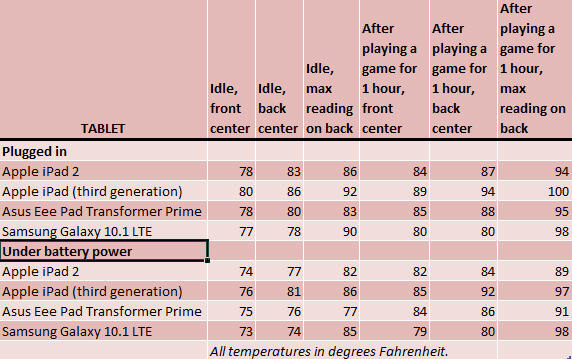
In addition, PCWorld tested the heat on the new iPad and compared it to the ASUS Eee Transformer Prime and Samsung Galaxy Tab under the same conditions. Without the charger plugged in, the new iPad was actually cooler than the Samsung Galaxy Tab—even with a bigger battery after playing a game for an hour.

The point is that the new iPad runs only slightly hotter than high-end Android tablets and only when charging. The cool champion is still the iPad 2 when playing graphic intensive games.


Expand
Expanding
Close

Foxconn is already producing 150,000 iPhone 5s/day, 2nd supplier Pegatron won’t begin until 2012?

Site default logo image

Somewhere in China there are stacks of millions of completed iPhone 5s.

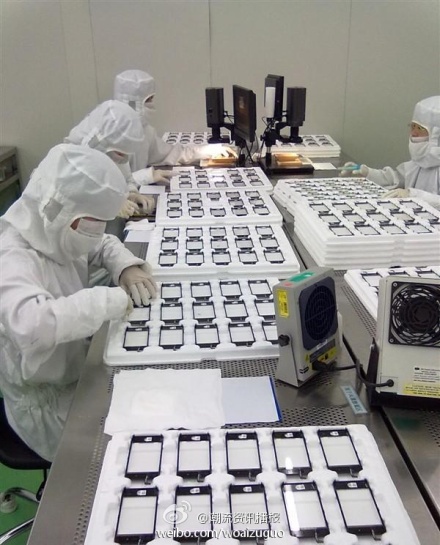
Digitimes is reporting that iPhone 5 production is at full swing with 150,000 of the devices being produced per day. That isn’t quite the “volume” production level that Apple expects as it gets ready to release its phone for the holiday shopping season, however.

Lens maker Largan Precision, touch panel maker TPK Holding, reinforced glass supplier G-Tech Optoelectronics and battery vendors Simplo and Dynapack are all operating at full swing currently, the sources indicated.

We’ve also heard recently that these iPhones aren’t being boxed up just yet as Apple is finalizing the iOS 5 build that will eventually go on these iPhones.

Shipments of iPhone 5 from the supply chain are expected to reach 5-6 million in September but will then ramp up to over 22 million units in the fourth quarter as suppliers will ship fewer iPhone 4 and CDMA-version iPhones during the final quarter of the year, noted the sources.

Apple’s other manufacturing partner, Pegatron, is said to be holding off on production until 2012 and is expected to only build 15% of the devices overall.

Expand
Expanding
Close

WSJ: Thinner, lighter iPhone is expected this fall

Site default logo image

.

The WSJ reports on the next generation iPhone due this fall:

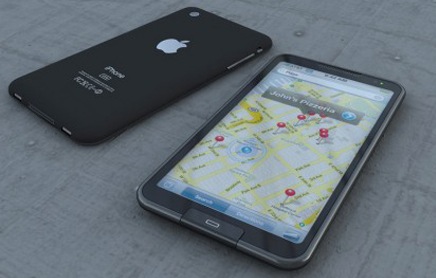
According to some suppliers of components to Apple, the new version of the iPhone is expected to be thinner and lighter than the iPhone 4 and sport an 8-megapixel camera. One person said the new iPhone will operate on Qualcomm Inc.’s wireless baseband chips. The current iPhone 4 uses memory chips made by Samsung Electronics Co. and baseband chips from German chip maker Infineon Technologies AG, according to a report by market-research firm iSuppli Corp.

Verizon execs have already said the next iPhone will be a GSM/CDMA world phone – which means it is likely that it will use Qualcomm’s Gobi chips (As the current Verizon iPhone and iPad currently do).  Numerous reports have also said it will contain a 8megapixel camera – from Sony and other manufacturers.

There is some question about whether or not these devices will meet production deadlines, however…


Expand
Expanding
Close