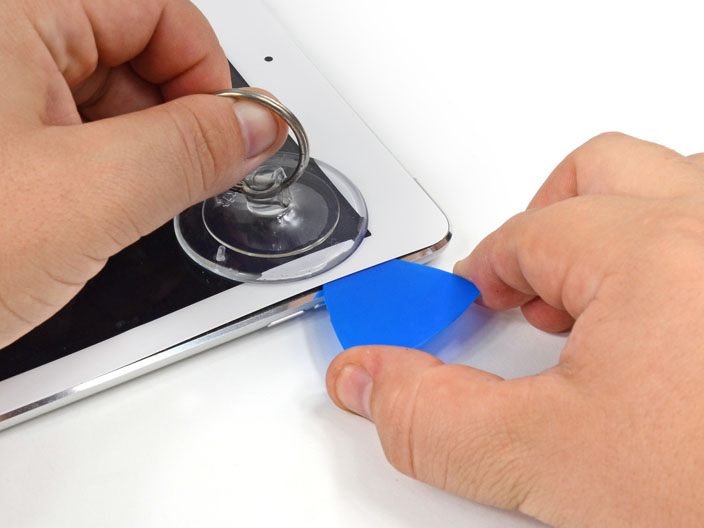
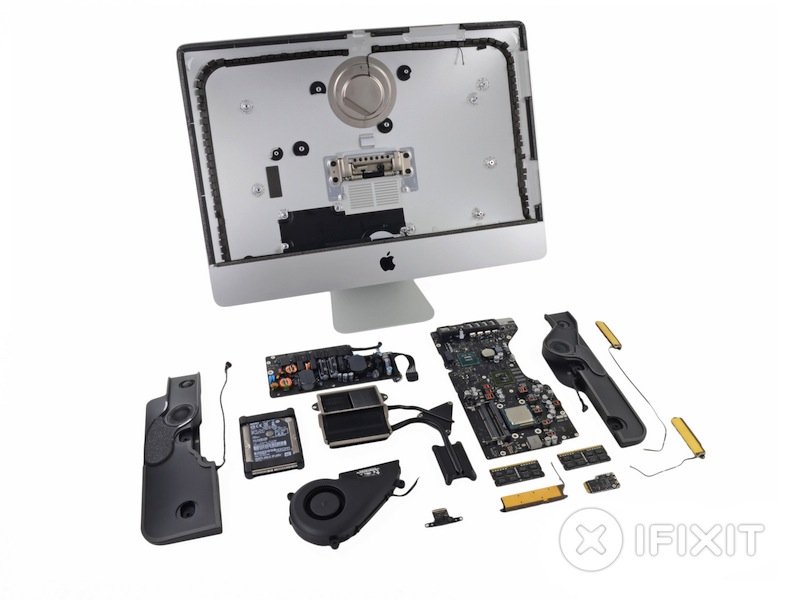
The folks over at iFixit have gotten their hands on one of Apple’s new 27″ Retina iMacs, and, as they are wont to do, immediately opened it up to find out what makes these things tick. Inside they found that most of the internal components are actually somewhat familiar.
The SSD inside the new iMac is the same unit found inside the latest-generation MacBook Pro, while the logic board, Bluetooth controller, and more are identical to that of previous iMacs. In fact, in the case of the logic board, iFixit didn’t even document the dissection, instead referring back to the previous year’s teardown.
Need to learn how to replace your iPhone 6 or 6 Plus’s battery, display, or other components? Our friends over at iFixit, the same ones that regularly tear apart the newest devices to have a look inside, today published its latest iPhone repair guides for the recently released iPhone 6 and iPhone 6 Plus. Expand Expanding Close
If anyone has more interest than its owner in how well a phone survives accidents, it’s the insurance companies that have to fork out afterwards. iDevice warranty specialists SquareTrade put the iPhone 6 through a series of breakability tests, and found that it was the toughest iPhone yet.
The tests began with ‘grippability’ – how likely you are to drop the phone in the first place – then ran through slide tests, submersion in water and a series of six drops from a height of four feet … Expand Expanding Close
Similar gaskets surround the volume buttons. Altogether, this seems to represent a move toward increased water/dust resistance, and therefore improved durability.
iFixit
How did Apple do? Well iPhone warranty provider Squaretrade was able to dunk both the 6 and 6 Plus for 10 seconds without any real damage. While this is indeed nice to have, especially for those of us who like to take our iPhones with us to the pool, it is by no means a guarantee like Samsung and Sony have on some of their phones.
And then there is the toilet. If you are willing to go after your iPhone 6 within a few seconds, you might actually have a good chance at saving it.
The slightly amphibious nature of the iPhone 6 isn’t entirely new either. Previous iPhones have been able to go underwater for a few seconds (see iPhone 5c below) but as you can see buttons and features rapidly begin to fail. Expand Expanding Close
In keeping with tradition, iFixit has started its live teardown of the latest iPhone hardware (an iPhone 6 Plus in this case), revealing all of the device’s internal components for the first time. So far we’ve already seen a 2915 mAh battery, which provides the increased battery life in the much larger of the two models.
The company will likely teardown the smaller iPhone 6 once the Plus model has been fully disected. You can follow along as the company discovers what makes the new handsets tick over on iFixit.com. We’ll keep this post updated as they add new information.
Ok, I admit it: I’m officially old. Old enough, in fact, to have bought the very first Macintosh in 1984: the Macintosh 128K.
Computers in those days had green screens and were controlled by typing arcane commands. Bold and italics did not appear on-screen, instead you saw ^Bthis is bold^B and ^Ythis is italics^Y (CTRL-Y for italics because CTRL-I was tab, for reasons no-one understood but didn’t question). You never had to worry about what typeface to use because computers could neither display nor print them.
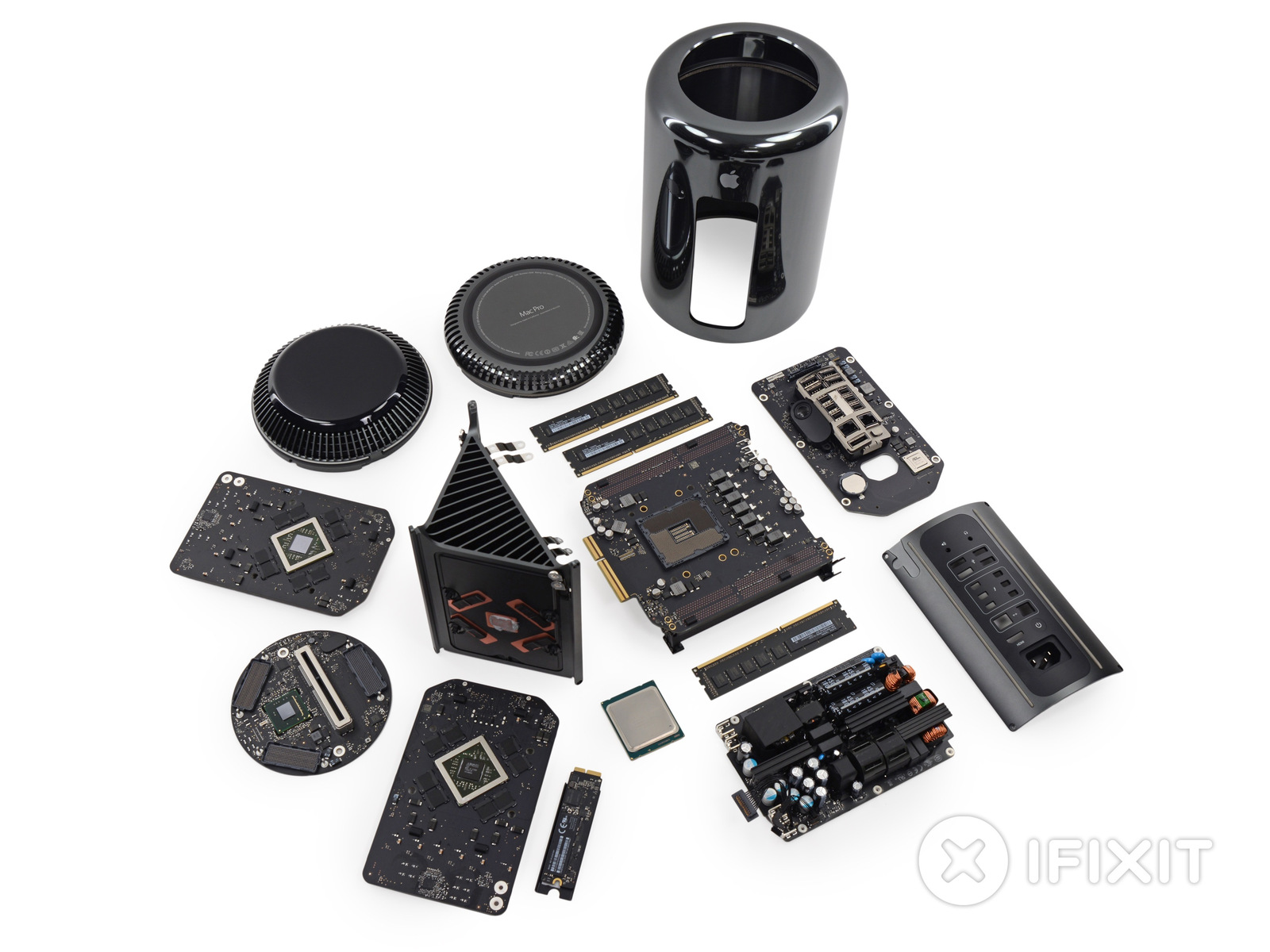
Unlike any other Apple product iFixit has reviewed this year, the firm gives high praise to the repairability of the Mac Pro. The system uses no proprietary screws and RAM is accessible without the need for any tools. Add in the socketed, upgradable CPU originally found in the earlier teardown, the Mac Pro is the most repairable computer in Apple’s lineup by far.
For those whose DIY skills are rather less catastrophic than my own, our friends over at iFixit are offering a range of Black Friday deals on their repair kits, with savings of up to 52 percent.
We of course regularly feature the company’s teardowns, with the most recent being the iPad Air and Retina iPad Mini.
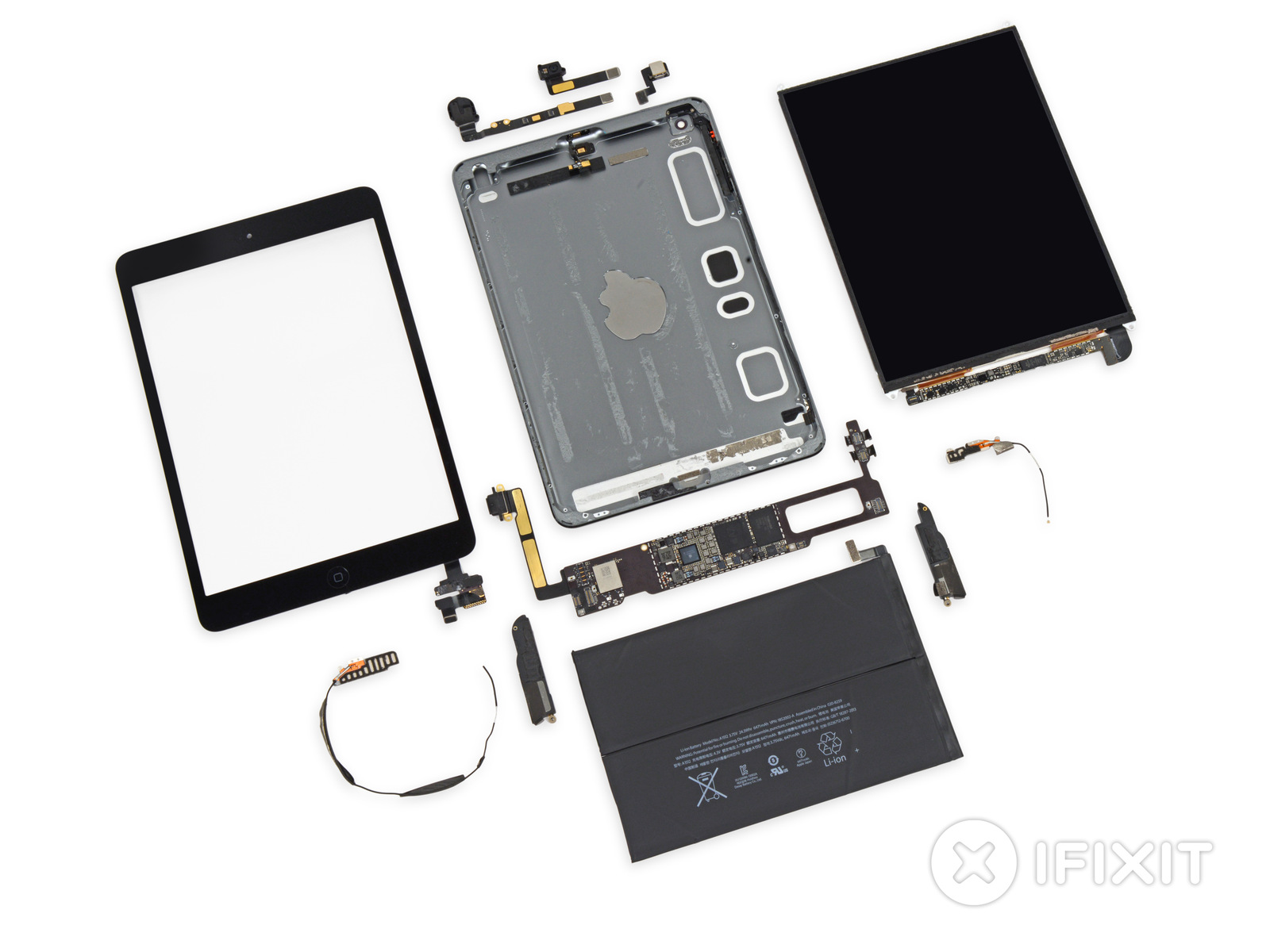
Following close behind its teardown of the iPad Air, iFixit has now taken its toolkit to the Retina iPad Mini. While the company understandably focuses on repairability – that’s how it makes it’s money – we’re betting most people just want to have a peek inside.
Unsurprisingly, the new iPad Mini is essentially a cross between the iPad Air and the iPhone 5s … Expand Expanding Close
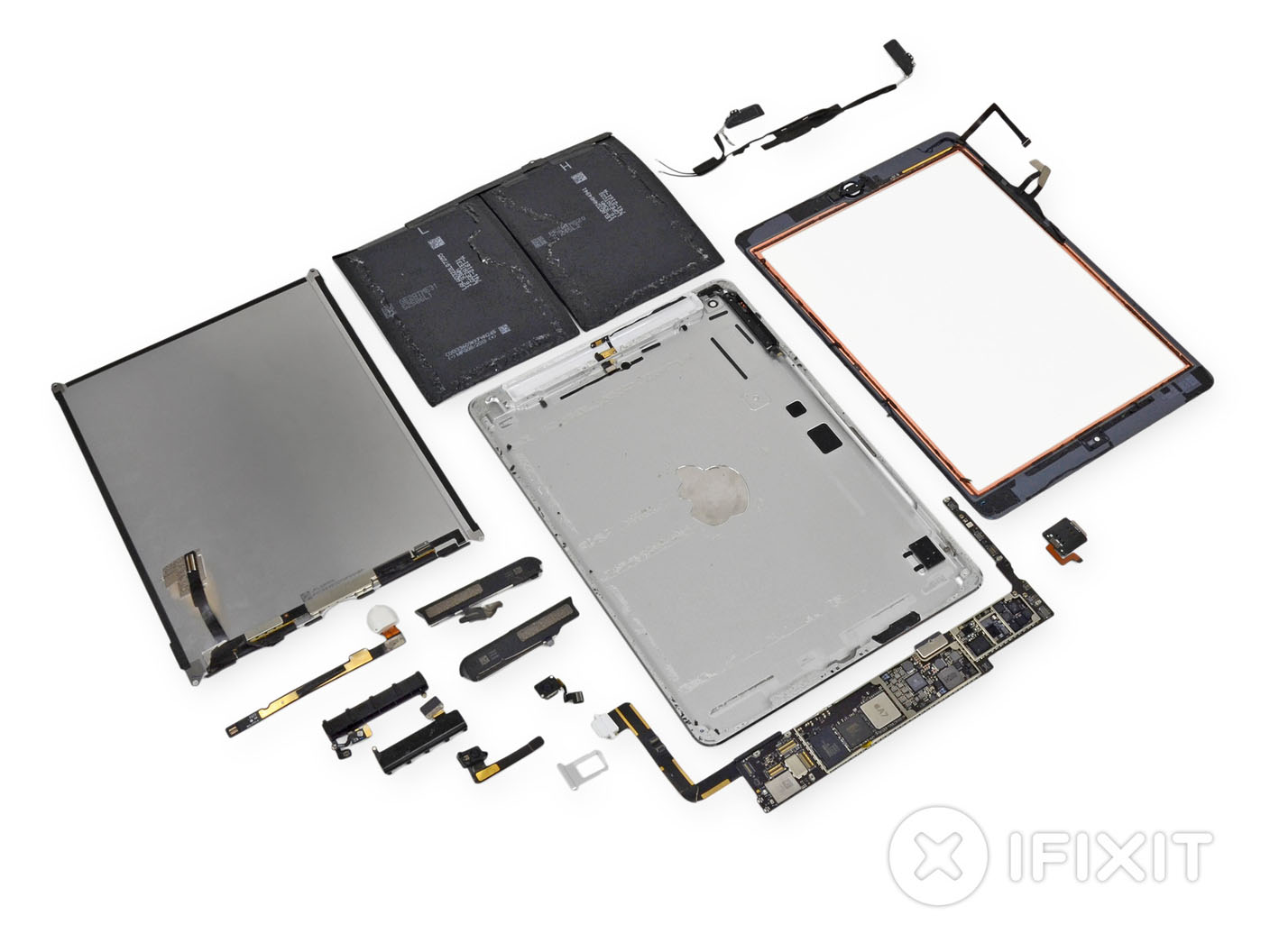
iFixit has done its usual trick of hopping over to Australia to get its hands on an iPad Air in the first time-zone to open its doors for business to bring us a look at the innards of the new device. The device is now on sale in the U.S. too, with supplies expected to be good.
No surprise that the company found little prospect of success for DIY repair, reporting that even opening the casing was a challenge: when you pack that much technology into so small a space, there’s going to be a lot of glue involved.
Some details of what the company found and more photos below the fold … Expand Expanding Close
iFixit points out that the 21.5 inch iMac now includes a Fusion Drive SSD bay as standard, improving future upgradeability prospects of the machine. With last year’s model, this expandability was only available if customers had specifically ordered the iMac with a Fusion Drive originally. As the new drives are now connected via PCIe, third-party drive makers should be able to make appropriate adapters to enable the addition of a second hard drive. Both the 21.5 inch and 27 inch models offer this unused PCIe Fusion Drive SSD port. A picture of the empty port is attached below.
As part of its Liberation Week and the big savings its currently offering on its iPhone Liberation Kits, iFixit has put together the video above walking us step-by-step through the iPhone 5 battery replacement process. It’s also got a few more below taking us through replacing the home button and the device’s display assembly.
You’ll of course need a pentalobe screwdriver (included in the Liberation Kit) for Apple’s proprietary tamper-proof screws, as well as a phillips #01 screwdriver, a suction cup, and small tool to pry off the display. iFixit reminds us that its pro toolkit contains everything necessary to get the job done.
iFixit’s iPhone 5 and iPhone 4/4S Liberation Kits, which include a pentalobe screwdriver and replacement screws, are available for $0 + shipping while supplies last. The deal will continue until the end of its Liberation Week celebrations ending on July 5.
Update: We’ve received information directly from Pebble that the watch does indeed support Bluetooth 4.0. The company provided the following explanation regarding iFixit’s findings:
The Bluetooth chips TI sent to Panasonic were labeled CC2560 but have been flashed with the firmware (and BT LE support) of a CC2564. That’s why the module was labeled PAN1316. Many chip vendors make silicon consistent between product lines but simply flash different firmware to enable features. Our chips were labeled CC2560 because TI asked us if we wouldn’t mind using them with CC2564 firmware to speed up our order. Pebble most definitely has Bluetooth LE support, though it has not yet been enabled in our operating system.
iFixit has performed its usual teardown process for yet another device today, this time giving us a look inside the recently launched Pebble Bluetooth smart watch. iFixit admits it has no way of rating the repairability of this type of device, and for that reason isn’t giving it a repairability score like usual. Unfortunately, at first glance the watch doesn’t appear to be easily repairable with the report noting waterproofing makes for a “very inaccessible battery.” iFixit noted that excessive adhesive used to keep out water made it impossible to access the insides of the device “without compromising the display”:
The Pebble employs tons of adhesive to keep water (and tinkerers) out. Add in a bezel around the screen, and it’s impossible to separate the cases without compromising the display.
The report also claimed that the Bluetooth chip being used does not appear to support Bluetooth 4.0 (BLE), despite the company promising support for the protocol in a future software update:
The backside of the motherboard houses a Panasonic RF module, promising both Bluetooth and Bluetooth Low Energy (BLE) functionality, as advertised by the folks at Pebble. Removing the EMI shield reveals a Texas Instruments chip in the same family as, but slightly different than the one we expected. According to its datasheet, this chip doesn’t support BLE. Word on the street was that Pebble had BLE functionality just waiting to be activated with a firmware update, but we can’t find evidence of the hardware to back up this hidden potential.
The good news is iFixit estimates the battery in Pebble will last 6 to 10 years and the developers confirmed a recycling program will be in place. We’ll have to wait for official word from Pebble on the questioned Bluetooth 4.0 support. You can check out the full teardown from iFixit here.
iFixit, the repair guide site that has been vocal about the lack of repairability in Apple’s devices, has released a new report that compares the repairability of tablets currently on the market. With the exception of the Microsoft Surface Pro, Apple’s iPad lineup lands at the bottom of the list with a 2/10 repairability score.
Among the issues with repairability for iPads: hidden screws complicate disassembly, excessive amounts of adhesive, difficulty removing batteries, and, for some models, a “high chance of cracking the glass during disassembly.”
Coming out on top of iFixit’s list is the Dell XPS 10 and Amazon’s Kindle Fire. iFixit explained its methodology:
A device with a perfect score will be relatively inexpensive to repair because it is easy to disassemble and has a service manual available. Points are docked based on the difficulty of opening the device, the types of fasteners found inside, and the complexity involved in replacing major components. Points are awarded for upgradability, use of non-proprietary tools for servicing, and component modularity.
From iFixit’s ritual iMac dismemberment yesterday, we learn that the particular 21.5-inch iMac they bought says it was “Assembled in USA”. The moniker isn’t new—we’ve seen it since at least a few iMac models back on the packaging. But as far as we can tell, “Assembled in USA” wasn’t etched in the actual machine’s aluminum, leading people to believe that the iMacs that were shipped were “refurbished in the USA”. However, this forum shows that some were actually assembled and sold new with the “Assembled in USA” label (below—27-inch iMac, previous gen).
Regardless of previous endeavors, Apple is shipping new iMacs “Assembled in USA”. PED at Fortune found one. Jay Yarrow at BI found one, too. This isn’t an isolated incident. We also heard that other new iMacs say “Assembled in China”, as you’d expect.
Still, it makes for an interesting question: Is Apple building some of its iMacs in the United States? Is that percentage growing since it seems much of the first line of iMacs are coming with USA labels?
The “Assembled in USA” label doesn’t just mean that foreign parts screwed together in the U.S. either. The U.S. Federal Trade Commission assumes that a “substantial transformation” must happen in the U.S. for the label to be used.
Specifically, the FTC states that the label “Assembled in the USA” should be the following:
A product that includes foreign components may be called “Assembled in USA” without qualification when its principal assembly takes place in the U.S. and the assembly is substantial. For the “assembly” claim to be valid, the product’s last “substantial transformation” also should have occurred in the U.S. That’s why a “screwdriver” assembly in the U.S. of foreign components into a final product at the end of the manufacturing process doesn’t usually qualify for the “Assembled in USA” claim.
Example: A lawn mower, composed of all domestic parts except for the cable sheathing, flywheel, wheel rims and air filter (15 to 20 percent foreign content) is assembled in the U.S. An “Assembled in USA” claim is appropriate.
Here’s where it gets more interesting. The FTC gives the specific example of a computer manufacture:
Example:All the major components of a computer, including the motherboard and hard drive, are imported. The computer’s components then are put together in a simple “screwdriver” operation in the U.S., are not substantially transformed under the Customs Standard, and must be marked with a foreign country of origin.An “Assembled in U.S.” claim without further qualification is deceptive.
That means one of two things: Either Apple or its contractors have some sort of significant manufacturing operations in the U.S., or it is being deceptive in its marketing (something that sadly, isn’t out of character)… Expand Expanding Close
Unfortunately, iFixit described the process as an “exercise in disappointment,” noting the iMac’s new thinner design introduces new hurdles for repairability. Most notably, the device’s glass and LCD are now glued directly to the iMac’s frame, while accessing the RAM, CPU, and hard drive will now mean having to remove the entire logic board:
The late 2012 iMac 21.5″ — code-named EMC 2544 — is an exercise in disappointment for us. We were quite worried when we saw that super-thin bezel during Apple’s keynote, and unfortunately we were correct: the glass and LCD are now glued to the iMac’s frame with incredibly strong adhesive. Gone are the lovely magnets that held the glass in place in iMacs of yesteryear.
A few things noted in iFixit’s highlights: a new rubber housing that “dampens the vibrations from the spinning hard drive,” a new single fan layout, dual microphones, and a 5mm thinner LG made display. Those are some of the highlights of Apple’s new design, but iFixit is scoring the new iMac as a 3 out of 10 (down from 7 last year) due to the many issues with repairability. Here are just a few:
Past the new Fusion Drive, upgraded RAM, and speed, French publication Macg.co found the 2012 Mac Mini introduced in September also boasts upgraded Wi-Fi antennas. The upgraded antennas brings the desktop to a maximum Wi-Fi speed of 450 Mb/s, now up-to-par with the 2011 MacBook Pro and iMac.
Of course to reach 450 Mbits/s you need a router to support it, and luckily, both Apple’s latest Time Capsule and Airport Extreme. There’s also other factors such as room configuration, interference and so forth. As to why Apple isn’t advertising the speeds is unknown.
Lines are a little bit shorter than most expect from an Apple product launch, but today Apple’s new iPad lineup, the mini and fourth-generation with Retina, officially go on sale. While the new fourth-generation Retina iPad is not a whole lot different from the iPad 3 it replaced, iFixit has took apart the new iPad to find out the exact changes made on the inside.
A few things of note: iFixit found the LCD is manufactured by LG, as opposed to the likely Samsung-manufactured display found on the iPad mini. We also get a peek at the new A6X and the new Lightning connector. Unfortunately, Apple doesn’t appear to have taken advantage of the potential to save space with the new connector:
Apple didn’t save any space by switching to the smaller Lightning connector (lower); rather they let the Lightning cable sit in a frame the same size as the 30-pin dock connector (upper)… We were hoping that space savings would yield bigger, better speakers. Very disappointing, indeed.
Apart from the slightly upgraded front-facing camera, most other components, such as RAM and the battery, appear to be the same as iPad 3: Expand Expanding Close
Apple was just given the EPEAT Gold certification for the Retina MacBook Pro after reversing its decision to withdraw its products from the green computer registry. Today, iFixit’s Kyle Wien has a few strong words about the MacBook Pro’s Gold certification. He claimed the decision “demonstrates that the EPEAT standard has been watered down to an alarming degree”:
With the Retina MacBook Pro, EPEAT felt there were three specific concerns about the product design that merited further investigation… On the surface, it seems that a product assembled with proprietary screws, glued-in hazardous batteries, non-upgradeable memory and storage, and several large, difficult-to-remove circuit boards would fail all three tests…But it’s not that simple….
Apple’s MacBook Pro with Retina display is not repairable, it’s not upgradeable, and it’s not easy to disassemble for recycling. Yet it is EPEAT Gold. The Product Verification Committee’s decision essentially greenwashes the Retina.
We got a look inside the new fifth-generation iPod touch last week thanks to our friends over at iFixit. Today, they are taking apart the seventh-generation iPod nano that Apple recently unveiled alongside the new iPod touch and iPhone 5 lineups. While it did not perform quite as poorly as the iPod touch in terms of repairability, it was still unable to outperform the 7 out of 10 repairability score given to iPhone 5. We see the usual suspects inside including flash memory from Toshiba and a TI touchscreen controller. However, a quick look at the Nano’s internals shows a few anonymous, Apple-branded chips as well:
* Toshiba THGBX2G7D2JLA01 128 Gb (16 GB) NAND flash
* Texas Instruments 343S0538 touchscreen controller
* Broadcom BCM2078KUBG Bluetooth + FM radio
* NXP Semiconductors 1609A1
* 75203 23017
* 75292 98820
* 339S0193
* Apple 338S1099
* Apple 338S1146
Thanks to many components being soldered to the logic board (battery, lightning connector, headphone jack, etc.), and a battery attached to the assembly, iFixit is giving the new Nano a 5 out of 10 for repairability. Here are some of the highlights:
While the iPhone 5 was able to grab an impressive repairability score in its teardown, iFixit unfortunately found the new iPod touch much harder to get inside. Due to lack of external screws and two “hard-to-manage ribbon cables” on the logic board, the device gets a low 3 out of 10 repairability score. That’s in comparison to the 7 out of 10 awarded to the iPhone 5. iFixit said, “repair is not impossible, but it’s certainly going to be difficult and expensive if one component breaks.” The teardown also found the iPod touch Home button has a “weaker, rubber-membrane design” when compared to the iPhone 5.
Together, with HealthyStuff.org, our friends at iFixit have just completed a chemical analysis of 36 smartphones, including the iPhone 5 and previous generations of the device. Each device was ranked from 0 to 5 (with 0 being best) based on a number of common hazardous materials including lead, bromine, and mercury. In the image above, we see a breakdown on which components of the iPhone 5 have the highest concentration of those chemicals. The findings show Apple is making good in its commitment to greatly reduce harmful chemicals in its products, with the iPhone 4S and iPhone 5 ranking significantly better than previous generations. For instance, the iPhone 2G lands itself at the bottom of the list with a “high concern”—not far from Nokia’s N95.
The iPhone 4S was able to outrank the iPhone 5; indicating Apple was not able to significantly reduce hazardous chemicals in the new device. However, all iPhone models were behind the Motorola Citrus—a device Motorola specifically markets as an eco-friendly option. While iPhone 4S came in second behind Citrus, the inexpensive LG Remarq and Samsung Captivate were able to beat out the iPhone 5. When it comes to Apples’ biggest competitors, such as Samsung’s flagship Galaxy S III and higher-end devices from HTC, the iPhone 4/4S/5 all outrank the competition.
As noted by iFixit, each year only about 8 percent of the 130 million discarded cellphones make it to proper recycling facilities. With Apple likely to build a 100 million new iPhones in the year to come, Apple’s commitment to make the “most environmentally responsible products in our industry” is certainly an important one.
iFixit explained the method used to rank the phones:
iFixit is hardcore when it comes to breaking open our favorite electronics to see what’s inside, and the website did it again today with the new Apple EarPods that just unveiled last week.
There is no repairability score for the EarPods, because they are “the throw-away kind.” Due to their glue blinding, iFixit warned the EarPods would never be the same if taken apart. In fact, an X-Acto blade was needed to cut the headphones open.
The notable tidbits from inside:
The EarPod speakers house a diaphragm/ paper cone, a voice coil, a permanent magnet, and a cabinet. Previous Apple headphones used plastic cones rather than paper.
The new design includes “larger cable wrapping on both ends” to sustain durability and minimize strain on the wires, and Apple removed the external microphone grate to make the EarPods more resilient to moisture damage.
As for the EarPod remote microphone:
The microphone in the EarPods’ remote bears the markings 2F17 045; we also uncovered another IC with the markings TI25ASGVI, which Chipworks believes to be an ADC, or a device used for volume-control duty.
Oh, and click here to see a size comparison of the remote’s circuit board alongside a U.S. dime.
Something to consider: Perhaps the new EarPods are so “mediocre'” because Apple wants to protect ears from the type of sound that only plug earphones produce. Apple sells many headphones, so producing a good sound that protects ears is probably a high priority for the oft-sued Apple.
You might remember a couple months ago when our friends at iFixit tore down the new Retina MacBook Pro. Unfortunately, the device received its lowest repairability score with the company calling it “the least repairable laptop”. While the new MacBooks provide possibly Apple’s least accessible and upgradeable design out of the box, iFixit updated its website today with its official 2012 MacBook Pro Retina repair guide to make it as easy as possible. Fifteen separate installation guides for the AirPort Board, battery, fans, logic board, speakers, SSD, trackpad, etc., are included in the repair guide with one maintenance guide for reapplying thermal paste to the CPU and GPU.
Many components within the laptop can be removed without much fuss, provided folks use the correct tools. Pentalobe screws hold the lower case in place and Torx screws secure everything else. Spudgers and plastic opening tools are absolutely necessary, as many of the components are designed with such tight tolerances that using fingertips is simply not an option.
Fair warning: working on the laptop is no easy task. Some repairs are simply infeasible. For example, there is no way to replace the trackpad without removing the battery. And while it’s possible to remove the battery, chances are high that it will be punctured in the process. Puncturing Lithium-polymer batteries releases noxious fumes and can cause fires. Additionally, removing the LCD glass from the aluminum frame will almost certainly break the glass. So components residing under the LCD — such as the FaceTime camera — will have to be replaced with the entire assembly… Finding replacements for the machine’s proprietary components is currently difficult. We’re working to source parts, but it may take some time.
iFixit also estimated that third-party battery replacements —if done correctly— could cost over $500: