After being named in a group legal filing expressing support for Apple in its case against Qualcomm, Intel has now filed its own statement with the International Trade Commission. The chipmaker alleges that Qualcomm is not licensing its patents at a fair rate and thus abusing its position in the industry.
TSMC, Apple’s sole A-series chip supplier for the iPhone 6 and 7 (and rumored exclusive supplier for the iPhone 8 also), is considering building a foundry in the USA, reports Reuters. While the company had previously said that it hadn’t ruled out the idea, it now says that it will make a definite decision one way or the other in 2018 …
Bloomberg reports that Apple is currently developing a new ARM-based chip that could appear in future MacBook Pros as soon as this year. According to the report, the new Mac chip may be used for low-power tasks that currently rely on Intel’s chip to process.
Intel has just announced the world’s first global 5G modem to help test initial 5G spectrum deployments across the world. As timing would have it, AT&T also announced their “5G Evolution” plans for 2017, which detail what they hope to achieve with the new wireless technology.
Analysts are suggesting that Apple might in future buy the A-series chips it uses in iPhones and iPads from Intel, following an interesting turnaround by the chipmaker this week, reports Fortune.
Intel has long offered foundry services in which they manufacture chips designed by customers, but that service has so far been limited to chips based on its own architecture. As of this week, however, the company has announced that it will also be able to produce ARM-based chips. This would allow Intel to compete with TSMC and Samsung for Apple’s iPhone and iPad chip business …
We can usually get a decent idea of what the insides of an upcoming Mac will look like thanks to announcements from part manufacturers. A report last week detailed some of the changes that Apple has planned for its MacBook Pro refresh in the fourth quarter of this year and now Intel and Samsung have both made announcements that could offer a glimpse into what else Apple will introduce…
Bloomberg reports that Qualcomm shares have dropped after the company’s CEO hinted that its biggest customer could switch to a rival supplier for future orders. Reading between the lines, the speculation is that its biggest customer is Apple (Samsung is the only other company close to holding that title) and that a switch to Qualcomm’s rival means Apple’s is considering Intel for LTE modem chips in the iPhone 7:
Apple’s PCIe SSDs are already very fast, in part due to the Non-Volatile Memory Express (NVMe) protocol used in the latest MacBooks, which dramatically reduces latency times. But future models could get even faster as MacWorld notes that the very latest SSD tech is compatible with NVMe.
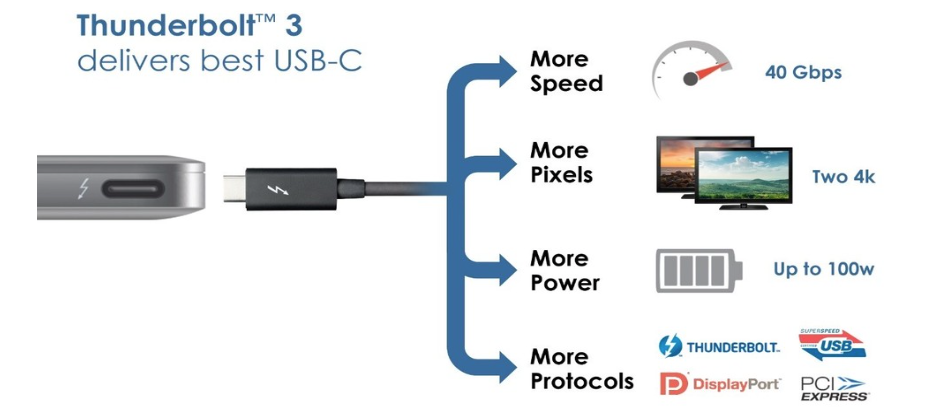
Apple’s decision to equip the 12-inch MacBook with just a single port was a controversial one, but the USB-C port Apple chose just got a whole lot more powerful. Intel announced back in June that it was integrating USB-C and Thunderbolt 3 to create “one compact port that does it all” – and that port just hit the market in the form of the revamped Dell XPS range.
That means that a single port combines superspeed USB, Thunderbolt, DisplayPort, PCI Express and power. The DisplayPort channel can simultaneously handle two 4K monitors.
Dell has opted to include two of the new ports, and this is an approach I think we can expect Apple to take with the new MacBook Air models (whatever they are actually called) and, in time, the MacBook Pro … Expand Expanding Close
According to a report out of VentureBeat, Intel has built a team of more than 1,000 people to build chips for the next-generation iPhone. Specifically, Intel hopes to supply its 7360 LTE modem chip to Apple for the device, and if all goes well, even take part in the manufacturing.
While we already know much of what there is to know regarding Intel’s Skylake lineup of processors, the company tonight has officially taken the wraps off of the CPUs. As expected, the Skylake lineup consists of four different series, including the Y-Series that will power the 12-inch MacBook and the U-Series that will power the MacBook Air.
After a pair of leaks revealed most of the details about Intel’s upcoming Skylake processor lineup, the company today itself has teased a few of the features of the upcoming processors. While Intel says launch details will be revealed in a couple of weeks, some information was teased during an Intel Developer Forum presentation today, including details about support for 4K displays.
Another day, another series of iPhone rumors. Yesterday’s roundup included the latest information about a September 18th next-generation iPhone launch date, faked benchmarks, and new system-on-a-chip schematics, and today our roundup covers a likely fake rose gold iPhone 6S image, reservations for the new phone from carriers, and Germany, and a pair of claims out of China about future iPhone models. Let’s start with the rose gold image:
A few weeks back, details regarding Intel’s upcoming Skylake processors were revealed with promises including improved low power performance, improved battery life, and faster integrated graphics. At the time, the information was somewhat vague, only detailing the year-over-year advancements and performance improvements from Broadwell to Skylake chips. Today, however, FanlessTech has given us a more detailed look at the specifications of the Skylake U-Series of processors.
Intel recently announced plans to bring its professional-class Intel Xeon processors to notebook computers for the first time. The Xeon family of chips is notably only used by Apple in $2,999 and up Mac Pro desktop computers. According to Intel, the high-performance processor will make its way to portable computers starting with processors based on the next-gen Skylake architecture. Specifically, the Xeon E3-1500M v5 family will be the first to bring contemporary workstation power to portable computers, while Intel promises “the right balance of power and mobility” for the upcoming chips. But would Apple ever use Xeon chips in MacBook Pros? Expand Expanding Close
Intel has just announced a new breakthrough in computer storage technology developed in collaboration with Micron that is 1,000 times faster than the current-generation NAND flash chips upon which modern solid-state drives are built. The tech is called 3D XPoint (that’s “crosspoint”), and is the first new type of non-volatile memory created since 1989.
Incredibly, 3D XPoint isn’t just a theoretical product being developed, or an end-goal for a current project. It’s already in mass production and is expected to go on sale in 2016. Intel says the technology will enable a whole host of new applications, ranging from real-time disease tracking to 8K-capable gaming PCs if built into GPUs.
The USB-C port first introduced by Apple in the new 12-inch MacBook looks likely to be used across the MacBook range as Intel has adopted the standard for Thunderbolt 3.
Thunderbolt was developed to simultaneously support the fastest data and most video bandwidth available on a single cable, while also supplying power. Then recently the USB group introduced the USB-C connector, which is small, reversible, fast, supplies power, and allows other I/O in addition to USB to run on it, maximizing its potential. So in the biggest advancement since its inception, Thunderbolt 3 brings Thunderbolt to USB-C at 40Gbps, fulfilling its promise, creating one compact port that does it all.
Apple was an early adopter of the Thunderbolt standard, which allowed a single port to be used for both high-speed data transfer and DisplayPort monitor connections. Intel’s integration of the two standards would allow Apple to replace the Thunderbolt port in the MacBook Pro range while still maintaining full compatibility with existing peripherals … Expand Expanding Close
SSDs are fast, but still expensive compared to spinning metal drives, giving us less storage capacity in today’s Macs than we got in older models. Pick up a classic 13-inch MacBook Pro with a hard drive, for example, and you’ll get 500GB of storage for $1100, compared to just 128GB of SSD storage in the $1300 entry-level Retina model.
That may be set to change thanks to new 3D NAND technology announced by Intel and Micron, allowing them to fit far greater storage capacity into the same space as today’s drives. By stacking flash cells on top of each other, up to 32 layers deep, they can can triple the capacity in the same size chip without the usual high price-tag, reports PC World.
For a standard 2.5-inch SATA drive that means up to 10TB of space; for the M.2 drive type used by most laptops, the 3D NAND will boost capacities up to 3.5TB.
We’ve been promised this technology before–Samsung demonstrated 24 layers of 3D NAND back in 2013–but Intel and Micron say that manufacturers will be able to buy the new chips later this year. Of course, with Apple not noted for its generosity when it comes to storage capacity, you may not want to hold your breath.
The quote, taken from TheTechBlock about 54 minutes in:
I have heard, can’t say who, but let’s call them “informed little birdies”, that USB-C is an Apple invention and that they gave it to the standard bodies. And that the politics of such is that they can’t really say that. They’re not going to come out in public and say it, but they did. It is an Apple invention and they do want it to become a standard.
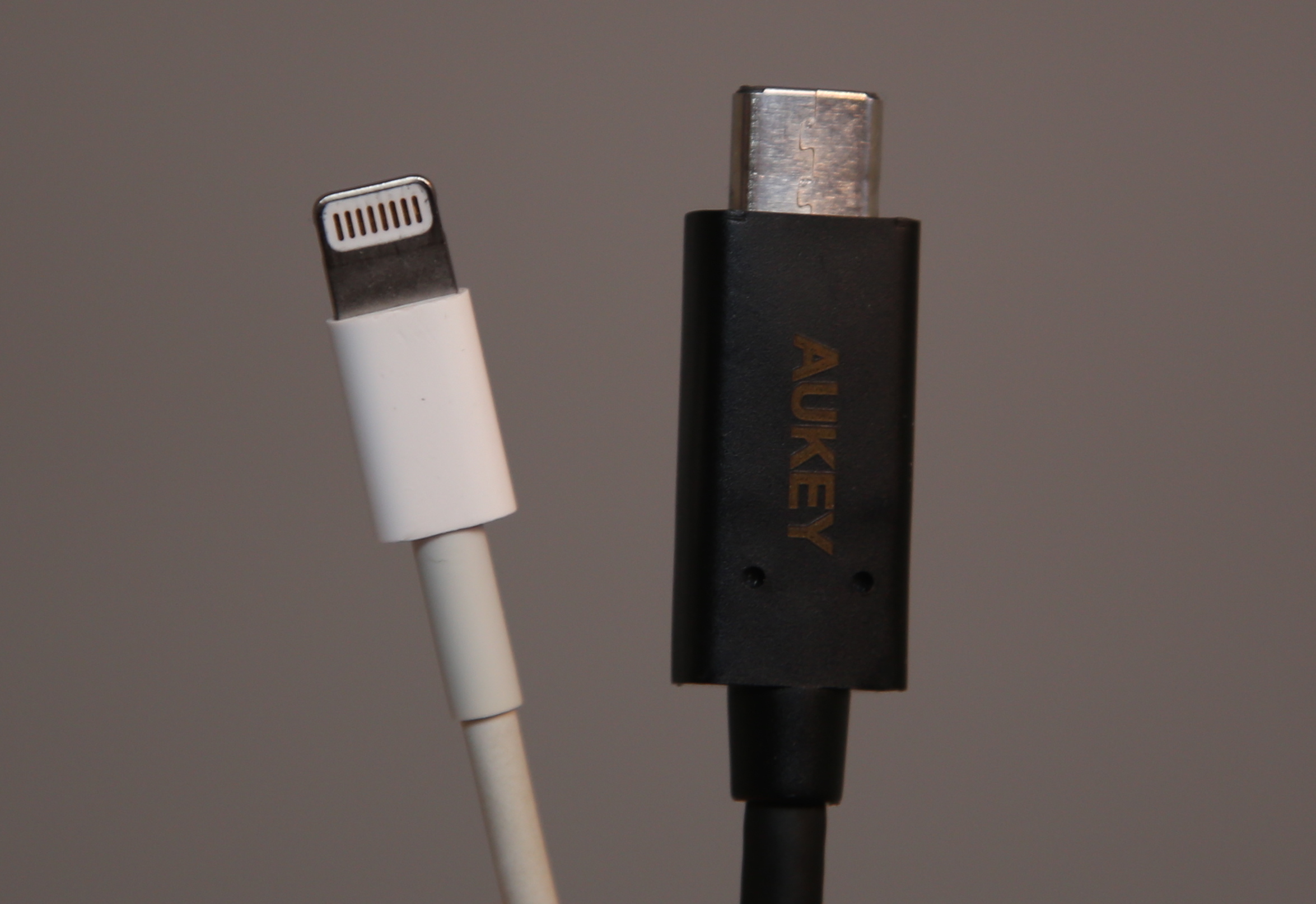
That’s a bit weird, because if Apple did invent USB Type-C, it would seem like a no-brainer for replacing Lightning. But Gruber noted in a post earlier this week that he didn’t think Apple would replace Lightning with USB Type-C.
I think the answer is probably “No, Apple is not going to switch the iPhone and iPad to USB-C”. I think Lightning is a more elegant design, including being slightly thinner. And I think Apple likes having a proprietary port on iOS devices.
But, if they did move iOS devices to USB-C, then you could charge your iOS devices and MacBook with the same cable. And within a few years, all phones and tablets from all companies would charge using the same standard.
A few minutes of research into the matter yields a wealth of data about the genesis of USB Type-C and while Apple does play an active role, it appears they had a lot of help – to put it charitably… Expand Expanding Close
A company spokesperson confirmed the move noting that the product life cycles for the company’s USM technology, which allowed integration of interfaces like Thunderbolt through adapters, is “coming to a conclusion.” Expand Expanding Close
As we reported earlier this week, often reliable KGI is predicting that Apple will bring its in-house designed A-series processor to an entry-level Mac sometime in 2016 with TSMC and Samsung expected to fab the potential A9X and A10X chips, respectively. As the move to put non-Intel chips in the Mac lineup would be a departure for the company, CNBC asked Intel CEO Brian Krzanich about the chip-maker’s business plans with Apple… Expand Expanding Close
Is an A-series chip destined for a future model of the 12-inch MacBook Air?
A KGI report predicts that Apple will begin using its own processors for Macs “in the next 1-2 years,” with a specific prediction of a Samsung-fabbed A10X chip powering at least one Mac made in 2016. The wording appears to suggest an entry-level machine–possibly a future model of the 12-inch MacBook Air.
Apple may launch Mac products that use own AP [Application Processor] in next 1-2 years. This prediction is based on the assumption that Apple’s self-developed AP performs at a level between Intel’s Atom and Core i3 and is good enough for Mac. Using self developed AP can help Apple better control the timing of Mac launches and Mac product features.
With performance between an Atom and Core i3, the chip would not be suitable for mid- to high-end Macs.
An accompanying table (below) shows an A10X chip made with a 10-nanometer process to be made by Samsung at some point during 2016 …
Basis, a company backed by Intel, has announced a new smart watch compatible with iOS devices that places a focus on health and fitness applications. The device is capable of keeping track of several health-related data points, such as steps, calories, heart rate, prespiration, the temperature of your skin, and in-depth information about your sleep habits.
The Peak doesn’t yet support basic smart watch features like email and text notifications, but Basis says those functions will come in a future software update.
The company says that the device will be available by the holidays, meaning it will beat Apple’s own market entry to shelves. Pricing? $199 in either black or white finishes, which means it comes in under the Apple wearable. You can see photos and the full press release for the Peak below: