Intel

See All Stories

Fasten your seatbelts, Mac Pro CPU cracks 30,000 in updated Geekbench tests

Site default logo image

There was much disappointment back in June when the new Mac Pro‘s CPU – the 12-core Xeon E5-2697 – delivered a surprisingly low Geekbench score of 23,901. It had been widely expected to break 30,000.

Some cautioned then that the score, based on a 32-bit build of Geekbench running on an early pre-release version of the CPU with a beta version of Mavericks, might not tell the whole story, and new tests by Tom’s Hardware on V2 of the chip appear to confirm this … 
Expand
Expanding
Close

Apple announces refreshed MacBook Airs with Haswell, 802.11ac, 12hrs battery life

Site default logo image

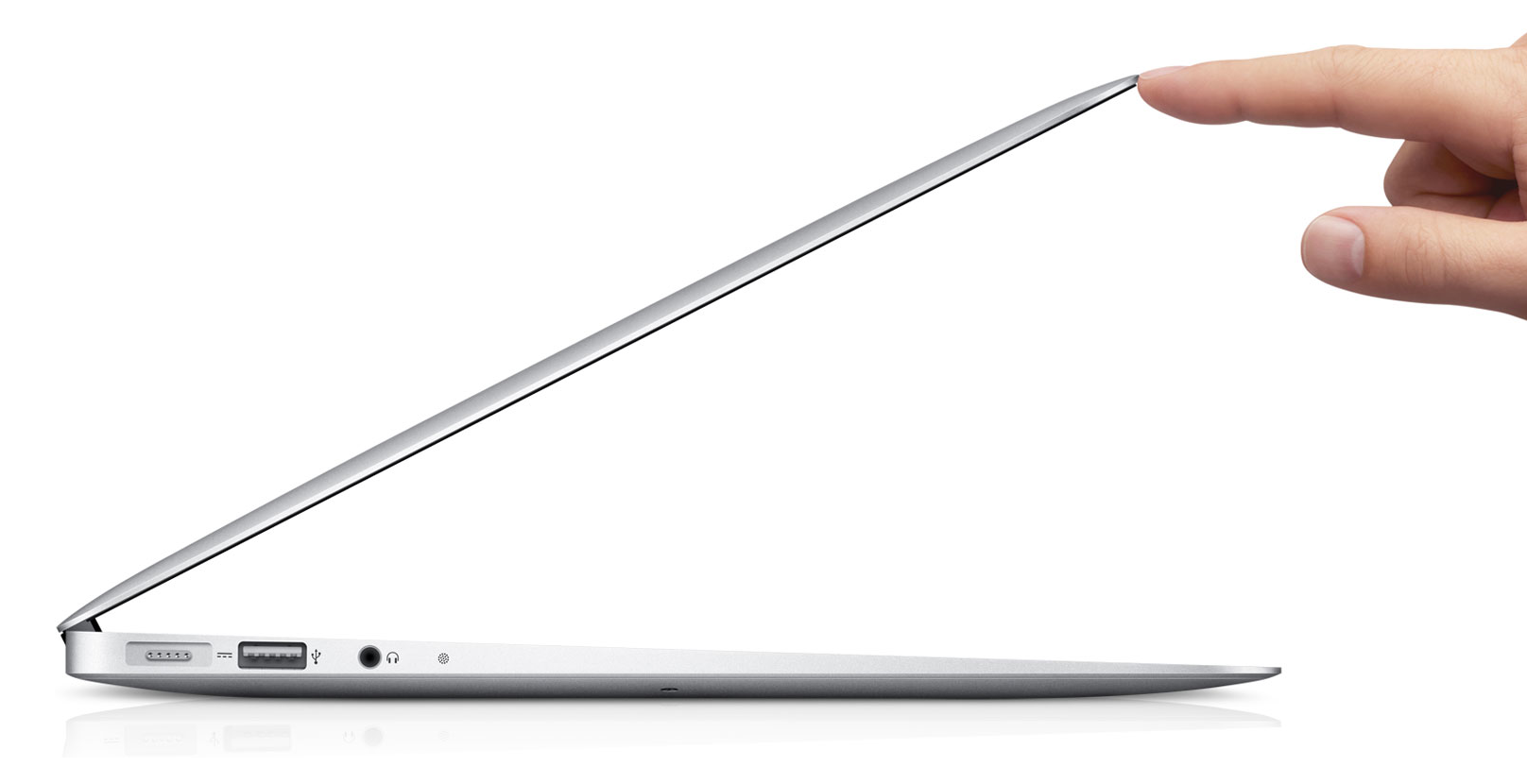
As we expected based on our intel leading up to the event, Apple just introduced refreshed MacBook Airs live on stage at it’s WWDC 2013 keynote address today. Apple announced that the new MacBook Airs will be arriving with the new Intel Haswell chips, as expected, and spent most of the time talking about increased battery life for the devices which now includes up to 12hrs battery. The 13-inch model now boasts battery life up to 12 hours (up from 7 on the previous generation), while the 11-inch model is expected to get 9-hour battery life (up from 5 on the previous generation).

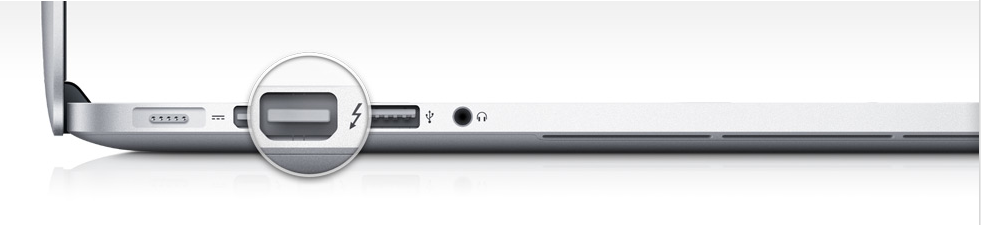
Apple also announced that the new MacBook Airs would include the faster 802.11ac with “a maximum data rate of 1.3Gbps, almost three times faster than 802.11n.” Other specs that Apple mentioned: dual microphones, a FaceTime® HD camera, a high-speed Thunderbolt port and two USB 3.0 ports.

All models will be available with a 1.3 GHz processor with Turbo Boost speeds up to 2.6 GHz and 4GB of RAM, but Apple will also make a BTO option available with a 1.7 GHz Intel Core i7 processor with Turbo Boost speeds up to 3.3 GHz, 8GB of RAM, and a 512GB SSD.

Apple said the new MacBook Airs include up to 40% faster graphics, 2x GPU execution units, and more energy efficient CPUs, while the machine itself now meets ENERGY STAR 5.2 and EPEAT gold environmental standards.

Apple will be shipping the new MacBook Airs starting today starting at $999 for a 128GB 11-inch model and $1099 for the 128GB 13-inch model. An extra $200 will bump you up to the 256GB models, but Apple didn’t provide any other details on any other upgraded internals.

Earlier this month we received SKUs indicating that Apple had some MacBook refreshes in the works for today’s event that would include an upgrade to Intel’s new Haswell chips and upgraded internals. At the time, the SKUs pointed to availability of the refreshed MacBooks this week, but it was unclear when the models would ship and if some would arrive before others.

Apple’s full press release below:
Expand
Expanding
Close

Site default logo image

One prominent analyst expects new Haswell-based iMacs this month or next

We’ve heard nothing of new Haswell iMacs in the pipeline but prominent Apple Analyst Mingchi Kuo from KGI securities thinks they are on the way:

What’s new
We forecast iMac shipments to be 650k units in 2Q13, down 63% from 1.75mn units in 1Q13. We expect shipments to pick up in 3Q13 as Apple (US) launches Haswell iMac and peak season arrives. Full-year shipments are set to reach 4.7mn units.
Analysis
We attribute the shipments decline to the fact that new product shipments have peaked and due to the arrival of the consumer slow season. But we believe iMac shipments troughed in 2Q13. Apple is expected to upgrade iMac processor to Intel’s (US) latest Haswell processor in June or July. Meanwhile, the consumer peak season has arrived. Thus we expect shipments to reach 1.1mn units in 3Q13, up 69% QoQ. Full-year shipments are forecast to be 4.7mn units, up 31% YoY.

Even a July launch, if the analyst is correct, could warrant a mention at today’s WWDC. Apple did announce the current iMacs months ahead of schedule but Tim Cook subsequently told analysts at an earnings call that he regretted the decision citing some variant of the Osborne effect hurting sales.

When Apple first launched the all new, slimmed down iMac lineup leading up to the holidays in October of last year, Tim Cook quickly confirmed that Apple would run into some significant component constraints and delays for the product. The months following launch saw major delays with customers ordering the product having to wait weeks to receive their shipments and some models pushed back as far as December.

Kuo has been accurate enough in the past to warrant mentioning but his weakness has been his timings of releases so let’s keep the expectations low.

We’ll be covering every aspect of today’s WWDC so stay tuned.

Site default logo image

When Thunderbolt adoption goes mainstream, this is your 10GB/s 128GB Thumb drive

The chicken and egg adoption/price reductions of Thunderbolt haven’t yet made the devices accessible to most storage shoppers. That didn’t stop Thunderbolt’s inventor, Intel from Frankenstein-ing an otherworldly thumb drive with a Thunderbolt interface and 128GB of fast storage.

Internally, the drive has SanDisk SSD (why not Intel’s own?) storage and probably has a bottleneck giving the device somewhere between SATA 3 and 10GB/s Thunderbolt speeds. Intel is making a few for demo purposes and but doesn’t expect a consumer version until wider Thunderbolt adoption takes place and prices for the tech go way down. 
Expand
Expanding
Close

MacBook Air refresh looks set for WWDC, potentially with faster Wi-Fi

Site default logo image

Apple appears set to release new versions of its MacBook Air notebook computer at next week’s Worldwide Developers Conference, according to information provided by a source. Earlier this week, we reported that Apple is planning to release four new Mac models at WWDC, and we narrowed this down to either new MacBook Pro with Retina display models or MacBook Air models.

Today, we have received specific pricing for the aforementioned SKUs, and the price-points correspond to Apple’s current pricing for the 11-inch and 13-inch MacBook Air models. We have yet to receive pricing information that points to the imminent availability of new MacBook Pros (as some had hoped), but perhaps the next refresh to Apple’s Pro portables will arrive in the coming months. Supply constraints to the Retina MacBook Pro line seems to imply that…


Expand
Expanding
Close

Intel officially launches 4th gen Haswell processors bound for next-gen Macs just in time for WWDC

Site default logo image

We’ve told you several times in recent months about Intel’s next-generation Haswell processors that are largely expected to replace Apple’s current Ivy Bridge offerings in the next round of Macs. Now, ahead of Apple’s expected WWDC announcements, Intel has just officially launched its next-gen processors. The company confirmed that quad-core versions of the chips are available now with availability of ultrabooks, all-in-ones, laptops and desktops planned for this summer.

Intel says the processors provide up to a 50 percent improvement in battery life (the biggest gain in the history of Intel’s processors), and double the graphics performance of previous generation chips thanks to its ‘Iris’ technology.

Delivering Intel’s largest generation-over-generation gain in battery life enablement in company history, 4th generation Intel Core processors can bring an 50 percent improvement in battery life over the previous generation in active workloads when watching movies or surfing the Internet, and two to three times improvement in standby battery life. For some systems coming to market this year, over 9 hours of active use battery life or 10 to 13 days of standby with fresh data on a single charge is expected.

Earlier this year we saw stats from early performance tests showing Haswell will provide some notable performance boosts for MacBooks, and we’ve also heard reports that the 4th-gen Intel processors will be headed to iMacs and Mac minis towards the end of the year.

In a more recent report, analyst Ming-Chi Kuo claimed Apple will introduce new MacBook Pro and Air updates next week at WWDC that will include an upgrade to Haswell. Yesterday, we posted even more evidence with SKUs showing that Apple is likely planning a MacBook refresh.
Expand
Expanding
Close

Site default logo image

Outgoing Intel CEO Paul Otellini’s big regret? Not landing an Intel chip in Apple’s iPhone

.

Interesting exit interview with Intel CEO Paul Otellini wherein he says (duh) he regrets not trying harder not to get his chips inside the iPhone (and subsequently iPod touch and iPads).

But, oh, what could have been! Even Otellini betrayed a profound sense of disappointment over a decision he made about a then-unreleased product that became the iPhone. Shortly after winning Apple’s Mac business, he decided against doing what it took to be the chip in Apple’s paradigm-shifting product.

“We ended up not winning it or passing on it, depending on how you want to view it. And the world would have been a lot different if we’d done it,” Otellini told me in a two-hour conversation during his last month at Intel. “The thing you have to remember is that this was before the iPhone was introduced and no one knew what the iPhone would do… At the end of the day, there was a chip that they were interested in that they wanted to pay a certain price for and not a nickel more and that price was below our forecasted cost. I couldn’t see it. It wasn’t one of these things you can make up on volume. And in hindsight, the forecasted cost was wrong and the volume was 100x what anyone thought.”

While there seems to be some sentiment that if Otellini had tried, Intel would have won Apple’s iOS device business. But, it clearly isn’t that simple. ARM chips use an order of magnitude less power than Intel chips, even to this day.

Also, if Intel is so great at powering mobile device chips, why wouldn’t Android devices (And Windows 8 devices!) have used them as an advantage?

Steve Jobs and Apple prioritized efficiency over raw power which may have proved to be one of the winning advantages of the feature-rich iPhone and iPad over a decade plus of Windows machines.

Intel announces 2014 Thunderbolt update with 4K support; opens door for Retina iMacs?

Site default logo image

Retina iMac mockup via <a href="http://macspoilers.com/665/a-slimmed-down-retina-imac-rumored-to-launch-with-the-ipad-min/"><em>MacSpoilers</em></a>

Today, Intel announced a new version of its Thunderbolt technology that will ship with devices in 2014. The new Thunderbolt technology supports up to 20Gbps throughput, which is up from the 10 Gbps supported by the current version of Thunderbolt.

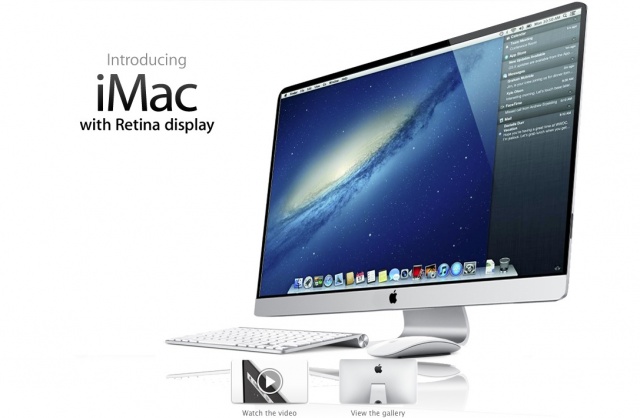
Notably, the new technology supports 4K resolutions, which could open the door for even higher-resolution Mac displays. Perhaps, this is the technology that Apple needs to work with in order to begin a Retina display rollout for its all-in-one desktop computer, the iMac, or even Mac Pro compatible Thunderbolt displays.


Expand
Expanding
Close

Haswell preview suggests similar gains to Ivy Bridge over Sandy Bridge

Site default logo image

A detailed performance test of a prototype Core i7 Haswell chip by tom’s Hardware suggests that it will offer a 7 percent to 13 percent performance gain over equivalent Ivy Bridge CPUs—a similar gain to that experienced with the move from Sandy Bridge to Ivy Bridge.

The integrated HD 4600 GPU experiences an impressive speed boost of almost 30 percent, but the website noted that this still won’t allow for comfortable gaming on HD monitors, so gamers will need discrete graphics chips.

While performance gains reached up to 75 percent in the case of some specific tasks, the gains for typical desktop applications are relatively modest.

Site default logo image

Apple introduces $1,099 21.5-inch iMac for education with 4GB RAM, 500GB HD & 3.3GHz dual-core i3

As noted by MacRumors, Apple has recently introduced a new model of the low-end 21.5-inch iMac to educational institutions that brings slightly downgraded specs and shaves $200 off the price of the entry-level iMac available to consumers.

Replacing the old $999 iMac for education option, the new $1,099 21.5-inch iMac (ME699LL/A) offers 4GB of RAM, Intel HD Graphics 4000, and a 500GB hard drive. That’s compared to the 8GB of RAM and 1TB hard drive Apple includes in the regular entry-level model. Apple is also including a 3.3GHz dual-core Intel Core i3 CPU in the machine instead of the usual 2.7GHz quad-core Intel Core i5.

The new education model offers most of the usual built-to-order options, including the ability to upgrade to a 1TB Fusion Drive and up to 16GB of RAM.

Apple just recently dropped shipping times from 1 to 3 days down to “within 24 hours” for the new iMacs in its North American online stores, but the new iMac for education is shipping in 5 to 7 business days.

Report: Apple to launch 11- and 13-inch Retina MacBook Air in Q3

Site default logo image

According to a translated report from Taiwanese publication Economic Daily (via Macotakara), Apple is apparently in the process of preparing suppliers for the launch of a Retina MacBook Air in Q3 2013. The report appears to claim that both 11- and 13-inch variants of the MacBook Air will launch with Retina displays in addition to an upgrade from Intel’s new Haswell platform. Apple supplier Quanta is expected to begin receiving shipments of the new components in the second quarter, according to Economic Daily.

Today’s report of course goes against recent claims from analysts predicting the next-gen MacBook Air would land in Q2 or Q3 without a Retina display. We heard last year that Apple was working on MacBook Airs with Retina displays, but sources indicated the power drawn from the Retina Displays combined with the thin and light form factor of the MacBook Air may pose challenges for Apple and its product manufacturers.
Expand
Expanding
Close

Site default logo image

Here’s a Mac Pro concept gallery while we patiently wait for Apple to update the real ones

This is what happens when designers have to look down at the same box they had almost a decade ago.

We showed you a detailed modular Mac Pro design concept in September posted by designer Peter Zigich. Today, Zigich is back with another future Mac Pro concept that imagined Apple ditching Intel for a custom Apple-designed ARM CPU, “A10”. We’re not sure Apple is ready to take the jump to ARM in the first major refresh of its Mac Pro line since 2010, but the prospect of a smaller, possibly Mac mini-like design for a new Mac Pro is definitely intriguing. The PCI slots are probably not necessary thanks to Thunderbolt, and Zigich doesn’t rule Intel out entirely. While these specs are maybe not completely realistic for an upcoming Mac Pro refresh, it certainly gets us thinking about what Apple might have planned for its aging Mac Pro design. More images available on Zigich’s website here.

Apple CEO Tim Cook ordered to give deposition in anti-poaching lawsuit

Site default logo image

Apple CEO Tim Cook has been ordered by U.S. District Judge Lucy Koh in San Jose to give a deposition related to an ongoing private lawsuit that claims Apple, Google, and others entered “no-poach” agreements, as reported by Bloomberg. Cook isn’t the only executive named in yesterday’s order. Google Chairman Eric Schmidt will also be deposed on Feb. 20, as well as Intel Chief Executive Officer Paul Otellini later this month.

Koh told lawyers yesterday that Apple founder Steve Jobs was copied on e-mails at issue in the case, and that she found it “hard to believe” that Cook, as Apple’s chief operating officer at the time in question, wouldn’t have been consulted about such agreements.

The judge said she was disappointed that senior executives at the companies involved hadn’t been deposed before yesterday’s hearing over whether she should certify the case as a group lawsuit. The class would include different categories of employees whose incomes, their lawyers argue, were artificially reduced because of the collusion. Koh didn’t rule on class certification.
Expand
Expanding
Close

Packing up for CES 2013: Here’s what we’re looking forward to

Site default logo image


This is what CES looked like the last time Apple attended. J/K. Via the Verge

The 2013 International Consumer Electronics Show is almost here, with official CES show floor at the Las Vegas Convention Center opening up next week on Jan. 8. To kick things off, hundreds of companies and the press will invade Las Vegas this weekend for three days of pre-show product demos, press conferences, and more from the majority of the tech industry’s biggest names. Samsung, Sony, NVIDIA, Intel, Toshiba, and LG are just a few of the companies with scheduled announcements, but there will surely be more than a few surprises with over 3,000 exhibitors setting up shop. Apple’s last official appearance at CES was in 1992 with John Sculley’s keynote introduction of the Newton, but its presence at the show remains with hundreds of new Apple-related products unveiled every year.

9to5Mac is on its way to Vegas to bring you full coverage of the best products from the show. But, until then, here’s a wrap-up of what we already know will be there and what else you can expect to see at CES 2013:


Expand
Expanding
Close

Site default logo image

Corning and Sumitomo unveil 100-ft optical Thunderbolt cables ahead of CES


C
orning Thunderbolt Cable

Ahead of CES 2013 taking place in Las Vegas next week, Corning has unveiled a new optical Thunderbolt cable for folks who need extra long-reaching Thunderbolt access (perhaps to storage closets or for dummy terminals). Corning’s new cable, perfect for plugging peripherals into supported Macs and moving away from copper core cables, will ship in lengths of 10, 20, and 30 meters and boast the same data transfer speeds of up to 10GBbps. Corning plans to unveil a USB 3 cable as well. No launch date or pricing has been provided for the cables—only that they will be available sometime during the first quarter of this year. At any rate, you bet we’ll stop by Corning’s booth for a closer look next week’s CES.

Just last week, Sumitomo Electric got the “world’s first” Thunderbolt optical cable certification and announced it would mass-produce the cables immediately. The cables are as thick as current copper cables (4.2 mm), can be bent 180 degrees or tangled in knots, and they still perform just like shorter copper cables.

A 100-foot Thunderbolt cable could let Mac users put their whole rig in a closet, run just a Thunderbolt cable to the desktop, and connect to peripherals via the Thunderbolt display. If only there were a Thunderbolt-enabled Mac Pro…

.


Expand
Expanding
Close

What needs to happen for Apple to turn its watch prototypes into a product

Site default logo image

Rumor has it Apple is working on a Bluetooth 4.0-enabled smart watch and could even launch the device as early as the first half of this year. This is according to the latest rumor originating from supply chain sources in China. There isn’t much to back up the report’s claim that Intel is collaborating with Apple on the device (perhaps Intel has competitive mobile chips on the way? Or the whole thing might be B.S.), but there is a lot going for the prospect of an Apple smart watch in 2013.

This isn’t the first time we’ve heard the rumors. In December 2011, The New York Times published an article that noted a “very small group of Apple employees had been conceptualizing and even prototyping some wearable devices.” One of those ideas was apparently a “curved-glass iPod” that users would wear on their wristand control with Siri.

Evidence from patents exists as well, such as this liquid metal patent, another for a cellular antenna, and many more that mention integrating features into an iPod nano-like wristwatch form factor. Apple also recently refreshed the iPod nano lineup back to the longer, rectangle shape of previous iPods, giving it a 2.5-inch display and moving away from the small, 1.5-inch square design introduced with the sixth gen. The ability to purchase watch straps for the square, sixth-gen nano was a major feature for many customers, so the move back to a rectangle, 2.5-inch nano could indicate Apple is making room for a full-fledged nano watch in the near future.

Apple is clearly experimenting with the form factor, the question is what will it have to do to make a captivating iWatch experience and create a new product market? And is that early 2013 launch realistic?…
Expand
Expanding
Close

Site default logo image

Intel, like Apple, is having trouble getting content deals for its TV product, won’t be ready for CES

Adding to an earlier report, the Wall Street Journal today says that chip giant Intel’s TV initiative isn’t nearly ready for primetime. Intel, which has little background in developing consumer-friendly experiences, seems like a long shot at cracking the digital TV nut.

The Intel Plan:

Intel has pitched media companies on a plan to create a “virtual cable operator,” which would offer U.S. TV channels nationwide over the Internet in a bundle similar to subscriptions sold by cable- and satellite-TV operators, people familiar with the effort said previously. The company, besides expertise in chips for set-top boxes, has expertise in server technology that could help serve up video programming and other content.

Interesting idea…but not so fast, says the cable operators!

Persuading companies to license individual channels would require far higher fees than the companies currently receive, this executive said, noting that his company and Intel were far from reaching an agreement on financial terms.

But Intel has so far reached at least one content deal, one of the people familiar with Intel’s plans said, without identifying the partner.

One content provider does not a cable TV replacement make. And this is the problem not just for Google and Intel but also for Apple. How do you convince the cable companies to let you have content in a more consumer-friendly format that will make them less money and take their power position away?

Steve Jobs may have been able to convince the music industry to do so, but it is pretty clear Eddy Cue is having a hard time cracking the TV biz (Jobs’ bio notwithstanding).

Intel leak details chips that will likely go into 2013 Macs

Site default logo image

A report from VR-Zone (via Engadget) claimed to show Intel’s plans for its fourth-generation Haswell processors. These are expected to be released in the second quarter of next year and are the likely follow-up to Ivy Bridge for Apple’s next round of Mac refreshes (unless Apple switches to AMD, ARM, or something). Previous leaks showed Intel plans to release the Haswell processors between March and June 2013, and today’s leak, if accurate, gives us a look at all 14 new desktop CPUs expected in the Haswell launch.

The top of the lineup CPU in the Haswell lineup is a 3.5GHz Core i7, 3.9 with Turbo Boost, with a 8MB cache and a TDP of 84W. The low-voltage 35W end of the lineup goes down to a 2.9GHz Core i5. The roadmap also makes a reference to integrated graphics, listing Intel HD 4600 with built-in visuals for all CPU variations. Here is the full first wave of 14 standard and low-voltage CPUs, according to the leaked image:

Standard voltage 84W:Core i7-4770K, Core i7-4770, Core i5-4670K, Core i5-4670, Core i5-4570, and Core i5-4430.

Low-voltage: 35W Core i7-4765T, Core i5-4570T; 45W Core i7-4770T, Core i5-4670T; 65W Core i7-4770S, Core i5-4670S, Core i5-4570S, Core i5-4430S.

Wild Speculation: Why a $2B AMD purchase would be a puzzle piece fit for Apple

Site default logo image

Things aren’t looking good for chipmaker AMD…Following another round of layoffs totaling about 15 percent of its employees last month, Reuters reported today that AMD is looking for an investor to sell its Texas campus in order to raise up to $200 million in cash in a multi-year lease back deal. AMD’s cash dropped from $279 million to $1.48 billion in the third quarter, and today the company sits at a market cap of $1.40 billion.

Despite not being the “main option,” with the restructuring and the company’s financial issues, Reuters’ sources claimed an outright sale of the company isn’t out of the question. This isn’t the first time we’ve heard chatter of an AMD takeover. However, with the company sitting at a market cap of $1.40 billion and rumors of Bob Mansfield’s new Technologies group possibly transitioning away from Intel processors, we can’t help but imagine a few things Apple would stand to gain from the purchase…


Expand
Expanding
Close

Site default logo image

After failing in mobile, Intel Chief Executive Paul Otellini is out May 2013

.

Apple’s Mac partner Intel is having trouble getting its chips into the booming tablet and smartphone space. That has lead to flat earnings and trouble for the once-dominant chipmaker. Today, Intel announced that CEO Paul Otellini would be replaced in May.

[tweet https://twitter.com/stroughtonsmith/status/270528253150773248]

Otellini is also on Google’s Board of Directors and is pictured above in three of his Apple Keynote event cameos. Release follows:


Expand
Expanding
Close

Bob Mansfield’s new group implied to be heading transition away from Intel processors on Macs

Site default logo image

Apple allegedly plans to one-day abandon Intel to implement a version of chips into Macs that currently power its mobile devices.

Bloomberg first reported the story, citing “people familiar with the company’s research,” and said Apple believes mobile device chips will eventually run its computer lineup. Apple previously mentioned semiconductor development during its management shift announcement on Oct. 29.

Bob Mansfield, senior vice president of Apple’s new “Technologies” group, is apparently leading the chip research, and Apple specifically said its semiconductor teams have “ambitious plans for the future.”

The Cupertino, Calif.-based company first began using Intel processors for Macs in 2005, but two of Bloomberg’s sources noted Apple would continue to rely on the tech for at least a few more years:

As handheld devices increasingly function like PCs, the engineers working on this project within Apple envision machines that use a common chip design. If Apple Chief Executive Officer Tim Cook wants to offer the consumer of 2017 and beyond a seamless experience on laptops, phones, tablets and televisions, it will be easier to build if all the devices have a consistent underlying chip architecture, according to one of the people.


Expand
Expanding
Close

Site default logo image

Intel’s answer to iPad’s ARM processors sees delays due to power management software

Image representing Intel as depicted in CrunchBase

A new report by Bloomberg, citing unnamed inside sources, revealed Intel’s software for a new processor, codenamed “Clover Trail,” which would give the iPad’s ARM processors a run for their money while preserving battery life in Windows 8-based tablets, is reportedly running into delays.

According to Bloomberg:

Intel Corp. (INTC)’s delayed delivery of software that conserves computer battery life is holding up development of some tablets running the latest version of Microsoft Corp. (MSFT)’s Windows operating system, a person with knowledge of the matter said.

Microsoft hasn’t yet approved any tablets featuring an Intel processor code-named Clover Trail because the chipmaker hasn’t produced necessary power-management software, said the person, who asked not to be named since the process is private.

The delay, following remarks by Intel Chief Executive Officer Paul Otellini, who told employees in Taiwan that Windows 8 needs improvement, underscores how the Wintel alliance that has dominated the personal computer industry for three decades is struggling to respond to the threat of Apple Inc. (AAPL)’s iPad. At stake is the chance to make up for lackluster PC buying by capturing users who are flocking to mobile devices, snappy applications and elegant design.

Software development delays obviously limit manufacturers, as they have less time to prep their tablets for the Holiday season; and thus, they have less of a chance to curb Apple’s 70 percent tablet market share.

“It’s bad news for Microsoft and Intel because it’s not going to present the best light on either one and it will hurt the perception of Windows 8,” said Directions analyst Wes Miller to Bloomberg.

Miller further noted Window’s Clover Trail-based tablets will directly compete with Apple’s ARM-based iPads.

Get the full report at Bloomberg. 


Expand
Expanding
Close

Site default logo image

Intel CEO Paul Otellini: Microsoft Windows 8 OS is being released before it’s fully ready [Update: Intel denies]

This cannot be good.

Intel Corp. (INTC) Chief Executive Officer Paul Otellini told employees in Taiwan that Microsoft Corp.’s Windows 8 operating system is being released before it’s fully ready, a person who attended the company event said. Improvements still need to be made to the software, Otellini told employees at a company meeting in Taipei today,

If anyone should know, it is Otellini. He is also on Google’s Board of Directors, and he might be feeling some of the sting from the ARM-based Windows RT. Still: Ouch.

Many believe Microsoft’s Windows 8 strategy is reactionary and being dictated by the success of the iPad.

Update: Intel denied in a press release this afternoon the statements:

Intel has a long and successful heritage working with Microsoft on the release of Windows platforms, delivering devices that provide exciting experiences, stunning performance, and superior compatibility. Intel fully expects this to continue with Windows 8.

Full PR below:


Expand
Expanding
Close