It’s been a long time coming, but Apple has finally implemented useful notification features in iOS 8. Interactive notifications are essentially Apple’s version of quick reply (or quick actions) that will be available for a wide variety of apps when iOS 8 is released. We’ve had some time to explore the beta version today and put together a quick video to show off iOS 8’s new notification features.
Earlier today we pointed out that Apple quietly announced WiFi calling would arrive in iOS 8 despite not actually talking about the feature on stage. Now, T-Mobile has confirmed that it will soon enable the experience for iPhone users on its network when iOS 8 is released later this year: Expand Expanding Close
Today at their annual WWDC Keynote, Apple announced iOS 8, the next major version of iOS, which includes features like an all new Photos app, a much improved Messages app, custom keyboard support, Family Sharing, and more.
Here at 9to5Mac, we’re all busy trying out the new software on our phones, so in the meantime, here’s a brief hands-on look at Apple’s new version of iOS. Stayed tuned for more in depth coverage of both iOS 8 and OS X Yosemite later today.
Earlier today Apple announced the next version of its iOS software, iOS 8, during the WWDC keynote today. Below you’ll find a gallery of all the new bells and whistles in the latest operating system. If you’ve got some screenshots you’d like to send us, you can send them to tips@9to5mac.com.
There’s a lot of new features coming in iOS 8 that you might have missed during Apple’s presentation today. Apple briefly flashed the slide pictured above and in it listed a bunch of new features that it didn’t talk about in length or at all during its keynote. Some of them include a “Tips app”, panorama on iPad, WiFi calling, FaceTime call waiting, rich text editing in Notes, iBooks preinstalled, and accessibility improvements like multi-device support for MFi hearing aids and the ability to exit Guided Access mode using TouchID. Expand Expanding Close
Following today’s WWDC 2014 keynote, Apple has just refreshed their website with tons of new information on iOS 8, OS X Yosemite, and all of the new developer announcements unveiled at the keynote. (Now let’s just hope they update that navigation bar soon!)
Apple has also refreshed the Dev Center with new betas for registered developers.
Stay tuned to 9to5Mac for more news coverage from WWDC 2014.
Apple just announced its new Swift programming language at WWDC, and has already published a free guide for developers looking to learn the language.
Swift is a new programming language for creating iOS and OS X apps. Swift builds on the best of C and Objective-C, without the constraints of C compatibility. Swift adopts safe programming patterns and adds modern features to make programming easier, more flexible, and more fun. Swift’s clean slate, backed by the mature and much-loved Cocoa and Cocoa Touch frameworks, is an opportunity to reimagine how software development works.
This book provides:
– A tour of the language.
– A detailed guide delving into each language feature.
– A formal reference for the language.
During the WWDC 2014 keynote, Apple wrapped up its overview of iOS 8 and has officially announced device compatibility. This release is available for developers today and schedules for a public launch in fall.
iOS 8 will be compatible with iPhone 4s, iPhone 5, iPhone 5c, iPhone 5s, iPod touch 5th generation, iPad 2, iPad with Retina display, iPad Air, iPad mini, and iPad mini with Retina display. So it looks like the iPhone 4 is officially dead to Apple.
Along with several other new APIs for developers, Apple has announced HomeKit which allows all home automation accessories/devices to work together. The new API will allow home automation developers to centralize all home automation in iOS without needing separate apps to access each device’s specific features. These devices include locks, lights, cameras, doors, thermostats, plugs, switches, and more.
Apple has just announced at WWDC 2014 that as part of its iOS 8 extensions capability, users will be able to install systemwide keyboards, such as the popular Swype system. The keyboards will run in a secure sandbox and not have access to anything except text input, though they can ask for permission to use the network in order to provide more features.
These keyboards can be installed through third-party apps on the updated App Store.
Apple just announced during its WWDC keynote that it’s opening up its Touch ID fingerprint sensor on the iPhone to third-party app developers. Apple showed off the personal finance management app Mint (pictured above) using the Touch ID feature to allow users to login instead of using the keyboard to enter a password. Previously Apple limited this feature to its own App Store and iTunes purchases as well as unlocking the device itself.
Apple also shared some stats on Touch ID noting that it has improved security by getting a much higher number of users using a passcode to protect their device: Expand Expanding Close
As expected, Apple has announced new Siri features for its iOS 8 mobile operating system, including the ability to analyze and identify songs automatically with recognition powered by Shazam. You can also purchase iTunes content directly from Siri, and dictate text in 22 new languages.
Also included is a feature that recently hit the iPhone through a jailbreak tweak that allows you to summon the iPhone’s assistant by saying “Hey, Siri.”
Apple debuted a new Family Sharing feature during its WWDC keynote today. The feature allows family members who use the same credit card to also share a variety of other information, including iTunes purchases, photos and photo streams, location, reminders, calendars, and more.
One incredibly useful feature for parents included with this update is the ability to approve (or disapprove) purchases by minors. When a child in the family sharing account attempts to make a purchase, a notification will be sent to a parent asking them to approve the purchase. Parents will be able to review the item being purchased and decide whether or not to allow the charge.
Apple announced iOS 8 today during its Worldwide Developer Conference, including several new features for its default Mail client. Among those new features were new gestures for quickly handling messages by swiping. Swiping from left to right allows you to mark a message as unread, while swiping right-to-left presents options for deleting or archive messages and more.
The app also now intelligently detects invitations and other potential calendar events and presents a banner at the top of the message that offers to create that event auotmatically. New features have been added to the compose screen as well, allowing users to swipe down on a draft to quickly dismiss it, access their other mail, and return to the draft with a few taps.
Apple has officially announced iOS 8, the next version of the iPhone and iPad mobile operating system, at its developer conference in San Francisco. The update includes some noticeable user interface and design changes from iOS 7 while maintaining the same design language. Continuity between the Mac and iPhone has already been previewed at length during the OS X Yosemite demo prior to iOS 8’s unveiling. Specific features and press release below: Expand Expanding Close
In addition to announcing new integration between iOS and Mac OS X with AirDrop support and its new Handoff feature, Apple announced today that it’s bringing SMS and phone calls to the Mac. That means that you can now have your SMS text messages and phone calls from your iPhone arrive as notifications on your Mac. Users will be able to respond to messages and even use the Mac as a speaker phone in order to complete a phone call. Previously iOS users only had access to iMessage messages and FaceTime on the Mac. Expand Expanding Close
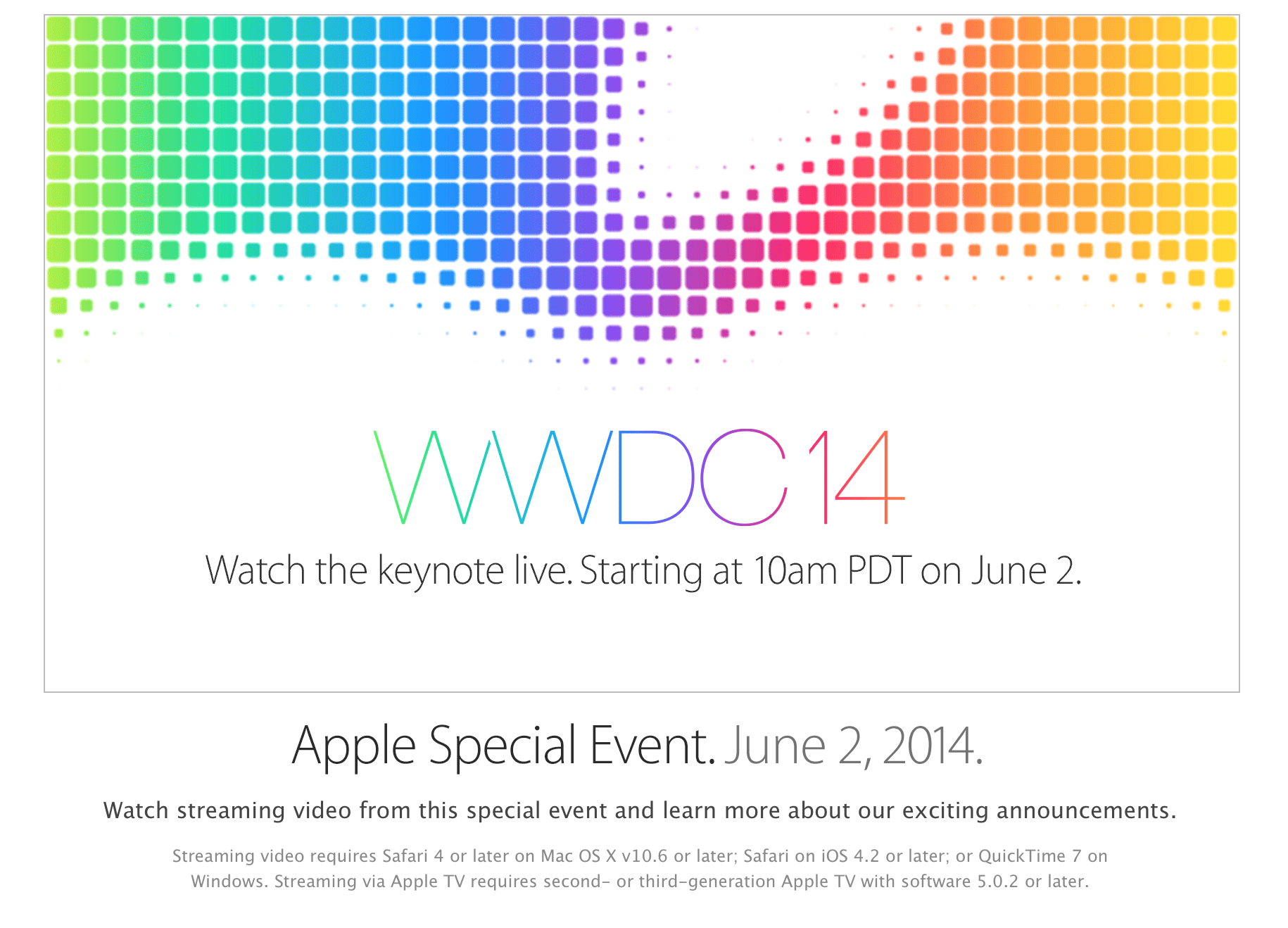
Apple has updated its website to announce that it will be live streaming next week’s WWDC Keynote address for all to watch. As per usual, the event will be available on Macs running Safari 4 or later, iOS Devices running iOS 4.2 or later, Windows machines running Quicktime 7, and via an application on the Apple TV. The event kicks off at 10AM Pacific/1PM Eastern time on Monday, June 2nd. Apple says that it has “exciting announcements” in store for the event (as it says for all of its events), which is likely to include talk of iOS 8 with Healthbook, a redesigned OS X 10.10, and new hardware products. We’ll be on hand live to bring you the latest news from the conference.
Following announcements earlier this month from both AT&T and Verizon, T-Mobile announced today it’s introducing Voice over LTE support starting with the Seattle market:
So I’m thrilled to congratulate my team on the launch of Voice over LTE (VoLTE) in the Seattle area for our existing LG G Flex and Samsung Galaxy Note 3 and Galaxy Light customers. Our friends at MetroPCS were the first to launch VoLTE in the U.S. back in 2012, and we’ve been working hard on a LTE Advanced version of VoLTE, which we plan to roll out to more T-Mobile customers throughout the coming year.
T-Mobile’s CTO Neville Ray noted that the new technology, which brings voice calls onto the same LTE radio layer previously reserved for data, will allow “faster call setup times (almost twice as fast as a non-VoLTE call setup) and the ability to enjoy lightening fast LTE data speeds while on a call.” It will also support the HD Voice or wide-band audio feature that Apple already supports. Ray explained how the technology works: Expand Expanding Close
Verizon Wireless is officially joining in on this year’s major new cellular network technology: Voice over LTE, or “VoLTE.” VoLTE allows voice calls on compatible smartphones to be made over the previously-data only LTE network technology. This allows for higher-quality, better sounding (“HD Voice”) phone calls to be placed. The rollout will occur “later this year”, or “in the coming months” depending on which part of the press release you believe:
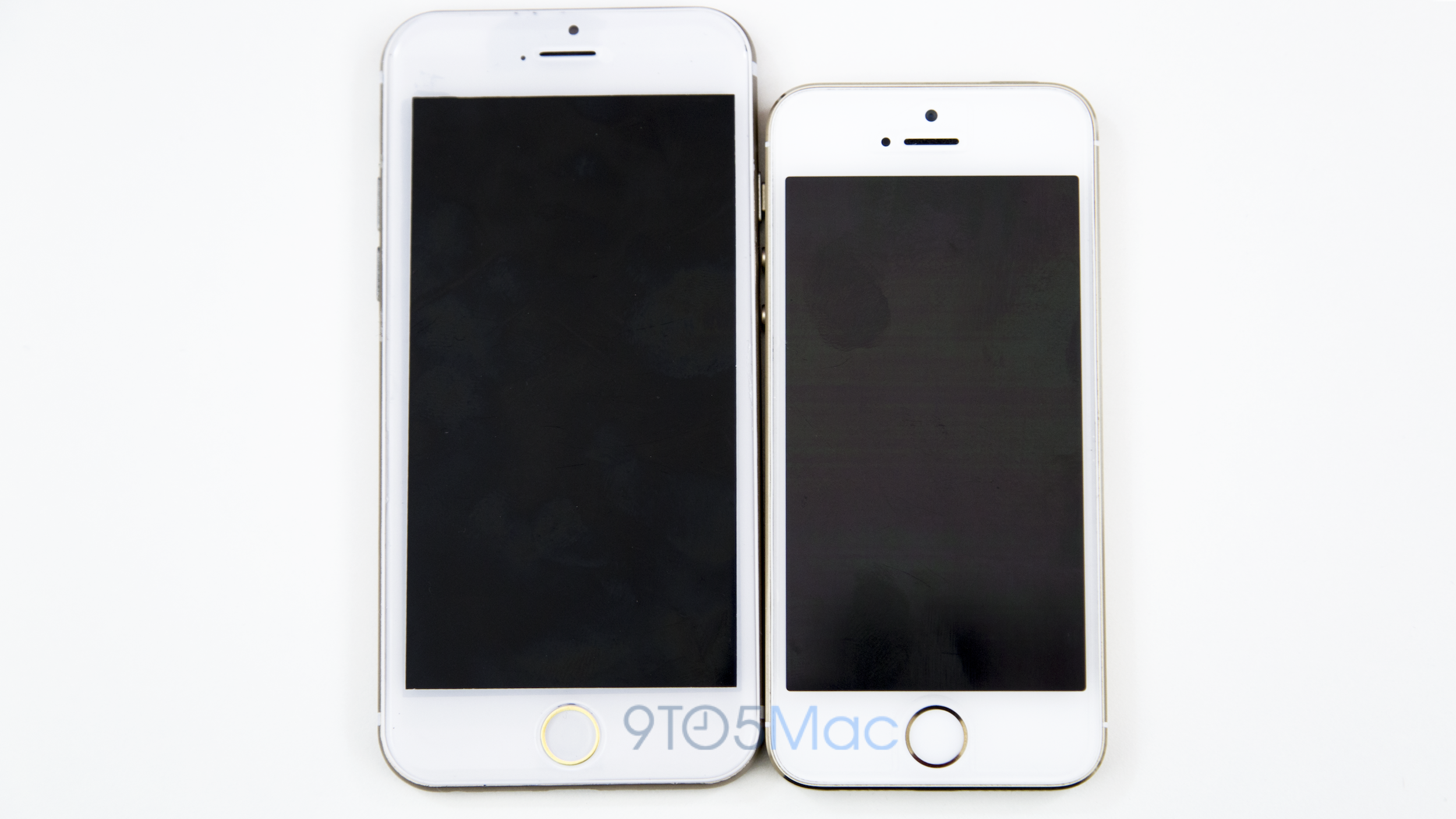
Apple is preparing to release a new iPhone with a larger screen later this year, and while multiple reports have indicated that the screen will be larger, the exact dimensions of the screen and its resolution have so far been guesswork.
Some industry watchers have speculated that Apple could stretch the iPhone software’s interface and retain the iPhone 5s’s screen resolution of 1136 x 640. This approach would allow all iOS software and App Store apps to function normally on the iPhone 6 without work from developers. The downside of this approach would be that the iPhone 6’s display would fall below Steve Jobs’ somewhat arbitrary 300 pixels per inch definition of ‘Retina’ for a phone.
Just like with the transition to the iPhone 4’s Retina display in 2010 and the transition to the iPhone 5’s taller screen in 2012, Apple is preparing major resolution changes for the iPhone 6 that will require software changes by both Apple and developers, according to people briefed on the specifications of the new device…
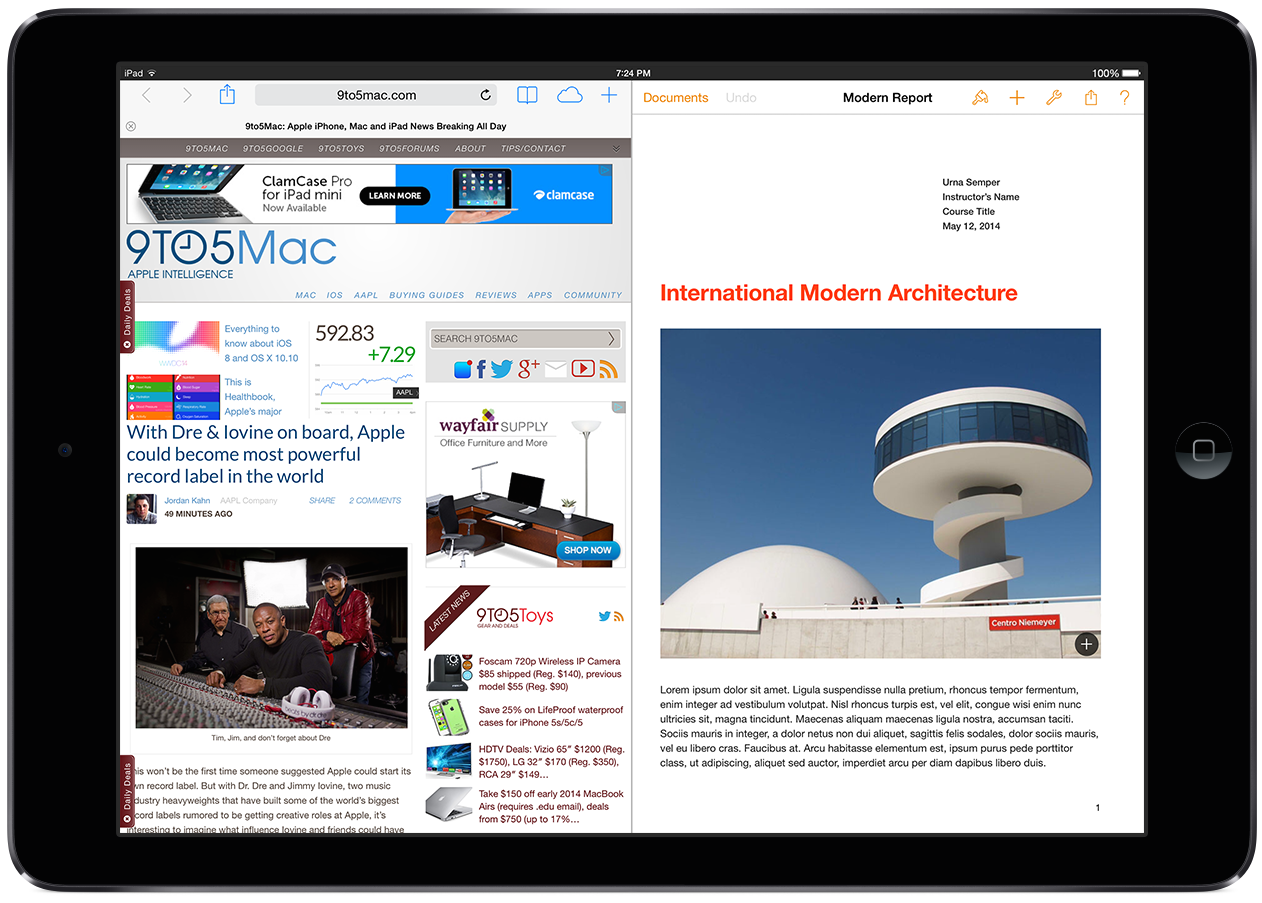
iOS 8 is likely to supercharge the functionality of Apple’s iPad with a new split-screen multitasking feature, according to sources with knowledge of the enhancement in development. These people say that the feature will allow iPad users to run and interact with two iPad applications at once. Up until now, each iPad application either developed by Apple or available on the App Store is only usable individually in a full-screen view.
Following the presumed acquisition of Beats, Apple plans to up its music game with support for high-resolution audio files in a revamped Music app in iOS 8, and to offer a higher-quality version of its In-Ear Headphones, reports Japanese blog Macotakara.
The source of the high-res audio rumor appears somewhat circumstantial, linked to a Warner Music post about the forthcoming release of a ‘Super Deluxe’ version of three remastered early Led Zeppelin albums in 96kHz/24-bit form – a resolution the current iOS Music app cannot play. It is, however, consistent with a similar earlier rumor regarding iTunes support for higher-quality audio … Expand Expanding Close
The newest reports from Taiwanese media indicate that the iPhone 6 could possibly be revealed in August, not September. According to these rumors, the smaller, 4.7-inch model could be available for purchase the same month, with the larger 5.5-inch version going on sale in September—the month in which most rumors had originally predicted the reveal.
Apple may be planning to give the next version of the Mac OS X operating system, 10.10, a larger presence than iOS 8 at this year’s Worldwide Developers Conference, according to sources with knowledge of the plans. Because OS X 10.10 will feature an end-to-end redesign, not dissimilar from the scope of the changes to the iPhone and iPad operating system with iOS 7 last year, Apple wants to heavily promote the new system to developers. Apple has also been allocating iOS user interface resources to OS X teams in order to finish up the new OS X design in time for WWDC, and 10.10 development is said to be “steaming forward…”