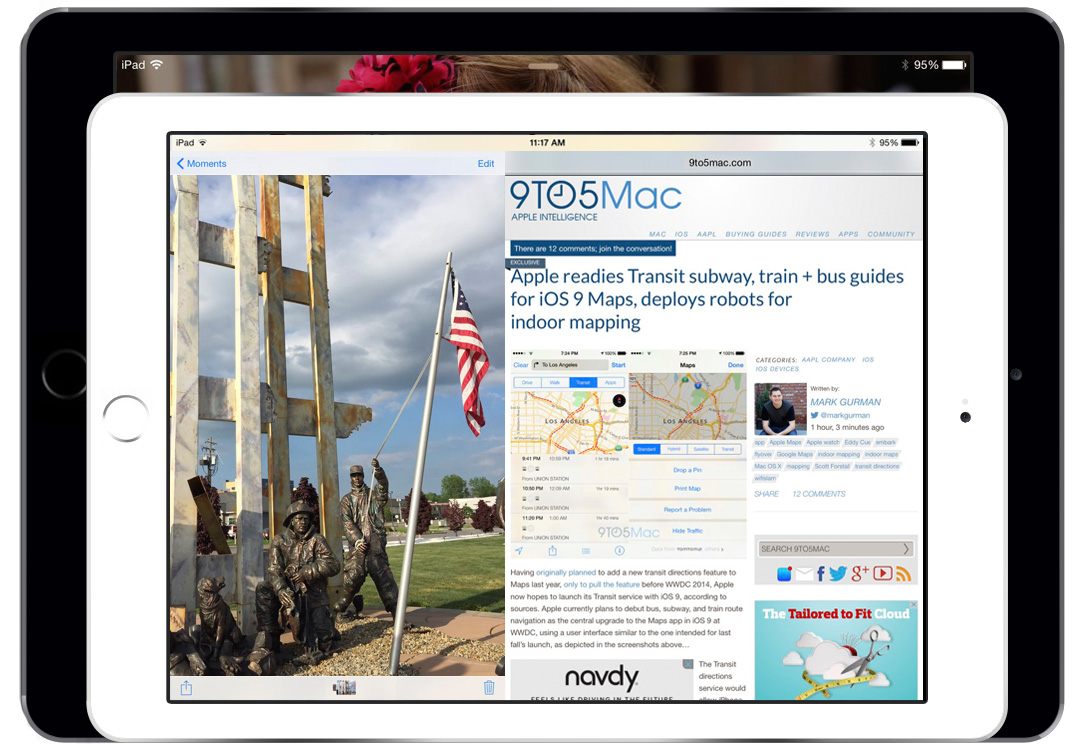
Facing slowing growth for the first time since the iPad’s 2010 debut, Apple is working on several significant software and hardware updates to reinvigorate the tablet over the next year. Apple is developing a dual-app viewing mode, 12-inch iPads codenamed “J98” and “J99,” as well as support for multi-user logins, according to sources briefed on the plans. First planned for debut last year, the split-screen applications feature for the iPad could be introduced as soon as June at Apple’s annual Worldwide Developers Conference, while multi-user login support and the 12-inch iPads will apparently arrive later…
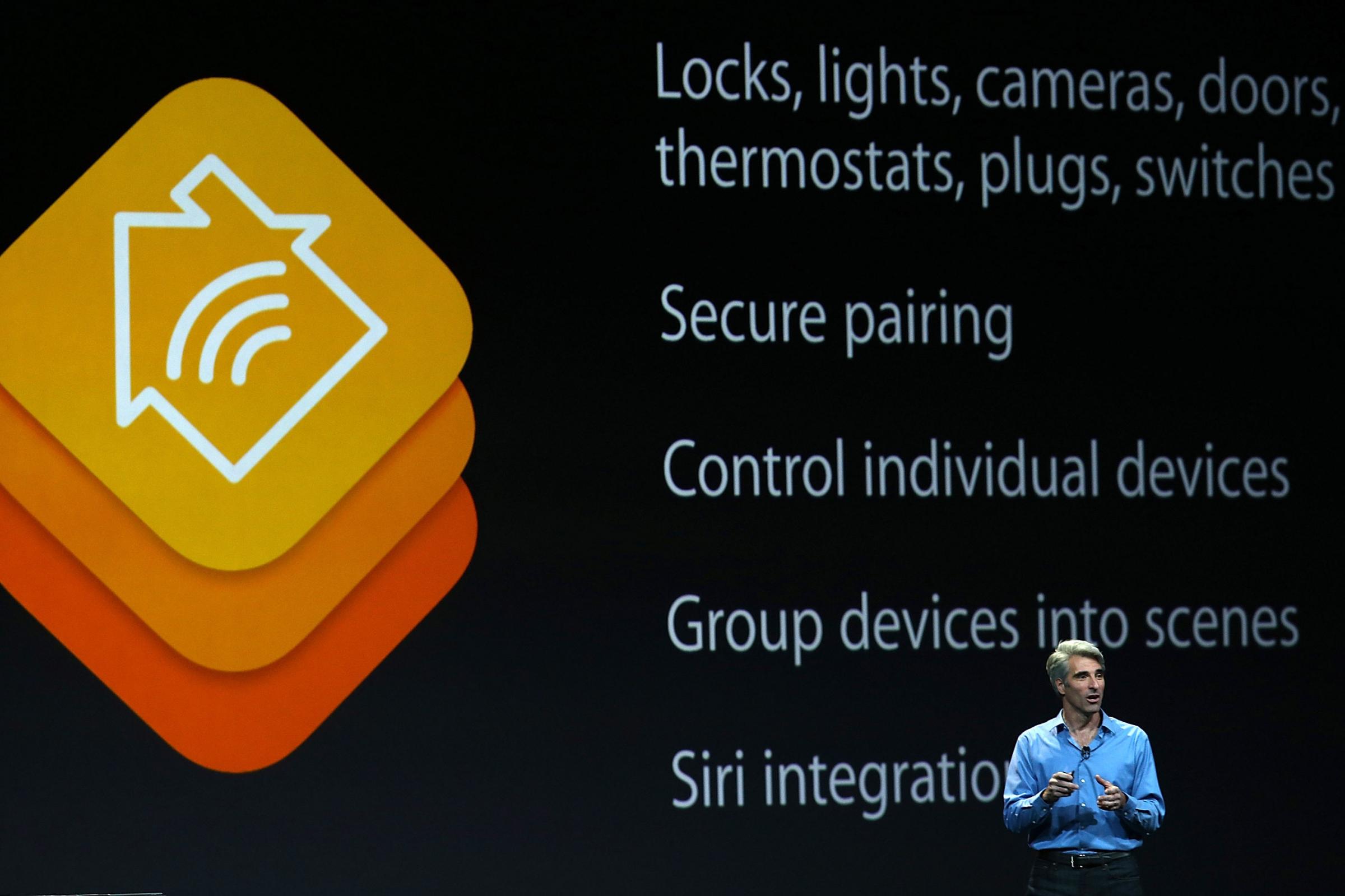
Apple’s plan to manage upcoming HomeKit-compatible accessories could revolve around a new iOS app called “Home,” according to sources familiar with the app. Introduced at last year’s Worldwide Developers Conference, HomeKit is an Apple initiative designed to encourage accessory makers to integrate “connected home” accessories such as Wi-Fi garage door openers, smart thermostats akin to Nest’s Learning Thermostat, and wireless door locks with iPhones and iPads. Using Siri or the Home app, users will be able to remotely control parts of their homes directly from iOS devices…
Nearly a month after the release of the first-generation Apple Watch with Watch OS 1.0, a proven source has disclosed a collection of upcoming Apple Watch software and hardware updates. Currently in development, the features seek to enhance Apple Watch security, connectivity with other Apple devices, health and fitness features, Wi-Fi capabilities, and integration with third-party applications. Additionally, Apple is also priming major updates for the Apple TV in both the hardware and software departments, including Apple Watch integration. Below, we detail what users can expect from Apple Watches and Apple TVs in the future…
Rumors are already floating around about Apple’s iPhone 6s and we’ve got the rundown on everything. Along with that, we discuss WWDC 2015 and our expectations for software and hardware announcements. The Happy Hour podcast is available for download on iTunes and through our dedicated RSS feed…
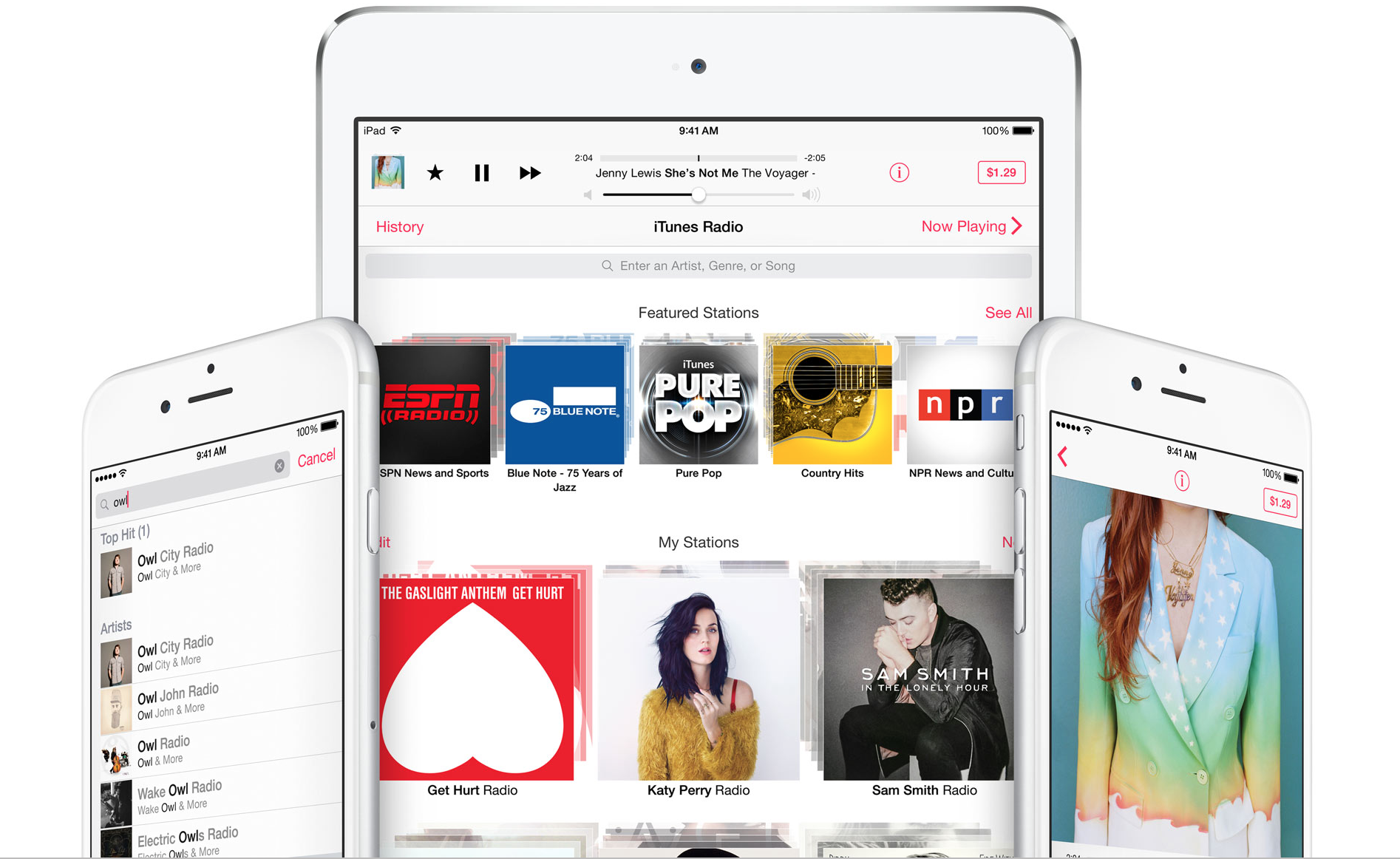
As was previously known, Re/code notes that the recent hire of BBC Radio 1 DJ Zane Lowe and other BBC DJs is a plan to help bolster iTunes Radio’s curated playlist feature by manually compiling track lists instead of allowing an algorithm to make the decisions. The site also notes that iTunes Radio will be available in additional countries, which we first reported earlier this week. A few other new details were also mentioned.
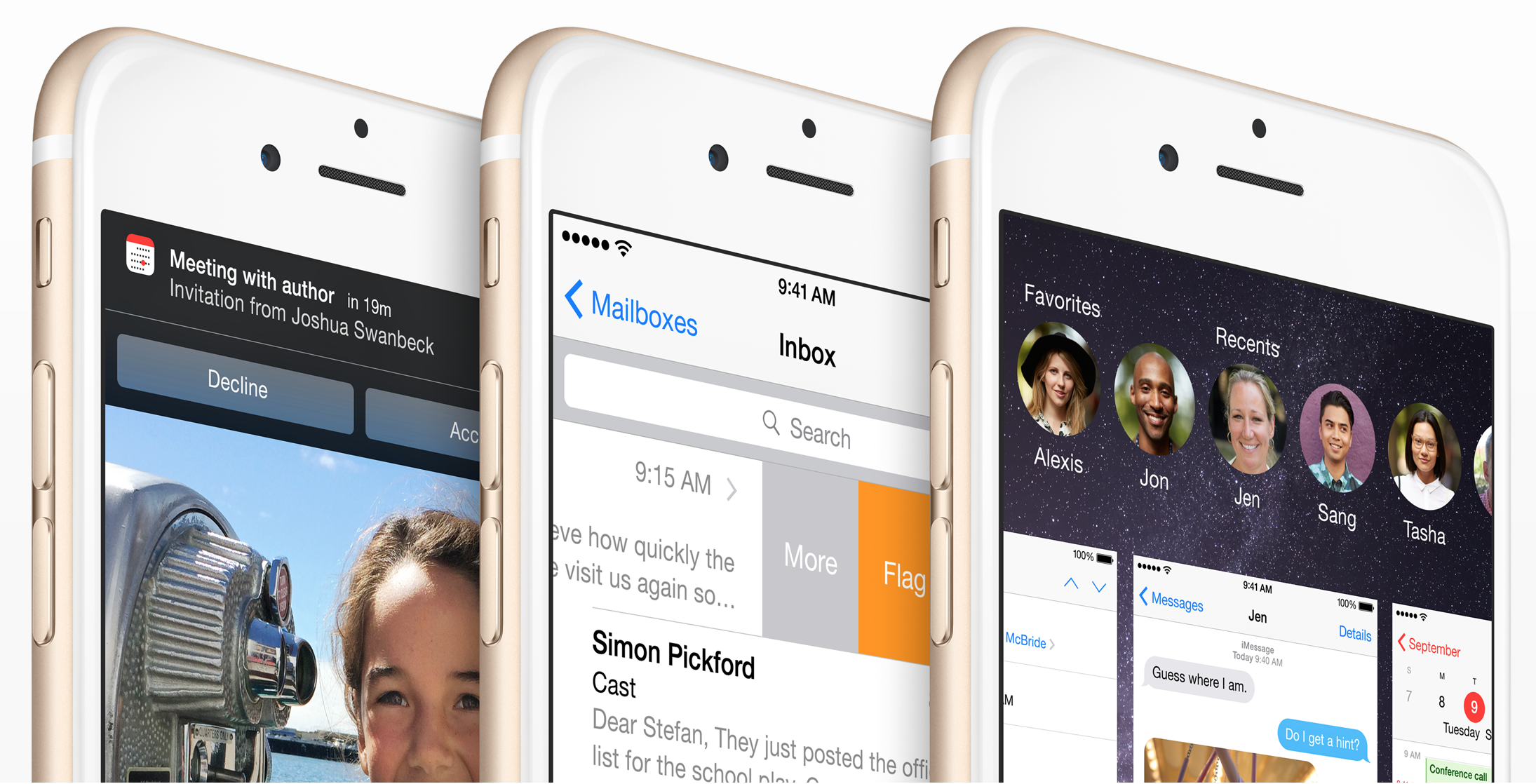
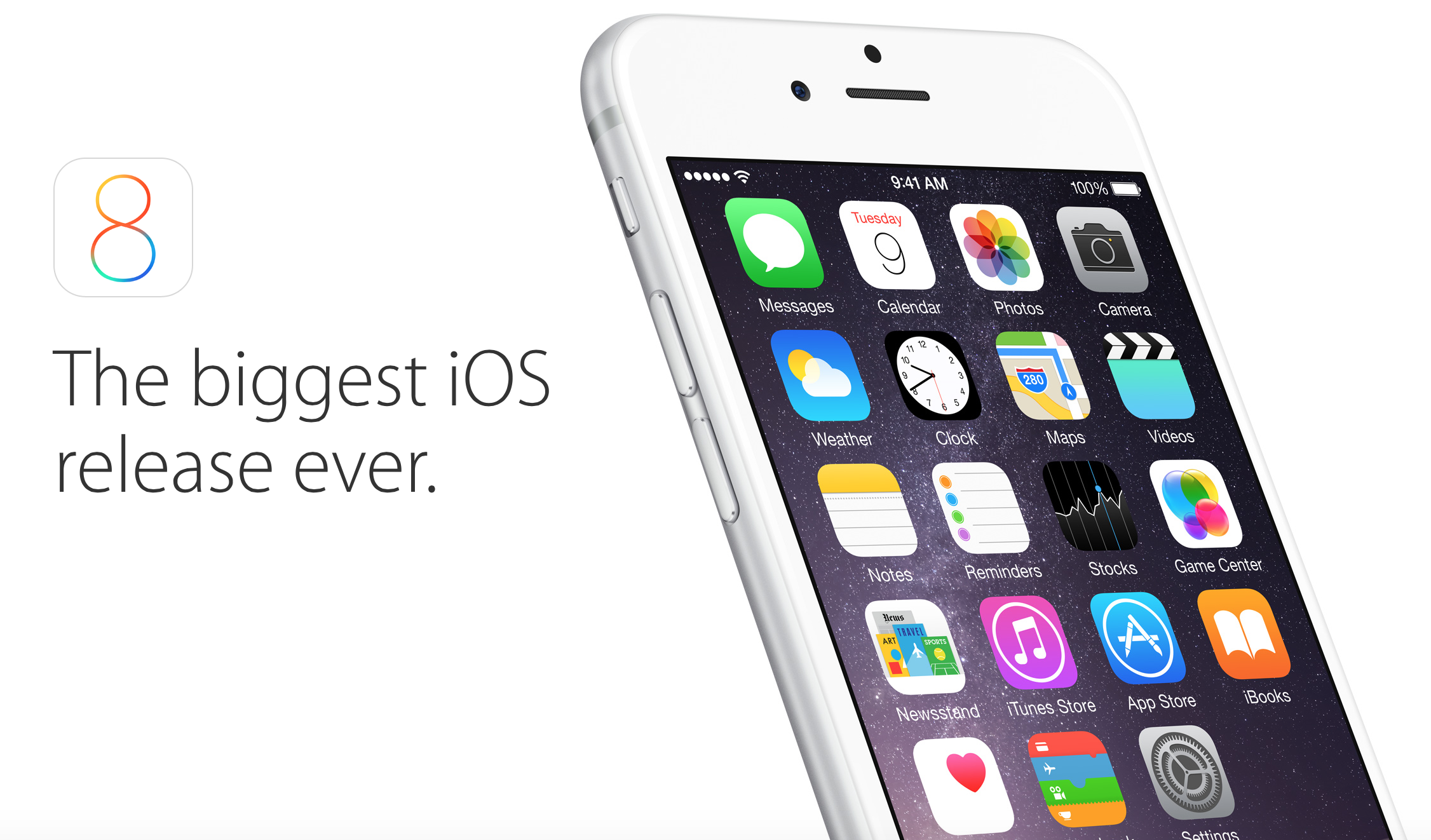
More than 7 months after its official release, iOS 8 has now passed 80% adoption as a version of Apple’s latest mobile operating system is running on 81% of active devices, according to Apple’s App Store Distribution data. The new data puts iOS 8 up two points since this time two weeks ago. The remaining devices include 17% running a version of iOS 7, which is where the upgrades came from, while 2% of devices measured have iOS 6 or earlier. Expand Expanding Close
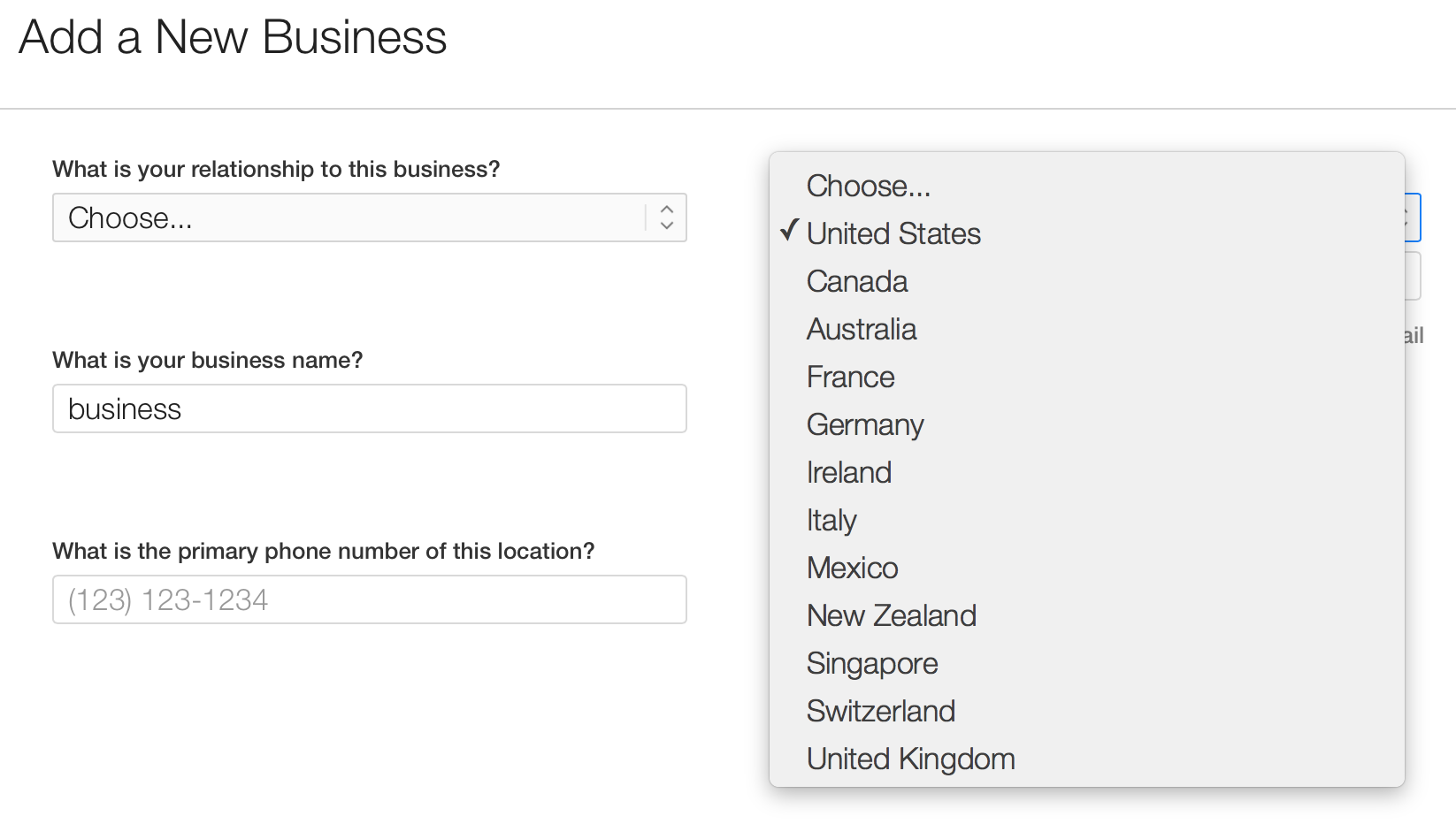
Apple this week has begun rolling out its Apple Maps Connect feature to a trio of new countries: Italy, Switzerland, and Mexico. Apple Maps Connect allows business owners to alter their business listing on Apple Maps for OS X and iOS as well as add their businesses to the platform. The additions are noted on the portal, while Apple has also begun emailing users. Business listing updates can take about a week. Apple first launched the service in the U.S. last October, expanded it to the U.K., Australia, New Zealand, Ireland, and Singapore in January, and brought it to Canada, France & Germany in February. The same online portal allows businesses with over 1 million annual visitors to apply for Apple’s indoor mapping technology.
Update 3/31: Apple’s latest data reflects 78% as measured on the App Store on March 30th.
Update 4/14: Two weeks and one iOS 8.3 update later, the App Store now reports 79% iOS 8 adoption.
Apple now says that 77% of active iPhones, iPads, and iPod touches are now running some version of iOS 8. The remainder of active devices running older software than what was released last September include one out of five devices still running iOS 7, and a small 3% running iOS 6 or earlier. The data comes from Apple’s App Store Distribution dashboard, which captured the adoption rate earlier this week.
While the information does show the steady climb of active devices upgrading to iOS 8 at a steady, gradual rate, it does not reveal how many users are running the very latest version, iOS 8.2, which is required for iPhone users to pair with the upcoming Apple Watch, which will be released on April 24th… Expand Expanding Close
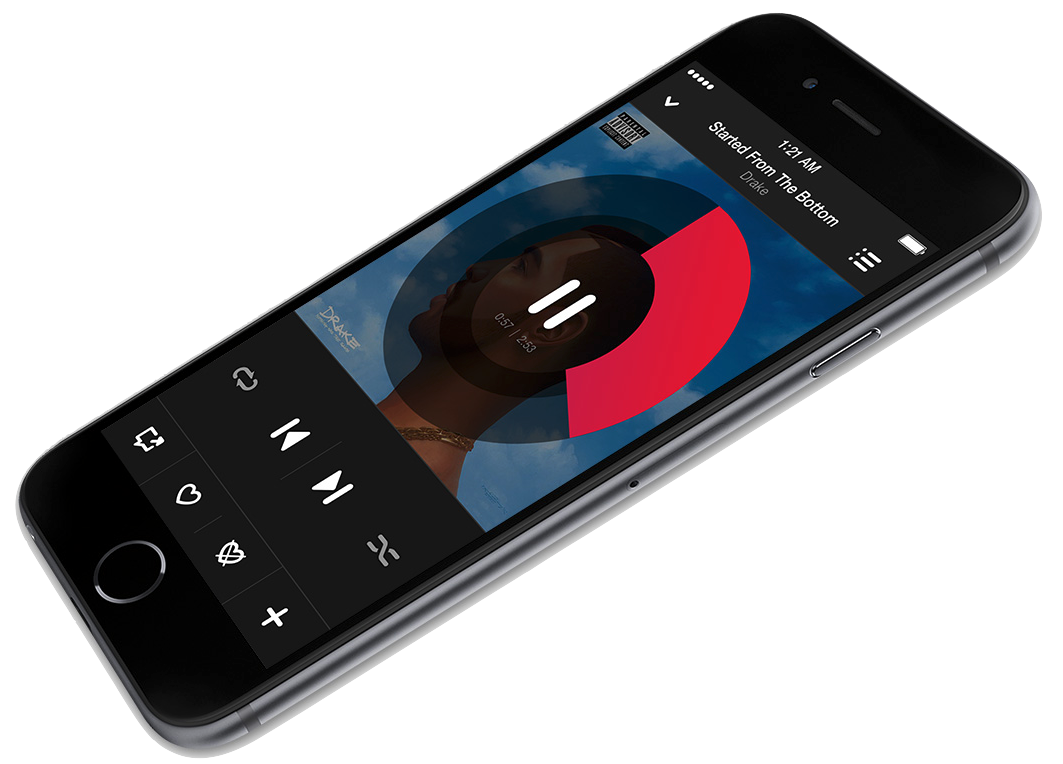
Apple won’t take the wraps off of its upcoming Beats-based music streaming service at its March 9 “Spring Forward” event, according to music industry sources briefed on the launch timeline. Instead, Apple currently plans to introduce the service, at least in beta form, at its Worldwide Developers Conference (WWDC) in early June. The WWDC keynote likely takes place on Monday, June 8th, and that’s the event where the debut will occur. The new iTunes music streaming service is based on technology acquired from Beats Music, including curated playlists, cloud-based libraries, and offerings customized to the musical tastes of individual users. The service will be priced as high as $7.99 per month, which is less expensive than current $9.99 pricing for Beats Music, Spotify, and Rdio…
In an effort to eliminate bugs from upcoming iOS versions ahead of their general releases, Apple plans to launch the first-ever public beta program for the iOS operating system, according to multiple people briefed on the plans. Following the successful launch of the OS X Public Beta program with OS X Yosemite last year, Apple intends to release the upcoming iOS 8.3 as a public beta via the company’s existing AppleSeed program in mid-March, according to the sources. This release will match the third iOS 8.3 beta for developers, which is planned for release the same week. Apple then expects to debut iOS 9 at its June Worldwide Developer Conference, with a public beta release during the summer, and final release in the fall…
Happy Hour is back and better than ever. Join us as we kick off the first episode and discuss everything you need to know about Apple’s master plan for iOS 9, a new music streaming service in the works, Apple Watch launch details, and more. The Happy Hour podcast is available for download on iTunes and through our dedicated RSS feed.
Following the success of OS X Snow Leopard for Macs in 2009, one of iOS 9’s standout ‘features’ will be a directed focus on stabilizing and optimizing the operating system. While stability is normally an expected component in Apple software rather than a marquee feature, the rapid pace of iOS releases and feature introductions has taken a toll on the operating system’s overall performance, recently leading to numerous complaints from long-time Apple users and regular customers alike…
Starting with iOS 5 in 2011, Apple has released a major new iOS version each fall and a notable follow-up update early in the following year. For example, iOS 6 launched in September 2012 and was updated to iOS 6.1 in January, and iOS 7, which was launched in September 2013, was updated to iOS 7.1 with CarPlay and interface improvements in March 2014. But starting with the recently released iOS 8, it appears that Apple has a different development schedule for 2015 and perhaps beyond. According to sources, Apple is already hard at work on three major follow-up versions to iOS 8: iOS 8.1, iOS 8.2, and iOS 8.3.
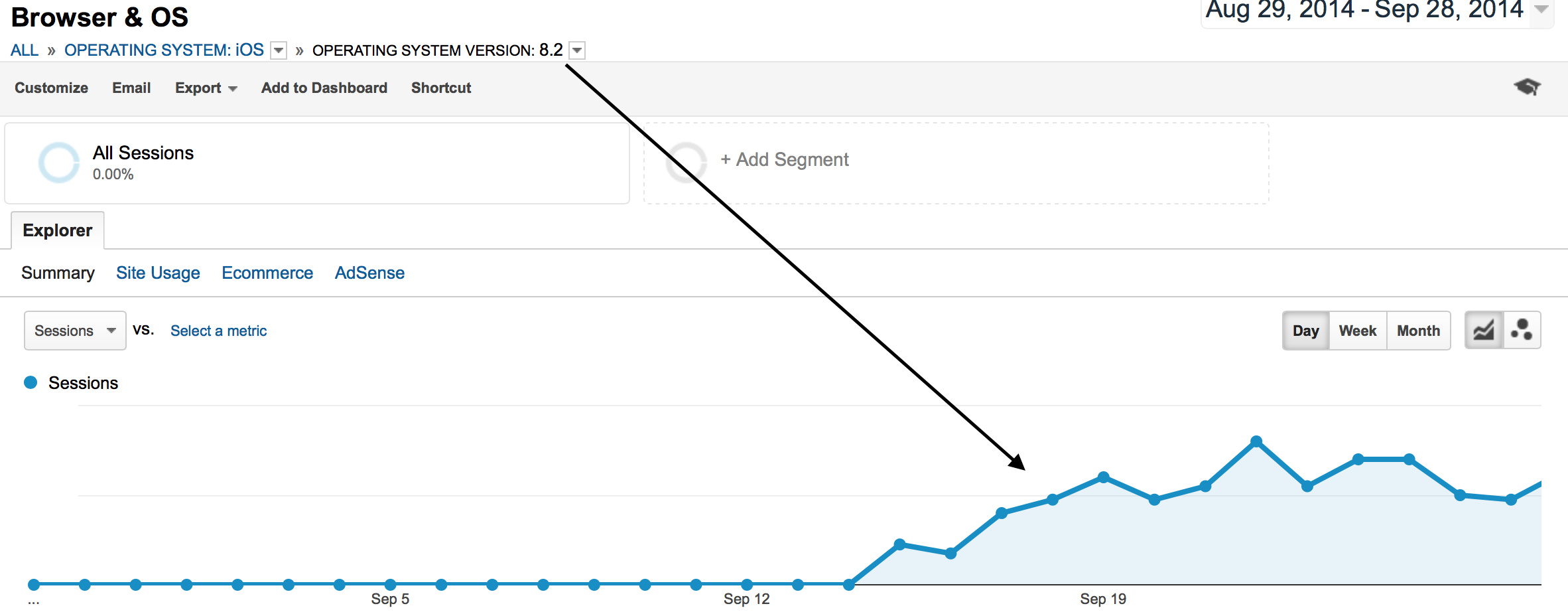
iOS 8.2 visits to 9to5Mac
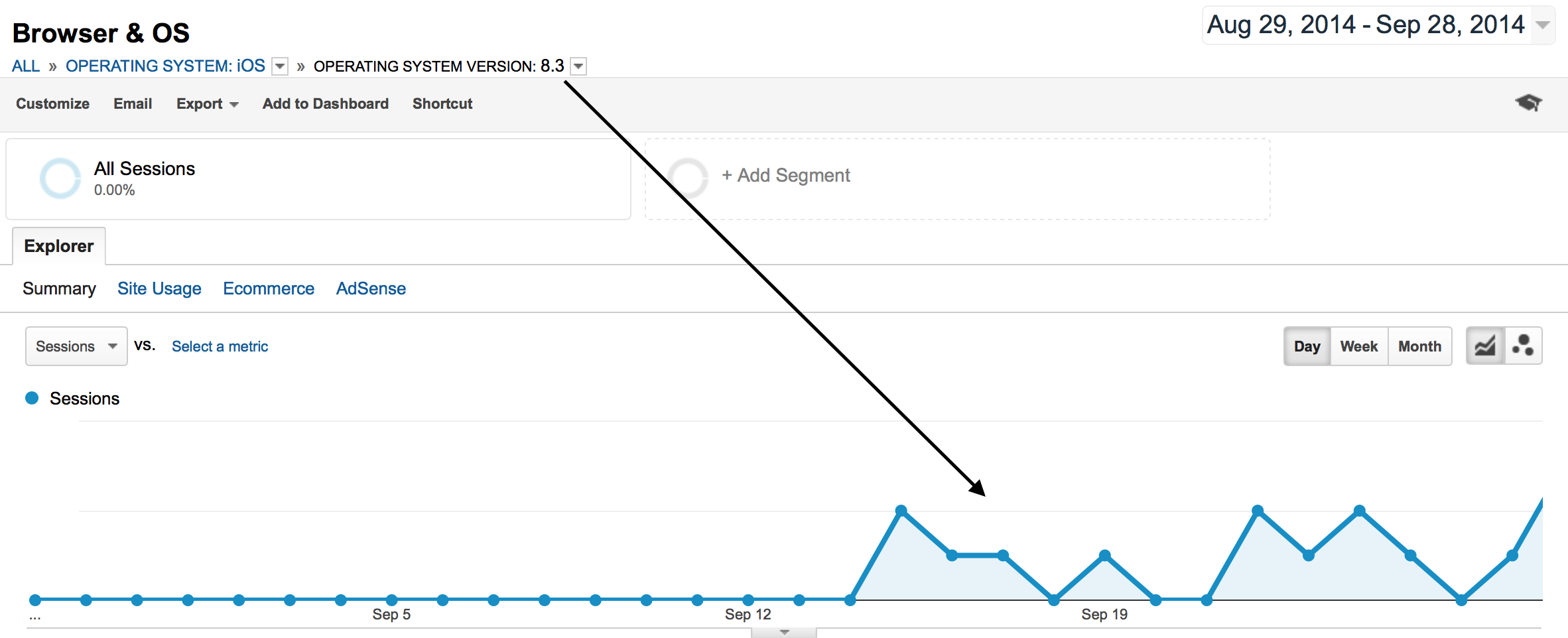
We’ve confirmed that these major new versions are in development via two means. First, a developer of a major hardware-connected iOS application has shared with us their analytics, and this data indicates that all three versions are in testing by Apple employees in or around Cupertino, California. Second, and much closer to home, our own Google Analytics for 9to5Mac.com show that iOS users are visiting our website via iOS 8.1, iOS 8.2, and iOS 8.3 devices. iOS 8.1 hits to 9to5Mac.com started appearing even months before iOS 8.0 launched, but 8.2 and 8.3 visits only started picking up following iOS 8’s release in mid-September.
iOS 8.3 visits to 9to5Mac
While Apple works on several iOS features and enhancements over the course of several years, it typically only begins wholly testing major new releases close to the ship dates of the preceding release. Apple working on three significant follow-ups to iOS 8 is a shift from the usual development cycle, one which would normally indicate Apple to be working on just iOS 8.1 as well as iOS 9.0. It’s possible that iOS 9 is also in the works, and of course Apple is always working on nominal bug fix (x.x.1 or .2 or .3) updates, but the fact that 8.1, 8.2, and 8.3 are all in simultaneous development raises some interesting possibilities:
Now that we’ve had our first look at at least an early take on iOS 8, what stands out most to me is how little the basic appearance of the iOS homescreen has changed over the years. On the left is iOS 1, on the right the recently-leaked iOS 8 homescreen.
Seven years apart, yet still essentially identical in form: a grid of static icons. Looked at in one way, that’s incredibly impressive: that a user-interface that worked in 2007 still works today. But it does make me wonder at what point the iOS homescreen will move beyond this format? Expand Expanding Close