Today only, Amazon has the Pioneer VSX-1020-K Home Theater Receiver for $299 with free shipping. That’s close to half off the list price of this 770W 7.1 3D iPod/iPhone/iPad-controlled stereo system which features include six HDMI 1.4 inputs, 110 watts of power into seven channels, subwoofer output, and more.
We have just learned that Apple retail stores are having an “overnight” tonight to setup new Express Lanes. Apple has used these express lanes in the past to provide holiday shoppers a fast track to purchase Apple products and accessories. The zone are typically staffed with several Apple Specialists and stock popular laptop models, every iPad and iPod model.
The fact that Apple is using the express lane again this year is a bit interesting because the new Apple Store app was released today, which adds self-checkout and in store pickup.
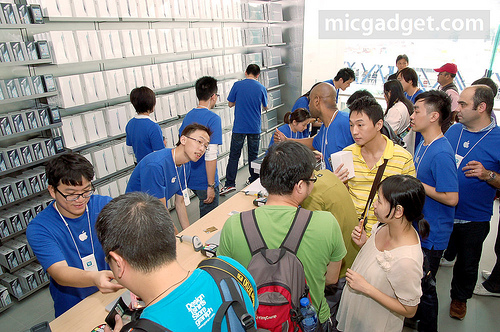
Alternatively, the brand new Hong Kong Apple store is so busy that it has a year-round express counter (above). Several tipsters have confirmed the overnight and hinted that there may be more in the coming weeks. Don’t get too excited though, this doesn’t mean new Apple products are on the horizon. Subsequent overnights will probably used to install holiday marketing materials; large banners, easel poster, and device screen-savers. Two more Express Lane images below… Expand Expanding Close
Barnes and Noble announced their Nook Tablet today, a successor to their now $199 Nook Color. The $249 dual core tablet is aimed squarely at the $199 Kindle Fire but has 10GB more (16GB total) storage and the ability to add up to 32GB via micro SD card. It also has a superior screen to the Kindle and the popular Hulu Plus and of course Neflix for watching videos. The app library is a much smaller subset of the Android market, however it is curated much better so only quality apps are allowed in.
Although we hear it a lot, the Nook Tablet or the Kindle Fire aren’t really competitors to the iPad. Realistically, if you have a budget for a $500-$830 iPad, you aren’t considering a $200 alternative … and vice versa. Sure all are “tablets” but it is like comparing a netbook to a MacBook Pro.
If anything, these cheap 7-inch tablets are competition for the $188 iPod touch (though with increased portability, superior app and content ecosystem and cameras -that too is a stretch). Price, being one of the biggest purchase considerations, puts these things more in line with the lower priced iPods. For people who want a bigger screen and don’t consider the many other advantages to being in the Apple ecosystem a plus, these might make sense.
If you had a choice between the two, would you choose a $199/$249 Nook or a $199 Kindle Fire?
Raising the stakes in the ongoing legal battle between Apple and Samsung over copycat accusations involving mobile devices, Samsung is upping the ante by asking to depose Apple’s iPhone designers, including Apple’s leading industrial design guru Jonathan Ive.
According to Josh Rosenthall of Edible Apple, depositions of Apple’s iPhone inventors Jonathan Ive, Douglas Satzger, Shin Nishibori and Christopher Stringer “will be taking place relatively soon” and ahead of the expedited trial between Apple and Samsung in the United States, scheduled for July 30, 2012.
According to Samsung’s motion, none of the aforementioned designers will be able to sit for deposition for various reasons. In the case of Jony Ive, the motion mentions “personal reasons”. Ive is especially important in this case. Jobs’s spiritual partner, it is said that no one could tell Ive what to do, at least until Jobs resigned. According to Jobs’s authorized biographer Walter Isaacson:
He called Jonathan Ive, Apple’s design chief, his “spiritual partner” at Apple. He told Isaacson that Ive had “more operation power” at Apple than anyone besides Jobs himself — that there’s no one at the company who can tell Ive what to do. That, says Jobs, is “the way I set it up.”
As such, Ive is the holder of Apple’s many secrets and inner workings, something Samsung is legitimately hoping to exploit ahead of the trial. And while Apple’s design guru really needs no introduction, here’s a brief overview of the others.
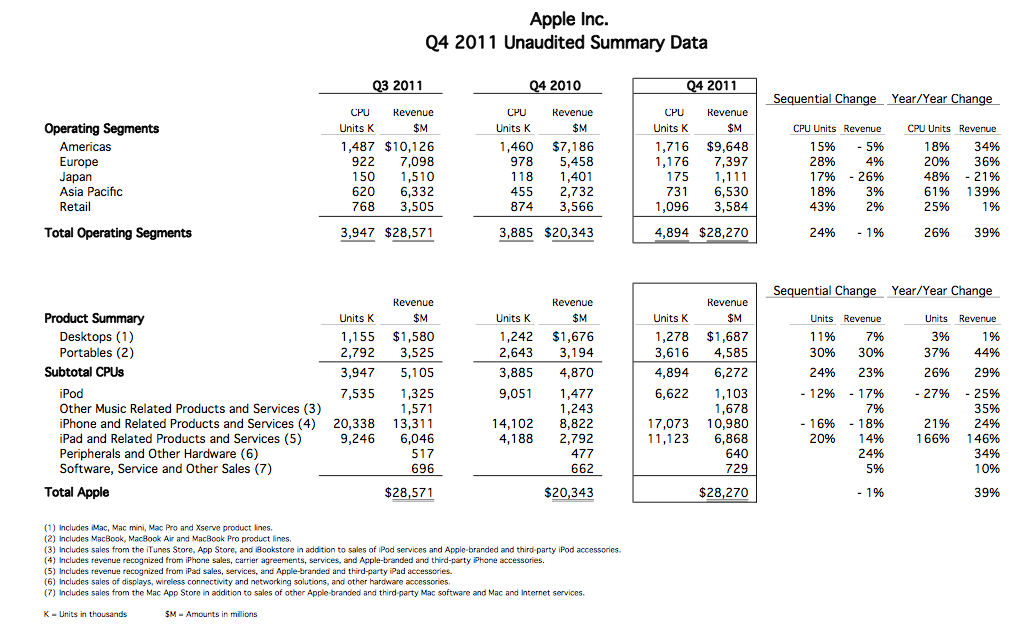
According to the newly-released DisplaySearch Tablet Quarterly report, shipments of tablets powered by chips based on ARM’s CPU designs will grow by a projected 211 percent in 2011 to nearly 60 million units. At the same time, mobile devices using Intel’s x86 architecture are not expected to pick up steam until 2013. Meanwhile, Apple sold 11.12 million iPads in the September quarter, a 166 percent annual unit growth, grabbing a Strategy Analytics-estimated 67 percent market share of all quarterly tablet shipments, down from 96 percent in the year-ago quarter when the company took the market by surprise and left competitors flabbergasted.
ARM’s domination in mobile stems from the tremendous growth of smartphones and tablets, the vast majority of which come with chips based on ARM’s blueprints. With iPad accounting for more than two-thirds of tablets and their A-series of chips being based on ARM’s designs, it’s really not surprising that tablet PC architectures are now feeling the heat by ARM and iOS.
In retrospect, the mobile landscape might have looked a lot different had Apple’s deceased co-founder Steve Jobs not listened to the iPod Godfather Tony Fadell. I found this incredibly interesting anecdote yesterday in the authorized Steve Jobs bio by Walter Isaacson…
Bloomberg is reporting that the rumored Apple HDTV is being led by iTunes creator Jeff Robbin (introducing iTunes 9, above). Jeff Robbin led Apple to create both the original iPod and iTunes — so obviously he’s the man for the job.
Apple Inc. is turning to the software engineer who built iTunes to help lead its development of a television set, according to three people with knowledge of the project. Jeff Robbin, who helped create the iPod in addition to the iTunes media store, is now guiding Apple’s internal development of the new TV effort, said the people, who declined to be identified because his role isn’t public.
Bloomberg also quotes Piper’s Munster who believes that the HDTV is in prototype, due out late next year or 2013. He also postulates that the Apple TV will have Siri and iCloud functionality. Siri would act as the controller (think Kinect) and iCloud would help deliver user’s content.
In Steve Jobs’ biography, Jobs told Isaacson “that he cracked the code for building an HDTV.” Robbin is an interesting character. Bloomberg explains:
Here’s another excerpt from the upcoming Steve Jobs biography by Walter Isaacson, which goes on sale Monday in electronic, hardcover and spoken word formats. The juicy bits published by the Huffington Post teach us about the books and music which had shaped the brilliant mind of the entrepreneur and cultural icon who would go on to transform computers, music, mobile, publishing, digital entertainment and cell phones, to name a few. Jobs’ artistic sensibilities drew from the influences he picked up along the way from his reading and listening material, most of which he had discovered and consumed back in the teen and college years.
So what did Jobs read and listen to back then? The music part is easy:
Jobs’ love for the Beatles became widely known when he likened Apple’s creative process to that of the Beatles, here’s that quote from60 Minutes:
My model for business is The Beatles: They were four guys that kept each other’s negative tendencies in check; they balanced each other. And the total was greater than the sum of the parts. Great things in business are never done by one person, they are done by a team of people.
Apple’s co-founder in the early days was deeply involved in a spiritual search for enlightenment and he experimented with marijuana and LSD starting at the age of 15.
Jobs found himself deeply influenced by a variety of books on spirituality and enlightenment, most notably Be Here Now, a guide to meditation and the wonders of psychedelic drugs by Baba Ram Dass, born Richard Alpert. “It was profound,” Jobs said. “It transformed me and many of my friends.”
Moby Dick and Dylan Thomas’ poetry were also among Jobs’ favorite reads, but the books which really shaped Jobs’ artistic sensibilities and enriched them with a touch of the much-needed technology flare are…
There have been signs and indications of China’s growing importance to Apple’s bottom line before. In the June quarter the company grew China revenues sixfold, to an astounding $3.8 billion, or nearly eight percent of its total revenue for the quarter. Just three months later, however, the business in China has ballooned to $4.52 billion, an impressive sixteen percent of Apple’s total $28.27 billion revenue for the September quarter. China contributed with twelve percent in the more than $108 billion of fiscal 2011 revenue, or about fifteen billion dollars. Last year revenue from China was just three billion dollars and in 2009 only two percent of Apple’s total revenue.
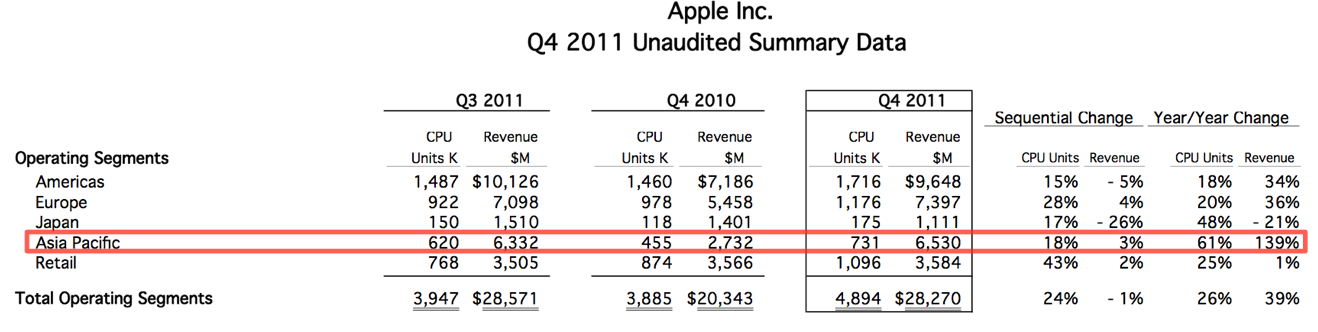
In other words, one in six dollars of Apple’s quarterly revenue came from China (almost one-in-eight looking at fiscal 2011). The 1.33 billion people country is now Apple’s second-best revenue market. Moreover, revenue for the entire Asia Pacific region grew by 139 percent year over year to $6.53 billion, with CPU units climbing by 61 percent (three percent revenue and eighteen percent CPU units sequential growth). Compared to a 34 percent annual revenue growth in the Americas ($9.64 billion) or a 36 percent growth in Europe ($7.39 billion).
It’s clear now that the Asia Pacific region is Apple’s fastest-growing market, outpacing Europe and the Americas by nearly four times. In fact, Asia Pacific raked in nearly two-thirds of the Americas’ revenue, Apple’s top revenue market. And at four times larger growth, the Asia Pacific region could become Apple’s #1 revenue generator by this time next year.
Click for larger
CEO Tim Cook said in a conference call with Wall Street analysts that “the China progress has been amazing”, calling it an “enormous opportunity” for Apple. It’s bound to grow even bigger as Apple builds more stores to increase its distribution footprint there. Apple operates five flagship retail stores in China which combined had the most traffic in the quarter. The company has managed to build an impressive thirty retail stores worldwide during the quarter, including massive outlets in Hong Kong and Shanghai, the latter being pictured below.
There were as of this writing more than seven thousand points of sale for the iPhone in Greater China. In total, iPhone has 120,000 points of sale around the world and iPad and iPod are now carried in 40,000 and 50,000 points of sale, respectively. They should open at least 25 new stores in China within the next few years and 40 outlets around the world in the next quarter, with 30 outside the United States.
We’ll be following along with Apple’s earnings call in a few minutes here. Also expect some separate posts for the “Best Quarter Ever” Press Release and any other news that comes our way.
US department store, Sears, announced today that they are rolling out iPads and iPod touches to 450 retail stores nationwide. The rollout is to better the relationship between the customer and sales associate to improve the shopping experience. Sears will train their employees to utilize these devices to order products online for customers, access product information and videos, and show customers how to utilize enhanced purchasing tools to buy products they desire.
Sears isn’t the first company to rollout Apple products across their fleet. Lowe’s did something similar by bringing 42,000 iPhones to their stores to process sales. Old Navy, Home Depot, and of course Apple also use iOS devices to enhance the sales experience.
In the press release, Sears also said they’re working to upgrade their technology infrastructure so that customers can use their mobile devices to compare products (Wi-Fi). Sears will also use the iPads and iPod touches to train employees. Cheers, to a better shopping experience!
The extra .05W/hrs battery increases talk time by an hour but for some reason (likely additional background processes with notifications), standby time is reduced from 300 to 200 hrs
The A5 processor is rated at 1GHz (like iPad obv.) but is underclocked for battery saving purposes. That doesn’t mean an update (or hack) in the future could boost speed to iPad levels.
It looks like there really is only 512MB of RAM. AnandTech says:
The second confirmation iFixit’s teardown gives us is the size of the A5’s on-package memory: 512MB. A quick look at the image above yields the Samsung part number: K3PE4E400B-XGC1. Each highlighted E4 refers to a separate 2Gb LPDDR2 die. The A5 features a dual-channel LPDDR2 memory interface, thus requiring two 32-bit die to fully populate both channels. The final two characters in the part number (C1) refer to the DRAM’s clock period, in this case 2.5ns which indicates a 400MHz clock frequency (F=1/T). My assumption here is Samsung’s part number is actually referring to clock frequency and not data rate, implying there are a pair of LPDDR2-800 die in the PoP stack. It’s not entirely uncommon to run memory at speeds lower than they are rated for, a practice we’ve seen in graphics memory in particular for as long as I can remember, so I wouldn’t take this as proof that Apple is running at full LPDDR2-800 speeds.
Businessweek’slengthy profile on Apple’s youngest VP (of iOS software) Scott Forstall is full of little nuggets. Here are the best bits:
Forstall’s older brother, Bruce, has been a senior software design engineer at Microsoft for 20 years; imagine the Thanksgiving dinner conversations.
“He was as close to Steve as anybody at the company,” says Andy Miller, who headed Apple’s fledgling iAd group.
Insiders say he has such a fraught relationship with other members of the executive team—including lead designer Jony Ive and Mac hardware chief Bob Mansfield—that they avoid meetings with him unless Tim Cook is present.
He’s known to have a taste for the Mercedes-Benz SL55 AMG, in silver, the same car Jobs drove and has a signature on-stage costume: black shoes, jeans, and a black zippered sweater. (He favors Reyn Spooner Hawaiian shirts for normal days at the office.)
“I once referred to Scott as Apple’s chief a–hole,” says former Apple software engineer Mike Lee, who left the company in 2010. “And I meant it as a compliment.”
“He knows what he wants, and he’s driven to get it,” says AT&T (T) Chief Technology Officer John Donovan. “He can be relentless about getting it.” “Scott’s a pretty amazing guy,” says Vic Gundotra, a senior vice-president at Google. “In terms of running an operating system team, he’s one of the best I’ve ever seen.”
According to the story, iPod godfather Tony Fadell and Jean-Marie Hullot CTO of Apple’s application division until 2005 left Apple after clashing repeatedly with Forstall. Jon Rubinstein, a former iPod chief who left for Palm in 2006, chatted amiably at a Silicon Valley party last month, until Forstall’s name came up. Then he turned away abruptly. “Goodbye!” he said.
He graduated high school as co-valedictorian with a perfect 4.0 grade point average. (His high school sweatheart/future wife was the other co-valedictorian.)
Before the iPhone 4 went to market, Forstall persuaded Jobs to allow dozens of his engineers to carry prototypes of the device to better test its network performance and minimize dropped calls, says a former Apple employee who was a manager at the time. That’s how Gizmodo got ahold of it.
Forstall has cashed in over $40 million in Apple Stock. Brian Marshall, an analyst at ISI Group, says that he would consider downgrading Apple stock if Forstall were to leave.
The idea is that Forstall isn’t quite a Steve Jobs, but he’s the closest all around package that Apple has.
Update: Fadell weighed in pretty much refuting BW’s portrayal of the situation
“I inherited the competitive iPhone OS project from Jon Rubenstein and Steve Sakoman when they left Apple. I quickly shuttered the project after assessing that a modified Mac OS was the right platform to build the iPhone upon. It was clear that to create the best smartphone product possible, we needed to leverage the decades of technology, tools and resources invested in Mac OS while avoiding the unnecessary competition of dueling projects.”
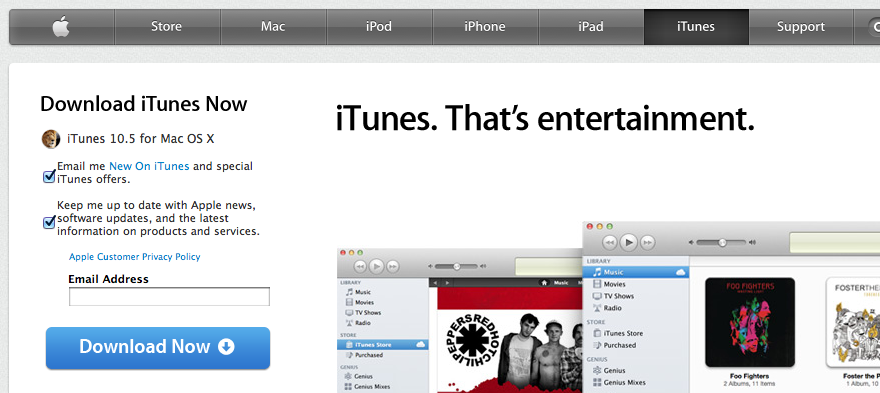
Here you go. The 103MB download isn’t immediately visible from the iTunes home screen but clicking download reveals the 10.5 download button. It is also hitting Software Update. This is the first step in Apple’s upgrade to iOS 5 and iCloud. Other updates, including iOS 5 tomorrow should be hitting shortly.
• iTunes in the Cloud. iTunes now stores your music and TV purchases in iCloud and makes them available on your devices anywhere, any time, at no additional cost.
• Automatic Downloads. Purchase music from any device or computer and automatically download a copy to your Mac and iOS devices.
• Download Previous Purchases. Download your past music, TV, app, and book purchases again, at no additional cost. Previous purchases may be unavailable if they are no longer on the iTunes Store.
• Sync with your iPhone, iPad, or iPod touch with iOS 5.
• Wi-Fi Syncing. Automatically sync your iPhone, iPad, or iPod touch with iTunes any time they’re both on the same Wi-Fi network.
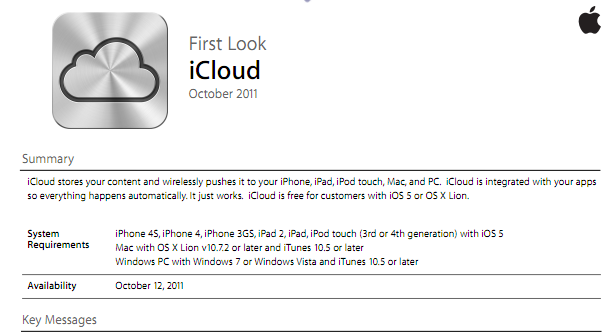
Last week, we detailed the internal docs Apple uses to tell its employees how to sell the iPhone 4S, the new iPods and the new Cards app. Today a tipster added to the trove two more internal docs. iCloud and iOS 5 First looks. These are the cheat sheets that Apple employees use to sell customers these products. Both below:
Toshiba-branded NAND flash module in the previous-generation iPod nano (left) and the SanDisk module in the new model (right). Click for larger.
Apple on Monday reaffirmed its dedication to the iPod family and its latest iPod nano saw a slight refresh stemming mostly from the power of software. The enhancements include an improved user interface with larger icons, sixteen new watch faces and the improved Nike+ fitness functionality (accelerometer?). Furthermore, the new interface available to the older nanos, too, via a firmware update. Apple’s diminutive music player is available in seven colors, priced at $129/$149 for the 8GB/16GB version.
Gadget experts at iFixittore it apart and found out the device carries the same model number A1366 as its predecessor, while the part number shifted from MC688LL/A to MC689LL/A, yet another indication of the minor hardware tweaks. The device still features the same 240-by-240 pixel display which remains inseparably bonded to the front glass. Also looking at the logic board, the seventh-generation iPod nano sports three Apple-branded chips, like its predecessor.
However, Toshiba’s NAND flash module from the previous-generation model has been replaced with flash memory from SanDisk, which appears to be the only major change to the device’s internals. The battery is still soldered to the logic board and getting the display off of the device requires the use of a heat gun, just like before, iFixit noted.
Additionally, iFixit’s director of technical communication Miroslav Djuric confirmed to 9to5Mac via email that the new model carries an updated Apple processor, the Apple 339S0104 chip versus the Apple 33850859 silicon found in the previous model. From TechInisights, it appears that this is a repackaged Samsung processor+DRAM:
Apple 339S0104 stacked PoP – Samsung APL3278A01 ARM Apps Processor and 512 Mbits Mobile DDR SDRAM from Samsung K4X51323PI
This stacked package-on-package device, once decapped, revealed another design win for Samsung (manufacturers of the A4 ARM processor).
This package revealed a Samsung APL3278A01 ARM application processor and 512 Mb (64 Mbytes) of Mobile DDR SDRAM (part number K4X51323PI).
By the way, UBM TechInsights guesstimated that Apple is spending $203 in parts for each 32GB iPhone 4S.
Apple announced a brand new iPhone, some new iPods, and more yesterday. We had a pretty good bead on what was going to happen overall a week before the event. Read our predictions post for a refresher.
But now that the event is over, here’s our rumors post mortem.
What came true:
October 4th Event: The first sighting of ‘October 4th’ occurred when a tipster showed us AT&T’s internal systems’ change for iPhone tiers in June. The date of the change: October 4th. We postulated:AT&T raises iPhone device tier on October 4th, perhaps signaling launch date?
At that point we were far from certain. AllThingsD deserves credit for getting not only the date right but the venue – Apple’s own auditorium.
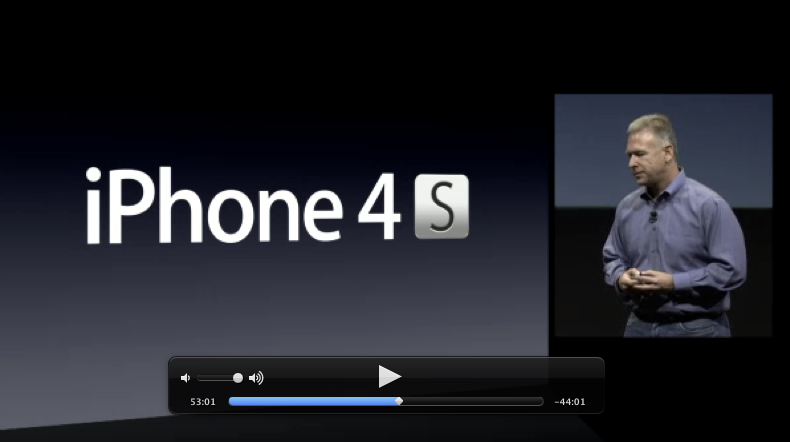
The name ‘iPhone 4S’: We pegged iPhone 4S as the name as early as April when we broke the news that Apple has seeded a next-generation iPhone to high-level gaming outfits. We also confirmed the name last week with an iTunes finding. If that wasn’t enough, twodifferent website ‘leaks’ happened as Apple took down the website ahead of the event. Contrary to many people’s hopes and dreams, we knew going into the event today that it would only be the iPhone 4S.
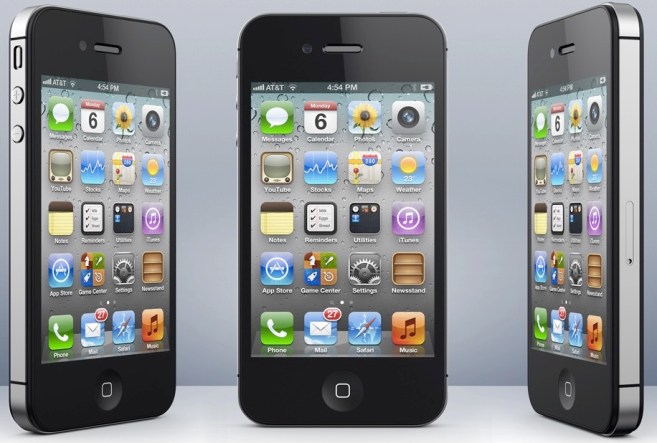
The iPhone 4 design: Our April report about a new iPhone being seeded to gaming developers pointed to this new iPhone retaining the iPhone 4 design. A report from BGR detailing a next-generation T-Mobile iPhone in testing also pegged this iPhone 4 design. Additionally, TiPb, Reuters and Bloomberg all later called for the iPhone 4S featuring a design identical to the iPhone 4. We also demonstrated the first evidence for this with iTunes findings.
A5 Processor: We, like everyone else, knew there would be an A5 processor.
The 64GB iPhone 4S: After a few years without a 64GB iPhone, we were finally able to confirm that Apple would unleash a 64GB varient of the iPhone 4S a few weeks ago. We guessed the prices based on foreign translated currencies, but were off.
Cards: We, like everyone else, passed over Cards app.
Find my Friends:MacRumors found Find my Friends code back in January. Since then, we spotted and detailed the Latitude-ish program. The Next Web took a pretty vague guess yesterday morning that a ‘GPS related product’ would be revealed which is sort of correct.
Siri Assistant: We called the headline feature for the keynote as the Siri Assistant a few times over the last few weeks. Our details about the user interface, exact feature set, and usage examples were spot on. We also reported in July that the feature would soon be launching with a crowd-sourced / beta standing for constant improvement.
Nuance Dictation: After reporting on incoming Nuance Dictation for the new iPhone on several occasions, we presented the first leaked screenshots of the new and handy software feature. Chronic Wire posted the first proof that Nuance is behind the technology.
World phone: We reported in February that Apple has begun placing world phone (CDMA + GSM) chips in their new iPhones. We also discovered references in iTunes which pointed to the 4S being a dual-mode device, and we heard this from sources as well along the road. TechCrunch heard this as well by way of application developer logs.
White iPod touch and new iPod nano:We posted the first photos of white iPod touch parts all the way back in July. MacRumors was able to confirm that a white iPod touch is coming in October and we discovered the three new white models in Apple’s inventory system.
The 8MP camera with better optics: We broke the news that the new iPhone will feature a brand new sensor from Sony, per their CEO’s public comments, and recently confirmed with sources that this new lens would clock in at 8 megapixels. TiPb first reported that the new iPhone will feature an improved optics system, and so did The Next Web. Bloombergalso pinpointed an eight megapixel sensor. We also reported that Apple was working on advanced face detection for iOS 5.
The cheaper iPhone:We confirmed that Apple was set to release an 8GB version of the iPhone 4 (N90A) today following Reutersreport about such a device being in production. Gizmodo managed to get a few spy shots of said device from Foxconn’s Brazil-based manufacturing plant.
The $199 iPod touch:We reported that Apple was set to drop the price of the iPod touch to $199 – for the 8GB model – to better compete in a new market with the Kindle Fire.
Sprint support:We reported all the way back in June (and hardly anyone believed us) that a Sprint version of the iPhone 4 for Sprint was in advanced testing stages. This turned out to be correct as the 8GB iPhone 4 is launching soon on Sprint. In addition, we were also told back then that Sprint’s first iPhone would not be 4G, and it is not. The WSJ and Bloomberg both followed up months later claiming that Sprint and Apple signed a deal.
Another tidbit regarding the iPod. Apple’s music player brand still holds a 78 percent market share a decade since its launch. Quite impressive. They sold over 300 million iPods to date. “It took Sony 30 years to sell 220 million Walkman cassette players,” Apple CEO Tim Cook remarked. We take it that means the iPod classic isn’t going away.
The iPod family of music players still have a lot to offer, he said, noting that nearly half of sales are from users who already own one. Apple shipped 45 million iPods from July of last year to June of this year. As for iTunes, the online music store now commands a 20 million songs-strong catalog. Remember, iTunes Store launched with just 200,000 songs.
Also notable is the release of the iPod touch in white; it’s available in 8GB, 32GB, and 64GB models for $199, $299, and $399, respectively, the same as the black version.
Apple announced price drops on its older iPhone models. With activation of a new 2-year contract, the iPhone 4 8GB is now $99, $100 off, while the iPhone 3GS is now free, a price drop of $99.
Funny, because it is true? SNL’s Seth Meyers tackles the Fire vs. iPad debate at 48 secs in (YouTube).
[vodpod id=Video.15495947&w=650&h=420&fv=]
You know, no one is really talking about this, but at a smaller 7 inches and priced at $199, the Kindle Fire is more of an iPod touch competitor than a iPad competitor…at least as far as budgets and capabilities are concerned.
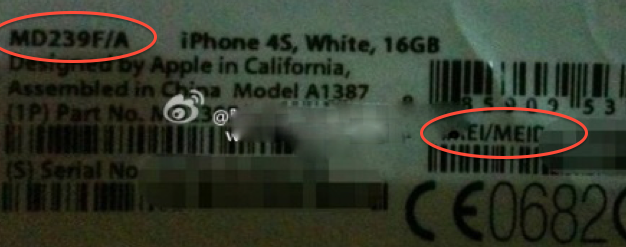
Perhaps the most interesting aspect of the new iPhone appearing in the inventory system is that the model number is similar to the one from a purported ‘iPhone 4S’ packaging label we spotted yesterday on a Chinese forum. We quickly dismissed the label as fake due to its unknown origin, but it is now possibly real. The model number from the label is MD239 (a 16GB unit), while the model number for the “better” (likely 32GB unit) is MD234. According to Mr. X, this sequence is sensible, but could just be a coincidence. If legitimate, the next-generation iPhone will be marketed as the iPhone 4S, but we definitely would not call that anywhere near confirmed. Another tidbit: IMEI and MEID being together on the label would seem to confirm this new iPhone to be GSM+CDMA (thanks @rokorre!).
Following up on our report yesterday that two new tweaked iPhone 4 models have appeared in the system, we are now hearing that the two models represent black and white units. The N90A is likely an 8GB iPhone 4 that comes in black and white.
iPods too!
We are also hearing that all three iPod touch capacities will be seeing price drops in certain international countries. The price drops for the 32GB and 64GB models will be minimal – perhaps due to currency fluctuations – but the 8GB pricing will change substantially. Translated, the 8GB iPod touch may even reach the $199 price point or below again in the United States, but that is unconfirmed. With the release of the $199 8GB Kindle Fire yesterday, a move like this from Apple makes sense.

 .
.