Microsoft has launched the latest stable version of its Edge browser to the public and it’s now available as a specific build for Apple Silicon M1 Macs.
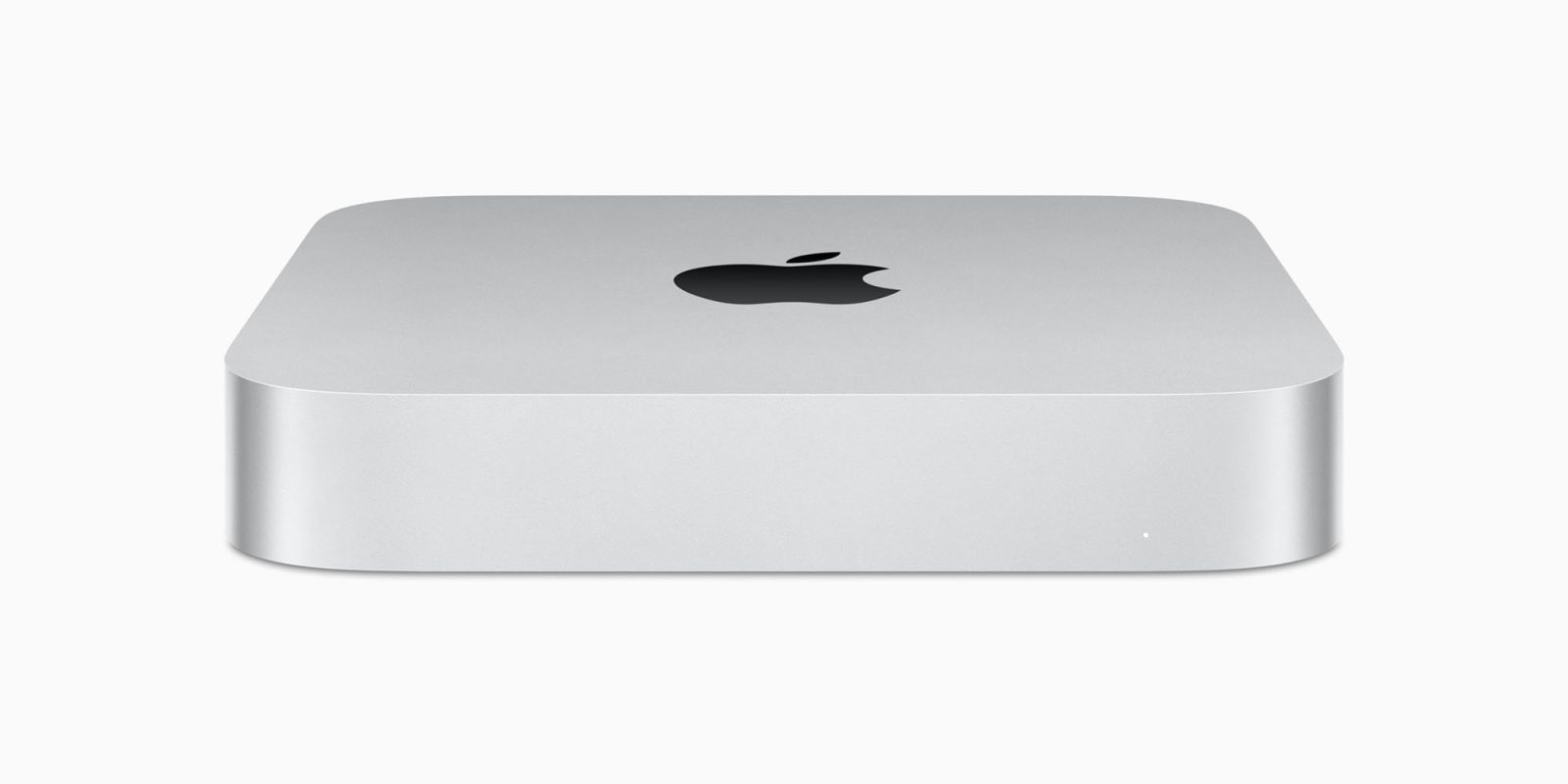
Accessing an M1 Mac mini in the cloud just got cheaper. Amazon Web Services (AWS) began offering Intel Mac mini instances at the end of last year for $1.083 per hour, in minimum 24-hour chunks. Scaleway, a European cloud services company, is now offering the M1 version for €0.10 ($0.12) per hour, with the same 24-hour minimum …
The M1 Mac mini power consumption and thermal output figures highlight just how much more efficient Apple Silicon is than the Intel chips that powered older models …
Since the new M1 Macs were announced, developers have been working to run different operating systems on the Apple Silicon platform, including Windows and Linux. Now, thanks to Corellium, it’s possible to run Ubuntu — a popular Linux distro — on new Macs with M1 chip.
Update January 19, 2021: Apple has reverted this server-side change, and it is once again possible to side-load unsupported iPhone and iPad apps on an M1 Mac. We don’t expect this to last long, so if there are any iPhone or iPad apps you want on your Mac, download them sooner rather than later using iMazing.
Earlier this week, 9to5Mac reported that Apple would soon start blocking users from side loading iPhone and iPad applications to their M1 Macs. Now, Apple has officially flipped the server-side switch to implement this change.
This means that it is no longer possible to use an app such as iMazing to side load unsupported applications from your iPhone or iPad to your M1 Mac.
The year 2021 is shaping up to be massive for the Mac. Apple began the transition to Apple Silicon processors in the Mac last year with a new Mac mini, a new 13-inch MacBook Pro, and a new MacBook Air. Things are expected to gain more traction this year, with the rumor mill currently suggesting the first iMac redesign in a decade, new 14-inch and 16-inch MacBook Pro models, and much more.
Here’s everything we expect from the Mac lineup and the Apple Silicon transition this year…
An apparent M1 Mac Fast User Switching bug is resulting in user reports that the screensaver takes over and leaves them temporarily locked out of their machines. The bug can be seen in the view below.
We just got some exciting news from Ming-Chi Kuo and Bloomberg today about the next-generation MacBook Pro notebooks. While we already knew some of the details like 14- and 16-inch screen sizes and the move to Apple Silicon, an expansion of I/O beyond USB-C ports, the return of MagSafe, a new design, and more have now been predicted. What ports and features are you most interested to see return or arrive on the next-gen MacBook Pro lineup?
Apple today released the second beta of iOS 14.4 and macOS Big Sur 11.2 for developers — and although the updates have no significant changes, they come as bad news for some M1 Mac users. 9to5Mac has found that Apple may stop users from sideloading unsupported iOS apps on Apple Silicon Macs.
Intel made an appearance at CES this year and brought a preview of its next substantial chip release, the 12th-generation Alder Lake. The company didn’t go into many details on the upcoming chips, but it did give us a taste of what to expect.
A new supply-chain report today says that we can expect to see a 2021 16-inch MacBook Pro with a miniLED screen. This is consistent with a recent report from noted Apple analyst Ming-Chi Kuo.
Kuo said just over a month ago that we can expect to see two MacBook Pro models with an all-new form factor, as well as miniLED backlighting …
Market intelligence firm TrendForce has estimated that the M1 Macs market share is currently 0.8% of all laptop sales, but expects new models to push Apple’s share to 7% by the summer.
The report estimates notebook computer shipments for 2020, and forecasts those expected in 2021 …
The first M1 Macs have been a huge big success on a number of levels and the tech industry is keen to see the performance that Apple Silicon will unlock as the whole Mac lineup gets the custom chips. Now a former Apple engineer has shared interesting details on what key ARM advancements Apple made starting around 10 years ago that led to the magic of M1 Mac performance that we have today. And notably, Apple’s work really pushed the rest of the industry as it forged the leading edge with ARM.
Along with the shift to Apple Silicon, performing things like a restore is different with M1 Macs compared to their Intel predecessors. Follow along for a look at how to revive and restore M1 Macs, what the difference is, when to use them, and what to try before taking those steps.
Despite the unique circumstances presented by being in the midst of a global pandemic, Apple had one of its busiest, and arguably most productive years in recent memory. In this hands-on video, I take a look back at my favorite Apple hardware releases of 2020.
Apple first unveiled its plans to transition away from Intel processors at WWDC in June, detailing that the first Mac powered by Apple Silicon would be released before the end of the year. As it turns out, Apple released three Macs powered by its new M1 chip: a MacBook Air, MacBook Pro, and Mac mini.
An Intel investor with a billion dollar stake in the chipmaker says that it needs to make drastic changes to address its changed fortunes – including attempting to win back Apple as a client.
Intel stock had fallen 21% over the course of 2020 before the 10-figure investment by hedge fund Third Point, which is pushing for fundamental change in the company …
On the whole, Apple’s M1 MacBooks and Mac mini have been a hit with big improvements across the board. However, the improvements never end and Apple has been asking early M1 MacBook customers a list of questions in a new survey including what they would change about the new generation of computers. How about you, what would like to see with the next iteration of M1 MacBooks?
Parallels recently released a technical preview of Parallels 16 that’s compatible with M1 Macs, and it works surprisingly well. The Apple Silicon version of Parallels is specifically designed for ARM-based operating systems, so it won’t work with the x86 version of Windows 10, but instead requires the ARM version of Windows. In this video tutorial, we show you how to run Windows for ARM on M1 Macs using Parallels.
Developer @daeken on Twitter has gotten Nintendo Switch games to run on Apple Silicon Macs. The implementation is not quite perfect yet due to the technical limitations of the MoltenVK runtime library, which “maps Vulkan to Apple’s Metal graphics framework.” Even with these limitations, the emulation looks very promising.