OLED

See All Stories

Apple may soon have an extra supplier of OLED displays for future iPhone: Sharp

iPhone concept from ConceptsiPhone

With Apple expected to switch to OLED screens for future iPhones, it appears that it may not need to rely completely on the two major manufacturers for long. While Samsung and LG currently manufacture most of the world’s OLED screens between them, Nikkei reports that Sharp expects to be doing the same ‘before 2018’ …


Expand
Expanding
Close

Concept brings rumored MacBook OLED fn key row to Apple’s wireless keyboard for all Macs

What if Apple brought the OLED display function key row that is rumored for upcoming MacBooks to its Apple keyboard too? Completely disregarding what it might require technically to integrate and drive such a display in the keyboard, this concept from Curved imagines bringing that feature to iMac, Mac Pro, Mac mini and other Mac users via a new version of Apple’s wireless keyboard.


Expand
Expanding
Close

This week’s top stories: WWDC 2016 preview, MacBooks w/ OLED function keys, Apple Energy & much more

In this week’s top stories: WWDC coverage kicked into full gear ahead of Apple’s event on Monday, we discussed USB-C and upcoming MacBook Pros, and Apple announced welcomed subscription and revenue changes for the App Store.

Apple’s plan to become an energy company by selling off its excess renewable electricity was revealed this week, and we also showed you how to drive a 4K display at 60 Hz with the new 2016 MacBook in this week’s top video.


Expand
Expanding
Close

MacBook OLED bar concept with multiple USB-C ports & monster trackpad…just…take my money

Site default logo image

KGI analyst report from two weeks ago broke the news that a new Apple MacBook, due later in the year, would debut a new OLED touch screen technology above the keyboard that will replace the function row keys. A leaked shell of a MacBook days later seemed to at least confirm the report along with showing 2 USB-C ports on the sides and a huge touchpad. The MacBook OLED bar rumor has been a controversial one for us and many of you generating lots of opinions.

However, one of our readers Cameron did a mockup that changed all of that for me and many others. Taking a look at the possibilities with Siri, many of our readers came up with excellent ideas for apps that would use the bar. 3D designer Martin Hajek has done a few better with some amazing renders that take the OLED display from gimmick to “TAKE MY MONEY.”


Expand
Expanding
Close

Opinion: More thoughts on how the new MacBook Pro’s rumored touch-panel could work

In an opinion piece a couple of weeks ago, I described the way I hope the rumored touch-panel will be used: dynamic content available to app developers to create one-touch shortcuts. Effectively you’d get similar benefits to a physical keyboard skin but for every app. Check out that piece first if you haven’t already read it so I don’t need to repeat the same points here.

Of course, there are potential downsides to that too. At present, I’m used to being able to adjust the volume or play/pause music, for example, just by pressing a key. My fingers know where those keys are, so it’s very easy to do. If the standard functions were overwritten by apps, it would become a fiddlier process to do things we currently take for granted.

So here are a few thoughts about how Apple might give us the best of both worlds – and the somewhat provocative view that the touch-panel might still be a good thing even if it turns out to be nothing more than a gimmick …


Expand
Expanding
Close

This week’s top stories: What to expect at WWDC 2016, iPhone 7 leaks, Apple’s Back to School deal & more

In this week’s top stories: iPhone 7 leaks, more on the rumored upcoming MacBook Pros with OLED touch bar, what’s in store for WWDC 2016, and much more.

Apple also launched its Back to School promo for 2016, and designer brand Coach started preparing for a launch of its Apple Watch bands next week. Head below for all of the handy links to these and our other top shared Apple stories this week.


Expand
Expanding
Close

This week’s top stories: new MacBooks incoming, iPhone 7 leaks, iOS 10 rumors, Siri SDK, & WWDC 2016

Site default logo image

The top Apple stories this week include reports of new MacBook models on the way, the latest rumored specs and features for iPhone 7, our roundup of features in the cards for iOS 10, and reports that Apple is developing dedicated hardware and a new SDK for Siri. As usual, below we’ve collected all of the handy links to these and our other top stories this week.


Expand
Expanding
Close

Poll: Would you prefer an OLED touch bar instead of traditional function keys?

Site default logo image

Many people have been eagerly waiting for Apple to refreshed its entire MacBook Pro lineup with a thinner design, faster internals, Siri support, and more. A report yesterday said all of that is coming later this year in Q4, but added an additional detail: an OLED touch bar above the keyboard that would replace the row of function keys.

This is a new idea that hasn’t really been suggested for Apple’s MacBook Pro lineup before, but it has a variety of interesting possibilities. But with a significant change like that comes a steep, steep learning curve. The quick shortcuts we’ve all become accustomed to using throughout OS X would have an added twist, but could they potentially become easier to access in the long run? In the end, however, it would all come down to whether or not the OLED touch bar improved navigation enough to warrant a few weeks of relearning how to use your MacBook Pro’s keyboard.


Expand
Expanding
Close

As Apple prepares switch to OLED for 2017, suppliers seeing huge jump in orders

Site default logo image

While many are still waiting for Apple to officially announce the iPhone 7 this fall, some have already turned their attention to what the company has up its sleeve for next year’s iPhone. According to a report from Bloomberg, suppliers are already preparing to mass produce OLED displays for next year’s flagship device.


Expand
Expanding
Close

UBI Research forecast adds fuel to idea that only larger iPhones will get OLED screens initially

Site default logo image

iPhone concept: Yasser Farahi/Ovalpicture

With most reports now agreeing that Apple will switch to OLED displays in iPhones in either 2017 or 2018 (but no consensus yet on which of the two years), UBI Research has now added fuel to the idea that not all models will benefit from the new screen technology.

The Korea Herald reports the firm’s president and chief analyst suggesting numbers that indicate a gradual rollout across models.

Lee Choong-hoon predicted an OLED iPhone with a curved screen would debut in 2018, saying OLED models would make up 30 percent or 100 million units of total iPhone shipments in the year and the figure could surge to 80 percent by 2020.

While the 30% figure could be explained by Apple launching its new iPhones late in the year, the ‘80% by 2020’ number would mean Apple continuing to manufacture some new models with the older IPS LCD screen tech for some time to come …


Expand
Expanding
Close

Report: Apple reaches $2.6 billion agreement for Samsung to supply OLED panels starting in 2017

Site default logo image

According to a new report from the Korean Herald, Samsung and Apple have reached a deal in which Samsung will supply around 100 million OLED display units to Apple beginning in 2017. The report comes as several other sources have stated that Apple plans to make the switch to OLED panels beginning next year.


Expand
Expanding
Close

As expected, Sharp gearing up for large-scale OLED displays following Foxconn acquisition

It had always seemed obvious that Foxconn’s reason for buying display-maker Sharp was to acquire the capacity to make OLED displays for future iPhones – and a supply-chain report today supports this.

Sharp will set up one 4.5G and two 6G AMOLED production lines with monthly capacity of 13,000, 11,500 and 34,500 glass substrates respectively, with total monthly capacity of 9.85 million 5.5-inch equivalent panels.

While the source is Digitimes, this one seems likely to be at least broadly accurate.

Apple currently used OLED displays only in the Apple Watch, still relying on older LCD displays for the iPhone, but numerous reports suggest that the company plans to switch to OLED screens for iPhones at some point in 2017 or 2018.

Image: OLED display under microscope via Reddit

Site default logo image

Foxconn’s acquisition of Sharp likely to reduce Apple’s dependence on Samsung

Foxconn’s acquisition of Japanese display-maker Sharp looks likely to help Apple reduce its dependence on Samsung as it prepares for a transition from LCD to OLED displays.

The WSJ notes that Samsung currently makes 95% of the world’s OLED displays, and that Apple always aims to have multiple sources of components to reduce risk and strengthen its negotiating position.

While Sharp doesn’t currently make OLED screens, it will almost certainly start doing so under Foxconn’s ownership.

Sharp can springboard off its existing technology to develop the screens, says Alberto Moel, a technology analyst for Bernstein Research. The two types use the same backbone, but OLED screens are topped with a layer of organic compounds instead of the liquid crystal layer for LCDs. “The first part of the production process is similar,” he said.

Foxconn has long been seeking to expand its role in iPhone production from low-margin assembly work into the more profitable component business.

Apple currently used OLED displays only in the Apple Watch, but is widely expected to switch to the newer display technology in the iPhone in either 2017 or 2018. While Samsung looks set to be Apple’s lead supplier, that’s something the iPhone maker will want to change over time.

Sketchy report again positions Samsung as lead supplier for OLED iPhone screens rumored for 2017/18 [U]

Update: Raymond Soneira, President of DisplayMate Technologies Corporation, tells me that ET News got either its facts or translation wrong: “That statement (or possibly its translation from Korean) is wrong. What they mean is 60,000 OLED “substrates” per month, which should yield about 7.5 million 5 inch “panels” per month (but the production yield is well under 100 percent). My guess is that would result somewhere around 75 million 5 inch panels per year, or about a third of what Apple would need if it switched over entirely to OLED.”

With conflicting reports about whether Apple will be switching to OLED screens in 2017, 2018 or 2019, a sketchy report from ET News cites production volumes as evidence that Samsung is being positioned as Apple’s lead supplier. The same source first suggested this back in January.


Expand
Expanding
Close

Digitimes: Apple planning 5.8-inch OLED iPhone for 2017/2018

Site default logo image

Following a report last week that said Apple is looking to release an OLED iPhone sometime in 2017, Digitimes today reports that the company is planning a 5.8-inch OLED device (via The Motley Fool). While the report should be taken with a grain of salt considering the source, it claims that Apple is pushing to release the larger device sometime in 2018, or perhaps even earlier in 2017, which lines up with last week’s report.


Expand
Expanding
Close

Poll: Should future iPhones offer always-on or Watch-style motion-activated displays?

No, it’s not as dumb a question as it seems. While keeping the full iPhone display on full-time would quickly drain the battery, there are ways of keeping a partial display on all the time to display time and notification alerts – and LG has today confirmed that its upcoming G5 flagship handset will do just that.

LG hasn’t explained the technology, but the graphic it teased on Facebook shows a mono display, which raises a couple of possibilities that perhaps the iPhone could consider …


Expand
Expanding
Close

Report: Samsung to be Apple’s primary OLED display supplier as it invests up to $7.5B in readiness

Korea’s ET News claims that Samsung will become Apple’s primary supplier of OLED display panels, stating that an agreement has “practically been decided.” Samsung is reportedly gearing-up for the contract with an initial investment of between $2.49B and $3.32B in plant and equipment, rising to $7.47B depending on order levels.

Apple currently uses OLED displays in the Watch. Rumors that it will switch to OLED for the iPhone have been doing the rounds for many years, but have been getting much more specific of late. The switch is said to be happening in 2018, with Apple recently reported to be ‘close to agreement‘ with suppliers. The most recent report named both Samsung and LG as likely suppliers …


Expand
Expanding
Close

The rumors of iPhones with OLED screens gather pace: Apple said to be ‘close to agreement’ with suppliers

Rumors that Apple will be switching from IPS LCD to OLED displays for future iPhones have been doing the rounds for many years – though the latest one reported by Reuters does get a little more specific than most.

LG and Samsung Display are close to a final agreement with Apple for the screens, the Electronic Times report said, adding the two Korean firms plan a combined 15 trillion won ($12.8 billion) in capital expenditure to build up OLED production capacity over the next two to three years.

It was claimed last month that Apple plans to start using OLED screens for iPhones starting in 2018, supporting an earlier report that Apple would be sticking with LCD for the iPhone 7.

There are pros and cons to the competing display technologies …


Expand
Expanding
Close

Report: Apple to begin shifting iPhone displays from LCD to OLED in 2018

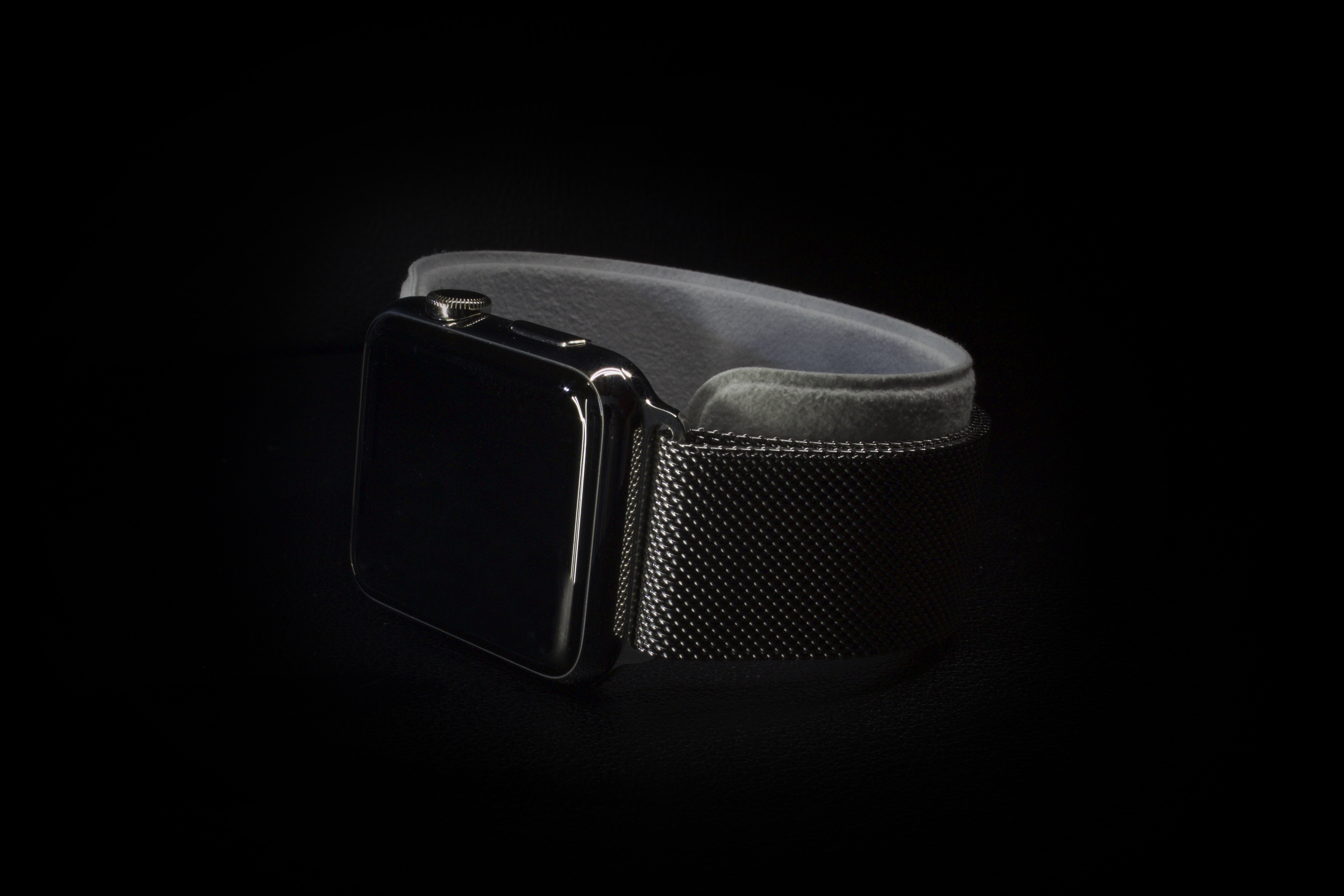
Apple Watch benefits from deeper blacks and greater energy efficiency thanks to OLED technology

Apple is expected to begin shifting iPhones from LCD displays to improved OLED screens starting in 2018, according to Nikkei Asian Review. Currently the display technology is only used by Apple to produce Apple Watch displays while iPhones and iPads use older LCD technology. OLED benefits from greater contrast levels and much deeper blacks as the display only illuminates to present color. This offers energy efficiency that leads to improved battery life compared lighting up the entire display each time.
Expand
Expanding
Close

KGI: Apple unlikely to add AMOLED screens to iPhone as Foxconn builds out new LCD factory

In a research note, reliable supply chain analyst KGI’s Ming-Chi Kuo is suggesting that Apple is unlikely to bring AMOLED screens to the iPhone for many years to come, through 2018 at least, and almost certainly not coming to the iPhone 7.

OLED iPhones have been a long-running rumor but Apple has remained steadfast with investments in better LCD panels for the most part. Yield for OLED panels continues to be a big issue given the incredible scale Apple requires for iPhone shipments.


Expand
Expanding
Close

Review: Apple Watch as a design piece

Site default logo image

Precision. That’s the word that immediately came to mind the minute I picked up my Apple Watch for the first time. Something about this device felt different, on an almost subconscious level, from any other Apple product I’ve used before. Perhaps I was just caught up in the moment. After all, the Watch is the first totally new product to come out of Apple since the introduction of the iPad, which feels like so many years ago. On the other hand, I knew from the onset that I planned on buying the Apple Watch mostly for its design. I wasn’t so much interested in all of the software features it could offer me, I just couldn’t imagine not having this shiny little box on my wrist. With that in mind, let’s take a closer look at the Apple Watch strictly as a design piece.


Expand
Expanding
Close

Site default logo image

Latest rumor of OLED displays in iPhones inspired by report on Foxconn display factory

There are always rumors around that Apple is planning to switch from LCD to thinner, brighter, more power-efficient OLED displays in its iPhones. The latest is a report seemingly originating on Japanese newspaper Nikkan Kogyo Shimbun cited by GforGames via a Chinese site … So take it with the usual large pinch of salt.

Bloomberg reported back in November that Foxconn was building a new $2.6B display factory whose output would be exclusively devoted to Apple. The headline was quickly changed to remove the reference to Apple, though the piece still strongly hinted at Apple being the sole client. This latest report says that the factory in question will be making only OLED displays.

It’s worth noting that, even if the factory is indeed making displays only for Apple, and even if all those displays are indeed OLED ones, that still doesn’t necessarily mean you can expect OLED displays in next year’s iPhones. Apple has already announced that the Apple Watch will use OLED displays, so it’s possible that the company is simply diversifying its supply chain for these. LG is currently slated as the primary supplier of Apple Watch displays.

While OLED has a number of advantages over LCD displays, it is more expensive to manufacture, so a switch is not one that Apple would make without a careful cost-benefit analysis.

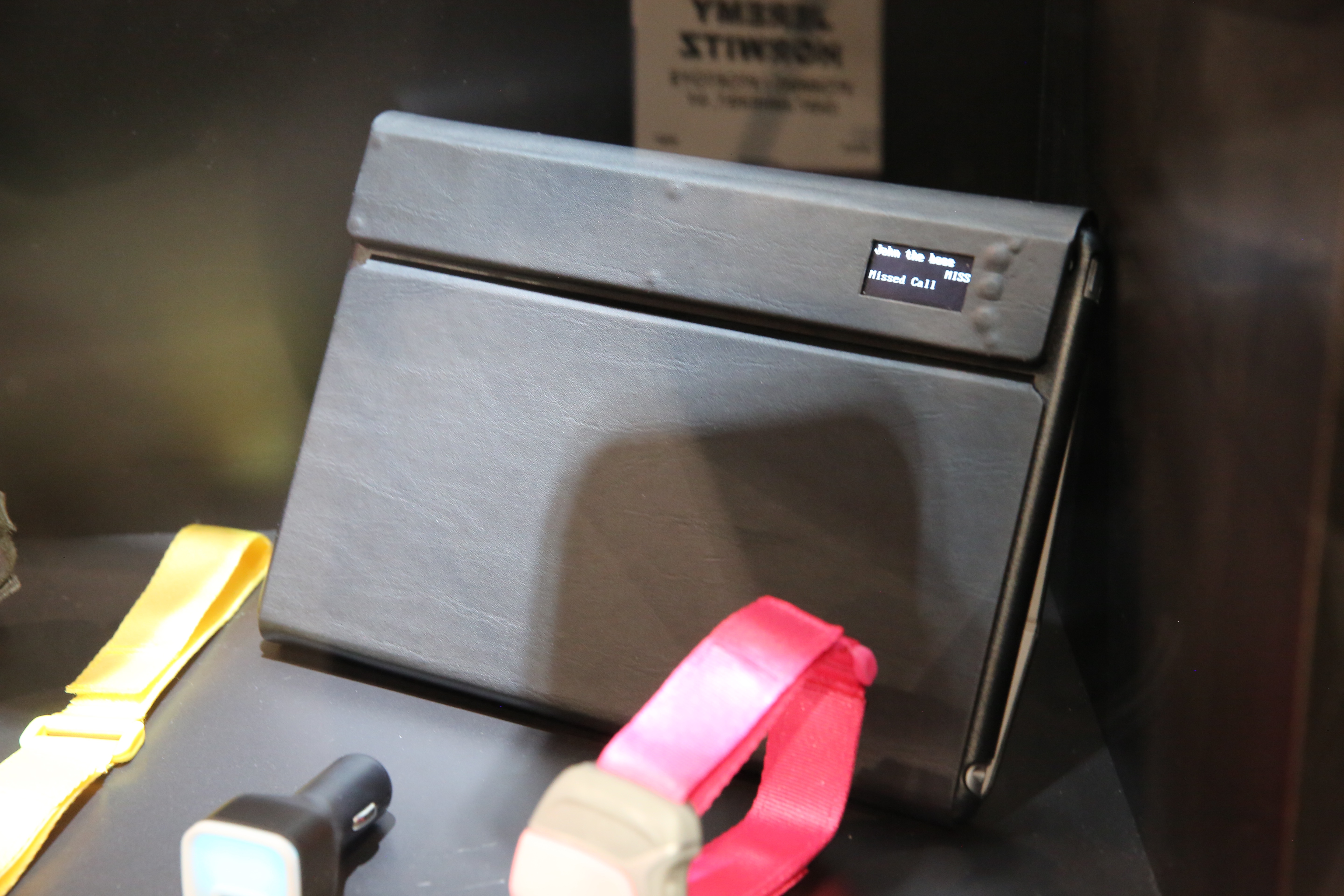
Incipio debuts Prompt Notification Folio, first iPad folio with OLED screen for watch-style notifications

Site default logo image

As a particularly interesting addition to its very wide new range of cases, Incipio today debuted Prompt Notification Folio for iPad Air 2 ($90) — the first iPad case with an integrated OLED screen capable of displaying phone-style notifications, shared either from an always-connected iPhone or the iPad inside. Head below for a closer look. 
Expand
Expanding
Close

WSJ: iWatch, iPhone 6 to link via NFC, watch coming in two sizes with curved OLED screens

A new report from The Wall Street Journal today is corroborating many previous rumors about Apple’s upcoming wearable, including that the device will include some form of NFC technology and will be shipping in multiple sizes. Furthermore, the report notes that Apple will also be bringing NFC to its next iPhone as seen in previous leaks, making it easier for the two devices to pair and signifying that the watch will be more than just a fitness gadget:

The gadget’s use of near-field communication, or NFC, reflects Apple’s broader ambitions for the so-called iWatch beyond health and fitness tracking, the most commonly cited use. Apple also is expected to add the wireless technology to the next versions of its iPhone, people familiar with the device said, potentially simplifying the process of connecting, or pairing, the two devices.


Expand
Expanding
Close