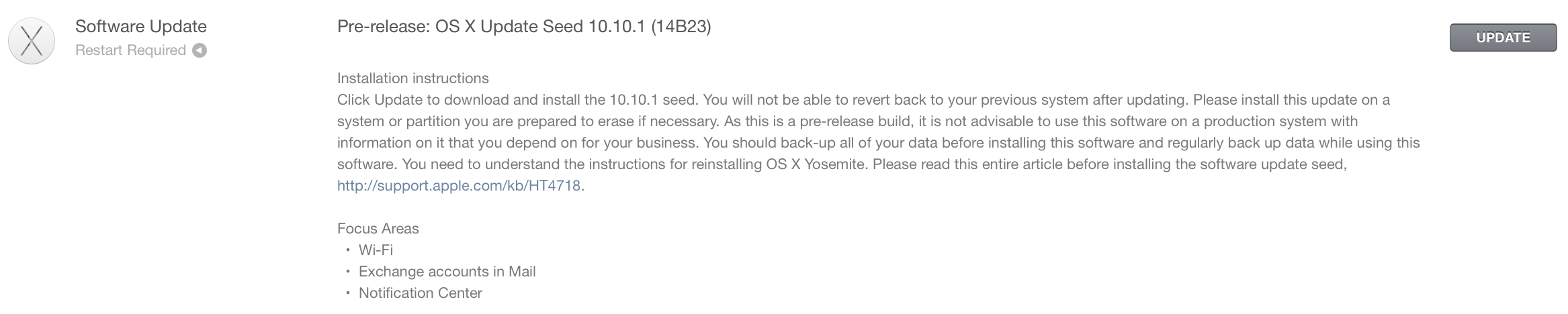
Apple today seeded the second beta of the upcoming OS X Yosemite 10.10.1 update to registered developers and participants in the AppleSeed program. The update is available for these users in the Software Update tab of the Mac App Store.
As with the first beta, Apple asks developers to focus their testing on WiFi-connectvitiy, Exchange accounts in the Mail app, and Notification Center. Apple has not indicated when OS X 10.10.1 will be released to the public, but the first point updates to OS X typically arrive within a month of the original version.
Apple has now blocked the launching of Mac apps infected with WireLurker malware, after earlier revoking security certificates to prevent them being installed on new devices. WireLurker was capable of infecting non-jailbroken iOS devices when connected to a Mac running one of the compromised apps. Over 400 Mac apps in a third-party Chinese app store were affected.
In a written statement, an Apple spokesperson said:
We are aware of malicious software available from a download site aimed at users in China, and we’ve blocked the identified apps to prevent them from launching. As always, we recommend that users download and install software from trusted sources.
However, a security researcher says that it would be easy for other attackers to exploit the exact same weakness … Expand Expanding Close
Mac App Store users browsing the software shop tonight are starting to notice a few aesthetic changes, as seen in the screenshots above and below. Like the recent iTunes Store facelift, the Mac App Store redesign features lighter fonts, a sparse white background, and thin gray separators.
The updated design is currently showing up every few minutes on the throughout the store, though it still shows the old design on many pages just as much as the new. The iTunes Store had a similar issue when it was updated last month, and once the rollout is complete the new design will be available to everyone. A few elements such as the “Update” button are also still using the old style.
Update: Apple confirmed the security issue in a statement provided to iMore. Apple has also revoked the certificate to prevent the apps from being installed on new devices.
The New York Times reports that a security firm called Palo Alto Networks has uncovered a new form of Apple-focused malware that is capable of infecting non-jailbroken iOS devices. Typically when such software pops up, as it does from time to time, one of the key factors that allows the malicious code to run on iOS is whether the device is jailbroken. The new “WireLurker” malware, however, is installed on the mobile device over USB by an infected Mac.
These infected Mac apps are reportedly coming from the Maiyadi App Store, a third-party software storefront operated in China. Palo Alto Networks says over 400 apps in the store are affected, and have been downloaded over 356,000 times total, potentially resulting in hundreds of thousands of infected devices.
Darwin forms the core set of components upon which OS X and iOS are based. It is mostly POSIX compatible, but has never, by itself, been certified as being compatible with any version of POSIX. (OS X, since Leopard, has been certified as compatible with the Single UNIX Specification version 3 (SUSv3).
Microsoft has had a great idea for making the next version of Windows better for power users: copy more trackpad gestures from OS X … Expand Expanding Close
Apple not only announced record profits for Q4 results and smashed through its own revenue guidance, but out-performed even the most bullish of analyst estimates with earnings of $42.123B. The highest analyst estimate in yesterday’s Fortune roundup was for $41.8B.
The consensus analyst expectation for earnings per share was $1.32, against the actual 20% climb to $1.42, aided by Apple’s stock buyback program, which now totals $68B of the $90B target announced by Apple … Expand Expanding Close
The numbers are small as yet, but early indications are that Mac users are keen to get their hands on the new Yosemite features. Social sharing tool AddThis, which collects analytics data from 13 million websites, is reporting that Yosemite adoption is already running at 2%, versus 1.2% for Mavericks in the same timeframe … Expand Expanding Close
The webcast is available on any iPhone, iPad or iPod touch running iOS 4.2 or above, as well as any Mac running OS X 10.6.8 or later. Windows users can also listen in so long as they are running QuickTime 7 or later.
Apple’s revenue guidance is quite broad at $37-40B, with a gross margin of 37-38%. We’re unlikely to learn anything specific about iPhone 6/Plus sales, as Apple generally doesn’t break down the numbers by model, but the overall sales figures will give us a good steer.
With the release of OS X Yosemite today, app developers have started releasing redesigned or upgraded versions of their apps to incorporate the new features and design language found in the latest version of the Mac operating system. Among those are popular apps like 1Password, Airmail, and Things.
We’ll keep this list updated as more apps get updated, so check back often to see what new apps have been updated.
As was mentioned earlier today during Apple’s special event, Mac OS X 10.10 Yosemite is now available as a free upgrade for users running OS X 10.8 Mountain Lion and 10.9 Mavericks. To get the update, you can head to the Mac App Store or, alternatively, simply click this direct link.
Borderlands: The Pre Sequel, the latest installment in the popular Borderlands series, launches today for Mac on the same day as the console and PC release. The Mac version of the game is developed by Aspyr and includes cross-platform multiplayer and a promise of all future DLC:
Discover the story behind Borderlands 2 villain, Handsome Jack, and his rise to power. Taking place between the original Borderlands and Borderlands 2, the Pre-Sequel gives you a whole lotta new gameplay featuring the genre blending fusion of shooter and RPG mechanics that players have come to love… Float through the air with each low gravity jump while taking enemies down from above using new ice and laser weapons. Catch-a-ride and explore the lunar landscape with new vehicles allowing for more levels of destructive mayhem.
The game is available starting today for $59.99 through GameAgent (the web store run by developers of the Mac version, Aspyr) as well as through Steam. Aspyr said previously that it’s planning a Mac App Store release of the game for October 16.
The game requires a Mac running OS X 10.9.4 (Mavericks) or later and at least a 2.2GHz Intel Core 2 Duo processor, 4GB of RAM, and 13GB of hard drive space. Supported video cards include NVIDIA GeForce 8800, ATI Radeon HD 2600, or Intel HD 3000 with 256 MB of Video Memory.
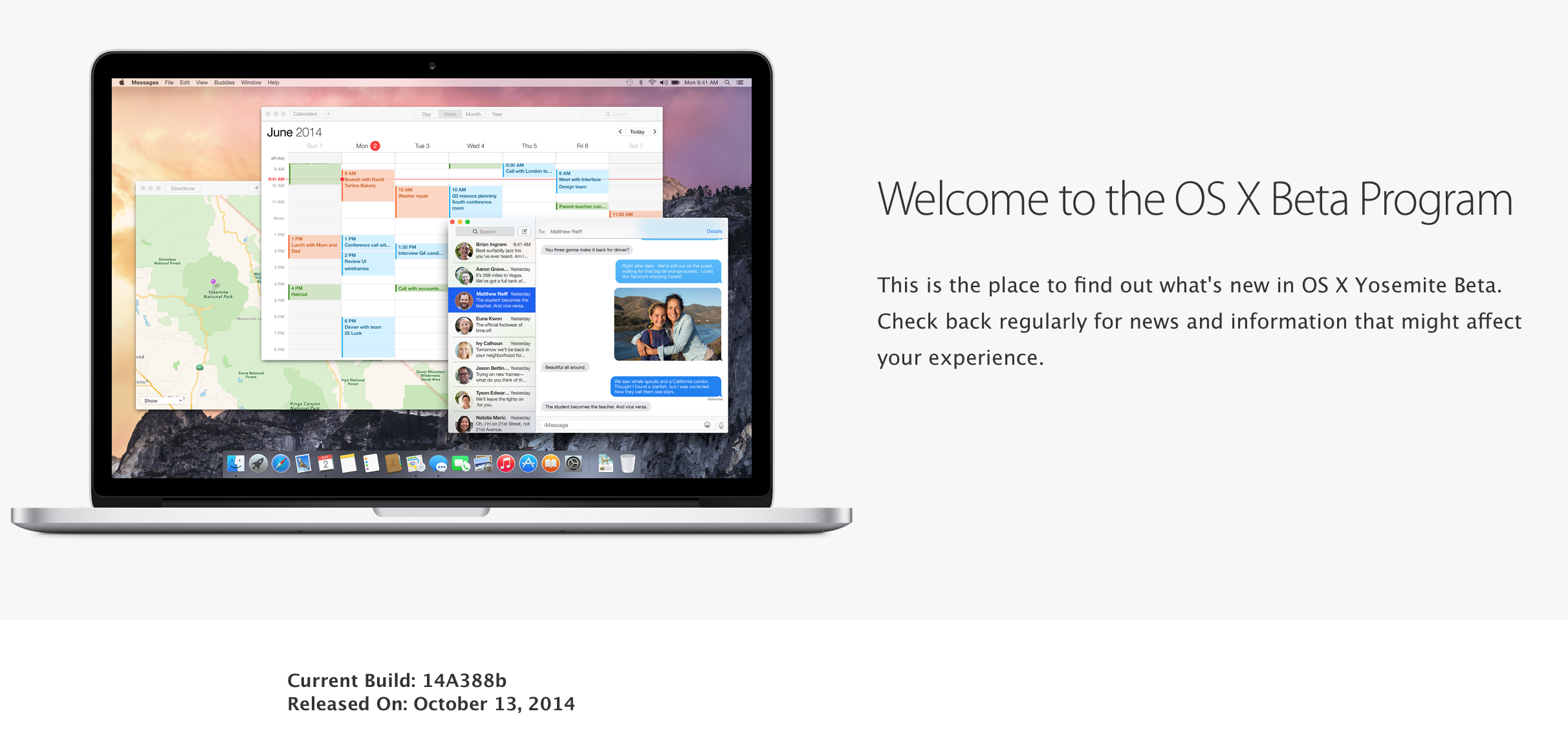
Apple today released the sixth public beta of the upcoming OS X Yosemite to AppleSeed testers. The build number is 14A388b, which coincides with last week’s OS X Yosemite Golden Master Candidate 3.0 release for registered developers. Apple plans to provide final details on OS X Yosemite at the October 16th event, then release it as soon as later that date.
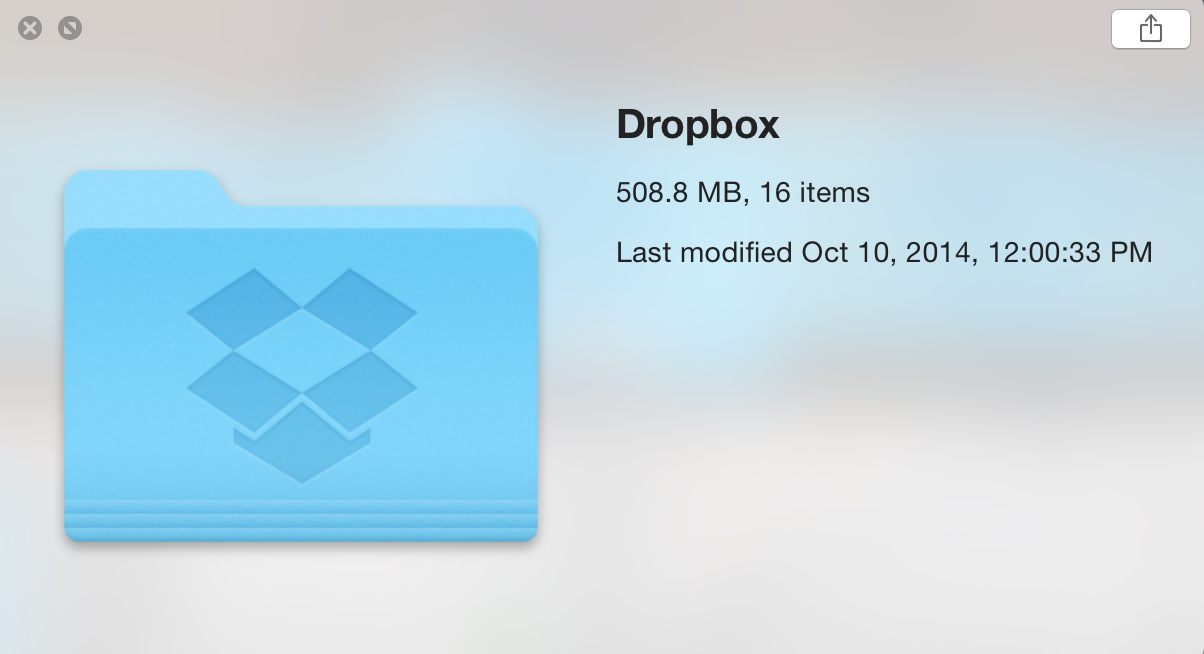
Good news for Dropbox users running OS X Yosemite: Dropbox has made available an experimental build optimized for Yosemite’s new look (via Zach Kahn). The download brings a new Finder icon, new notification glyphs, and faster uploads for small files among other enhancements. Here’s the full list of what’s new:
New in 2.11.25
Updated Camera Uploads folder icon for Yosemite
Fixed Copy Link context menu option from the toolbar
It’s happening: Apple has just announced a keynote address for Thursday, October 16th to take place at the Town Hall auditorium on its Infinite Loop Campus in Cupertino, California. Invitations to select members of the media and special guests indicate that the event will, as always, begin at 10 AM Pacific time/1 PM Eastern Time. News of the October 16th date broke last week. We’ll be providing full, live coverage on 9to5Mac.com of the event’s proceedings. Here’s everything we’re expecting Apple to discuss at the event:
On Tuesday Apple provided developers and beta testers with the GM build of OS X Yosemite, which will likely be the version that ships to consumers later in October (although since this is only a “GM candidate” we may see another build sometime before then). Earlier we noted that this build includes updated videos to demonstrate the trackpad gestures in System Preferences that showed off new iWork icons.
As it turns out, those demo videos also give us a quick look at what will almost certainly be the next major version of Apple’s iWork suite. Above you can see an unreleased version of Pages that features a redesigned toolbar and other tweaks. Another of the videos has our first look at the updated Keynote app:
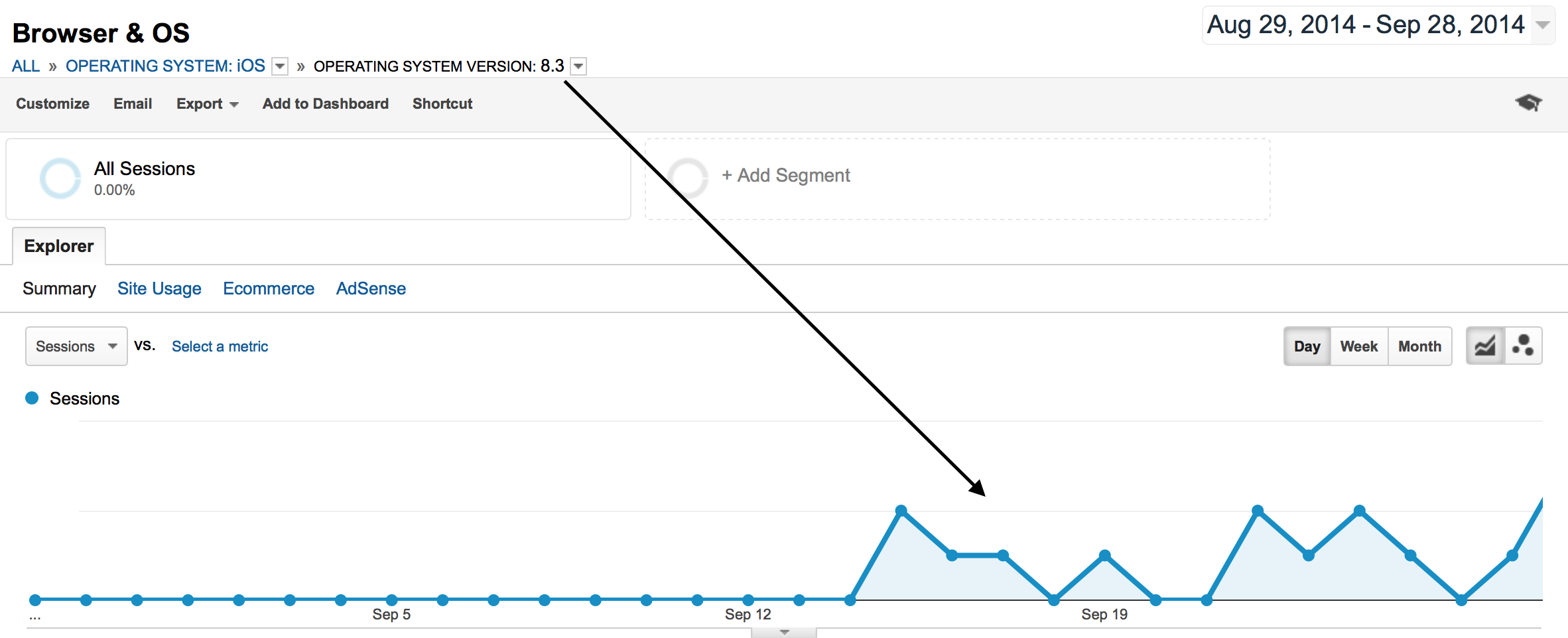
Starting with iOS 5 in 2011, Apple has released a major new iOS version each fall and a notable follow-up update early in the following year. For example, iOS 6 launched in September 2012 and was updated to iOS 6.1 in January, and iOS 7, which was launched in September 2013, was updated to iOS 7.1 with CarPlay and interface improvements in March 2014. But starting with the recently released iOS 8, it appears that Apple has a different development schedule for 2015 and perhaps beyond. According to sources, Apple is already hard at work on three major follow-up versions to iOS 8: iOS 8.1, iOS 8.2, and iOS 8.3.
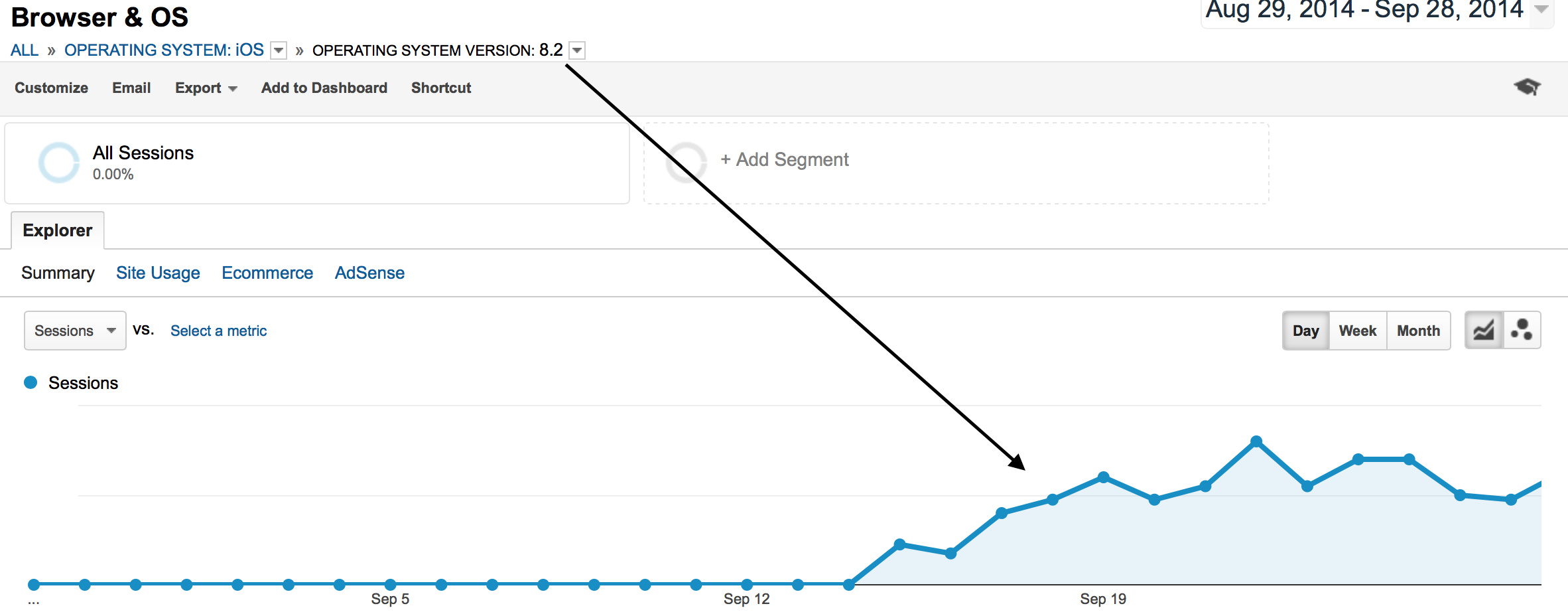
iOS 8.2 visits to 9to5Mac
We’ve confirmed that these major new versions are in development via two means. First, a developer of a major hardware-connected iOS application has shared with us their analytics, and this data indicates that all three versions are in testing by Apple employees in or around Cupertino, California. Second, and much closer to home, our own Google Analytics for 9to5Mac.com show that iOS users are visiting our website via iOS 8.1, iOS 8.2, and iOS 8.3 devices. iOS 8.1 hits to 9to5Mac.com started appearing even months before iOS 8.0 launched, but 8.2 and 8.3 visits only started picking up following iOS 8’s release in mid-September.
iOS 8.3 visits to 9to5Mac
While Apple works on several iOS features and enhancements over the course of several years, it typically only begins wholly testing major new releases close to the ship dates of the preceding release. Apple working on three significant follow-ups to iOS 8 is a shift from the usual development cycle, one which would normally indicate Apple to be working on just iOS 8.1 as well as iOS 9.0. It’s possible that iOS 9 is also in the works, and of course Apple is always working on nominal bug fix (x.x.1 or .2 or .3) updates, but the fact that 8.1, 8.2, and 8.3 are all in simultaneous development raises some interesting possibilities:
Apple made a minor over-the-air change to the Mac App Store today on OS X Yosemite. The company updated the icons to be more in line with the new design aesthetic. The top bar is the new version, while the bottom is the old one that can still be seen on OS X Mavericks. The new icons also better match up with those on the iOS version. Apple will launch Yosemite next month for free.
Update: Apple has issued a statement to iMore regarding this issue, stating that most Mac users are already protected unless they have configured “advanced UNIX services.” An update is in the works to protect those users.
A vulnerability in Bash, the software used to control the command shell in many flavors of Unix, has been shown to be present in OS X – with some security researchers saying that the flaw could pose a bigger threat than the Heartbleed vulnerabilty discovered last year (which affected many Unix systems but not OS X).
The Bash vulnerability being referred to by some as ‘Shell Shock’ allows an attacker to run a wide range of malicious code remotely. It was discovered by security researchers at RedHat, and is described in detail in a blog post.
There are conflicting reports as to the extent to which Mac users are at risk … Expand Expanding Close
Apple has invited a number of non-developer users to participate in what it’s calling an “AirDrop Test Fest” to help fix bugs in the over-the-air file sharing system, according to users who have gotten the invite. Users who have been invited will find a notice inside the Feedback Assistant application included with the public beta of the upcoming OS X Yosemite.
Users who have been invited to participate are provided with a set of guidelines for testing the feature. According to the notice, users will need two Macs capable of running Yosemite and AirDrop, or one Mac running Yosemite and one running Mavericks to test the “legacy” feature. An iOS device isn’t required to participate, indicating that the focus will be on Mac-to-Mac transfers rather than cross-platform ones.
Apple has just released Safari 7.1 to all users of OS X Mavericks following several beta releases in recent weeks. The update adds DuckDuckGo as a default search engine option, which was also just added to Apple’s mobile version of Safari alongside iOS 8. The update also includes a security improvement for Yahoo search engine users: Apple says Yahoo searches from the search field are now encrypted.
In addition, Apple notes the release improves Reader and AutoFill compatibility with websites.
As reported by the Wall Street Journal, Apple CEO Tim Cook has published a letter (below) on the company’s website expressing his commitment to the privacy and security of iOS and Mac users. Cook says that he will now issue annual updates on how user data is being handled, and the company will become even more transparent how its data collection tactics.
The executive also reiterated previous claims that neither he nor any part of the company has collaborated with governments to provide access to user information, noting again that Apple does not read users’ email, iMessages, and other communications. He also pointed out that there is no “profile” being created about user browsing habits or other data points that often interest advertisers.