patents

See All Stories
Site default logo image

Apple joins Google, Samsung and other adversaries to buy Kodak patents, perhaps signaling intent to curtail litigation

It must be a cold day in Hell. Apple is consorting with Google, Samsung, LG Electronics, and various ventures and firms to bid as a group on Kodak’s intellectual property.

Kodak filed for bankruptcy protection in January, according to The Wall Street Journal, and it is looking to auction its patents to raise money for surviving a Chapter 11 court protection. Kodak could barter all 1,100 digital photography-based patents or end the auction without a deal, as the company announced it would name the winning bidders on Monday but eventually pushed the deadline upon talking with creditors.

The Wall Street Journal explained:

  • Negotiations and the bidding group’s composition are fluid, the people said. If the consortium reaches a deal to buy some or all of Kodak’s patents, they would essentially be kept out of any one company’s hands and could prevent consortium members from using them in litigation against each other. A deal, however, could also attract attention from federal antitrust regulators.
  • A deal for the entire portfolio—one of many options under discussion— could fetch more than $500 million based on recent negotiations, people familiar with the process said. That is well above opening bids when the auction started last week, but far below the $2.2 billion to $2.6 billion Kodak at one point said the patents could be worth.
  • In a statement Thursday, Kodak said discussions with buyers are active and that it isn’t ready to announce a result. The company added that it might decline to sell some or all of the patents, depending on how the auction progresses.

Photography and cameras are obviously a main feature of mobile devices. Competitors in the tech arena have joined forces in the past to snatch up attractive patents, but The Wall Street Journal noted it is “unusual for them all to join the same camp.”

Patent law whiz Michael Carrier, of Rutgers University in Camden, said the companies would not suffer antitrust issues if the tech giants commit to licensing on reasonable rates. Otherwise, an action such as dividing the patents without sharing the rights to use them could likely meet legal trouble down the road.

Get the full report at The Wall Street Journal.

This article is cross-posted on 9to5Google.


Expand
Expanding
Close

Site default logo image

Apple granted patent for app to assist shoppers in finding best prices

Patently Apple covered an Apple Inc. patent today published by the U.S. Patent and Trademark Office that appears to be related to an app designed to assist shoppers by providing product and retailer information for scanned items. The invention would provide similar functionality to various third-party apps currently in the App Store that use barcode scanning and image recognition to search the web for product information and price comparisons. Patently Apple explained:

Apple has received their first Granted Patent relating to methods for conducting shopping-related transactions with a handheld electronic device. In some embodiments a mobile electronic device may be used to identify a product and obtain pricing information relevant to retailers of the product within a specified geographical location. In another embodiment, a mobile electronic device may be used to acquire pricing information for a shopping list of products. Embodiments may also include a variety of features that make the shopping experience quick and efficient while allowing the consumer to hunt for a better bargain. Furthermore, several embodiments also allow the product manufacturers and/or retailers to distribute relevant product information to targeted consumers who are known to be, or who may be, interested in buying a particular product.

Apple requests ruling in its favor over Samsung press leak, judge prohibits 2001: A Space Odyssey references

Site default logo image

At the beginning of the week, we reported Samsung leaked slides to the press that Judge Koh excluded as evidence in the Samsung-Apple trial currently underway. Judge Koh was not impressed with the move, despite much of the information in the slides being public knowledge, and today we get an update from FossPatents on Apple’s response to the situation. According to the report, Apple filed a letter with the courts today claiming fines would not be a severe enough punishment for Samsung and it requested a judgment in its favor:

“The proper remedy for Samsung’s misconduct is judgment that Apple’s asserted phone design patents are valid and infringed. Through its extraordinary actions yesterday, Samsung sought to sway the jury on the design patent issues, and the proper remedy is to enter judgment against Samsung on those same patents. It would be, to be sure, a significant sanction. But serious misconduct can only be cured through a serious sanction—and here, Samsung’s continuing and escalating misconduct merits a severe penalty that will establish that Samsung is not above the law.”

Apple also outlined an alternative set of sanctions, requesting “the Court should (i) instruct the jury that Samsung engaged in serious misconduct and that, as a result, the Court has made a finding that Samsung copied the asserted designs and features from Apple products; and (ii) preclude Samsung from further mentioning or proffering any evidence regarding the ‘Sony design exercise’ for any purpose.” FossPatents said Apple’s requests could mean big problems for Samsung moving forward:
Expand
Expanding
Close

Site default logo image

Apple working on high-resolution display tech for Google Glass-like HUD device

Today, a patent application published by the US Patent & Trademark Office, and then discovered by Patently Apple, covers methods of increasing pixel density for high-resolution display technology in a head-mounted display. This is not the first time an Apple patent related to head-mounted displays has surfaced. As far back as 2009, Apple won patents related to an iPod video headset displayIt also won a second patent just this year related to the Google Glass-like technology. Unfortunately, this is not a design patent. So, the Google Glass-like design in the drawing above only relates to a general concept for the device covered in the patent:


Expand
Expanding
Close

Site default logo image

Congress considers forbidding sales bans related to essential patents

Reuters reported today that Congress is set to discuss whether companies that hold patents considered essential to an industry standard, “such as a digital movie format,” should be allowed to request bans on infringing devices. A hearing will take place this Wednesday with the Senate Judiciary Committee, and Federal Trade Commission officials are expected to testify:

“If they (smartphone makers) had taken the conservatively $15 to $20 billion dollars they’ve spent on this fight, imagine how much better a place the world would be,” said Lemley.

Report: Judge who dismissed Apple’s case against Motorola disputes legal protection for tech industry

Site default logo image

Reuters interviewed the U.S. judge today who dismissed Apple’s patent court case against Motorola, and the details behind the jurist’s reasoning for tossing the lawsuit are as interesting as they are controversial.

Richard Posner sits on the 7th U.S. Circuit Court of Appeals in Chicago and disputes whether software and related tech industries should even have patents for their products.

“It’s not clear that we really need patents in most industries,” said Posner, referring to the slew of features in smartphones that are legally protected. “You just have this proliferation of patents. It’s a problem.”

Posner, 73, argued the pharmaceutical industry better deserved protection for its intellectual property because of the, as Reuters coined it, “enormous investment it takes to create a successful drug.” He tossed Apple’s lawsuit against Google’s Motorola Mobility last month and denied an injunction against the sale of Motorola devices using Apple’s patented technology.

The judge attributed Apple’s scramble to attack competitors allegedly using its technology to a “constant struggle for survival.”

“As in any jungle, the animals will use all the means at their disposal, all their teeth and claws that are permitted by the ecosystem,” Posner contended.


Expand
Expanding
Close

Site default logo image

UK Judge rules HTC phones don’t infringe on Apple’s slide-to-unlock patents

Following a report on Monday that the ITC blocked Apple’s request for an emergency ban on United States imports of HTC devices, Bloomberg reported this morning that a court in London has ruled against Apple over four touchscreen-related patents—including one covering the iOS slide-to-unlock feature. The four patents in question will also be used in similar Apple and HTC lawsuit in Germany in the coming months.

HTC’s devices don’t infringe four Apple patents for touchscreen technology and three of those patents are invalid, Judge Christopher Floyd said today… While HTC was pleased with the ruling, “we remain disappointed that Apple continues to favor competition in the courtroom over competition in the marketplace,” spokeswoman Andrea Sommer said… In addition to the slide-to-unlock feature, today’s ruling covered Apple’s patents on tools used to scroll through photographs and change alphabets, and software allowing users to touch the screen in two spots simultaneously.

Apple’s rumored iOS device inductive charging solution gets pictured in patents

Site default logo image

Another batch of newly granted Apple patents were published today by the U.S. Patent and Trademark Office, and then detailed by Patently Apple. Perhaps the most notable is one for an inductive charging solution that we have heard about in the past. Apple patents surfaced last year showing new methods of inductive charging that could be used in various Apple devices. There were even rumors last year that a next-gen iPhone could sport a similar cable-free charging solution. Patently Apple described the docking station invention covered in today’s patent that would include an “eradiating antenna and an inductive charging circuit for inductively charging a handheld device”:


Expand
Expanding
Close

Apple patent details replaceable back panels for adding lenses and advanced camera features

Site default logo image

According to an Apple patent application published by the U.S. Patent and Trademark Office and detailed by PatentlyApple, Apple is at the very least conceptualizing a device that sports a removable back panel for easily replaceable components such as lenses or optical solutions.

While it is unclear whether the invention would be used in a standalone camera, next-generation iPod or iPhone, or a different device entirely, the patent detailed several methods of upgrading a device with supplementary optics:

The digital imaging subsystem is typically enclosed within the case of the device to protect the digital imaging subsystem. The enclosure generally prevents direct access to the lens of the digital imaging subsystem for the purpose of providing any sort of supplementary optics, especially if the supplementary optics must be precisely aligned with the image sensor… It would be desirable to provide a structure for a compact device that allows the end user to reconfigure the optical arrangement of the device while retaining the benefits of assembling the device using a pre-assembled digital imaging subsystem.

Apple detailed several features that could be added through the easily swappable supplementary optics, including: improved zoom capabilities, better shutter control, removable close-up lenses, and the addition of motion sensors, flashes, or a lens baffle. As an example, the report explained a removable IR cut-off filter that would allow “capturing black and white images at very low light levels. Without the IR-cut filter the camera’s light sensitivity may extend to 0.001 lux or lower.” The report also broke down how the removable back panels could be implemented:


Expand
Expanding
Close

Site default logo image

Watch out UltraBooks! Apple gets sweeping patent for general MacBook Air shape [Photos]

Apple got its hands on a new U.S. patent this week that loosely covers the entire form of its thinnest notebook.

According to The Verge, the patent [D661,296] is “clearly intended to broadly cover the distinctive wedge or teardrop profile” of the MacBook Air that is found in more and more “UltraBooks that Intel is pushing:

With design patents it’s all about the drawings. There isn’t much in terms of a written description to go by, so the nuances of the drawings define the enforceable protection of the patent. And as always, the coverage centers around the details of the solid lines in those drawings. The dashed lines provide context, but do not at all define what is patented. In determining infringement, courts look at whether the allegedly infringing device and the design patent are substantially similar in overall appearance to an “ordinary observer,” excluding minor differences. You can see […] how Apple has dashed out the unimportant details of the notebook, like the rear contour, hinge, side ports and feet, and instead focuses on the overall wedge shape and look of the device with solid lines. That’s the aesthetic Apple has patented here and a notebook with hinges, feet or a shaped back different than the MacBook Air could still be infringing as long as the rest — primarily the claimed wedge profile — is substantially similar. On the other hand, competitors can still rely on meaningful tweaks to the angles, shapes and proportions of their notebook designs to avoid the patent — that’s how patent design-arounds work.

Apple tends to uphold its design rights and go after competitors in the mobile space that infringe upon its patents. With this new notebook patent, which issued on Tuesday, rivals with contending unibody, aluminum-shaped laptops, such as Ultrabooks, may now be in the Cupertino, Calif.-based Company’s legal sights.


Expand
Expanding
Close

Site default logo image

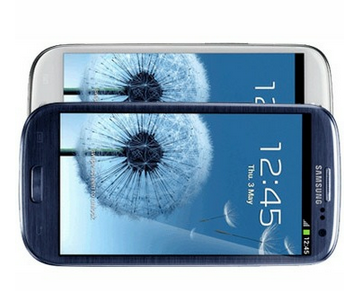
Apple seeks US preliminary injunction against Samsung’s Galaxy S III

Apple put forward a second California litigation against South Korea-based Samsung earlier this week when it sought the court’s consent to add the Android-powered Galaxy S III smartphone to its motion for a preliminary injunction against the Galaxy Nexus.

According to FOSS Patents:

Apple made this move approximately 20 hours after I wrote about the Galaxy S III being “the obvious next target”. In my blog post I speculated that Apple might bring a preliminary injunction motion against it, possibly after awaiting tomorrow’s preliminary injunction hearing. Apple decided to forge ahead now. Apple is on the offensive against Android. Earlier this week it filed an ITC complaint requesting an immediate import ban of 29 allegedly-infringing HTC devices. There’s an important overlap: the “data tapping” patent that Apple is seeking to enforce against HTC’s current generation of products is one of two patents Apple is using against the S III.

Apple purchased the S III in the United Kingdom, where Samsung launched it on May 29. The U.S. launch date is June 21 — precisely two weeks after the preliminary injunction hearing.

Apple’s motion notes that “[a]ccording to press reports, Samsung has already sold over nine million preorders of the Galaxy S III; indeed, the Galaxy S III has been reported to be the most extensively preordered piece of consumer electronics in history.”

Apple filed the first preliminary injunction motion against the Galaxy Nexus in February over four disputed patents. The Cupertino, Calif.-based Company’s requested in its latest motion that Samsung withhold the launch of the device’s successor in the United States until the court rules on the preliminary injunction request.

Samsung replied to the motion this afternoon, contending Apple cannot continue to add to its record for the Galaxy Nexus:

“If Apple wishes to seek an injunction against the Galaxy S III, the Court should require Apple to file a new motion and allow the parties to develop a full factual record on all four factors. Accordingly, the Court should reject Apple’s motion to amend its current notice of motion for a preliminary injunction.”

This article is cross-posted at 9to5Google.


Expand
Expanding
Close

Site default logo image

Oracle sues Lodsys, attempts to invalidate patents

Texas-based shell company Lodsys has often been accused of being a patent troll for its various attempts to take legal action against app developers and companies that it claims uses its technologies. Most notably, the company last year attempted to get iOS and Android developers to pay royalties over in-app purchasing before Apple’s legal team eventually intervened on behalf of developers. Now, after recent threats from Lodsys to Oracle customers such as Walgreens over a web-chat technology, Oracle is suing Lodsys in an attempt to invalidate its patents. GigaOM reported:

Oracle has decided to weigh in because Lodsys “has repeatedly threatened numerous Oracle customers” such as Walgreens over the use of a web-chat feature Lodsys claims to own. Oracle is asking the court to declare that the four patents Lodsys is using to bully its customers are not new inventions. The patents, including US Patent  5,999,908 (“customer based design module”), came to prominence last year when Lodsys used them to sue Best Buy, Adidas and others.

Prototype iPad with landscape dock connector surfaces in eBay listing

Site default logo image

As noted by MacRumorsan eBay listing popped up today showing what appears to be a prototype 16GB iPad with two dock connectors. The iPad has always included the same, single dock connector that allows docking in portrait orientation, but the prototype in the listing shows a second dock connector that would allow for docking in landscape view.

We heard rumors several times as far back as the original iPad launch that Apple was working to add a second dock connector. The rumors were supported by several patents that surfaced. They detailed possible advancements Apple could make to its dock connectors on iOS devices. As pointed out by the report, the prototype in the eBay listing does not actually have any iPad trademarks, but just a prototype ID number instead. Otherwise, it appears to be genuine with components carrying “part numbers and copyright dates from prior to original iPad’s components.”


Expand
Expanding
Close

Site default logo image

Is Apple building a haptic/optical stylus for its tablets?

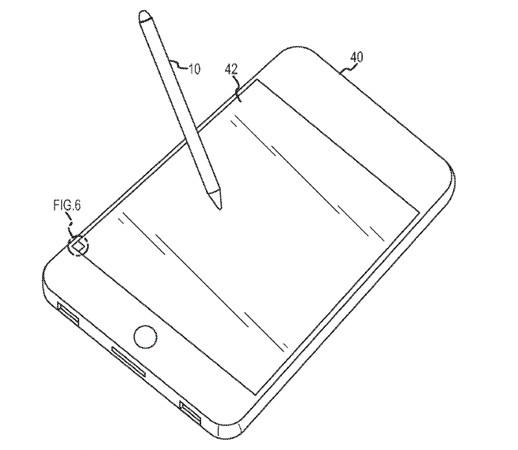
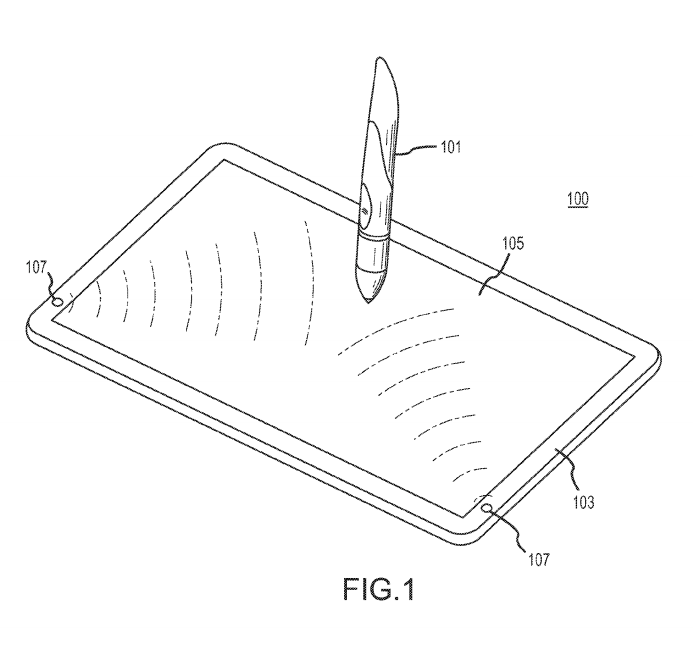
Not likely… but it has decided to patent an optical stylus anyway. We will also go ahead and note the fatty nature of that big iPhone thing pictured below:

It would be quite amusing if Apple tried to use this patent to take out Samsung’s Galaxy Note.

Another patent released today details a different type of Stylus—one with haptic feedback. Also, do not expect to see this at any point in the future. (via Unwired View)

Site default logo image

Apple patent details steering wheel remote control

PatentlyApple covered a number of Apple patents today that were recently published by the US Patent & Trademark Office. One of the 21 patents originally filed in Q1 2011 is for an iOS remote control that would clip onto a steering wheel. The remote shown in the patent drawings essentially looks like the iPod click wheel, but Apple described it as a touch-sensitive, rotatable faceplate:

Apple’s invention generally relates to remote controls. More specifically, certain embodiments of the present invention provide a steering wheel mountable wireless remote control for controlling a portable media player… The remote control device can also include a faceplate that is rotatably mounted on top of the base section that very much resembles Apple’s iPod clickwheel… The notable difference is that Apple states that the faceplate is touch-sensitive.

You can get full coverage on the patent at PatentlyApple

Site default logo image

Apple to judge: Samsung intentionally ‘spoiled’ documents

Apple filed a motion in the Northern District of California on May 1 that claimed Samsung ruined documents it needed to submit for the discovery process in a “spoilation of evidence,” according to the legal jargon that described the act. NetworkWorld elaborated:

  • In effect, Apple wants the Judge to instruct the jury as follows:
  • 1. Samsung had a duty to preserve relevant evidence, failed to do so, and acted in bad faith in failing to meet its legal duty.
  • 2. The jury may infer that documents Samsung failed to produce would have been advantageous to Apple’s position.
  • 3. If the jury finds Samsung liable for infringement, they may presume that the infringement was “intentional, willful, without regard to Apple’s rights.”
  • Apple’s motion doesn’t pull any punches, accusing Samsung of spoilating “vast quantities of relevant evidence in blatant disregard of its duty to preserve all such evidence.” Consequently, Apple writes that strong adverse inference instructions are required.

A hearing on Apple’s motion is scheduled for June 7, with Samsung’s reply brief due by May 15. However, Samsung said the claims are without merit, and it wants the due date extended to May 29. It is also seeking to have the matter’s hearing pushed to July 10, 2012, but Apple wasted no time and quickly filed a reply on May 7 that asked Samsung’s motion to be denied.


Expand
Expanding
Close

Site default logo image

Samsung’s Tizen prototype has a familiar home button

Samsung just cannot shake the blatant copying—almost like it is part of its DNA. Its latest Tizen reference device, besides an OS that copies the look and feel of Android, has a circular home button right where Apple’s iPhone has one.

Samsung is being dragged through the courts the world over for copying the iPhone’s look and feel. That behavior does not seem to be abating any, and might even be increasing. Samsung is now the world’s largest handset and smartphone maker.

http://www.youtube.com/watch?feature=player_embedded&v=rJ1y7CpIaVA
Expand
Expanding
Close

Apple in court: iPhone data collection, Samsung/iPad patent case, & double iTunes billing

Site default logo image

When we reported on Apple’s courtroom woes in March, we told you lawmakers were sending letters to iOS devs (Apple included) and questioning them on their privacy policies about how apps access contact data without explicit user permission. Despite promises, Apple has yet to carry out an update requiring apps to ask for user-approval, but an earlier case over the collection of user data has been given the green light by U.S. District Judge Lucy Koh in California. Reuters reported the lawyers representing customers in the case claimed in court today that Apple “collected data on customers’ geographical locations even after users said they didn’t want to share the information.” The judge is asking Apple to submit relevant documents to the plaintiffs by May 17.

In other courtroom news, ComputerWorld reported this week that Judge Koh ordered Apple and Samsung to “streamline” its patent claims ahead of a trial set for July 30. According to the report, the companies have already cut back the claims included in the case to 37 products, 16 patents, six trademark, five trade dress claims, and an antitrust suit, but Judge Koh said the extent of the case is “cruel and unusual punishment to a jury.” If Apple and Samsung do not agree to reduce the set of claims, the trial could be postponed until next year. The news comes after the companies agreed with Koh to have their CEOs meet for settlement talks related to the patent cases on May 21-22.

Justia.com reported this week that Apple is facing a class-action lawsuit over claims that iTunes is continually double billing a customer for downloads of a song. Apple apparently refuses to refund some customers for these double billing incidents, citing its Terms of Service. A copy of the lawsuit and more information on the class action is here.


Expand
Expanding
Close

Site default logo image

Yes, Apple is still working on haptics for touch devices

We already know Apple is working on haptic technologies for mobile devices from patents in the past (here, here, and here). We also know that last-minute rumors of Finnish company Senseg’s technology being included in the third-generation iPad never came true. Another patent surfaced today giving us a look at Apple’s work with an advanced multi-tiered haptics system for iOS devices. PatentlyApple has all the details:

…today’s surprise invention packs a punch with a wildly intelligent multi-tiered haptics system. The system will actually allow an iDevice display to deform so that it could provide the user with a button, an arrow or even a geological map to physically pop right out of the screen to give it 3D depth. If that wasn’t cool enough, Apple’s patent discusses a flexible OLED display that could be used for video glasses.

Man sues Apple over ribbed Smart Cover, makes case for throwing out patent system

Site default logo image

Apple is being sued by a man in Colorado over claims that the company’s $39 iPad Smart Covers violate a “Portable Computer Case” patent originally filed in 2003 and issued in 2005. PaidContent obtained a copy of the lawsuit.

The United States patent in question is 6,977,809. A Colorado man owns it, Jerald Bovino, who is seeking royalties for sales of Smart Covers’ using his invention. An excerpt from the patent seems to describe functionality that is quite similar to Apple’s Smart Covers—at least the ribbed design:


Expand
Expanding
Close

Site default logo image

iMac Touch concept incorporates a touchscreen, iOS, and Siri

[vodpod id=Video.16427916&w=650&h=350&fv=]

“You can converge a toaster and refrigerator, but these things are probably not going to be pleasing to the user”- Tim Cook on Windows 8 and touch-friendly PCs at Q2 earnings.

Disregarding Cook’s statement for a second, here is an iMac touch concept sent by 9to5Mac reader and 3D animation student Joakim Ulseth. The mockup shows how he thought a redesigned iMac could incorporate a touchscreen and iOS-like features. The overall concept is based on an Apple patent published in 2010 that detailed an iMac with adjustable “Flex base.” This is what Ulseth imagined would be inside the next-gen device:

Apple iMac Touch with Flex Base running both OSX 10.8 Mountain Lion and iOS5– ”Power at your fingertips”

Specs:

Retina-Display: The 27-inch iMac Touch features 4096-by-2304 HD resolution. The resulting pixel density — 174 pixels per inch — makes text and graphics look smooth and continuous at any size.
Siri: The intelligent assistant that helps you get things done.
Ivy Bridge: Intels new Ivy Bridge i5 and i7 processors.
Thunderbolt: Two Thunderbolt ports for high speed data transfer.

And, before you unleash the hate:

[tweet https://twitter.com/chronic/status/195163119788634114]

Site default logo image

Museum display company sues Apple over touchscreen patent

Yesterday, law firm Hagens Berman filed a lawsuit in a California U.S. District Court against Apple Inc. related to “gesture recognition technology for touchscreens” covered in patents owned by Flatworld Interactives. The company, which originally developed its technology for museum exhibits in the 1990s, is seeking an “injunction enjoining Apple from continued infringement, and an award of damages to compensate Flatworld” for the millions of iOS devices and MacBooks using its technology.

Flatworld Interactives, LLC received U.S. Patent No. RE 43,318, which includes claims to touch screen based systems that allow users to manipulate images using gestures, such as selecting an image by touching it, and flicking images off of the screen.

The full press release is below:

Hagens Berman: Lawsuit Claims Wide Range of Apple Devices Infringe Patents for Screen Manipulation

A lawsuit filed yesterday against Apple, Inc. (NASDAQ: AAPL) by the Hagens Berman law firm claims that the computing and consumer-products giant has built many of its most popular devices including the iPhone and iPad using intellectual property owned by a Villanova, Penn. company that developed gesture recognition technology for touchscreens in the mid-1990s.

Flatworld Interactives, LLC received U.S. Patent No. RE 43,318, which includes claims to touch screen based systems that allow users to manipulate images using gestures, such as selecting an image by touching it, and flicking images off of the screen.

The company designed touchscreen systems originally for use in video displays for museums and other exhibit applications.

Hagens Berman’s lawsuit was filed on Flatworld’s behalf in the United States District Court for the Northern District of California. It alleges that numerous best-selling Apple devices, including the iPhone, iPad, iPod Touch, iPod Nano, MacBook Pro and MacBook Air infringe the patent. The complaint also alleges that Apple knew about the patent but continued to sell the infringing products.

“Reading Flatworld’s patent is like reading the description of gesture recognition features of any of the accused products on Apple’s website,” said Steve Berman, Hagens Berman’s managing partner. “It is clear that Flatworld owns technology that Apple has used to drive billions of dollars in infringing sales.”

Flatworld was founded by Dr. Slavko Milekic, a Professor of Cognitive Science & Digital Design at the University of the Arts in Philadelphia, Penn. Professor Milekic first developed gesture recognition touch screens for use by children as an easier and more intuitive means of interacting with a computer.

The lawsuit seeks a ruling from the court affirming that Apple has infringed the patent, an injunction enjoining Apple from continued infringement, and an award of damages to compensate Flatworld.

More information about this case is available at www.hbsslaw.com/Flatworld.

HTC fights ‘slide-to-unlock’ in London as Samsung continues patent war with Apple ahead of settlement talks

Site default logo image

With court moderated settlement talks between Apple and Samsung executives set to take place within the next 90 days, Samsung has now filed a counterclaim in a California federal court alleging Apple’s iOS devices are infringing eight patents. The counterclaim is part of an original patent infringement lawsuit initiated by Apple in February. Foss Patents reported:

It comes as no surprise that Samsung retaliated with infringement claims. Samsung owns roughly 30,000 U.S. patents. It has from the outset of its dispute with Apple demonstrated its belief that a good offense is the best defense. So far, none of Samsung’s infringement claims against Apple has succeeded anywhere on Earth, despite efforts in nine different countries, but Samsung keeps on fighting.

Apple is also in the middle of patent infringement cases with HTC, which just told a court in London that its touchscreen devices, specifically its “slide-to-unlock” functionality, do not infringe on Apple’s patents. Bloomberg reported today that HTC’s lawyers described the functionality in question as “extremely simple implementations of commonly known techniques.” Apple’s lawyer Simon Thorley argued HTC is “attacking the validity of four patents” and claimed, “It is clear the inventions make the requisite contributions.”

If HTC is successful, it could have an impact in ongoing patent infringement related cases with Apple in Dutch and German courts. The report described the functionality Apple claims is covered in the patents:


Expand
Expanding
Close

Apple and Samsung CEOs to meet in court for patent dispute settlement talks within 90 days

Site default logo image

According to a report from Foss Patents (and confirmed by Reuters), Apple Chief Executive Officer Tim Cook and Samsung Chief Executive Officer Gee-Sung Choi will meet within the next 90 days for settlement talks over ongoing patent disputes. Judge Lucy Koh, who is presiding over the two cases in California, initiated the meeting after ordering the companies to submit their CEOs and legal counsels to an Alternative Dispute Resolution.

“As directed by the Court, Apple and Samsung are both willing to participate in a Magistrate Judge Settlement Conference with Judge Spero as mediator. At Apple, the chief executive officer and general counsel are the appropriate decision-makers, and they will represent Apple during the upcoming settlement discussions. At Samsung, the chief executive officer and general counsel are also the appropriate decision-makers, and they will represent Samsung during these settlement discussions.”

The report called the talks “semi-voluntary,” because the companies did not have to submit to the Alternative Dispute Resolution. However, as pointed out by Foss Patents, “if only one of them had made the CEO available, the other one would have appeared to be less than constructive.” Apple and Samsung executives will meet in San Francisco with U.S. Magistrate Judge Joseph C. Spero sometime over the next three months:

Expand
Expanding
Close