Qualcomm

See All Stories

Tim Cook says he’s open to settling Qualcomm lawsuit, but expects a lengthy legal battle

Site default logo image

One of the more pressing questions during Apple’s earning call earlier this afternoon centered on the company’s current litigation battle with Qualcomm. Toni Sacconaghi of Bernstein pressed Tim Cook for comments on Apple’s decision to sue Qualcomm, bringing up a past instance of Cook saying that he hated litigation:

“I’ve always hated litigation, and I continue to hate it, and I highly prefer to settle versus battle.”


Expand
Expanding
Close

Apple launches another lawsuit against Qualcomm over iPhone modem licensing deals, this time in China

Site default logo image

Following reports late last week that Apple is suing its iPhone modem supplier Qualcomm for $1 billion in the US, today Beijing’s Intellectual Property Court said Apple has also filed a similar suit in China seeking 1 billion yuan or over $140 million in damages (via Reuters).

In response to the new lawsuit, Qualcomm today issued its own press release and noted that Apple is claiming the company is in violation of China’s Anti-Monopoly Law. The press release also said that Apple is requesting “determination of the terms of a patent license” regarding the two companies’ cellular standard essentials patents, in response to which Qualcomm’s lawyers claimed Apple was offered deals consistent with the rest of the industry:


Expand
Expanding
Close

Apple suing iPhone modem supplier Qualcomm for $1 billion following FTC monopoly complaint

Site default logo image

CNBC reports that Apple is suing chip supplier Qualcomm for roughly $1 billion over patent royalties:

Apple is suing Qualcomm for roughly $1 billion, saying Qualcomm has been “charging royalties for technologies they have nothing to do with.” […] Apple says that Qualcomm has taken “radical steps,” including “withholding nearly $1 billion in payments from Apple as retaliation for responding truthfully to law enforcement agencies investigating them.”

The latest development follows an FTC complaint alleging Qualcomm engaged in monopolistic practices to prevent Apple from sourcing key components from its competitors.


Expand
Expanding
Close

FTC complaint alleges Qualcomm forced Apple to use its baseband chips for lower patent royalities [U]

Site default logo image

Update: Qualcomm has aggressively responded to the complaint, effectively alleging that the FTC doesn’t understand the industry it regulates.

Qualcomm believes the complaint is based on a flawed legal theory, a lack of economic support and significant misconceptions about the mobile technology industry […] Qualcomm has never withheld or threatened to withhold chip supply in order to obtain agreement to unfair or unreasonable licensing terms. The FTC’s allegation to the contrary — the central thesis of the complaint — is wrong.

Qualcomm is the target of a new Federal Trade Commission complaint filed today involving Apple. The FTC claims Qualcomm engaged in anti-competitive practices that helped it monopolize the market of a “key semiconductor device” used in products including iPhones and iPads.


Expand
Expanding
Close

Qualcomm CEO hints Apple will switch to Intel for iPhone 7’s LTE chip

Bloomberg reports that Qualcomm shares have dropped after the company’s CEO hinted that its biggest customer could switch to a rival supplier for future orders. Reading between the lines, the speculation is that its biggest customer is Apple (Samsung is the only other company close to holding that title) and that a switch to Qualcomm’s rival means Apple’s is considering Intel for LTE modem chips in the iPhone 7:


Expand
Expanding
Close

Report: Apple developing thinner & brighter screens in secret Taiwanese lab

Image Credit: Maurice Tsai / Bloomberg

According to a report out of Bloomberg, Apple has opened a secret production laboratory in northern Tawain to focus on developing new display technologies. The report claims that the lab, located in Longtan, has at least 50 engineers and various other employees working to develop iPhone and iPad displays.


Expand
Expanding
Close

iPhone 6s rumor roundup: fake Rose Gold image, Germany reservations, Intel modems, 5-inch model

Another day, another series of iPhone rumors. Yesterday’s roundup included the latest information about a September 18th next-generation iPhone launch date, faked benchmarks, and new system-on-a-chip schematics, and today our roundup covers a likely fake rose gold iPhone 6S image, reservations for the new phone from carriers, and Germany, and a pair of claims out of China about future iPhone models. Let’s start with the rose gold image:


Expand
Expanding
Close

Site default logo image

Mark Gurman talks to CNBC about the leaked iPhone 6S, Apple Music, and more

In case you missed it, Mark appeared on CNBC’s “Squawk Alley” earlier today to discuss the leaked iPhone 6S, its numerous changes, and its new Qualcomm chip and double LTE speeds, plus this week’s launch of Apple Music and Beats 1 and what to expect for the future of Apple’s new streaming music service. Watch below:
Expand
Expanding
Close

iPhone 6S to double LTE speeds, run more efficiently with new Qualcomm chip

Site default logo image

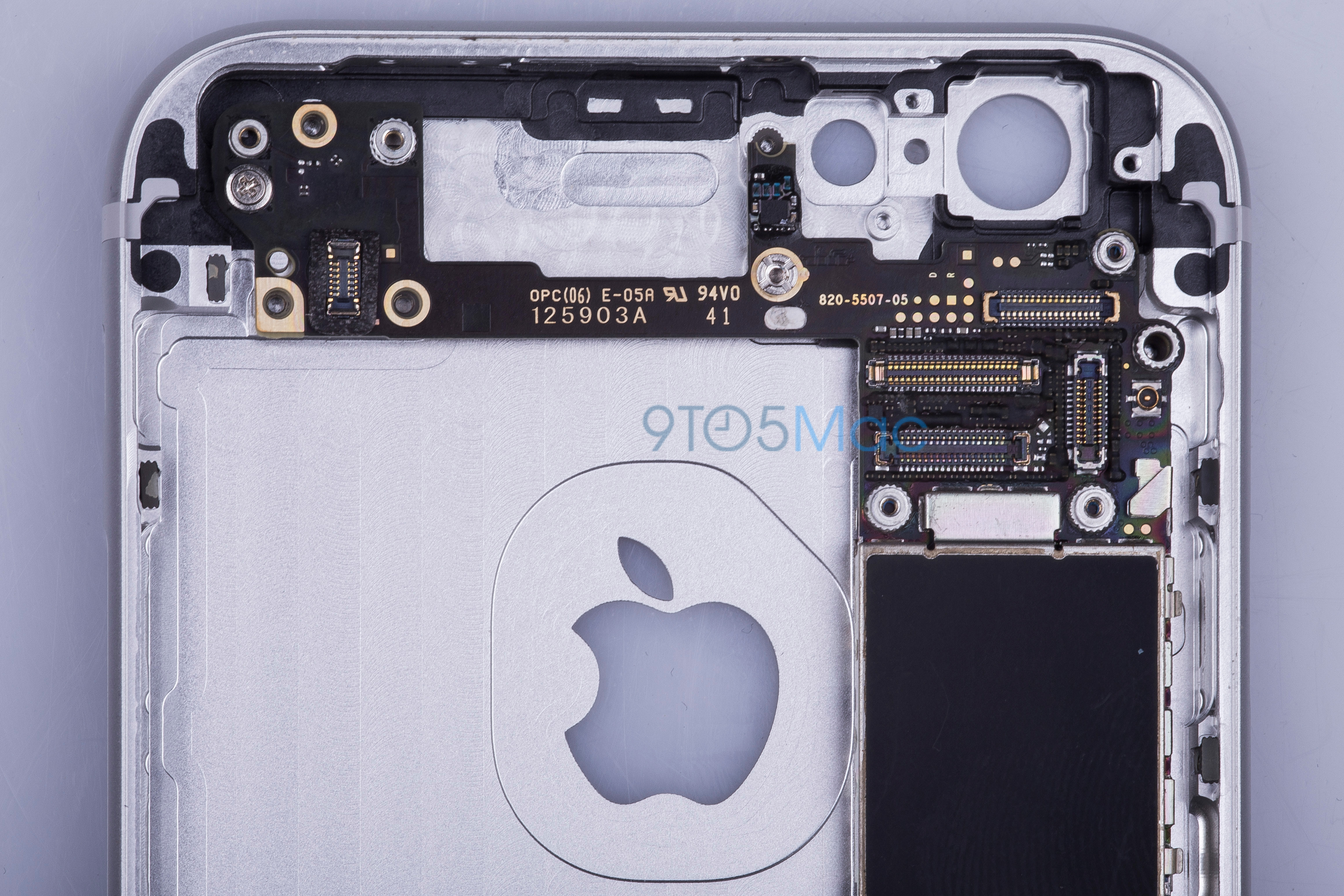
One of the main upgrades to the next iPhone’s internals will be a redesigned wireless system featuring a new Qualcomm-made LTE chip, as revealed by images of a prototype iPhone 6S logic board shared by a source. As shown in the image below, the new device will include Qualcomm’s MDM9635M chip, also known as the ‘9X35’ Gobi modem platform. This new chip promises significant performance improvements over the “9X25” chip found inside of the current iPhone 6 and iPhone 6 Plus, capable of delivering up to twice the theoretical LTE download speeds…


Expand
Expanding
Close

Samsung and HTC unveil 2015 flagships, events ripe with Apple jokes and comparisons

Site default logo image

From 9to5Google: 

As Mobile World Congress kicks off in Barcelona, Samsung and HTC have both unveiled their respective 2015 flagship devices. First off, HTC this morning unveiled the One M9. The device features a Snapdragon 810 processor under-the-hood with a 2,840mAh battery to go with it. HTC infamously ditched Megapixels with its One M8 flagship, but this time around, the company is touting that the One M9 feature a 20MP rear-facing shooter with a f/2.2, 27.8mm sapphire lens and 4k video recording.

Visually, the One M9 looks almost identical to its predecessor…


Expand
Expanding
Close

Site default logo image

Apple’s comms chip supplier Qualcomm fined almost $1B in Chinese anti-trust case

Qualcomm, which makes baseband communications chips for Apple and licenses 3G and 4G patents to other smartphone manufacturers, has been fined almost a billion dollars by the Chinese government in an anti-trust case. The company was found to have abused its dominant position in wireless chip technology by charging “unfairly high” licensing fees to manufacturers of smartphones and tablets.

The 6B Yuan ($960M) fine is the largest fine ever imposed on a foreign company, reports the GuardianChina’s National Development and Reform Commission (NDRC) said that the fine was calculated as 8% of Qualcomm’s 2013 revenue in China. China is responsible for around half of Qualcomm’s total revenue.

Chinese regulators said that Qualcomm bundled together patent licenses, forcing Chinese companies to buy unwanted licenses in order to get the core 3G and 4G ones they needed. Qualcomm said that it was disappointed by the ruling, but has agreed to separate out its licenses to allow companies to purchase only the ones they need.

The ruling is unlikely to impact Apple this year, as the company orders its baseband chips from Qualcomm rather than licensing patents, but may have an impact next year. KGI predicted last month that Apple would be buying 30% of its baseband chips from Intel in 2016.

Photo: Mike Blake/Reuters

KGI: Apple is designing its own Mac processors; Intel and Global Foundry added to Apple’s chipmaking stable

Site default logo image

Is an A-series chip destined for a future model of the 12-inch MacBook Air?

A KGI report predicts that Apple will begin using its own processors for Macs “in the next 1-2 years,” with a specific prediction of a Samsung-fabbed A10X chip powering at least one Mac made in 2016. The wording appears to suggest an entry-level machine–possibly a future model of the 12-inch MacBook Air.

Apple may launch Mac products that use own AP [Application Processor] in next 1-2 years. This prediction is based on the assumption that Apple’s self-developed AP performs at a level between Intel’s Atom and Core i3 and is good enough for Mac. Using self developed AP can help Apple better control the timing of Mac launches and Mac product features.

With performance between an Atom and Core i3, the chip would not be suitable for mid- to high-end Macs.

An accompanying table (below) shows an A10X chip made with a 10-nanometer process to be made by Samsung at some point during 2016 …


Expand
Expanding
Close

Site default logo image

NVIDIA sets the bar high for Apple’s A9 chip as early Tegra X1 benchmarks significantly outperform A8X

NVIDIA has thrown down the gauntlet to Apple in the mobile chip power stakes. While the A8X chip used in the iPad Air 2 has so far blown away the competition, NVIDIA has shown off benchmarks indicating that its new mobile superchip, the Tegra X1, leaves it standing.

The benchmark data shared with SlashGear were heavier on graphics than hard data, but appear to show that the chip significantly outperforms the A8X, with NVIDIA saying that it will offer “silky-smooth 60fps 4K video.” The one number the company did share is that when throttled back to match the GPU performance of the Apple chip, power efficiency was 1.7 times better.
Expand
Expanding
Close

Site default logo image

Today’s sketchy rumor: iPhone 6 to offer 150Mbps but not 300Mbps on LTE-Advanced networks

Carriers have started rolling out faster LTE-Advanced networks, also known as LTE-A and LTE+. If today’s rumor is correct, the iPhone 6 will be able to take advantage of these faster networks, but will top out at 150Mbps rather than the maximum 300Mbps supported by LTE-A.

GforGames is citing a Geekbar post, suggests that the LTE modem in the iPhone 6 will be the Qualcomm MDM9625, which supports LTE-A but only up to 150Mbps.

To put the speeds into perspective, the LTE modem used in the iPhone 5s and 5c tops out at 100Mbps, so we’d see a 50 percent increase in speed rather than a 200 percent one.

It should be noted that the source of the rumor is the same one which yesterday got its NAND and its DRAM confused, and has a record of mixed reliability. However, it wouldn’t be a surprising decision by Apple. LTE-A is at a very early stage, with limited network roll-out and only a few handsets supporting it. Apple generally prefers to wait for a technology to mature before adopting it.

We shouldn’t have long to wait to find out, with Apple expected to officially launch the iPhone 6 at a media event on 9th September.

Recent claimed leaked parts appear to show  tapered edges on the display panel and the power button moved from the top to the side of the phone; a raised camera cutout; a single, circular True Tone flash; and the logic board assembly – with far fewer leaks for the 5.5-inch model, perhaps lending weight to rumors that it will go on sale later than the 4.7-inch one.

Site default logo image

Digitimes: Apple working on in-house baseband chip design to appear in 2015 iPhone

Apple is reportedly putting together a new engineering team that would focus on creating baseband hardware for future iPhone models, according to Digitimes. Apple’s current chips are supplied by Qualcomm, but is said to be considering a move to an in-house design as it did with its mobile processors with the launch of the iPad.

The report indicates that any such design would not appear in hardware this year, but could be considered for the next round of iPhone updates. That would put it on track for what we could tentatively call the iPhone 6s.

Of course, this report should probably be taken with a grain of salt. Digitimes doesn’t have the most solid track record, although they have been known to be right on occassion.


Expand
Expanding
Close

Reports: A8 won’t feature integrated LTE yet, low yield rates pushing Samsung out of the process?

Site default logo image

Image via iFixit

Two new reports out today are offering a bit of early insight into what to expect from Apple’s next A-series SoC, or system on a chip, that powers its iPhone and iPad devices.

The first tidbit from Fudzilla says Apple will once again rely on Qualcomm for LTE chips in the next round of iOS devices rather than an A8 chip with LTE integrated. So what does this mean? It’s probably safe to assume Apple will save a SoC which includes the LTE modem in a future iteration.

Generally, the fewer chips required in a mobile device, the better optimized for battery life the device is. Apple, of course, must strive to engineer battery life parity, if not improvements, as our devices get more powerful each generation.


Expand
Expanding
Close

Site default logo image

Qualcomm employee said Apple’s 64-bit A7 chip was Spinal Tap moment

[youtube=http://www.youtube.com/watch?v=4xgx4k83zzc]

If Qualcomm seemed rather taken by surprise by Apple’s use of a 64-bit chip in a smartphone, first dismissing it as a gimmick and then hastily backtracking and announcing it would be making 64-bit smartphone chips itself, that’s because it was, says Dan Lyons in a nicely-written piece on HubSpot. The piece includes what has to be a strong contender for tech quote of the year:

The 64-bit Apple chip hit us in the gut,” says the Qualcomm employee. “Not just us, but everyone, really. We were slack-jawed, and stunned, and unprepared. It’s not that big a performance difference right now, since most current software won’t benefit. But in Spinal Tap terms it’s like, 32 more, and now everyone wants it.”

The reference is to a scene in the 1984 mockumentary This is Spinal Tap where the band proudly shows an amp that goes all the way up to 11, explaining that “it’s one louder.” What Qualcomm missed was that while 64-bit smartphone chips may be of limited immediate value, the A7 made for a compelling marketing sell, leaving other companies scrabbling to catch up.

Qualcomm has just created a 64-bit version of its Snapdragon SOC and expects to see it appearing in Android phones sometime in the second half of next year.

Qualcomm gets in on Bluetooth beacon action with iBeacon competitor

Site default logo image

[youtube=http://www.youtube.com/watch?v=P3LX84jdfnE]

Apple’s iBeacons aren’t the only Bluetooth LE beacons available, but they have so far been the default option for retailers thanks to the backing of such a well-known company. Qualcomm, which makes wireless chips for Apple among many others, may be aiming to change that with its launch of its own beacons from just $5 each.

Gimbal proximity beacons, available in two models, are accurate down to one foot and work indoors and outdoors […]

Depending on volume, Series 10 beacons [for indoor use] are available for as little as $5 each and Series 20 beacons [weatherproof version] are available for as little as $10 each.

While the move represents competition for Apple, it’s good news for iOS users … 
Expand
Expanding
Close