Apple’s iBeacons aren’t the only Bluetooth LE beacons available, but they have so far been the default option for retailers thanks to the backing of such a well-known company. Qualcomm, which makes wireless chips for Apple among many others, may be aiming to change that with its launch of its own beacons from just $5 each.
Gimbal proximity beacons, available in two models, are accurate down to one foot and work indoors and outdoors […]
Depending on volume, Series 10 beacons [for indoor use] are available for as little as $5 each and Series 20 beacons [weatherproof version] are available for as little as $10 each.
While the move represents competition for Apple, it’s good news for iOS users … Expand Expanding Close
The job posting are interesting as Samsung, which works with Apple to develop the custom chips used in iPhones and iPads, continues to compete with Apple in the smartphone and tablet space.
In January, anonymous U.S. analysts at Detwiler Fenton postulated that Apple could save a few bucks on a low-cost iPhone by using a Qualcomm Snapdragon integrated processors that place the CPU and wireless processors on the same die.
“It is likely that the work with QCOM is being driven by AAPL’s concern regarding maintaining gross margins as well as the need to differentiate the product by performance,” the research firm (which shuns putting the spotlight on particular analysts) said in a research note. “AAPL would not want a value priced iPhone to offer the same kind of graphics and video support, processing power etc. that its premium priced device would, therefore a less powerful lower-end Snapdragon integrated solution would help segment the product.”
At the time, the idea of Apple using Qualcomm processors and not its own perhaps older-model processors seemed preposterous. Sure, Apple uses Qualcomm 4G radio chips extensively, but its own processors now power the ‘free with a plan iPhone 4’ and the prospect of reworking the OS to work with a new off-the-shelf Qualcomm processor instead of in-house solutions still seems extremely unlikely.
In fact, the original analysts —with the statement “AAPL would not want a value priced iPhone to offer the same kind of graphics and video support, processing power etc. that its premium priced device would, therefore a less powerful lower-end Snapdragon integrated solution would help segment the product”— seemed to have no knowledge of Apple’s wide range of A4, A5, and A6 processors or wide range of iPhones in which those processors currently reside.
Originally thought to be a prototype by its seller, this rare, transparent Apple Newton 110 was apparently given to a limited number of developers during an Apple Conference. The seller estimated through his research that there was somewhere between 150 units and 1,200 units produced. These have popped up for sale online in the past, but it’s clearly a rare piece. The seller will let it go for the Buy Now price of $1,350. A gallery is below:
International CES 2013 is officially ending, so we decided to share some of what we saw from the show floor and surrounding events. 9to5Mac has tons of CES coverage for some of the most interesting new iOS accessories, advancements in display technology, and new Apple-related products we saw at the show right here, but below we have put together a collection of photos and video we shot while walking the many acres of CES exhibits at the Las Vegas Convention Center. Enjoy.
Qualcomm CEO Paul Jacobs went on “Charlie Rose” last night to discuss a range of topics, including Apple.
Jacobs notably told an anecdote (around 3:00) of when he tried to persuade Apple in the 1990s to put a Qualcomm radio in the Newton PDA, but his pitch failed. He also apparently took his Newton to Palm, with it taped to a Palm Pilot brochure, and pitched the idea of integrating Palm’s OS into a Qualcomm smartphone. Of course, that device eventually became the Qualcomm PDQ. As Venture Beat noted, the PDQ is quite possibly the world’s first smartphone with a mobile, app-centered OS and cellular connectivity.
Jacobs further called Apple an amazing marketing company and credited the iPhone as helping to expand the curve of mobile. He also admitted the success of Qualcomm is directly tied to Apple’s mobile endeavors in recent years (around 13:00): “We were putting Internet protocols into the phone in the early 90s, but it wasn’t really breaking through to the mainstream.”
Things aren’t looking good for chipmaker AMD…Following another round of layoffs totaling about 15 percent of its employees last month, Reuters reported today that AMD is looking for an investor to sell its Texas campus in order to raise up to $200 million in cash in a multi-year lease back deal. AMD’s cash dropped from $279 million to $1.48 billion in the third quarter, and today the company sits at a market cap of $1.40 billion.
Despite not being the “main option,” with the restructuring and the company’s financial issues, Reuters’ sources claimed an outright sale of the company isn’t out of the question. This isn’t the first time we’ve heard chatter of an AMD takeover. However, with the company sitting at a market cap of $1.40 billion and rumors of Bob Mansfield’s new Technologies group possibly transitioning away from Intel processors, we can’t help but imagine a few things Apple would stand to gain from the purchase…
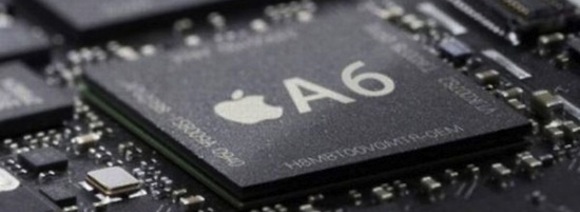
Just before we heard Apple was not using an ARM-designed processor and instead its first custom CPU design for the new iPhone’s A6, we also heard reports that Apple was reducing component orders from Samsung due to the two companies’ ongoing patent disputes. While we knew Samsung was still—at the very least—manufacturing the new chip, a report from KoreaTimes gives more insight into the company’s involvement directly from a Samsung official. According to the report, the A6 is the first of Apple’s iPhone chips where Samsung did not contribute to development of the technology:
According to industry sources, Apple has not collaborated with Samsung in the process to develop its A6 microprocessor used in its latest iPhone 5. Samsung has handled the manufacturing of the processors used in previous iPhones and believed to have contributed in their design to some degree… It now appears that the structure of the deal has been dramatically adjusted…Apple is still relying on the Korean firm to manufacture its chips but has made it clear it will no longer use its rival’s technology.
We heard conflicting reports in September regarding Apple’s decision to reduce component orders from its biggest supplier, Samsung. Reuters claimed the reduction in orders was an attempt to simply “widen its supply chain,” while others reported Apple is actively reducing orders of displays, memory chips, and batteries specifically due to increasing tension between the companies. According to the report’s source, an unnamed senior Samsung official, Samsung is now only manufacturing the A6 chips on a “foundry basis”:
“There are three kinds of chip clients. Some want us to handle everything from chip design, architecture and manufacturing. Some want us to just design and manufacture. Some want us to just make the chips. Apple is now the third type,’’
Related to today’s report: Apple’s recent hiring of Samsung chip designer Jim Mergard. The report claimed the hiring of Mergard, who was working specifically on ARM chip designs at Samsung and prior, increases the “mutual tension”… Expand Expanding Close
Update: While the meeting apparently didn’t result in any resolution, ZDnet reports the ITU’s Malcolm Johnson said the ‘heated debate’ “has gone a long way to help clarify the positions” of the companies involved:
“Today’s event has gone a long way to help clarify the positions of various stakeholders in determining the effectiveness of FRAND commitments and the impact of litigations surround standards-essential patents,”
ZDnet also reported Motorola argued “Apple was misunderstanding the way FRAND works in the telecoms industry”:
“For 20 years the [FRAND] licensing commitments made by innovators in the communications industry have been sufficient,” Warren said. “Past experience would indicate that [FRAND] has been effective… but that doesn’t mean there isn’t room for improvement to improve the present situation.”
The world’s biggest tech companies are meeting today for a Patent Roundtable with the United Nation’s International Telecommunications Union to “assess the effectiveness of RAND (reasonable and non-discriminatory) – based patent policies.” The meeting will take place at the ITU headquarters in Geneva, Switzerland; and according to several reports, it will include Apple, Samsung, Nokia, Google, Microsoft, and many of the industry’s other biggest players. The discussions follow high-profile, patent-related cases and failed settlement talks between Samsung and Apple, while the European Union continues to probe Motorola, Samsung, and others over potential abuse of the patent system. It also comes as Google’s legal chief David Drummond issued statements to the press calling for a reform on software patents.
A report from BBC noted others attending the roundtable include: Qualcomm, Cisco, Research in Motion, Intel, Philips, Huawei, Sony, and Hewlett-Packard. BBC also provided statements from the companies that submitted pre-event arguments (below).
According to the ITU, the meeting will have the following objective: Expand Expanding Close
After execs from both companies could not come to terms in an attempt to settle, both Samsung and Apple take the stand in a San José, Calif., court room this week. Apple and Samsung will face off for allegedly stealing each other’s patents. Apple also claims that Samsung’s Galaxy devices “slavishly” copied its beloved iPhone and iPad. The same type of trial already played out in many countries across the pond. It will be interesting to see where this all goes, especially after the injunctions against Samsung’s products we have already seen.
Samsung Chief Product Officer Kevin Packingham recently sat down with the folks at Wired to answer a few questions on the recent legal matters, shedding more light on Samsung’s view of the whole legal fiasco. First off, Packingham answers a question regarding the separation between Samsung’s component business that supplies necessary parts to Apple and the product team that Apple thinks is a bunch of copycats. Packingham answered: “There are times when I’m absolutely appalled that we sell what I consider to be the most innovative, most secret parts of the sauce of our products to some other manufacturer — HTC, LG, Apple, anybody…But you know, we also use Qualcomm components, and we source from other component manufacturers as well.”
Apple, of course, gets a ton of parts from Samsung, and it even partnered with Samsung on a factory in Texas to make A4 and A5 chips for the iPhones and iPads.
According to a report fromThe Oregonian, power amplifier specialists TriQuint Semiconductor is facing a “challenging” quarter due to a temporary drop in revenues from its biggest customer, Apple. The report noted the company’s CEO Ralph Quinsey did not mention Apple by name, but that Foxconn was responsible for 35 percent of TriQuint’s revenue during 2011:
TriQuint said sales in the current quarter will fall at least 19 percent to the lowest point in at least two years… While Quinsey wasn’t specific about where the problem lies, Apple has incorporated TriQuint chips in the last several generations of the iPhone. Apple is approaching its annual iPhone upgrade — the last upgrade took place in October — and sales tend to fall off before new products launch.
We know from teardowns that Apple included TriQuint chips in many generations of the iPhone and iPad, including the most recent iPhone 4S and third-generation iPad. When iPhone component supplier Qualcomm announced last week it was having “trouble meeting demand” for LTE chips likely to end up in a next-gen iPhone, many analysts speculated that was a clear indication of an October iPhone launch.
Quinsey said in a statement to the publication that he expects to return to normal revenue and growth numbers in the second half of this year:
“I believe this dip will be temporary and remain confident about our long term position,” Quinsey said in a written statement. “We have achieved design win success with our new products and I believe we will return to normal revenue levels and growth in the second half of 2012.”
Yesterday, we reported that Qualcomm announced it was having “trouble meeting demand” for its next-generation chips that would likely find their way into an LTE-enabled iPhone 5. While the announcement was a clear indication that Apple’s rumored October release window was much more likely than talk of a June unveiling at WWDC, Piper Jaffray analyst Gene Munster agreed and said the new device will be the mother of all hardware upgrades:
“We think one of the big features of iPhone 5 is going to be LTE… when iPhone 4S came out it was obviously the same form factor… this is going to be a big hardware upgrade… this is going to be the year of the hardware… the mother of all upgrades “
According to a report fromReuters, Apple’s LTE chip supplier Qualcomm is having “trouble meeting demand” for smartphone chips and will continue experiencing manufacturing constraints throughout the rest of the year. Qualcomm Chief Executive Paul Jacobs told analysts on a conference call yesterday, “At this stage we cannot secure enough supply to meet the increasing demand we are experiencing.”
With Apple’s next-generation iPhone expected to include LTE capabilities like the recently launched third-gen iPad, many are speculating Qualcomm’s supply issues could lead to delays. It would also make the rumored September or October unveiling and holiday launch all the more likely opposed to June. Is it possible Qualcomm’s supply constraints have anything to do with Apple buying up its capacity?
Apple recently began internally seeding prototype N96— a faster iPhone with 1GB of RAM and an A5X variant to test the performance of the new chip on iPhones.
Qualcomm’s Chief Financial Officer Bill Keitel told Reuters the constraints have lead to increased operating expenses: Expand Expanding Close
There are two interesting pieces of information this morning on the new iPad.
If used solely as an LTE MiFi, AnandTech got a mind-numbing 25.3 hours of Verizon LTE hotspotting out of the new iPad. That is equal to about five to seven MiFis.
Now for the killer. If you have an iPad on Verizon’s LTE network and use it as a personal hotspot (not currently possible on the AT&T version), it will last you roughly 25.3 hours on a single charge. Obviously that’s with the display turned off, but with a 42.5Wh battery driving Qualcomm’s MDM9600 you get tons of life out of the new iPad as a personal hotspot.
By my calculations, that means you could download 182GB of data at 2MB/sec on LTE through a single charge or over 18 times Verizon’s highest data plan in a single day.
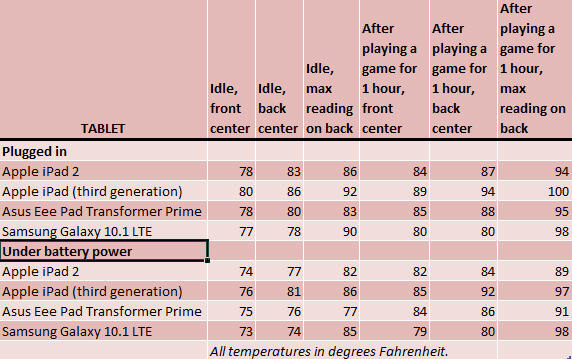
In addition, PCWorld tested the heat on the new iPad and compared it to the ASUS Eee Transformer Prime and Samsung Galaxy Tab under the same conditions. Without the charger plugged in, the new iPad was actually cooler than the Samsung Galaxy Tab—even with a bigger battery after playing a game for an hour.
The point is that the new iPad runs only slightly hotter than high-end Android tablets and only when charging. The cool champion is still the iPad 2 when playing graphic intensive games.
Twice the LEDs: That means more heat coming from more LEDs. This is especially a problem at full brightness.
2.5X the power needed: The brightness efficiency is lower, because the new iPad has more pixels (which means more transistors) compared to the iPad 2. More pixels and transistors take up more space, meaning less opportunity for light to pass. “So they basically have to blast light through the LCD to make it come out.” Soneira adds: “I measured the LED power at maximum brightness–it’s two and a half times greater than on the iPad 2.”
Battery generates more juice: The battery has to push out more power. This makes the battery warmer.
Traditional LCD technology: Sharp’s power-efficient IGZO technology was not ready for the new iPad, which forced Apple to use traditional —and less power efficient— amorphous silicon tech. [To be fair, the older iPads also used this tech. Perhaps Apple was hoping to go 100-percent IGZO to offset the above].
The biggest heater in the new iPad is the new processor that has four graphics cores. If you look at the heat maps Consumer Reports and Tweakers did, the center of the heat is right where that A5X sits on the left side of the device.
As a bonus, do not forget those hot and schweaty Qualcomm LTE chips that bring the “faster than home broadband” goodness directly to your 4G iPads.
With all the above said, it is a minor miracle Apple managed to keep temperatures within 10 degrees to 15 degrees of the earlier versions.
UPDATE: Qualcomm at Mobile World Congress in Barcelona, Spain took the wraps off three next-generation modem chipsets, first to support 84MBps HSPA+ Release 10 and LTE-Advanced with carrier aggregation technology.
Chipmaker Qualcomm today issued a press release highlighting a fifth iteration of its Gobi reference platform that had actually been introduced back in February 2011. That said, these chips include in a comprehensive support for TD-SCDMA, TD-LTE, LTE on FDD and TDD networks worldwide, in addition to embedded GPS capability.
Of course, the platform also supports the usual HSPA+ and EV-DO for backwards compatibility and (unlike current 6000 series chips) voice. Such a powerful combo in theory allows Gobi products to connect to the faster LTE network locally and stay connected to the Internet globally on 3G networks worldwide.
Now, Qualcomm noted in the release included after the break that both the MDM9615 and MDM9215 work with Windows 8 and Android devices plus x86 and Qualcomm’s own dual- and quad-core Snapdragon system-on-a-chip solutions. For all we know, this could be the chip inside the iPhone 5. The yet-to-be-announced iPhone 5 running this new Gobi chip would theoretically enable Apple to tap a single hardware in targeting a variety of carriers that often use different and incompatible radio technologies.
This includes the world’s biggest carrier China Mobile whose infrastructure revolves around TD-LTE radio technology. Put simply: These Gobi chips allow for true world-phone compatibility. It is worth noting that almost every 3G iOS device since the Verizon iPhone uses Qualcomm’s Gobi platform. The only exception is the AT&T iPad that still runs an older Infineon chip. Whichever way you look at it, one thing is certain: Apple will soon ship its first 4G LTE mobile device.
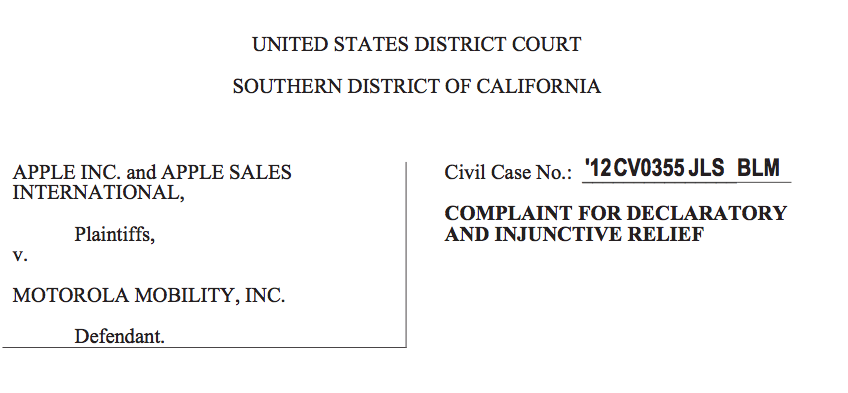
Apple, today, has filed a lawsuit against Motorola over their use of Qualcomm technology, as reported by Reuters. Apple explains that Motorola has breached a contract pertaining to their use of a patent license and “asks this Court to enjoin Motorola from prosecuting and 4 enforcing its claims against Apple in Germany.”
Specifically, Apple is suing Motorola over their claims that Apple is illegally using Qualcomm’s baseband chip. In its lawsuit, Apple asks the court to ban Motorola from being able to sue Apple over Apple’s use of Qualcomm’s technology:
Permanent injunctive relief restraining Motorola and its subsidiaries, affiliates, officers, directors, agents, employees, servants, licensors, successors, assigns, and all those acting in concert with them, from prosecuting patent infringement proceedings against Apple based on Apple’s use of the Qualcomm MDM6610 chip and other Qualcomm components licensed under Motorola patents in any forum other than this Court
The root of the lawsuit is essentially Apple’s strike-back at Motorola for attempting to stop sales of Apple’s 3G products in Germany. The lawsuit’s referencing of Qualcomm’s chips is a nod to the iPhone 4S, which uses a Qualcomm baseband chip, not being removed for that short amount of time when Apple won a temporary injunction of Apple’s 3G products in Germany.
Samsung made a formal request with the U.S. District Court in California for Apple to reveal the intricacies of its contract with wireless chipmaker Qualcomm, who currently supplies chips for the iPhone 4S, CDMA iPhone 4, and iPad 2. Qualcomm is currently in a cross licensing agreement with Samsung, bringing up the question of whether “Apple’s buying Qualcomm chips is as good as paying for the patents.” The documents could potentially reveal Apple’s plans to move to Qualcomm LTE chips in future iOS devices.
Specifically, Samsung defense lawyer Dylan Ruga wants to know if Apple is considered a “Qualcomm Customer,” a term that is “defined in certain licensing agreements between Samsung and Qualcomm.” The request was discovered in court documents by Korea Times and later confirmed by Samsung Electronics spokesperson Lim Yoon-jeong. Korea Times reported:
Samsung Electronics is alleging that Apple has infringed on Samsung-owned patents that relate to technology embodied in chipsets used in Apple’s iPhones and iPads. The documents are expected to determine whether Apple is in fact a direct customer of Qualcomm — and potentially immune from Samsung’s suits — or whether it purchased its chips through an intermediary.
Here is an excerpt from the document that has not been released by the courts: Expand Expanding Close
Qualcomm has just issued a press release announcing the commercial availability of their Gobi 4000 chips for 4G LTE and HSPA+ capable devices, a variant of which could very well ship in a next-generation LTE-capable iPad. In August we discovered Apple had possibly begun field testing a next-gen LTE iPads with LTE code floating around the iOS builds, and it’s likely Apple would go with Qualcomm’s chip, as almost every 3G iOS device since the Verizon iPhone has used their Gobi platform, the exception being the the AT&T iPad which uses an older Infineon chip.
“The Gobi 4000 platform allows customers to offer both LTE/HSPA+ and LTE/EV-DO designs to meet the growing demand for embedded 3G/4G connectivity in mobile devices worldwide… System designers now have the flexibility to choose an embedded Gobi 4000 platform for high-speed 4G LTE support, or an embedded Gobi 3000 platform for worldwide 3G connectivity.”
The new chips, now shipping to OEMs with modules available through Novatel Wireless and Sierra Wireless, are based on Qualcomm’s MDM9600 and MDM 9200 3G/4G wireless modems, and as the company notes, have been specially designed for deployment in devices utilizing Snapdragon dual-core and quad-core processors. In addition to HSPA+, dual-carrier HSPA+, and LTE support, the Gobi 4000 platform is also backwards compatible with HSPA and EV-DO. On top of a possible variant of the chip coming to a future 4G LTE iPad, the Gobi 4000 platform will also be included in Lenovo’s ThinkPad laptops, and Dell’s Latitude E6420 laptops, in addition to other Windows and Android powered mobile devices.
Qualcomm’s senior vice president of produdct management for CDMA Technologies, Cristiano Amon, had this to say about the announcement: Expand Expanding Close
Slashgearran the browser on the dual-core 800MHz A5 iPhone 4S against the latest and greatest Galaxy S II with dual-core 1.5GHz Qualcomm processor (skip ahead 4:30). From the video it looks like the iPhone 4S was faster (as expected). However, in their words…
…from initial results the iPhone 4S performs quite well, I’m sure everyone expected that as the original held its own pretty well too. One of the fastest processors around currently, the 1.5 GHz Qualcomm in the Galaxy S II performs very well but is just barely by a hair beat by the new A5 dual-core iPhone 4S in most tests. We could argue about this all day, or try other sites but when it really comes down to it iOS is highly efficient — not to mention many many websites are designed with iOS in mind.
The WSJreports on the next generation iPhone due this fall:
According to some suppliers of components to Apple, the new version of the iPhone is expected to be thinner and lighter than the iPhone 4 and sport an 8-megapixel camera. One person said the new iPhone will operate on Qualcomm Inc.’s wireless baseband chips. The current iPhone 4 uses memory chips made by Samsung Electronics Co. and baseband chips from German chip maker Infineon Technologies AG, according to a report by market-research firm iSuppli Corp.
Verizon execs have already said the next iPhone will be a GSM/CDMA world phone – which means it is likely that it will use Qualcomm’s Gobi chips (As the current Verizon iPhone and iPad currently do). Numerous reports have also said it will contain a 8megapixel camera – from Sony and other manufacturers.
There is some question about whether or not these devices will meet production deadlines, however…
…in fact, if Apple turned on the HSPA part of the Gobi 14.4 chips in its Verizon iPad and iPhone, they’d already be 4G, at least according to AT&T.
Chris Ziegler noticed today that AT&T has started calling regular old 14.4Mbps HSPA devices 4G in its latest marketing materials. Until recently, the pseudo ‘4G’ was reserved for HSPA+ on T-Mobile which tops out at 21Mbps. However, with the release of the HPalm Veer 4G, HTC Inspire 4G and Motorola Atrix 4G, AT&T has extended the ‘4G’ down to speeds of 14.4 Mbps, the same speed as those Qualcomm chips that Apple loves.
Most industry watchers expect the next iPhone to run on some version of the Qualcomm chip that the Verizon has which would let it do double radio duty and be operable on all US networks.
As Ziegler notes, AT&T is paving the way to charge extra for the benefit of using the newly branded ‘4G’ which doesn’t sound good to us. Expand Expanding Close
We’re not sure if this has already happened, but EETimes reports on the rumors that Apple has shifted its A5 production from Samsung to TSMC (Taiwan Semiconductor Manufacturing Company). Since no one has seen a real A5 processor yet, we don’t know if Apple has already switched.
Perhaps most damning, the art that Apple has put out on its A5 Chips is actually just an A4 Chip with ‘A5’ superimposed over top(!) See same part numbers around the edges above. Does this mean that Apple has something to hide? (They always do)
The move would make logistical sense as Apple’s current (former?) partner in processor manufacturing, Samsung, is increasingly becoming a competitor in both iOS devices and in PCs. Apple was supposed to take $7.8Billion in parts from Samsung this year. Might be time to adjust that estimate.
With little or no fanfare, Apple and TSMC have recently entered into a foundry relationship, sources said. As reported, TSMC will make the A5 dual-core processor on a foundry basis for Apple’s iPad 2. That can be read here and here.
Bloombergtoday reports what would have seemed unthinkable a year ago. Microsoft is building a version of its Windows OS (not Phone 7) for the ARM processor design, the very same that powers Apple’s lineup of iOS devices.
The operating system would give Microsoft another way to attack the market for tablets and phones, where it’s lost ground to Apple Inc. and Google Inc. ARM chips — made by Qualcomm Inc., Texas Instruments Inc. and Samsung Electronics Co. — are used in most smartphones, as well as Apple’s best-selling iPad. A full-featured version of Windows for ARM chips is the best way for Microsoft to make a dent in the iPad’s lead, said Robert Breza, a Minneapolis-based analyst for RBC Capital Markets. While Windows is dominant in the personal-computer market, it hasn’t parlayed that into tablet success yet. “They’ve got to come back with a product that’s better than ‘me too’ and is equal if not better in features,” Breza said. He has an “outperform” rating on Microsoft’s stock, which he doesn’t own. “A lot of tablets today are inferior to PCs.”
Microsoft became a licensee of the ARM architecture earlier this year but at the time it seemed to be for embedded devices such as the Zune. Apple is also an ARM licensee and builds its A4 lineup of chips using ARM designs.
Is this really a good move for Microsoft? The problem with Windows 7 on tablets hasn’t really been an Intel problem necessarily. Whatever the case, this has to be bad news for Intel/AMD who now may see competition from ARM processors like the Nvidia Tegra 2 in netbooks running Windows.