Samsung

See All Stories
Site default logo image

Sony and Philips-backed Intertrust sues Apple over security and trusted computing patents

Apple is the target of a new patent infringement suit filed today by Intertrust—a company backed by Sony and Philips that has licensed its patents to many companies in the past including Samsung, Nokia, Microsoft, HTC, Motorola, and others. The Wall Street Journal noted Philips and Sony each hold a 49.5-percent stake in the company that previously settled with Microsoft in 2004 for $440 million related to a patent infringement case.

The announcement from Intertrust on its website doesn’t mention the specific patents or technologies involved in the suit, but it claims Apple products, including iPhone, iPad, Apple TV, Macs, iCloud and iTunes, infringe on 15 Intertrust patents related to “security and distributed trusted computing.”

 The lawsuit accuses Apple of making products and services that infringe on 15 Intertrust patents on security and distributed trusted computing. The lawsuit covers a broad range of key Apple products and services including iOS devices such as the iPhone and iPad, Mac computers and laptops, Apple TV, and services including iTunes, iCloud, and the Apple App Store.

“Apple makes many great products that use Intertrust’s inventions,” said Talal Shamoon, Intertrust’s chief executive officer. “Our patents are foundational to modern Internet security and trusted computing, and result from years of internal research and development. We are proud of our record of peaceful and constructive licensing with industry leaders. We find it regrettable that we are forced to seek Court assistance to resolve this matter.”

Smartwatch race is on as Samsung confirms it’s in the game

Site default logo image

Samsung has confirmed to Bloomberg the rumors that it’s working on a smartwatch to rival the widely-speculated Apple iWatch.

Known for being a ‘fast follower’, a company that, er, watches what others do and aims to quickly launch a competitive product, Samsung appears to be following Apple’s lead in revealing nothing at all about the device: no feature-list, no visuals, no price, no launch-date. Samsung’s executive vice president of mobile business Lee Young Hee said only: “We’ve been preparing the watch product for so long. We are working very hard to get ready for it. We are preparing products for the future, and the watch is definitely one of them.” Thanks for that, Samsung.

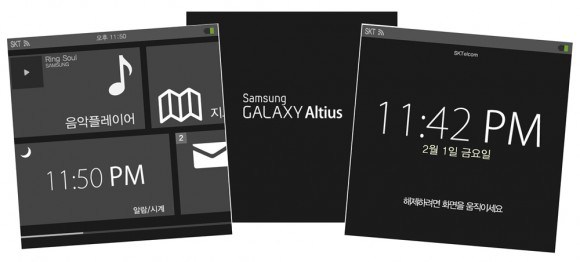
The alleged screenshots that appeared last month on Slashgear suggested a 500×500-pixel touchscreen device running a new operating system supposedly named AltiusOS.

The smartwatch market is estimated to be worth $60 billion a year. Just to put that in perspective, that’s about 16 percent of the $358 billion handset market. Marshal Cohen, an analyst at NPD Group in Port Washington, told Bloomberg: “We’re going to see formidable competition coming from many different directions — from device makers, accessory makers, even fashion designers.”

Laurence Balter, chief investment strategist at Oracle Investment Research, said he believed Apple’s strategy should be to use the iWatch as an affordable entry into the Apple ecosystem, generating sales for its more expensive products. “If I were Apple, I’d strategically price the watch as low as possible to bring as many as possible into the ecosystem,” he said.

It’s expected that most smart watches will follow Pebble’s lead in making the device a Bluetooth accessory to a phone and not a standalone gadget, but there has been speculation that the iWatch will run iOS, potentially allowing it to perform useful functions without a link to an iPhone.

Apple analysts react to Galaxy S4 launch with a variety of wild insights

Site default logo image

Samsung officially unveiled its flagship Galaxy S4 smartphone last night at a theatrical, Broadway-style presentation in New York, and analysts are quick to jump in today with opinions on what it means for Apple. AAPL is having a decent morning hitting a high of 442.50 and opinions from analysts seem to be split down the middle regarding whether the S4 has what it takes to cut into Apple’s market share.

Gene Munster of Piper Jaffray doesn’t seem too impressed with the S4 upgrade but noted Samsung’s new S Band is “a quick first pass for Samsung on wearable technology ahead of Apple’s watch. Munster added that he expects Apple to launch its smart watch product by 2014 (via Barron’s):

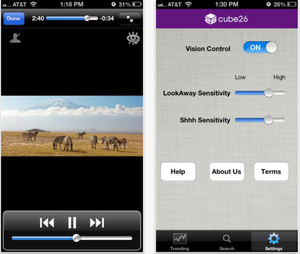
The Galaxy S4 appears to be largely an incremental update to the S3 including a slightly larger screen (4% larger on diagonal), better camera and processor, and updated software, but largely the same body style and casing. We believe some of the software features are unique, including the tilt to scroll, video pausing based on facial recognition, and hand gesture based interactions, but view these software improvements as minor compared with what Siri was to the iPhone 4S or even Google Now to Android.

Jefferies analyst Peter Misek thought the S4 will be “incrementally negative for Apple” but doesn’t view the S4 upgrade as “revolutionary” (via Zdnet):
Expand
Expanding
Close

Site default logo image

Samsung’s ad budget exploded past Apple and the rest of the field in 2012

We have been hearing much about Samsung’s advertising efforts in recent months including its efforts crafting the now well-known ad campaign mocking iPhone line sitters, to some of the companies recent marketing tactics used to target iPhone users. Last night The Wall Street Journal published a new piece outlining Samsung’s increasingly aggressive advertising thanks to new data from research firm Kantar Media. According to the report, Samsung passed Apple in 2012 for ad spending by around $68M in the US:

Outspent by rival Apple Inc. more than three to one in advertising for mobile phones in the U.S. in 2011, Samsung responded with a marketing blitz on TV, billboards, the Internet and print media that moved the Korean company into the pole position last year… In 2012, Samsung spent $401 million advertising its phones in the U.S. to Apple’s $333 million, according to ad research and consulting firm Kantar Media.

Apple spent more than three times Samsung on marketing its mobile devices in 2011. If a slew of recent media reports is any indication, including one from Apple’s own former ad man Ken Segall, many seem to think Apple is losing its advertising momentum to Samsung.

The Wall Street Journal added that executives at carriers said Samsung “also spends more on “below the line” marketing than any device maker. Those funds help pay for in-store advertising, promotions and training for carrier sales representatives that help close the sale.”

To put the spending in perspective for the global smartphone market, Tech/telco analyst Benedict Evans noted the figures above account for around 10% of Samsung global ad budget compared to 1/3 of Apple’s, which also somewhat reflects sales proportions.

Site default logo image

Nokia submits amicus brief in support of Apple’s bid to block sale of Samsung products

According to a report from Reuters, Nokia has this week become the first company to submit an amicus brief in support of Apple’s attempt to secure injunctions on several Samsung products. While the full contents of the brief have not yet been revealed, Reuters reports Nokia argued its position in a summary of the brief that was filed with the U.S. Court of Appeals for the Federal Circuit in Washington on Monday.

In an accompanying summary, however, Nokia argued that a trial court judge got it wrong when she denied Apple’s request for a permanent injunction.

In the filing on Monday, Nokia attorney Keith Broyles from Alston & Bird argued that U.S. District Judge Lucy Koh in San Jose, California, erred by ruling that Apple must establish a “causal nexus” between its patented feature and the demand for its phones in order to secure a permanent injunction.

Nokia argued that the rule “could cause wide-ranging damage to the United States patent protection landscape.”

Companies and advocacy groups will still be able to submit briefs on behalf of Samsung after the company’s written arguments in the coming weeks. Nokia said its decision to submit the brief is to “advocate for patent rights as a means of fostering innovation.” 
Expand
Expanding
Close

Site default logo image

iPhone concept imagines a 4.8-inch bezel-less display (Gallery)

Nowhereelse.fr posted another set of high-quality renders from designer Martin Hajek today that seem to be the illegitimate lovechild of a Samsung Galaxy device and the iPhone 5. In the images below, we get the designer’s take on a 4.8-inch “iPhone 6” with a super thin bezel and black and silver anodized backs. He’s also included a 4-inch version of the concept that clearly takes cues from Samsung’s Galaxy devices.

More images at Nowhereelse.fr.

Site default logo image

Samsung steals Apple’s wallet

.
From 9to5Google:

Samsung is today officially unveiling its “Samsung Wallet” mobile app solution, and it is quickly gaining attention for similarities to Apple’s iOS 6 ticket, card, and coupon solution known as Passbook. For those familiar with Apple’s app, Samsung Wallet appears to work much the same way. The app will allow users to store event tickets, membership cards, coupons, and boarding passes in one central app. From there, users will be able to present the digital passes. Companies supporting the standard can also scan a barcode included for each digital ticket.

Full story and video of the app in action is available on 9to5Google.

Steve Jobs’ ad man Ken Segall says Apple’s advertising has lost momentum to Samsung

Site default logo image

[ooyala code=”9wc3FtOTpudZkeXdJrtb8gXF-WmHpm1i”]

In the video above, Bloomberg West speaks with 72andSunny’s partner and creative director Jason Norcross about the thinking behind some of Samsung’s latest campaigns. 

If there is one person qualified to discuss the state of Apple’s current marketing efforts, it’s Ken Segall. Working alongside Steve Jobs’ creative team for more than a decade, Segall, the man who put the “i” in iMac, served as creative director at ad agency TBWA\Chiat\Day. He created some of Apple’s most iconic ads such as the legendary Think Different campaign. Segall took some time on his Observatory blog today to share his thoughts on how “momentum has been lost” for Apple’s marketing department at the hands of none other than the company’s biggest rival, Samsung:

While you can still argue that Macs and i-devices have a ton of appeal, you can’t argue that Apple is still untouchable when it comes to advertising…The fact is, it is being touched — often and effectively — by none other than Samsung…Samsung has made remarkable inroads in a very short time, for two big reasons.

According to Segall, the two big reasons Samsung’s advertising has eclipsed Apple’s is due to Sammy’s massive advertising budget and willingness to “bash away at Apple, delivering ads that are well produced, well written and seem to be striking a nerve.” Specifically, Segall pointed to Samsung’s decision to run creative new ads at the Super Bowl and Oscars: 
Expand
Expanding
Close

Apple renews efforts in India with increased distribution, marketing & installment plans

Site default logo image

Despite comments from Apple CEO Tim Cook last year about India remaining a lower priority than many other emerging markets, a report from Reuters today detailed how Apple is “aggressively pushing” the iPhone in India through payment plans and a new marketing campaign. Cook suggested last year that India wasn’t the biggest international focus for Apple and multi-layer distribution in the country “really adds to the cost of getting products to market.” According to Reuters, on top of an aggressive marketing campaign and payment plans, Apple also aims to increase the distribution channels Cook mentioned last year:
Expand
Expanding
Close

Site default logo image

Report: Even iPhone 4S outsells Galaxy S3 in Q4 as iPhone 5 becomes best selling smartphone in the world

While Apple was able to pass Samsung for the first time to become the No. 1 mobile phone vendor in the U.S. recently, Strategy Analytics latest numbers showed Samsung still dominated among global smartphone shipments in Q4. The research firm is out with a new report today that breaks down global smartphone sales by model, and, not so surprisingly, Apple’s iPhone 5 was able to take the top spot from Samsung’s Galaxy S3 to become the world’s best selling smartphone model during the quarter with 27.4 million units shipped:

According to the latest research from our Handset Country Share Tracker (CST) service, Apple’s iPhone 5 overtook Samsung’s Galaxy S3 to become the world’s best-selling smartphone model for the first time ever in the fourth quarter of 2012. Apple’s iPhone 5 smartphone model shipped an estimated 27.4 million units worldwide during the fourth quarter of 2012. The iPhone 5 captured an impressive 13 percent share of all smartphones shipped globally and it has become the world’s best-selling smartphone model for the first time ever. A rich touchscreen design, extensive distribution across dozens of countries, and generous operator subsidies have been among the main causes of the iPhone 5’s success.

Perhaps more surprising is the fact that iPhone 4S, which was discounted at the launch of iPhone 5, is also ahead of the Galaxy S3, as highlighted in the graphic above. The iPhone 4S grabbed the No. 2 position in Strategy Analytics’ study with 17.4 million units sold and 8 percent of the global smartphone market:

In addition to the iPhone 5, Apple shipped an estimated 17.4 million iPhone 4S units for 8 percent smartphone share globally in Q4 2012. Apple’s iPhone 5 and iPhone 4S are currently the world’s two most popular smartphone models.We estimate Samsung’s Galaxy S3 was the world’s third best-selling smartphone model and it shipped 15.4 million units globally, capturing 7 percent share in the fourth quarter of 2012… global demand for the Galaxy S3 appears to have peaked and Samsung will surely be keen to introduce its rumored Galaxy S4 upgrade in the coming weeks to fight back against Apple’s popular iPhone range.

Site default logo image

Apple hires AMOLED TV Application Expert James (Jueng-Gil) Lee from LG

According to reports originating from OLED-A.org (via OLED-Info), Apple has hired OLED expert Dr. James (Jueng-Gil) Lee. He was previously a senior researcher on LG Display’s R&D team and worked on printed AMOLED TVs. Lee was also a researcher with Cambridge Display Technology before joining LG, and he was the R&D head for LCD technology development at Samsung.

According to his LinkedIn, Lee was working on “OLED Technology Development for TV Application” at LG. At Samsung, he “successfully started the first three generations LCD production lines.” He also “showed track of records in yield improvement, productivity improvement, manufacturing cost reduction and new technology transfer into production line.”

Too bad Apple doesn’t make a television.


Expand
Expanding
Close

iPhone for the first time takes top spot from Nokia for global mobile internet usage

Site default logo image

Web analytics firm StatCounter is out today with updated stats for the month of January 2013. When it comes to Internet usage, iPhone users this month held the No. 1 spot as Nokia experienced a significant decline during 2012. With Nokia’s share of mobile internet usage down 15.52-percent from 37.67-percent last January to just 22.15-percent this year, Apple was able to move into the No. 1 position for the first time despite experiencing a decline of 2.81-percent. Apple took 25.86-percent of mobile Internet usage in January, down from 28.67-percent last year. Nokia was also bumped to third position with Samsung gaining 7.85-percent to move into the No. 2 spot. However, it’s important to point out that StatCounter didn’t include iPads in its definition of mobile devices.

As for mobile OS, StatCounter has Android at 37 percent of the market in January up from 33.19-percent in December. In comparison, iPhone and iPod held 25.85-percent of the global OS share, up from 23.26-percent in December. Keeping in mind that StatCounter didn’t include iPads in these stats, we also looked a report for January from NetApplications (pictured below) that has iOS with iPads included at 60.56-percent of the market during the month:
Expand
Expanding
Close

Site default logo image

Court again rejects Apple’s attempt at Samsung Galaxy Nexus sales ban

Reuters reported today that a U.S. Federal Circuit Court of Appeals in Washington rejected Apple’s attempt to get a sales ban on Samsung’s Galaxy Nexus. Apple asked the court to revisit a previous decision to reject the company’s request for the sales ban leading up to a full trial set for March 2014. The case involved patents not included in the California trial that awarded Apple a $1.05 billion verdict against Samsung.

Apple wanted the full Federal Circuit of Appeals, made up of nine active judges, to reverse the earlier ruling. But in a brief order on Thursday, the court rejected Apple’s request without detailed explanation or any published dissents… Several experts had believed that Apple faced long odds, as the legal issues in play were not considered controversial enough to spur full court review.

Reuters noted that Apple could still appeal the decision to the U.S. Supreme Court:

Apple could still appeal to the U.S. Supreme Court. However, the high court has made it more difficult for patent plaintiffs to secure sales injunctions in recent years.

Report: Apple and Samsung dominate Q4 with 51 percent of global smartphone market

Site default logo image

Q4 2012 estimates from Strategy Analytics

While Samsung has conveniently left specific smartphone sales numbers out of its Q4 earnings release yesterday (as usual), today we get a look at the latest estimates for the quarter coming from research firms Strategy Analytics and IDC.

We know that Apple sold 47.8 million iPhones during the quarter, and today both research firms put Samsung just over 63 million units for Q4 2012. That means Samsung was able to capture 29 percent of the market last quarter (up from 36.2 million units and 22.5-percent of the market in the year ago quarter). Apple is of course a close second among the top five smartphone vendors with 21.8-percent—down slightly from the 23 percent it held in the same quarter last year. In Q4 2011, Apple and Samsung were neck and neck at about 23 percent of the market each.

The increasing market share for Apple, and especially Samsung, over the past year comes at the expense of Nokia. It experienced a drop from 16 percent to 5 percent of the market during the past year. 
Expand
Expanding
Close

Site default logo image

LG takes 2nd place from Apple in US handset market for first time since 4S launch

The iPhone may have recently captured a record 53 percent of the U.S. smartphone market. However, when it comes to its steady second place position in the U.S. handset market (smartphones and feature phones combined), a new report claimed LG bumped Apple to third position during December on strong sales of its Optimus G.

Yonhap News covered the report from Hong Kong-based Counterpoint Research, which said on Sunday that LG captured 13 percent of the U.S. market last month, bumping Apple to third place for the first time since the launch of the iPhone 4S. Apple recorded 12 percent of the market, which puts both Apple and LG well behind leader Samsung at 33 percent. LG recently announced sales of 1 million units for the Optimus G worldwide, but it’s unclear if the LG-made Nexus 4 from Google was a significant contributor to the company’s rise during December.

LG Electronics had maintained the runner-up position until the third-quarter of 2011 but fell to third place after Apple’s iPhone 4S hit the market… Market insiders attributed LG Electronics’ sales growth to the popularity of its latest Optimus G handset, with over 1 million units sold across North America.

(via TNW)

Patent troll Personal Audio LLC sues iTunes’ top podcaster Adam Carolla’s Ace Broadcasting

Site default logo image

In July 2011, a federal jury in Texas awarded “patent licensing company” Personal Audio LLC $8 million in its patent infringement lawsuit against Apple. The jury found Apple infringed two valid patents related to downloadable playlists with its iOS devices as far back as the original iPod. One covered an “audio program player including a dynamic program selection controller,” while the other covered an “audio program distribution and playback system.” 9to5Mac has now learned Personal Audio LLC is attempting to target content creators directly, starting with a new patent infringement case in Texas against one of iTunes biggest podcasters, Adam Carolla’s Ace Broadcasting.

If the outcome of the case is anything like Personal Audio’s previous cases, it could have a major impact on podcasters and other content creators on iTunes and elsewhere. Personal Audio also sued and entered licensing agreements with Sirius XM Radio, Archos, Coby, RIM, Samsung, Amazon, and Motorola related to its downloadable playlist patents and others.

The new patent, issued just last year on Feb. 7, 2012, is quite broad and describes a “System for Disseminating Media Content Representing Episodes in a Serialized Sequence.” Personal Audio is also suing the popular Howstuffworks.com series, which like Ace Broadcasting, is a large podcasting presence on iTunes and across the web…


Expand
Expanding
Close

Packing up for CES 2013: Here’s what we’re looking forward to

Site default logo image


This is what CES looked like the last time Apple attended. J/K. Via the Verge

The 2013 International Consumer Electronics Show is almost here, with official CES show floor at the Las Vegas Convention Center opening up next week on Jan. 8. To kick things off, hundreds of companies and the press will invade Las Vegas this weekend for three days of pre-show product demos, press conferences, and more from the majority of the tech industry’s biggest names. Samsung, Sony, NVIDIA, Intel, Toshiba, and LG are just a few of the companies with scheduled announcements, but there will surely be more than a few surprises with over 3,000 exhibitors setting up shop. Apple’s last official appearance at CES was in 1992 with John Sculley’s keynote introduction of the Newton, but its presence at the show remains with hundreds of new Apple-related products unveiled every year.

9to5Mac is on its way to Vegas to bring you full coverage of the best products from the show. But, until then, here’s a wrap-up of what we already know will be there and what else you can expect to see at CES 2013:


Expand
Expanding
Close

comScore: iOS and Android continue move toward duopoly with 90 percent of US market in November

Site default logo image

According to the latest numbers from comScore MobiLens for the United States mobile phone market, Apple and Samsung both continue to gain marketshare as the leading OEMs as Android and iOS move closer toward a duopoly with a combined almost 90 percent of the market. ComScore’s latest numbers track the three-month period ending in November, which saw Apple jump from 17.1-percent in August to 18.5-percent of the U.S. mobile phone market. Samsung continued its lead jumping up 1.2-percent to 26.9-percent, while gains for both companies come at the expense of decreases in market share for LG, Motorola, and HTC.

As for the U.S. market by platform, iOS and Android both experience slight gains over August numbers. With a joint 88.7-percent of the market for Apple and Google, RIM is the closest competitor dropping from 8.3-percent of the market in August to just 7.3-percent in November. Microsoft dropped from 3.6-percent to 3 percent:

In November, 75.9 percent of U.S. mobile subscribers used text messaging on their mobile device (up 0.3 percentage points). Downloaded applications were used by 54.2 percent of subscribers (up 0.8 percentage points), while browsers were used by 52.1 percent (up 0.1 percentage points). Accessing of social networking sites or blogs increased 0.9 percentage points to 39.2 percent of mobile subscribers. Game-playing was done by 33.7 percent of the mobile audience, while 28.7 percent listened to music on their phones (up 0.4 percentage points).

Apple A6 X processor production reportedly goes from Samsung to TSMC, trial set to begin this quarter

Site default logo image

Taiwan Semiconductor Manufacturing Company has been contracted by Apple to soon manufacture A6X chips, according to a report from Taiwan-based Commercial Times (via France24). The move, which has been speculated by media in the recent months, is said to reduce Apple’s reliance on South Korean-based Samsung, who has been responsible for many of Apple’s chips in recent years. The folks in Cupertino introduced the A6X chip in the fourth-generation iPad in October, and it is expected to go into TSMC’s hands, rather than Samsung’s, during the first quarter of this year for trial production.

For those unfamiliar, TSMC is the world’s largest dedicated independent semiconductor foundry. The trial that will be underway during the first quarter will presumably be in-place to see if the company can keep with Apple’s high demand that must be appeased with devices in stock. Past the powerful A6X chip, Apple has been rumored to make the switch to TSMC’s 20nm process for quad-core processors over the next couple of years in the iPad, “iTV” (Apple TV?), and MacBook, while iPhone’s will remain with duo-core chips.


Expand
Expanding
Close

Apple, Google, Samsung and more team up in $525M purchase of Kodak patents

Site default logo image

Today, Kodak announced the $525 million sale of its patents to two firms, Intellectual Ventures and RPX Corporation. It is interesting that the two companies will work with 12 intellectual property licensee to pay a portion of the over $500 million price tag. The 12 licensees, who aren’t listed by name in Kodak’s press release, would all receive varying access to the digital imaging patent portfolio and other Kodak patents included in the sale. In turns out that Apple, Google, and many other large tech companies, will provide cash toward the purchase as licensees.

Under the agreements, Kodak will receive approximately $525 million, a portion of which will be paid by 12 intellectual property licensees organized by Intellectual Ventures and RPX Corporation, with each licensee receiving rights with respect to the digital imaging patent portfolio and certain other Kodak patents. Another portion will be paid by Intellectual Ventures, which is acquiring the digital imaging patent portfolio subject to these new licenses, as well as previously existing licenses.

Bloomberg is reporting, as relayed by Business Insider, that the 12 companies are made up of Apple, Google, Samsung, Microsoft, Facebook, and just about every major player in the tech business:

Expand
Expanding
Close

Site default logo image

Apple successfully defends itself against Motorola in latest patent case

Apple successfully defended itself against a Motorola lawsuit over an accidental hang-up sensor on its iPhone line. Bloomberg reported this evening that U.S. International Trade Commission judge Thomas Pender ruled in Apple’s favor, as he has before, declaring Motorola’s patent invalid. The ITC’s commission still has the power to review the ruling, but that hasn’t stopped Motorola from releasing an official statement on the matter.

Jennifer Erickson, a Motorola Mobility spokesperson, told Bloomberg in a statement: “We’re disappointed with this outcome and are evaluating our options.” Motorola is a part of Mountain View-based Google, which was acquired last August for $12.5 billion in a patent defense move.

Motorola’s collective lawsuit was filed in August with a claim that Apple violated seven patents with its iPhone, iPad, iPod touch and iOS products, and even Macs. The suit was filed during the same time Apple worked to defeat Samsung in a historic patent case that played out during the better part of August. Samsung was ultimately ruled to pay damages of more than $1 billion.


Expand
Expanding
Close

Apple vs Samsung: Apple loses bid for US ban, new trial over juror misconduct denied, Samsung drops EU sales ban requests

Site default logo image

Today, we have updates on Apple and Samsung’s ongoing court woes. A report from Bloomberg noted U.S. District Judge Lucy H. Koh in the San Jose, California case rejected Apple’s most recent request for a United States sales ban on 26 Samsung devices. According to the report, Koh said the decision was based on the fact that the “case involves lost sales—not a lost ability to be a viable market participant.”

“Samsung may have cut into Apple’s customer base somewhat, but there is no suggestion that Samsung will wipe out Apple’s customer base, or force Apple out of the business of making smartphones,” Koh said. “The present case involves lost sales — not a lost ability to be a viable market participant.”

As noted by The Verge, a second post-trial order delivered by Koh yesterday denied Samsung’s request for a new trial on the claims of jury misconduct. Koh claimed that juror Velvin Hogan disclosed his previous involvement with Seagate during the jury selection process, giving Samsung’s lawyers more than enough time to discover the litigation. From the court filing:

Samsung has waived its claim for an evidentiary hearing and a new trial based on Mr. Hogan’s alleged dishonesty during voir dire.  Prior to the verdict, Samsung could have discovered Mr. Hogan’s litigation with Seagate, had Samsung acted with reasonable diligence based on information Samsung acquired through voir dire, namely that Mr. Hogan stated during voir dire that he had worked for Seagate.

Samsung vs. Apple cases abroad are also making news today: FossPatents reported today that Samsung has dropped all requests for sales bans against Apple in Europe related to standard-essential patents. However, as pointed out in the report, Samsung will still attempt to win monetary compensation in its cases against Apple, but will no longer request courts to enforce bans on Apple products. FossPatents speculated on Samsung’s decision:
Expand
Expanding
Close

Kickfolio allows you to demo iOS apps in a browser

Site default logo image

[youtube=http://www.youtube.com/watch?v=D41vbZ1RFMs&feature=plcp]

Just launched this week, Kickfolio is a new HTML5-based platform that allows developers to test and share builds of their iOS apps in the browser. Developers simply upload a zipped version of their app (no SDKs or changing code), and the service spits out a link to a private test page displaying an interactive HTML5 and CSS version of the app controllable by mouse and keyboard in portrait or landscape. Testers will also be able to leave feedback and interact with testers in a comment section on the page. Kickfolio has an example of the Angry Bots iOS app from Unity Technologies on its website here.

A pro version of the service also includes a feature to embed apps that allows users to insert the interactive apps in press releases, websites, and elsewhere. The company has a 15-day free trial available, but is also offering pricing ranging from $50 a month for one to two apps to $300 a month for unlimited apps. You can learn more and create an account on the company’s website here.

A demo from Kickfolio of an iPhone app running inside a browser on Samsung’s Galaxy Nexus is below:


Expand
Expanding
Close

‘Steve Jobs’ iPhone patent used against Samsung/Motorola invalidated by US patent office, could affect lawsuits

Site default logo image

In October, as pointed out in Samsung filings with U.S. District Lucy Koh, we told you that the U.S. Patent and Trademark Office issued a non-final decision that declared 20 claims related to Apple’s rubber-banding patent invalid. While Samsung and Apple were back in court yesterday regarding post-trial motions, today FossPatents reported (via MacRumors) the USPTO has issued another non-final ruling declaring yet another Apple multitouch patent invalid.

This time it’s a touchscreen patent, commonly called “the Steve Jobs patent,” that courts previously deemed valid in cases against Samsung and Motorola in the past:

This week, the USPTO issued a first Office action rejecting all 20 claims of U.S. Patent No. 7,479,949 on a “touch screen device, method, and graphical user interface for determining commands by applying heuristics”, which has been referred to by many people, including Apple’s own lawyers, as “the Steve Jobs patent”.

The touchscreen heuristics ‘949 patent has also been asserted against Motorola. Judge Posner declared large parts of the patent invalid and identified only some minor potential infringement on Motorola’s part that he decided would not warrant injunctive relief even if Apple prevailed on whatever little was left of its related claims.
Expand
Expanding
Close