Samsung

See All Stories
Site default logo image

Apple granted stay on posting Samsung ads on its site and newspapers

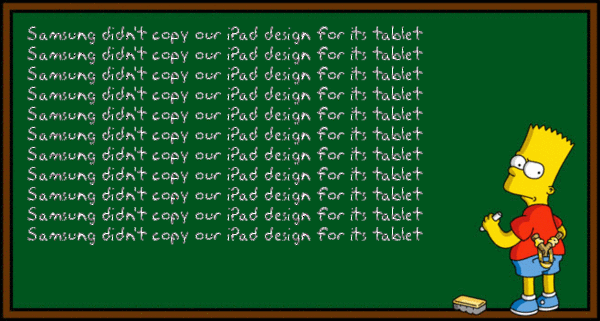
9to5Mac reported earlier this month that a U.K. Judge ruled Apple must publicly state Samsung did not copy the iPad design, but a London court ordered a stay today until the company’s appeal is heard this fall.

According to Bloomberg

  • Apple Inc. won’t immediately have to publish a notice on its U.K. website that Samsung Electronics Co. didn’t copy its iPad tablet, a London court ruled today.
  • Apple was ordered earlier this month to put a note on its U.K. site and buy advertisements in British newspapers to alert customers to a court ruling that Samsung hadn’t copied the iPad’s design. Cupertino, California-based Apple appealed saying it didn’t want to advertise for its rival. The order is stayed until its appeal against the ruling is heard in October.

Apple’s public statements, if the appeal is rejected, will appear as a message on its website and in British newspapers.


Expand
Expanding
Close

Site default logo image

IHS iSuppli: Apple buying chips at a faster rate, will remain top OEM semiconductor buyer in 2012-2013

In a post on iSuppli citing the IHS iSuppli OEM Semiconductor Spend Analysis report, the research firm broke down Apple’s continued lead among top OEM semiconductor buyers, noting Apple is buying at a faster rate and “dramatically outperforming” No.2 purchaser Samsung. The research expects Apple to increase its spending on semiconductors to $28 billion this year from $24 billion in 2011, and also made the case for Apple’s continued growth in 2013. Apple will experience the fastest growth among the top 10 with the company “set to increase its chip buying at a rate nearly three times faster than the next-fastest-rising purchaser.”

Apple this year is expected to buy nearly $28 billion worth of semiconductors, up 15 percent from $24 billion in 2011, according to an IHS iSuppli OEM Semiconductor Spend Analysis report from information and analytics provider IHS (NYSE: IHS). This means that Apple will dramatically outperform the No. 2 purchaser, Samsung Electronics Co. Ltd., allowing it to remain the world’s top OEM semiconductor buyer—a position it has held since 2010… Apple is set to expand its lead in global chip purchasing in 2013, with growth of 12.3 percent once again leading the Top 10 OEM semiconductor purchasers.

Senior analyst for semiconductor spending and design activity at IHS Myson Robles-Bruce explained the benefit of Apple’s dominance in the supply chain:

“It’s well known that Apple has already conquered the smartphone and tablet segments—but behind the scenes the company is engaging in another kind of conquest: the dominance of the electronics supply chain,” said Myson Robles-Bruce, senior analyst for semiconductor spending and design activity at IHS. “Such a dominant position provides critical benefits, allowing one to dictate semiconductor pricing, control product roadmaps and obtain guaranteed supply and delivery. For Apple, these benefits translate into competitive advantages, letting it offer more advanced products at lower prices, faster and more reliably than the competition.”

Next-gen iPhone cases come rolling in [Gallery]

Site default logo image

Tvc-mall.com (via CydiaBlog) has some “iPhone 5” cases for sale (at just $1.58 each!) that seem to align with the many, many, many, many next generation iPhone body part leaks. One thing to remember: Just because a case maker is producing cases, does not mean the next generation iPhone will fit into it.

As you can see, the cases are longer to accommodate the larger 4-inch display and have a smaller dock connector hole at the bottom. The speaker holes are bigger with the addition of the headphone jack rumored to be moving down south.

If you are one of the 65 percent of smartphone owners who are already signed up for the next iPhone, are you buying a case for it yet?


Expand
Expanding
Close

Site default logo image

Judge rejects bids to block live-streaming TV service Aereo

[youtube=http://www.youtube.com/watch?v=DR8lLt3gFZ8&feature=player_embedded]

Aereo—the service that streams over-the-air local TV to any Mac, iOS device, or PC running Safari for $12 per month—just got a second chance at survival. According to The New York Times, a U.S. federal judge on Wednesday rejected a temporary injunction spurred by television broadcasters, saying a ruling for the broadcasters would have shut down Aereo.

Reuters reported that Walt Disney Co., Comcast Corp., News Corp., Univision Communications Inc., and the Public Broadcasting Service tried to stop Aereo with the injunction, claiming they would “lose their right to retransmission fees from cable and other companies that rebroadcast their programming, and also lose critical advertising revenue”:

  • U.S. District Judge Alison Nathan said on Wednesday that while the broadcasters demonstrated they faced irreparable financial damage if were the venture were allowed to continue, Aereo also showed it would face severe harm if the requested preliminary injunction were granted.
  • ‘First and foremost, the evidence establishes that an injunction may quickly mean the end of Aereo as a business,’ the Manhattan judge wrote in a 52-page opinion.

The New York Times quoted Aereo’s Barry Diller, who noted a trial still lies ahead for his company, but he is now “far happier to begin this process with the judge’s ruling.” One of the plaintiffs, CBS, told the publication it would continue to seek damages and a permanent injunction: “This is only a ruling on a preliminary injunction. This case is not over by a long shot.”

9to5Mac reviewed Aereo in March and found its broadcast TV-like experience encouraging and well worth a test-drive:

  • Overall, Aereo’s HTML5 user-interface is the most impressive on the Mac platform. Its ease of browsing, watching, and recording local TV through Safari is a unique take during an age that offers countless ways of viewing cable without an actual television. The main takeaway with Aereo is that it works best on the Mac and the iPad, video quality is identical to what one would see on a HDTV, and the DVR function is extremely handy.
  • […] For many people, its DVR functionality alone is worth the $12 monthly fee. For others, the admission price might be too hefty when compared to cheaper services that also offer cable programming and better streaming.


Expand
Expanding
Close

UK Judge rules against Apple in Samsung patent case, claims Galaxy Tabs ‘are not as cool’

Site default logo image

Reports from last week noted that Samsung’s attempt to lift Apple’s preliminary injunction placed on the Galaxy Tab 10.1 in the United States was rejected by District Judge Lucy Koh. Today, in Apple’s ongoing patent cases with Samsung in the United Kingdom, Bloomberg reported Judge Colin Birss ruled against Apple, claiming Sammy’s Galaxy Tabs “are not as cool.” It is hard to imagine Apple losing in any more of a complimentary way, as Judge Birss claimed his decision was based partly on the fact Galaxy tablets “do not have the same understated and extreme simplicity” as iPad.

The Galaxy tablet doesn’t infringe Apple’s registered design, Judge Colin Birss said in a ruling today in London. He said that consumers weren’t likely to get the two tablet computers mixed up.

The Galaxy tablets “do not have the same understated and extreme simplicity which is possessed by the Apple design,” Birss said. “They are not as cool.”

The company provided a full email statement regarding today’s decision (via Pocket-lint). Samsung explained the court referred to roughly 50 pieces of prior art when dismissing Apple’s case:


Expand
Expanding
Close

Apple posts $2.6M bond to begin preliminary injunction on Galaxy Tab 10.1

Site default logo image

There were reports earlier this week that District Judge Lucy Koh issued a preliminary injunction on the Galaxy Tab 10.1 in the United States related to the ongoing cases between Apple and Samsung. At the time, reports claimed the ruling would kick in once Apple posted a $2.6 million bond. Today, FossPatents reported that Apple has since done so, allowing the preliminary injunction to formally take effect:

Apple didn’t hesitate to post its $2.6 million bond to protect Samsung against the possibility of a successful appeal, in which case the preliminary injunction would be found to have been improperly granted… the injunction has taken effect and Samsung must abide by it. Otherwise Apple could ask the court to sanction Samsung for contempt.

With Apple pulling $39.2 billion in revenue last quarter, we know it takes only a matter of minutes to make that $2.6 million, which is meant to protect Samsung from damages in case the injunction is found to be wrongly issued. On Tuesday, Judge Koh made a statement following her ruling that Samsung “does not have a right to compete unfairly, by flooding the market with infringing products.” FossPatents continued by giving its outlook for the trial set to take place this summer:

Expand
Expanding
Close

Site default logo image

Five years after launch: Apple sold 250M iPhones, accounting for $150B in revenue

According to a report from research firm Strategy Analytics, covering its Global Handset Shipments Forecast for Q2 2012, the company provided insight about the number of iPhones Apple has sold since the device’s launch five years ago on June 29, 2007. The report estimated that Apple sold 250 million iPhones, which accounts for $150 billion in revenue:

“The iPhone portfolio has become a huge generator of cash and profit for Apple. A quarter of a billion iPhones have been shipped cumulatively worldwide in the first five years since launch and Apple reaches its fifth birthday at the top of its game. However, there are emerging signs that the iPhone’s next five years could get tougher. Some mobile operators are becoming concerned about the high level of subsidies they spend on the iPhone, while Samsung is expanding its popular Galaxy portfolio and providing Apple with more credible competition.”

At its Q2 earnings report, Apple announced it sold 35.1 million iPhones during the last quarter, with 365 million iOS device sales to date.

(via The Globe and Mail)

Site default logo image

Samsung opens ‘Easy Phone Sync’ app to help iOS users move to Galaxy products

Samsung wants you.

The South Korea-based Company is making it easier than ever to jump ship from iOS to its Galaxy line with the Easy Phone Sync app. The software is free to anyone purchasing a Samsung Galaxy device, and it quickly installs on any Galaxy product, PC, or Mac.

In the most straightforward manner, it transfers media, contacts, content—and all that other stuff packed into handhelds—from iTunes to an Android-powered tablet or phone by Samsung. Users can also manage their content through iTunes to maintain preferences during the sync process.

For more information on Samsung’s plan to pilfer iPhone users from Apple, check out its newest marketing strategy that 9to5Google detailed earlier this week.

The press release is below. 


Expand
Expanding
Close

Foxconn CEO Terry Gou: iPhone 5 will put Samsung’s Galaxy S III to shame

Site default logo image

According to several local reports, Foxconn’s Terry Gou made some pretty bold statements at Hon Hai Precision’s annual meeting of shareholders on Monday. While there are a few translations, all seem to claim Gou urged customers to wait for the iPhone 5, “saying that the new model will put Samsung’s Galaxy III to shame.” A report from Focus Taiwan quoted China Times:

Gou said he has made it a lifetime goal to defeat Samsung — “a company with a track record of snitching on its competitors.”… He was referring to Samsung’s action in 2010 of snitching on four Taiwanese companies in an investigation by the European Commission on price-fixing in the flat panel industry…Samsung was exempted from the investigation by serving as a “tainted witness.” … Gou also urged consumers to wait for the launch of Apple’s iPhone 5, saying that the new model will put Samsung’s Galaxy III to shame.

Gou also apparently claimed that Foxconn’s Sakai plant “has an exclusive agreement with Corning Inc., an American manufacturer of glass, on large panel supply,” and his “competitors will not be able to secure any such material if they wished to.” We are going to wait to see if Foxconn issues a statement regarding these quotes, because we know a couple of stories in recent months misquoted Gou…
Expand
Expanding
Close

Site default logo image

Apple in court: Apple vs Motorola, Samsung wins damages, Kodak sues

There are several reports today on Apple’s ongoing court cases with Samsung and Motorola. First, we have the latest on the United States case between Apple and Google’s Motorola Mobility with Reuters reporting on a “crucial hearing” scheduled for today:

Federal Judge Richard Posner in Chicago will hear Apple argue why it should be able to seek an order barring the sale of some Motorola phones. Posner’s decision could affect the iPhone maker’s ability to negotiate favorable licensing agreements in its legal fights against Motorola and other competitors like Samsung Electronics Co Ltd… last week Posner granted Apple’s request for a hearing on a possible injunction, and ordered both sides to submit legal arguments in advance. Those documents were filed under seal on Monday.

The last time we reported on this Apple/Samsung Galaxy case in the U.S., Apple was forced to request a separate hearing for a ban on the Galaxy S III. A trial date for Apple’s previous injunction requests for the Galaxy line is set for July 30. In its patent disputes with the company in Europe, Reuters reported today that a Dutch court in The Hague ruled Apple would have to pay damages for violating a Samsung patent with pre-iPhone 4S devices:

A court in The Hague ruled Apple had violated a Samsung patent used in some of Apple’s phones and tablet computers to connect to the Internet, and said damages should be based on certain iPhone and iPad sales in the Netherlands… Damages should be based on Dutch sales figures since August 4, 2010, which the court said was the date when Apple could have known it was violating Samsung’s patent.

FossPatents weighed in:

…there’s no question that Apple is ready, willing and able to pay a FRAND royalty rate. It just didn’t want Samsung to win an injunction, or pay an excessive rate. Court documents say that Apple asked Samsung half a dozen times (!) to quote a FRAND rate before the 2.4% demand, which the court considered outrageous, was made… Considering the parameters and circumstances I just described, Samsung will be lucky to even recover its attorneys’ fees with this. The dispute will continue.

In other Apple court news, bankrupt Kodak is suing the company this week for wrongly claiming ownership of 10 patents and “interfering with plans to sell a large patent portfolio.” Reuters explained:

In a lawsuit filed on Monday in U.S. bankruptcy court in Manhattan, Kodak said Apple, the largest U.S. company by market value, wrongly claims to own 10 patents arising from work that the companies did together in the early 1990s… Kodak said Apple is the largest infringer of patents in that portfolio, and also a potential purchaser of those patents… “Apple’s strategy has been to use its substantial cash position to delay as long as possible the payment of royalties to Kodak” and interfere with the sale, Kodak said.

Site default logo image

Apple won’t stop June 21 Galaxy S III launch

When we checked in last Friday on the ongoing Apple vs. Samsung cases in the United States, Apple’s lawyers were threatening Samsung with a temporary restraining order on the Galaxy S III to stop sales of the device before its June 21 release date. Apple was hoping Judge Lucy Koh would add the Galaxy S III to existing preliminary injunction requests that Apple previously made on other Galaxy products. However, according to a report from Reuters, Judge Koh ruled this week that Apple’s requests would “overload her calendar” given a July 30 trial date in the previous Galaxy cases is already set.

Apple can still request a ban on the Galaxy S III with a separate hearing date, but it likely will not be able to do so in enough time to block the device from launching later this month:

U.S. District Judge Lucy Koh in San Jose, California, effectively dashed Apple’s hopes of stopping the launch of Samsung Electronics Co Ltd’s new Galaxy S III smartphone, which also runs on Android. Koh had said Apple’s push to get a court order blocking the June 21 launch would overload her calendar… Koh last week said Apple could ask for a temporary restraining order against the Galaxy S III phone, but that would likely delay the trial over a Galaxy tablet and other smartphones. In her order on Monday, the judge said Apple would have to request a new hearing date if it wanted to stop sales of the Galaxy S III phone. That likely would not take place before the phone’s scheduled launch. Apple has not said what its next move will be.

Site default logo image

Benchmarks for SSDs and USB 3.0 performance in new MacBooks

Even before Apple’s unveiling of the all-new Retina MacBook Pros, refreshed previous-generation MacBook Pros, and MacBook Air lineups today, we knew most of Apple’s new Macs would receive performance improvements courtesy of new SSDs and USB 3.0. We are now getting our first look at benchmark data for the two new features—thanks to a Retina MacBook review unit benchmarked by AnandTech.

As for SSDs, we told you before that the new MacBook family would probably receive Samsung’s speedy 830 series. AnandTech’s report seems to narrow down the 830 series as the most likely scenario noting his review unit appears to be running a Samsung drive approaching read speed of 500MB/s, and writes close to 400MB/s:

The same updated SSD is present across all of Apple’s lineup: from the MacBook Air to the next-gen MacBook Pro. Based on the model number in Apple’s System Report I’d guess my review sample features a Samsung based drive… I ran a few tests using Quick Bench to validate Apple’s claims. In general it looks like read speed approaches 500MB/s, while sequential writes are closer to 400MB/s

When it comes to initial benchmarks for USB 3.0 performance, the chart to the right speaks for itself by showing a remarkable jump in performance over USB 2.0 on the early 2011 MacBook Pro:

USB 3.0 performance is much improved over the previous generation MacBook Pro. I used an Apricorn SATA to USB 3.0 adapter to measure copy time to/from a 512GB OCZ Vertex 4 SSD. The performance gap between USB 2.0 and 3.0 is nothing short of significant.

Site default logo image

Apple’s lawyers threaten Samsung with temporary restraining order to stop Galaxy S III sales

Last time we checked in on the ongoing U.S. patent-related court cases between Apple and Samsung, Apple’s lawyers were requesting to add the Galaxy S III to its previous motion for a preliminary injunction against the Galaxy Nexus line of products from February.

Apple was hoping the courts would agree to withhold sales of the S III until a ruling on the preliminary injunction was made. Samsung recommended the judge dismiss Apple’s request and file a new motion, but Apple attorney Josh Krevitt threatened Samsung at a hearing on Thursday that Apple could file a temporary restraining order as early as today to stop sales of the S III before it launches June 21. Bloomberg reported:

Josh Krevitt, a lawyer for Cupertino, California-based Apple, told Koh he was considering filing a request for a temporary restraining order in the interest of blocking sales of the Galaxy S III before its scheduled release in the U.S. this month… Krevitt said a court order temporarily barring Galaxy S III sales in the U.S. will create “a mechanism to allow the court to decide this issue before the launch.”

First Samsung will have to prove in court today that the Galaxy S III includes a “different combination of features” from the Nexus in order to prevent Apple from adding the device to the previously requested preliminary injunction. According to Bloomberg, Samsung lawyer Bill Price claimed: “Apple’s urgency stems from its inability to “compete against the new features” of the Galaxy S III, and the company is trying to “prevent a phone from getting to the public that is better than Apple’s in many, many respects.”

Reuters noted that several Google attorneys attended Thursday’s hearing. If Apple files for a temporary restraining order, the scheduled July 30 trial date would likely be delayed. Apple is also trying its best to kill HTC.


Site default logo image

New Samsung CEO has strong relationship with Apple

Samsung officially appointed a new CEO today to replace Choi Gee-Sung, who will now take up a position as head of corporate strategy overseeing Samsung Group’s roughly 80 companies. Choi, who was CEO for over three decades, will be replaced by Kwon Oh-hyun, who Reuters explained is currently head of Samsung’s components business and has deep relationships with Apple. Samsung made a statement claiming there will be no major changes in the way the company operates, because Kwon will continue to run the components business that  “became the sole supplier of the mobile processors” for iPhone and iPad under his leadership:

The South Korean group named Kwon Oh-hyun as its new CEO. Currently head of Samsung’s components business, which oversees chips and display, Kwon cemented Samsung’s position in memory chips, where it has almost 50 percent global market share, and expanded into non-memory, or logic chips, which now account for 40 percent of Samsung’s overall semiconductor revenue… Under Kwon, Samsung became the sole supplier of the mobile processors that power Apple’s iPhone and iPad – rival products to Samsung’s own Galaxy and Note. The 59-year-old former engineer, who studied electrical engineering at Seoul National University and Stanford, has also led a restructuring of Samsung’s LCD flat-screen business.

This article is cross-posted on 9to5Google.com

Site default logo image

Apple seeks US preliminary injunction against Samsung’s Galaxy S III

Apple put forward a second California litigation against South Korea-based Samsung earlier this week when it sought the court’s consent to add the Android-powered Galaxy S III smartphone to its motion for a preliminary injunction against the Galaxy Nexus.

According to FOSS Patents:

Apple made this move approximately 20 hours after I wrote about the Galaxy S III being “the obvious next target”. In my blog post I speculated that Apple might bring a preliminary injunction motion against it, possibly after awaiting tomorrow’s preliminary injunction hearing. Apple decided to forge ahead now. Apple is on the offensive against Android. Earlier this week it filed an ITC complaint requesting an immediate import ban of 29 allegedly-infringing HTC devices. There’s an important overlap: the “data tapping” patent that Apple is seeking to enforce against HTC’s current generation of products is one of two patents Apple is using against the S III.

Apple purchased the S III in the United Kingdom, where Samsung launched it on May 29. The U.S. launch date is June 21 — precisely two weeks after the preliminary injunction hearing.

Apple’s motion notes that “[a]ccording to press reports, Samsung has already sold over nine million preorders of the Galaxy S III; indeed, the Galaxy S III has been reported to be the most extensively preordered piece of consumer electronics in history.”

Apple filed the first preliminary injunction motion against the Galaxy Nexus in February over four disputed patents. The Cupertino, Calif.-based Company’s requested in its latest motion that Samsung withhold the launch of the device’s successor in the United States until the court rules on the preliminary injunction request.

Samsung replied to the motion this afternoon, contending Apple cannot continue to add to its record for the Galaxy Nexus:

“If Apple wishes to seek an injunction against the Galaxy S III, the Court should require Apple to file a new motion and allow the parties to develop a full factual record on all four factors. Accordingly, the Court should reject Apple’s motion to amend its current notice of motion for a preliminary injunction.”

This article is cross-posted at 9to5Google.


Expand
Expanding
Close

Site default logo image

Apple faces delays in bid for sales bans in German Motorola case and US Galaxy Tab case

According to two separate reports today, Apple is once again facing roadblocks in its attempt to win sales bans in a patent-related litigation with Samsung and Motorola.

The first report comes from Bloomberg about a court in Dusseldorf, Germany, which said Apple would likely lose its bid for an injunction on Motorola’s Xoom tablet in the country:

The German court that banned Samsung Electronics Co.’s Galaxy 10.1 tablet sales last year is unlikely to grant Apple the same victory against Motorola Mobility’s device, Presiding Judge Johanna Brueckner-Hofmann said at a Dusseldorf hearing. The assessment is preliminary and may change after today’s arguments are reviewed. A ruling is scheduled for July 17… “We don’t think someone sits in a coffee house using the Xoom and hopes other people will think he owns an iPad,” Brueckner-Hofmann said.

The second report is related to the ongoing United States Samsung/Apple patent case. Today, CIO claimed Apple’s request to ban Samsung’s Galaxy Tab 10.1 was delayed due to a judge in California telling the court it will hold off on a ruling:

Apple’s bid to get a ban on sales in the U.S. of Samsung’s Galaxy Tab 10.1 tablet has been delayed after a federal court in California said on Monday it could not rule right away on Apple’s request for a preliminary injunction, while the matter is before an appeals court… The judge said Apple can renew its request for a preliminary injunction once the appeal court issues its ruling.

Site default logo image

ChipWorks dives into the Samsung Galaxy SIII, discovers the Sony iPhone 4S camera

ChipWorks and iFixit are hardcore when it comes to breaking open our favorite devices to see what is inside. The two websites decided to take it up a notch today by joining forces to publish a live teardown of the non-LTE Samsung Galaxy SIII. ChipWorks looked at the—you guessed—chips, while iFixit focused on repair aspects.

This is what the ChipWorks dissection unearthed: 

Yep, that is Samsung’s Exynos 4412, 32 nm CMOS, 1.4 GHz quad core ARM processor.

“The Exynos is in a standard PoP (Package-on-Package) assembly with a Samsung LP DDR2 Green Memory K3PE7E700M-XGC2,” explained ChipWorks. “It is notable that this is the same process generation as we documented in the Apple A5 rev 2, APL2498, also fabricated by Samsung and for which you can see the general structure.”

The device also features the Sony IMX145 is an 8-megapixel, 1.4 um pixel pitch, back illuminated CMOS image sensor. Sony designs and manufactures this image sensor, which the Apple iPhone 4S also boasts. Samsung provides its own storage, however, with the KMVTU000LM. According to ChipWorks, it is a multi-chip Samsung MOVI N and memory module.

Go to 9to5Google for more information. 


Expand
Expanding
Close

Twig: the most versatile iPhone charging cord/tripod hits Kickstarter

Site default logo image

Apple’s medium-length, white docking cable is widely known for its, how would one say, cumbersome functionality when attached to iDevices.

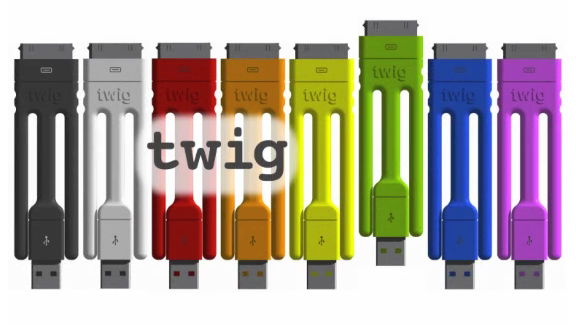
It comes in every iPhone, iPad, iWhatever box, and it is in desperate need of an update. Sure, reports show the next iPhone will sport a mini-dock connector, so maybe a new charging solution is already around the corner. But, in the meantime, third-party firms are thankfully developing interesting alternatives. Twig, for instance, is a newly launched Kickstarter project that certainly caught our eye.

Jason Hilbourne created a docking cable—err thing—that lacks a cord, can fit into a pocket, bends like Gumby, and sports a variety of color options. No tangle, no mess, and no headache. Oh, and the best part is that this little doohickey also doubles as a tripod. Go watch the video on the Kickstarter page to see how Hilbourne developed the product before deciding upon the last iteration. Those who are interested can get Twig at the $18 contribution level.

In related Kickstarter/docking cable news, Dave Hakkens has developed the Plugbook. Yes, it is in the shape of a book, so it can hide between other books. However, 10 feet of cable hides inside. Interesting, eh?


Expand
Expanding
Close

Siri vs S-Voice on Samsung’s Galaxy S III

Site default logo image

[youtube=http://www.youtube.com/watch?feature=player_embedded&v=X9YbwtVN8Sk]

The Verge recently went hands on with Samsung’s new flagship Galaxy S III launched earlier this month and during its review put the device’s new Vlingo-powered “S-Voice” feature up against Siri on the iPhone 4S. Other than the striking resemblance to Siri’s UI and canned responses, the first thing we notice is Siri appears to be much quicker than S-Voice running on the Galaxy S III.

When asked “Who is the president of France”, Siri quickly asks to search the web, while S-Voice takes a little longer but comes up with the correct answer. However, in most scenarios, both Siri and S-Voice request to search the web for the majority of the same queries. You’ll also notice S-Voice has no problem keeping up with Siri when scheduling appointments, but both have some of the same issues understanding The Verge’s commands.

S Voice consistently chews up my words when I try asking it questions, although it works better when instructed to schedule an appointment or set an alarm. It can also be used as an unlocking mechanism once you pre-record a pass phrase. That adds to the face unlocking option that’s native to Android 4.0 in being frustratingly unwieldy and planted firmly within gimmick territory — more than once I was stuck repeating “hello” without any recognition from the phone.

While we don’t have all of the info on S-Voice, we know it is using voice recognition technology from Vlingo, the same as the previous Voice Commander feature for the Galaxy S II. Last December Nuance acquired Vlingo. It’s no secret Apple is currently using Nuance to power speech in Siri, and Siri co-founder Norman Winarsky told us in October that Siri originally used Vlingo, but that Nuance has by far the most IP in speech synthesis technologies”. However, he also noted Apple could likely easily replace Nuance if something better was available.

Expand
Expanding
Close

Site default logo image

Is Apple building a haptic/optical stylus for its tablets?

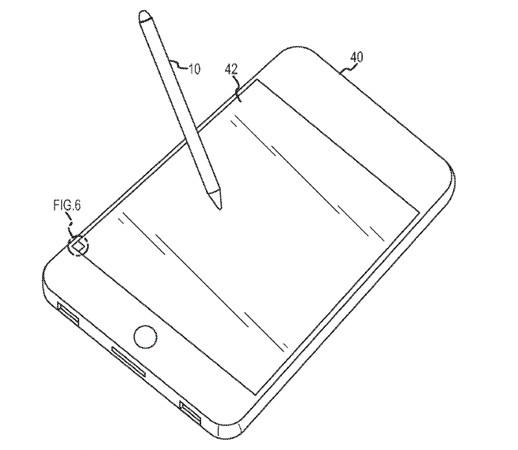
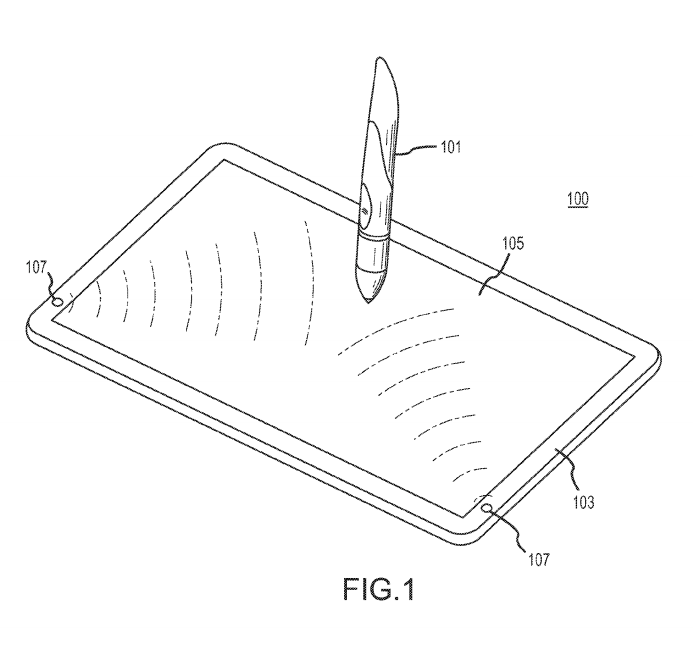
Not likely… but it has decided to patent an optical stylus anyway. We will also go ahead and note the fatty nature of that big iPhone thing pictured below:

It would be quite amusing if Apple tried to use this patent to take out Samsung’s Galaxy Note.

Another patent released today details a different type of Stylus—one with haptic feedback. Also, do not expect to see this at any point in the future. (via Unwired View)

Site default logo image

Shocker: Apple and Samsung agree to nothing during their two-day forced summit

A couple days ago, we updated you on the ongoing legal battle between Samsung and Apple with Reuters reporting Samsung chief JK Shin was considering cross-licensing options ahead of court moderated settlement talks between Apple and Samsung scheduled for May 21. While it is not much of a surprise to anyone following the case, The Korea Times reported today that a Samsung official confirmed no agreement was reached during the two-day summit:

Samsung CEO Choi Gee-sung and Shin Jong-kyun, head of the firm’s mobile division, left Seoul Sunday for the United States to meet Apple CEO Tim Cook by order of the Northern District Court of California, in an attempt to settle the patent fight without going into costly legal proceedings… The two technology giants could find no clear agreement through the talks, according to a Samsung official. Apple Korea declined to comment on the matter.

According to the report, the ongoing patent battle and trial in California is scheduled to continue June 27. As for what was discussed at the meeting…

According to foreign media outlets, both technology giants held firm on their assertions: Samsung continued to demand Apple pay royalties for using its wireless transmission technology and Apple insisted that Samsung copied its design in various products.

Site default logo image

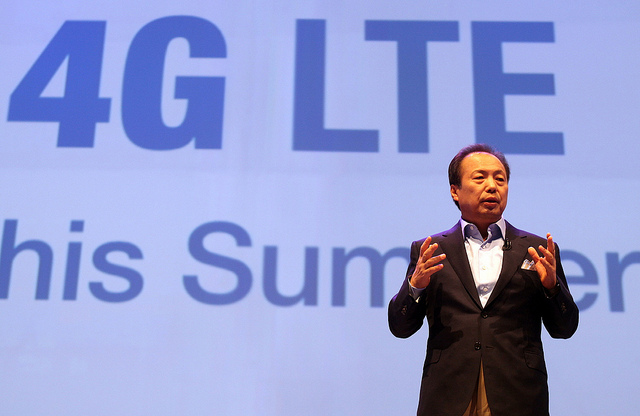
Samsung chief says company looking to resolve differences with Apple ahead of court rendezvous, options include cross-licensing deal

The legal battle between Samsung and Apple is nothing new, because the two companies have duked it out in court for quite sometime. Both companies are ordered to meet to talk about a deal tomorrow. Not surprisingly, Samsung chief JK Shin is looking to resolve the differences between his company, and Apple is looking toward negotiating with them, according to Reuters. One of the ways he suggested is a cross-licensing deal: “There is still abig gapin the patent war with Apple but we still have several negotiation options including cross-licensing.”

Headed to the United States today, Shin is accompanied by chief executive Choi Gee-sung. Both will meet with Apple’s CEO Tim Cook and company in a San Francisco court tomorrow to try to hammer out a negotiation.

The interesting part of this whole kerfuffle is that Samsung is a key supplier for many parts that Apple uses in its products. South Korean-based Samsung even has a factory in Austin, Texas dedicated to making chips for Apple’s iOS devices. However, even with giving each other their business, the two companies’ relationship is not very good. Samsung is one of the most popular manufacturers of Android handsets, leaving both Apple and Samsung suing each other to try to back up their respective devices.

We will cover anything that comes out of the court tomorrow, but do not expect the two companies to strike a deal very quickly, because it looks like it is going to take a bit to settle their differences.


Expand
Expanding
Close

New MacBook Pros will get Samsung’s fast 830 series SSD too

Site default logo image

In January, following a meeting with Samsung Storage solutions at CES 2012, we told you that Apple’s next-gen MacBook Air would likely make the switch to the speedier 830 series SSDs from Samsung alongside an update to Ivy Bridge. This was of course before we revealed some major changes coming to Apple’s new MacBook and iMac lineups. In addition to Retina displays for almost the entire new lineup, the new ultra-thin 15-inch MacBook Pro will be getting a complete redesign, losing the optical drive, and bringing it closer to to the thin design of current Airs. Like the new MacBook Airs, we have been told that at least some of Apple’s prototype MacBook Pros have used Samsung’s 830 series SSDs…

Expand
Expanding
Close

Site default logo image

Samsung & Apple take half of global smartphone market, Android & iOS hit 80 percent

Research firm Gartner released its numbers today for “Worldwide Mobile Device Sales” during Q1 2012. There are not many surprises in the report when it comes to Apple, but Gartner estimated Samsung sold 38 smartphones during the quarter, which is less than the 42.2 million estimated by IDC earlier this month and more than the 32 million by IHS iSuppli. With Apple confirming 35.1 million iPhones sold during the quarter, Gartner’s numbers put Samsung as the both the No. 1 smartphone and overall mobile device vendor. The report also noted Samsung and Apple together accounted for 49.3-percent of the global smartphone sales, which is up from just 29.3 percent in Q1 of last year:

“The continued roll-out of third generation (3G)-based smartphones by local and regional manufacturers such as Huawei, ZTE, Lenovo, Yulong and TCL Communication should help spur demand in China. In addition, the arrival of new products in mature markets based on new versions of the Android and Windows Phone operating systems (OSs), and the launch of the Apple iPhone 5 will help drive a stronger second half in Western Europe and North America. However, as we are starting to update our market forecast we feel a downward adjustment to our 2012 figures, in the range of 20 million units, is unavoidable.”

On the platform side, Gartner’s report estimated both Android and iOS accounted for 79 percent of global smartphone sales—up from just 53.3-percent in Q1 2011. Of that 80 percent, Android grabbed 56.1-percent, which is slightly higher than the 51 percent of the United States market, according to estimates from comScore earlier this month. Apple took in the remaining 22.9-percent, which is less than the 30.7-percent comScore estimated for the U.S. market:

Gartner analysts said the smartphone market has become highly commoditized and differentiation is becoming a challenge for manufacturers. “At the high end, hardware features coupled with applications and services are helping differentiation, but this is restricted to major players with intellectual property assets. However, in the mid to low-end segment, price is increasingly becoming the sole differentiator. This will only worsen with the entry of new players and the dominance of Chinese manufacturers, leading to increased competition, low profitability and scattered market share.”